
Tech & Sci
14:02, 06-Jun-2018
Money, traditional beliefs fuel wildlife trade in Thailand
 ["other","Thailand"]
Share







Copied
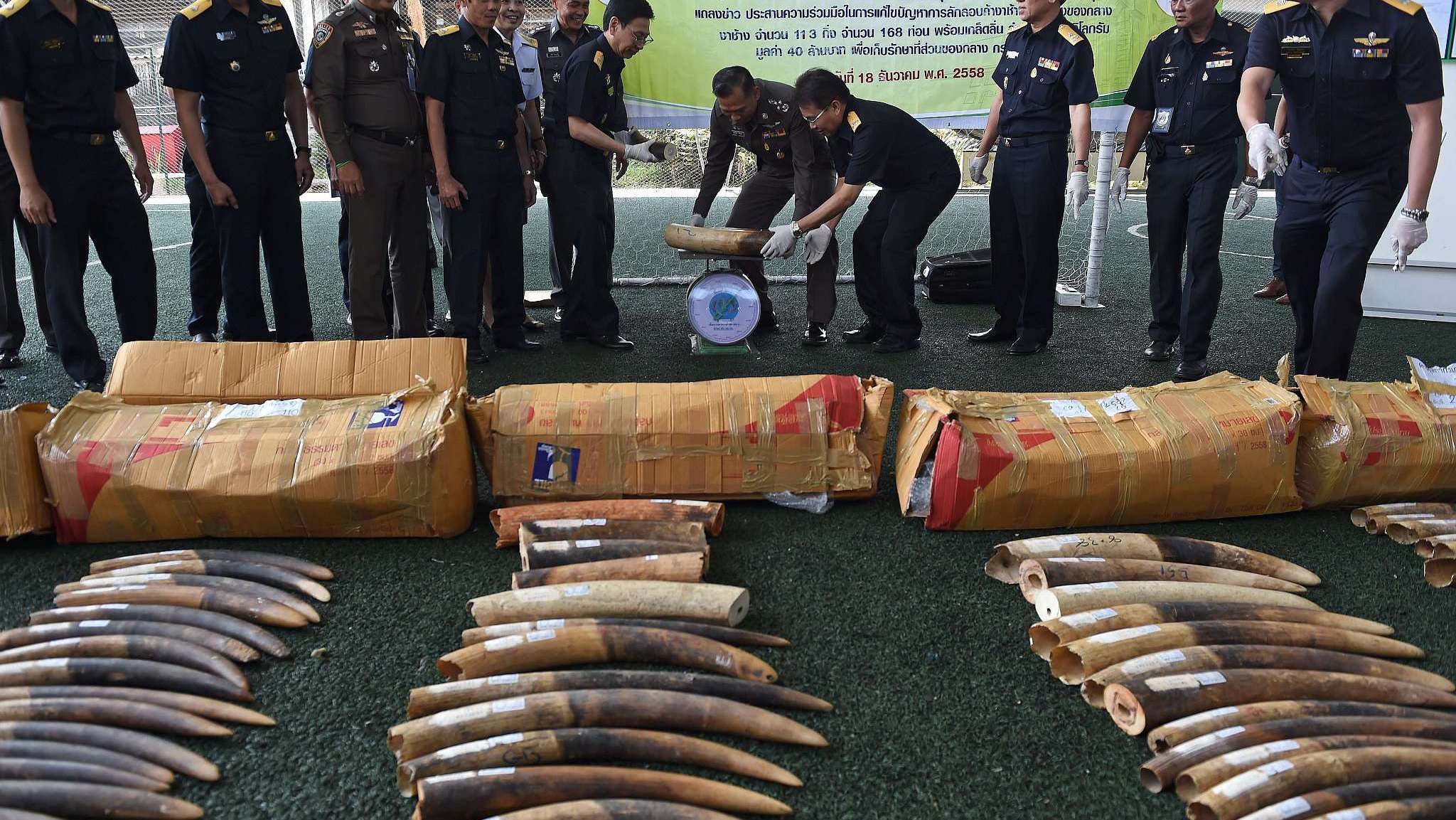
Affluence, a strong business network, and cultural beliefs are significant catalysts behind a burgeoning wildlife trade in Thailand, a recent consumer research report claimed.
Around two percent of the Thai population own or use ivory parts or products, and one percent own or use tiger parts or products. Nearly 90 percent of ivory consumers and 82 percent of tiger consumers feel buying these products is socially acceptable, according to the report commissioned by the US Agency for International Development Wildlife Asia (USAID).
The researchers from Chulalongkorn University and Ipsos, a market research organization, interviewed nearly 1,000 respondents to understand people’s perceptions and beliefs regarding ivory and tiger parts. A large number of them believe that ivory protects the owner, helps in overcoming obstacles, creates goodwill and enhances one’s appearance. Similarly, tiger parts and products are perceived to improve charisma, bring good fortune and provide protection from evil or harm.
Responses from the consumers also revealed that sacred images, small carvings and amulets are the most popular ivory and tiger items purchased. Ivory accessories and jewelry, because they are beautiful and attractive, remain popular with female consumers. Meanwhile, male consumers prefer to buy tiger parts.
Physical stores including jewelry stores, amulet markets and temples were found to be the primary source for buying ivory and tiger products. Researchers also found that online platforms are further boosting the trade with an exchange of information regarding the wildlife product. “Once information is exchanged, the purchase is done either offline or on online platforms like Facebook groups or Line,” researchers revealed.
According to the Convention on International Trade in Endangered Species of Wild Fauna and Flora (CITES), more than 30,000 elephants are killed in Africa by poachers each year for their tusks. To curb poaching, CITES banned international trade in ivory in 1990.
In Thailand, domestic ivory trade is legal, but all trade in African ivory is illegal. However, the tiger trade is illegal. The selective ban on wildlife products has reportedly left Thai consumers perplexed.
The USAID report states that ivory and tiger consumers seem confused about the legal issues regarding ivory and tiger products. Many are not sure whether the small items they own are legal.
Richard Goughnour, director of USAID’s Regional Development Mission for Asia, pointed out that understanding what influences consumer behavior is an important step to reducing demand for ivory and tiger products in Thailand.
“By targeting current and potential consumers, we can implement more effective messaging and campaigns based on what motivates and drives their desire for ivory and tiger parts and help put an end to the trade in illegal wildlife.”
Recent studies estimate the value of illegal wildlife crime worldwide to be between 5 billion to 23 billion US dollars annually. A wildlife monitoring group has categorized Thailand as a major transit hub, destination and source country for illegal wildlife products.
The country also acts as a transit hub for ivory to be sold in other Southeast Asian nations and China. The Chinese mainland totally banned ivory trade earlier this year, while the Hong Kong Special Administrative Region and China’s Taiwan also enforced a similar ban.
Pinsak Suraswadi, deputy director general of the Department of National Parks, Wildlife and Plant Conservation, said, “To effectively tackle this issue, it is crucial to strengthen a network with related and like-minded partners and improve collaboration with other countries.”
[Top Image: Wildlife officials weigh elephant tusks after more than 700 kg of ivory items – 113 tusks and 168 pieces – were seized last week on the island of Koh Samui, in Bangkok on December 18, 2015. /VCG Photo]