
Politics
21:01, 28-Apr-2018
Turkish foreign minister denies Douma 'attack' weakened Ankara-Moscow ties
 ["china"]
Share







Copied
05:41
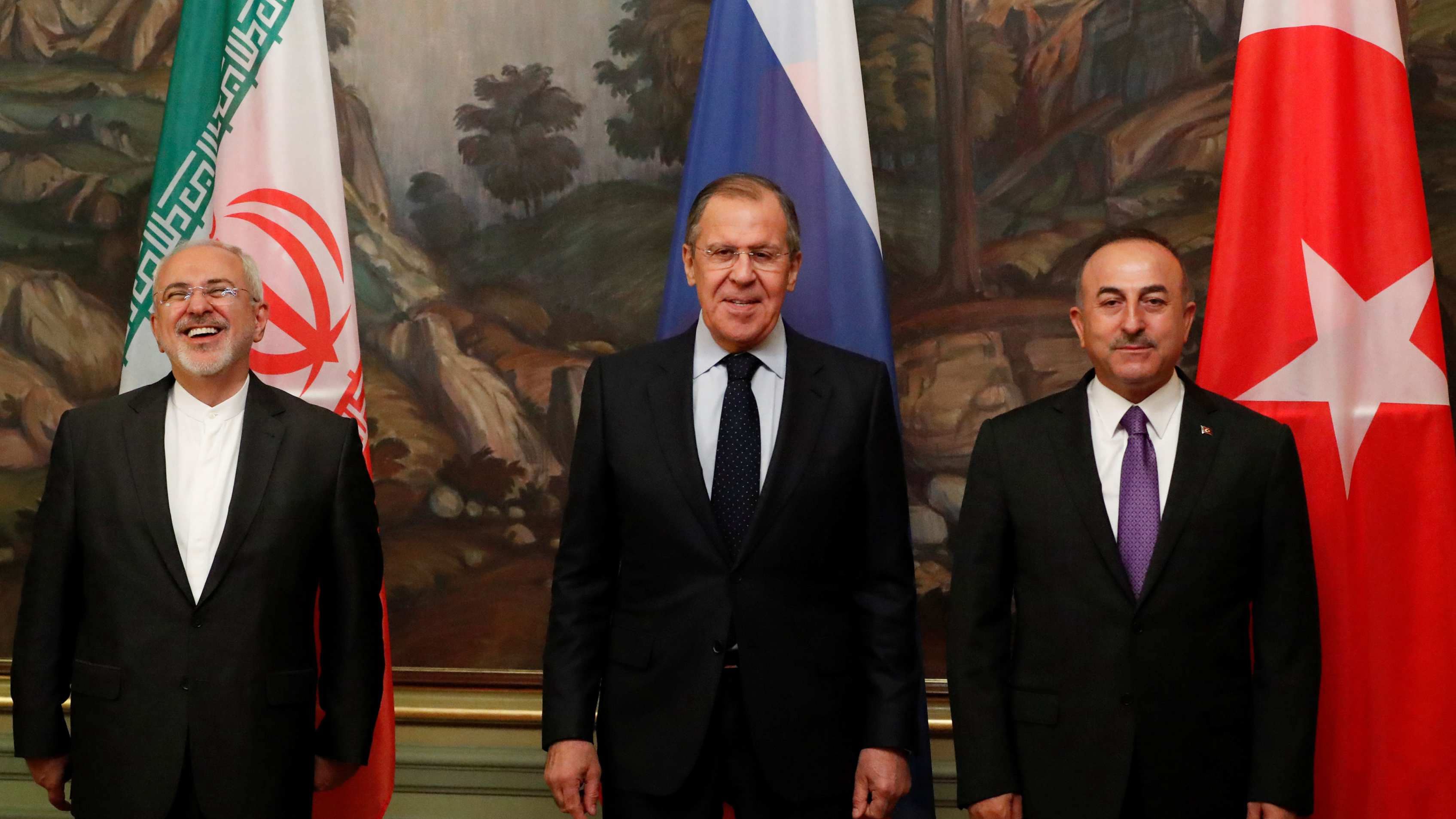
Russian Foreign Minister Sergei Lavrov on Saturday hosted his Iranian and Turkey counterparts for talks on Syria in the wake of an alleged chemical attack that has exposed differences between the three powers.
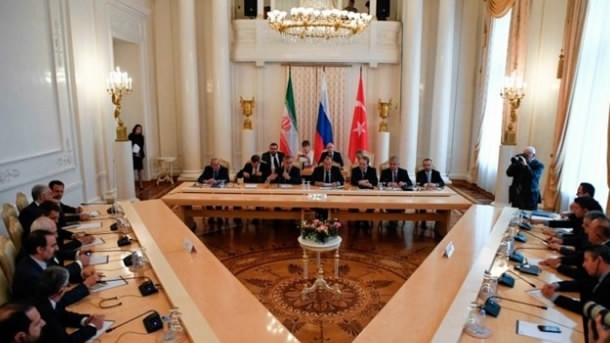
The three nations have been attempting to find a political solution to the Syrian conflict at talks that started last year in Astana, Kazakhstan, in competition with the US and UN-backed Geneva initiative.
Lavrov held separate bilateral talks with his Turkish counterpart Mevlut Cavusoglu and then Iran's Mohammad Javad Zarif, who stressed the warmth of their relationship in opening comments. These were to be followed by three-sided talks.
Russian Foreign Minister Sergei Lavrov meets with his Turkish counterpart Mevlut Cavusoglu and Iran's Foreign Minister Mohammad Javad Zarif in Moscow, April 28, 2018. /AFP Photo
Russian Foreign Minister Sergei Lavrov meets with his Turkish counterpart Mevlut Cavusoglu and Iran's Foreign Minister Mohammad Javad Zarif in Moscow, April 28, 2018. /AFP Photo
Meeting his Turkish counterpart, the Russian diplomat stressed the "great importance" both Russian President Vladimir Putin and President Recep Tayyip Erdogan attach to improving relations.
Cavusoglu, in translated comments, praised the "atmosphere of trust that has grown up between us" and said the countries had "seriously moved forward on questions of Syria settlement." He said Saturday's meeting would discuss "what further steps can be taken."
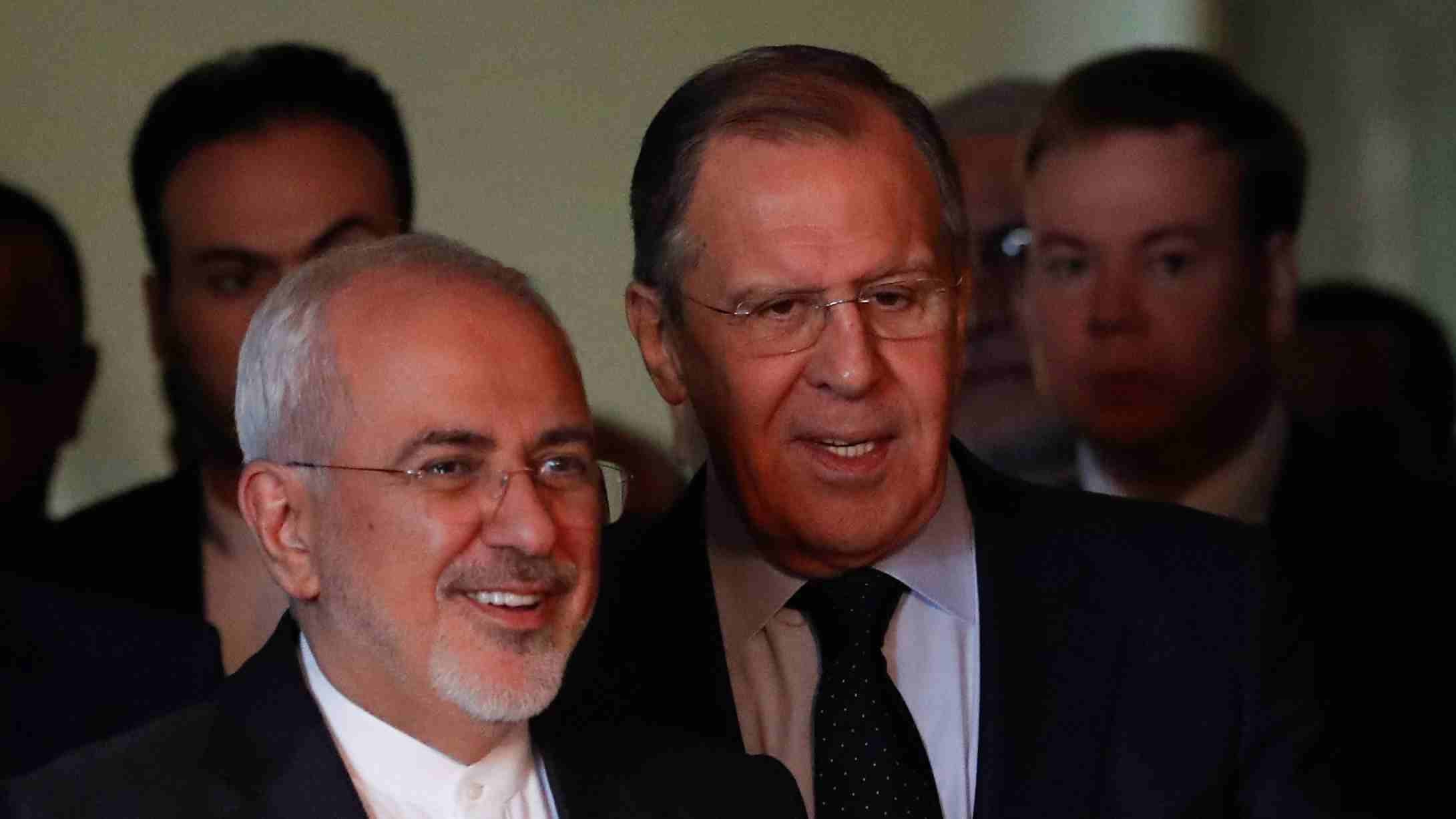
Russian Foreign Minister Sergei Lavrov (R) shows the way to his Iranian counterpart Mohammad Javad Zarif during a meeting in Moscow, Russia, April 28, 2018. /Reuters Photo
Russian Foreign Minister Sergei Lavrov (R) shows the way to his Iranian counterpart Mohammad Javad Zarif during a meeting in Moscow, Russia, April 28, 2018. /Reuters Photo
Lavrov also held a bilateral meeting with Iran's Zarif, who hailed the three countries' work together in the Astana process as a success, saying it led to "the defeat of the Islamic State group," referring to Daesh (ISIL).
Zarif said this was the only aspect of joint cooperation with "our Turkish friends" and it was "bearing fruit."
Yet the latest talks in Moscow between two of Assad's key supporters, Moscow and Tehran, and rebel-backer Ankara come as the alleged chemical attack in the Syrian town of Douma on April 7 has prompted sharply differing responses from Turkey and Russia.
"I curse those who carried out this massacre," Erdogan said, adding that he welcomed Western air strikes in retaliation as "appropriate."
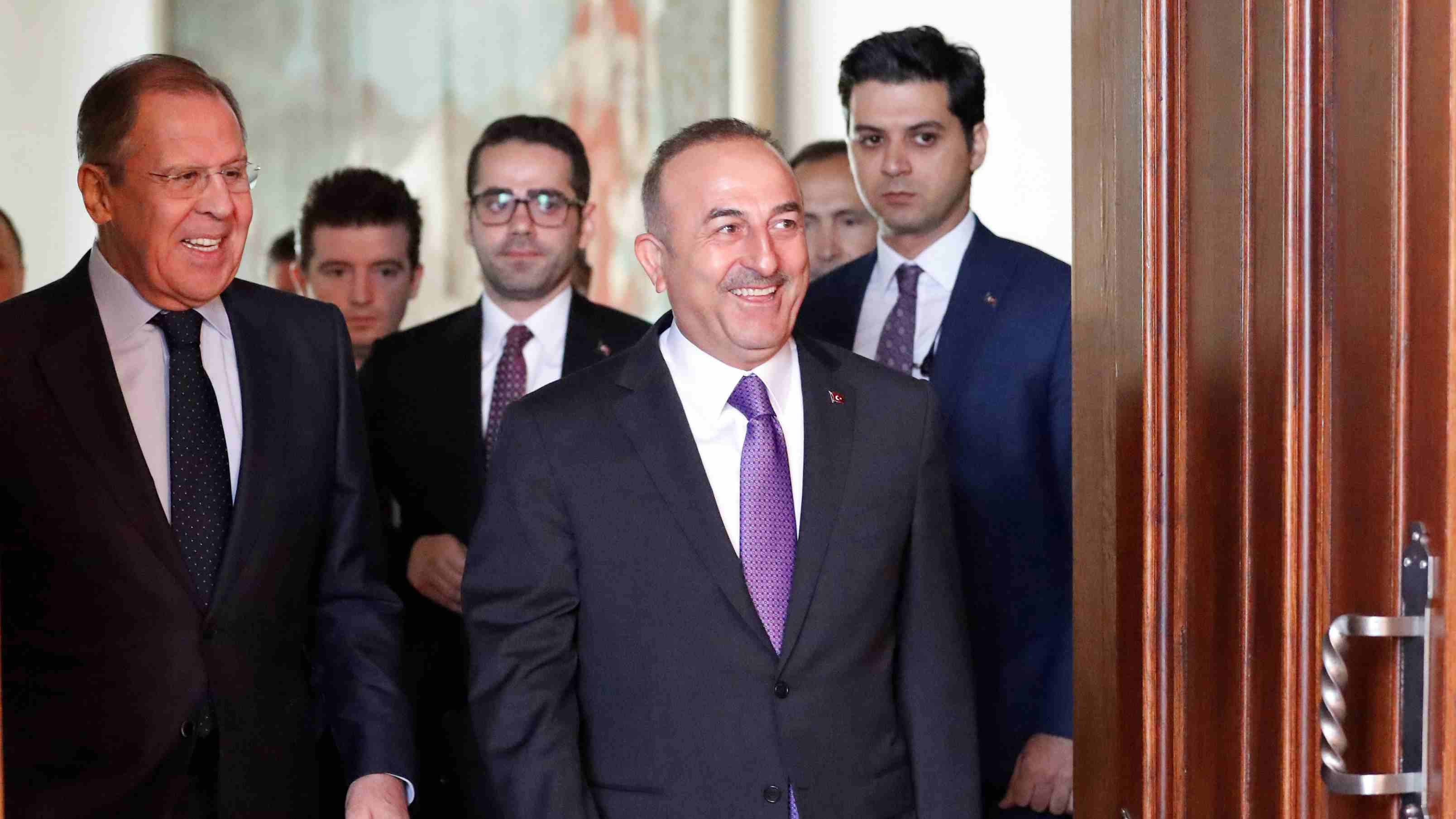
Russian Foreign Minister Sergei Lavrov (L) and his Turkish counterpart Mevlut Cavusoglu enter a hall during a meeting in Moscow, Russia, April 28, 2018. /Reuters Photo
Russian Foreign Minister Sergei Lavrov (L) and his Turkish counterpart Mevlut Cavusoglu enter a hall during a meeting in Moscow, Russia, April 28, 2018. /Reuters Photo
Meanwhile, Russia says the attack was staged to discredit its ally President Bashar al-Assad and this week brought a group of Syrians to the global chemical arms watchdog to back its claims.
French President Emmanuel Macron this month suggested the air strikes had driven a wedge between Ankara and Moscow as they have been building increasingly close ties.
This prompted an angry denial from Cavusoglu, who said the countries' relations "are not so weak that the French president can break them."
The most recent Syria talks attended by the foreign ministers in Astana were held on March 16. The next round is set for May 14.
EU diplomatic chief Federica Mogherini on Tuesday urged the three powers to do more, saying they "have not only a responsibility but also an interest in making the ceasefire work."
Eight rounds of talks under United Nations auspices in Geneva have made little headway, with Assad's government taking little interest.
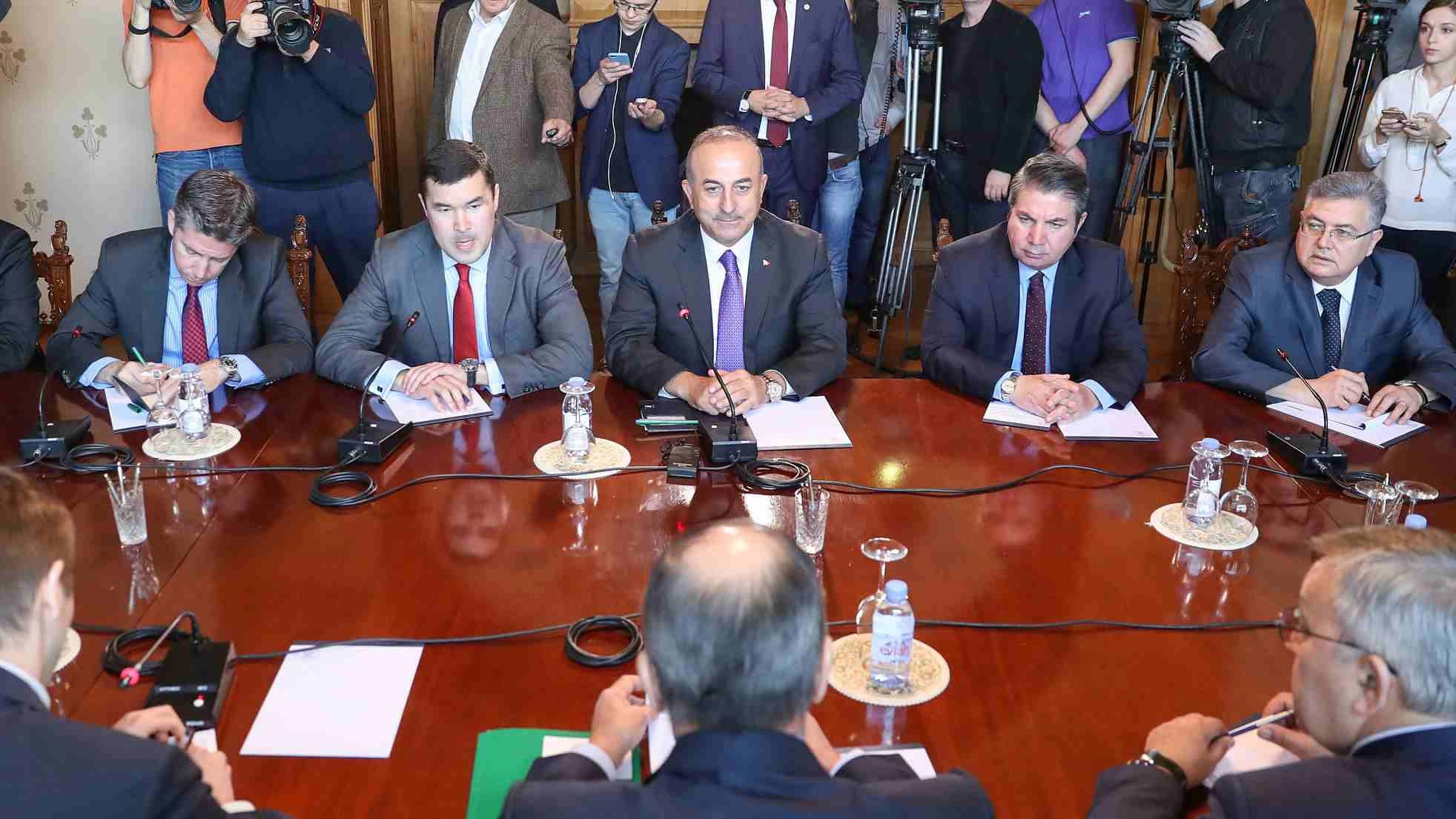
Turkey's Foreign Minister Mevlut Cavusoglu (C) during a meeting with Russia's Minister of Foreign Affairs Sergei Lavrov at the Reception House of Russia's Foreign Ministry in Spiridonovka Street /VCG Photo
Turkey's Foreign Minister Mevlut Cavusoglu (C) during a meeting with Russia's Minister of Foreign Affairs Sergei Lavrov at the Reception House of Russia's Foreign Ministry in Spiridonovka Street /VCG Photo
Both Tehran and Moscow have deployed military forces to Syria to back up Assad in the now seven-year-old war against anti-government rebels.
Ankara has called for Assad's removal throughout the war but has worked increasingly closely with Moscow and Tehran in recent months in an attempt to find a solution to the conflict.
In January, Russia held a showpiece conference in the Black Sea resort of Sochi with largely pro-government delegates, which saw boycotts by rebels and made little progress.
Putin hosted a summit on Syria with the Iranian and Turkish presidents in November. They then met again in Ankara this month.
Source(s): AFP