
World
17:56, 31-Jul-2018
Macedonia to hold referendum on name change on September 30
Updated
16:32, 03-Aug-2018
 ["europe"]
Share







Copied
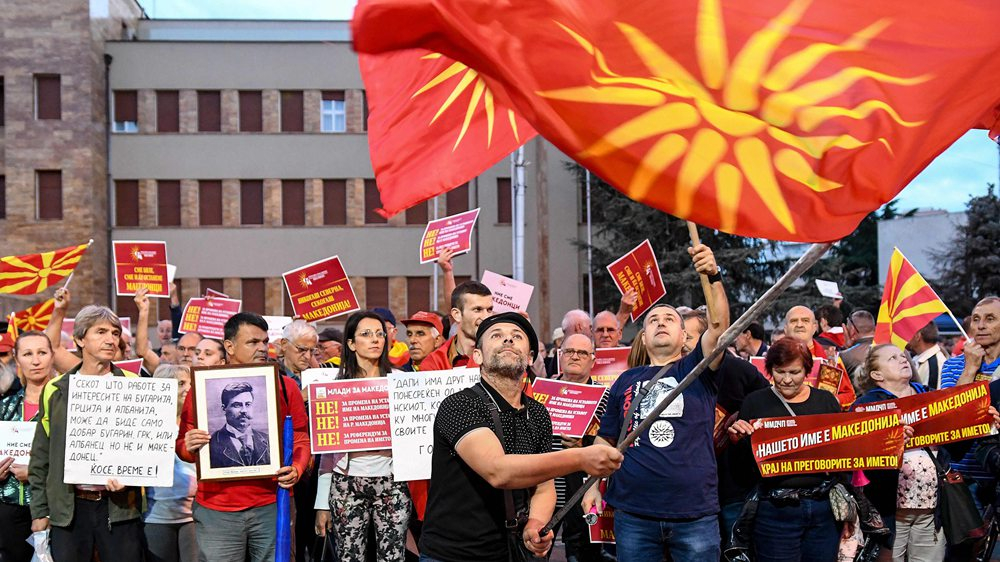
Macedonia's parliament on Monday set September 30 as the date for a referendum on changing the country's name to the Republic of North Macedonia, a high-stakes vote aimed at resolving a long-running row with Greece and clearing the path to join NATO and the EU.
Skopje and Athens signed a landmark agreement in June to rename the former Yugoslav republic in an effort to break a stalemate that has poisoned their relations since 1991 and hobbled Macedonia's integration with the West.
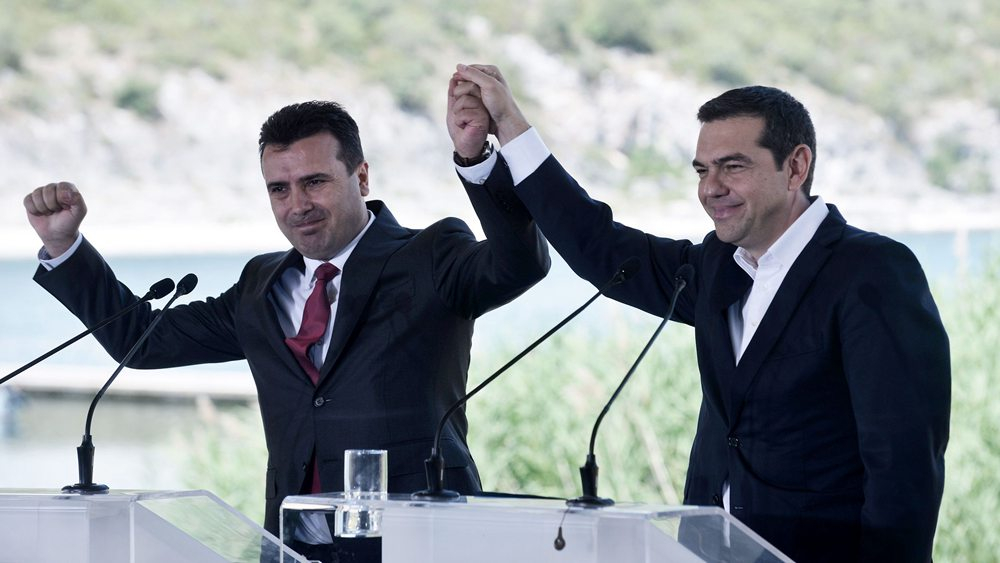
Greek Prime Minister Alexis Tsipras (R) and Macedonian Prime Minister Zoran Zaev raise their hands during a signing ceremony of a preliminary accord on changing Macedonia's name, near Otesevo, Macedonia, June 17, 2018. /VCG Photo
Greek Prime Minister Alexis Tsipras (R) and Macedonian Prime Minister Zoran Zaev raise their hands during a signing ceremony of a preliminary accord on changing Macedonia's name, near Otesevo, Macedonia, June 17, 2018. /VCG Photo
Greece has objected to its neighbor being called Macedonia because it has a northern province of the same name, accusing Skopje of territorial ambitions and appropriating its cultural heritage.
While more than 120 countries, including the US and Russia, have recognized the name the "Republic of Macedonia," Athens has voiced its protest by blocking the country from joining NATO or starting EU accession talks.
The referendum question approved by 68 out of Macedonia's 120 lawmakers on Monday does not spell out the new name clearly. But it closely links the vote to the government's ambitions of stronger ties with the West.
On September 30 the public will be asked: "Are you for EU and NATO membership by accepting the agreement between the Republic of Macedonia and the Republic of Greece?"
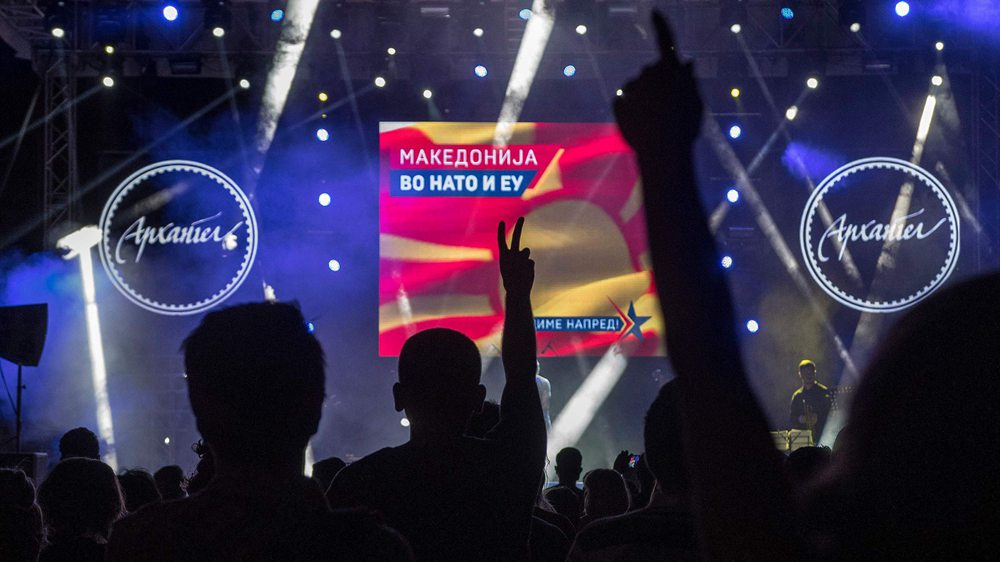
Macedonians celebrate the invitation to join NATO at an event in Skopje, July 14, 2018. /VCG Photo
Macedonians celebrate the invitation to join NATO at an event in Skopje, July 14, 2018. /VCG Photo
After the deal was struck between Greek and Macedonian leaders in June, NATO said Macedonia would be eligible to join the alliance if its new name is finalized.
The European Union, for its part, said that accession negotiations would not begin before June 2019.
But progress in resolving the dispute has been challenged by hardliners and large protests in both countries.
Athens has also accused Russia – who opposes Macedonia's efforts to join NATO – of trying to sabotage the accord by encouraging demonstrations.
Opponents in Greece are upset that the deal recognizes a Macedonian language and nationality.
In Macedonia, nationalists have branded the name-change as an assault on the country's identity.
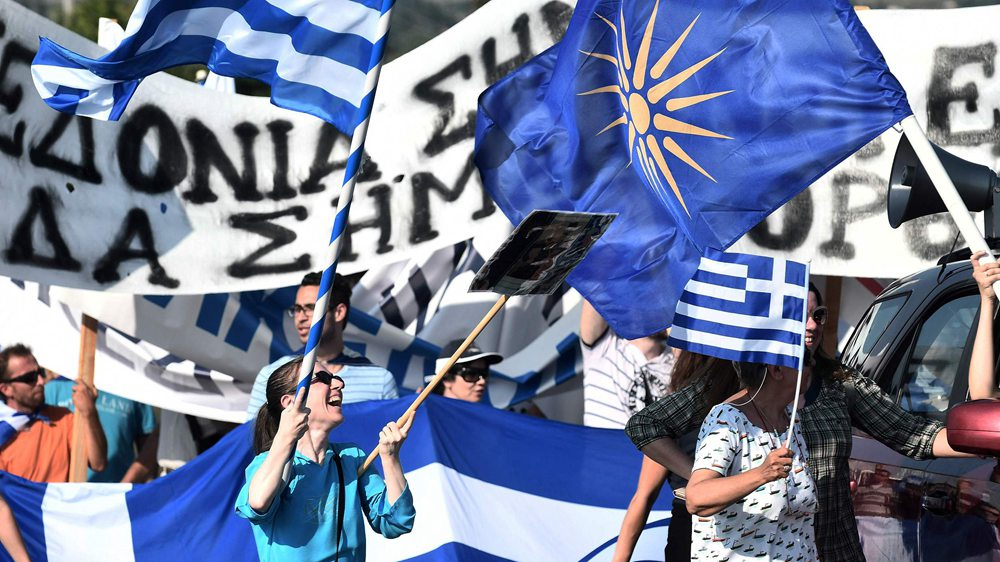
People demonstrate against a name deal between Greece and Macedonia during the quadrilateral summit of Balkan countries in Thessaloniki, Greece, July 4, 2018. /VCG Photo
People demonstrate against a name deal between Greece and Macedonia during the quadrilateral summit of Balkan countries in Thessaloniki, Greece, July 4, 2018. /VCG Photo
Macedonia's Prime Minister Zoran Zaev has said the referendum will only be "consultative" – meaning that parliament could still vote to change the country's name even if it does not get a majority approval by the public.
If Macedonia does go ahead with the name change and revises its constitution, Greece's parliament will then be called to ratify the accord.
After declaring independence from Yugoslavia in 1991, Macedonia was admitted to the United Nations in 1993 under the provisional name of the "Former Yugoslav Republic of Macedonia."
(Top image: Demonstrators wave flags in front of the parliament building in Skopje during a protest against the new name of the country, July 30, 2018. /VCG Photo)
Source(s): AFP