
Security
19:36, 24-Jul-2018
Singapore disconnects healthcare computers from the Internet after cyberattack
Updated
19:35, 27-Jul-2018
 ["china"]
Share







Copied
Singapore has disconnected computers at public healthcare centers from the Internet to prevent cyberattacks of the kind that caused its worst personal data breach, a government official said on Tuesday.
Singapore started to cut web access for civil servants in 2016 to guard against cyberattacks, but stopped short of including public healthcare institutions. Officials may still surf the web using separate personal or agency-issued devices.
In an attack in June, hackers stole the details of more than 1.5 million patients, including the prime minister’s drug prescriptions, in what the government has called “a deliberate, targeted and well-planned cyberattack”.
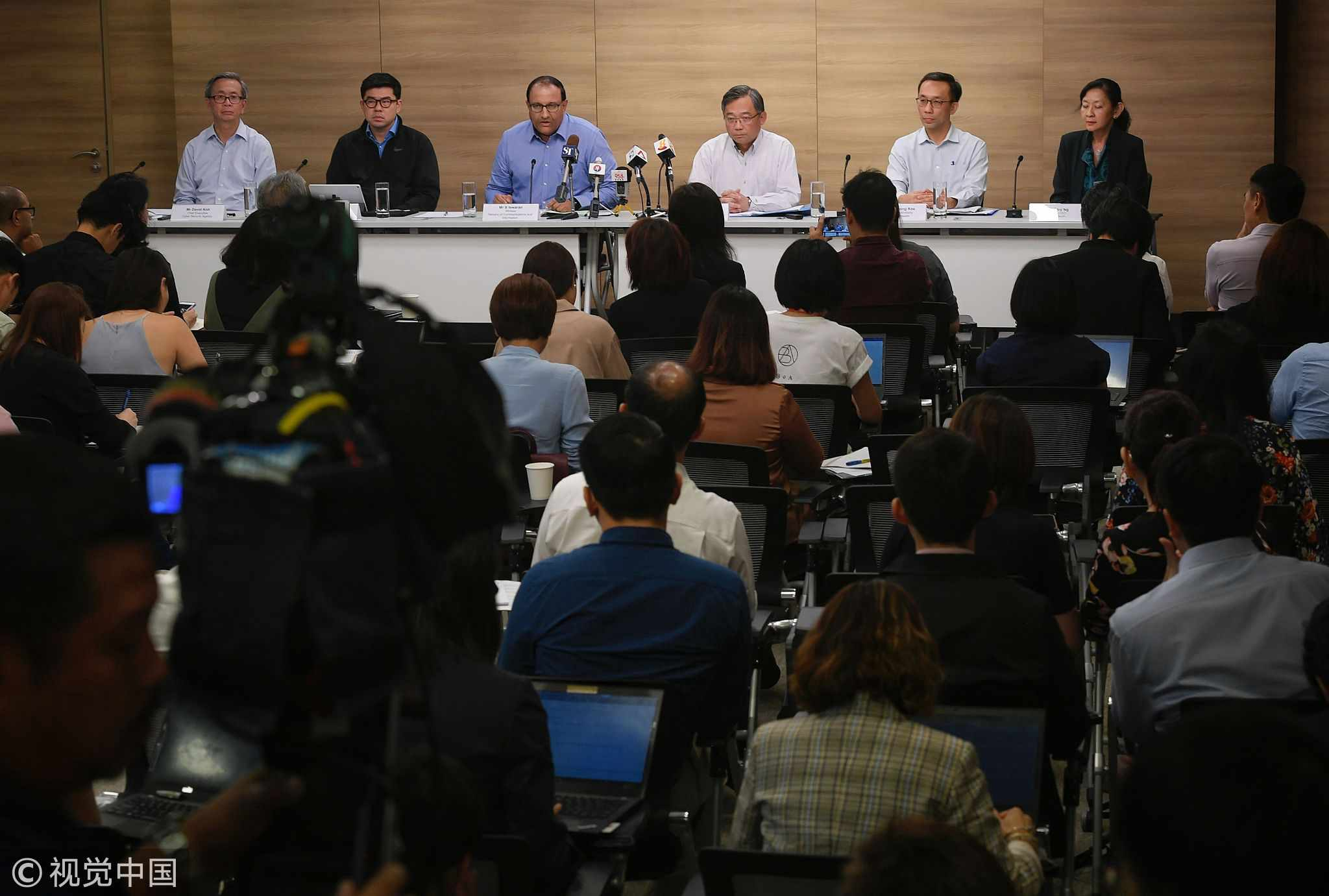
A press conference regarding the SingHealth cyberattack in Singapore, July 20, 2018. /VCG Photo
A press conference regarding the SingHealth cyberattack in Singapore, July 20, 2018. /VCG Photo
The government on Monday wrapped up the task of disconnecting staff computers at public healthcare facilities from the Internet, Deputy Prime Minister Teo Chee Hean said.
“We could, and should, have implemented Internet surfing separation on public healthcare systems, just as we have done on our public sector systems,” Teo said in a speech at an engineering conference.
“This would have disrupted the cyber kill-chain for the hacker and reduced the surface area exposed to attack. This has now been done.”
He did not say why the measure had not been adopted earlier.
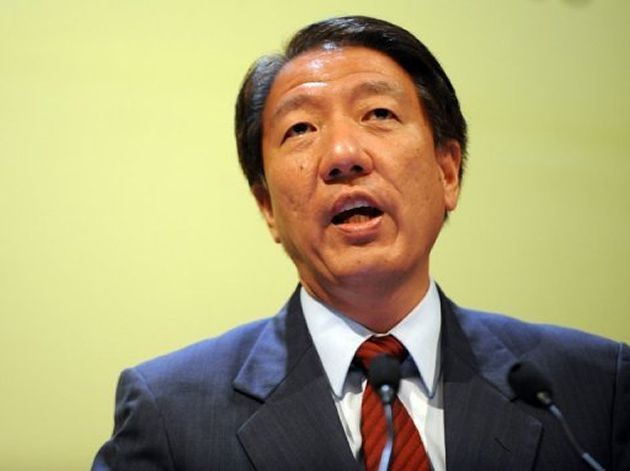
Singapore's Deputy Prime Minister Teo Chee Hean. /AFP Photo
Singapore's Deputy Prime Minister Teo Chee Hean. /AFP Photo
The disconnection will cause “some inconvenience for patients and healthcare staff, as a result of the unavailability of some IT system connections that require the Internet,” the health ministry said in a statement on Monday.
Government officials did not say who might have been behind the attack, and cybersecurity experts said it was too early to identify the infiltrators.
Internet Surfing Separation, or air-gapping, is common in security-related fields in government and business, but not for normal government functions and, according to experts, does not guarantee success.
The idea is that computers used by government staff for their work, which are connected to an Internal network, are isolated from the wider Internet, reducing the exposure of official government data to cyberattacks.
The procedure drew criticism when introduced in the public services two years ago, with cybersecurity experts calling it a retreat for a technologically advanced city-state that has adopted the term “smart nation” for its initiatives.
The government has set up a four-member panel headed by a former judge to investigate the cyberattack which will report by the end of December, it said.
Separately, the Monetary Authority of Singapore has told financial institutions to tighten customer verification measures in the wake of the healthcare attack, it said on Tuesday.
Singapore may use drones to deliver medicine
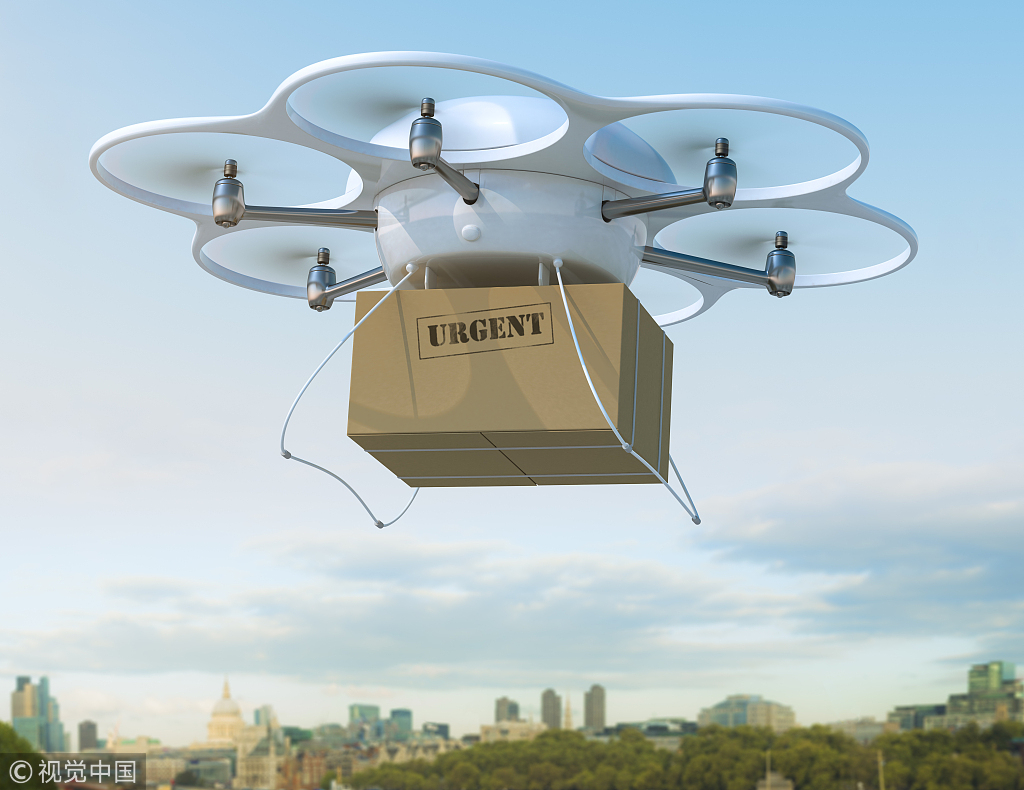
An illustration of a delivery drone. /VCG Photo
An illustration of a delivery drone. /VCG Photo
Drones could be used across Singapore to deliver life-saving medical supplies to a patient during an emergency or to respond to the security breach, a private consortium said Tuesday.
The Future Flight Consortium, a 13-member group, said it had been chosen by the country's civil aviation authority and transport ministry to develop the drone program.
Its uses could include transporting blood samples, delivering emergency medical supplies and responding to security incidents across the city-state, the consortium said in a statement.
The drones would be controlled remotely by pilots at an operation center and be able to travel relatively long distances across the city-state.
The consortium said it will generate flight paths for the drones and develop a private communications network as well as take-off and landing sites.
"Our goal is to make it possible for any enterprise who needs to fly drones [beyond the visual sight of the pilots] in Singapore to easily do so in a safe and effective manner," said Future Flight project director Ong Jiin Joo.
(Cover: VCG Photo)
Source(s): AFP
,Reuters