
Culture
21:26, 26-Jul-2018
Meeting a master embroidered shoemaker in Beijing
Updated
20:30, 29-Jul-2018
 ["china"]
Share







Copied
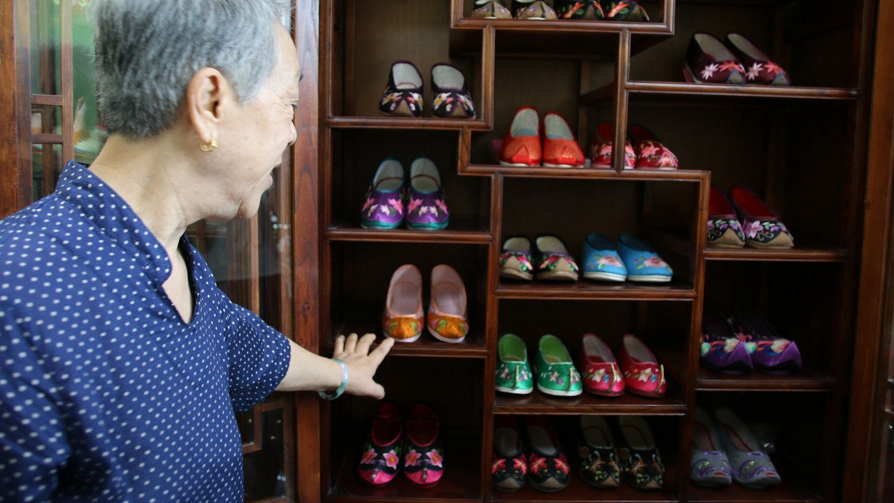
Ten enthusiasts of traditional Chinese embroidery are lucky enough to have a chance of working under the guidance of shoemaking master Wang Guanqin in Beijing.
Participants in the intangible cultural heritage experience program Great Seed learn at the feet of inheritors or masters and from hands-on experience.
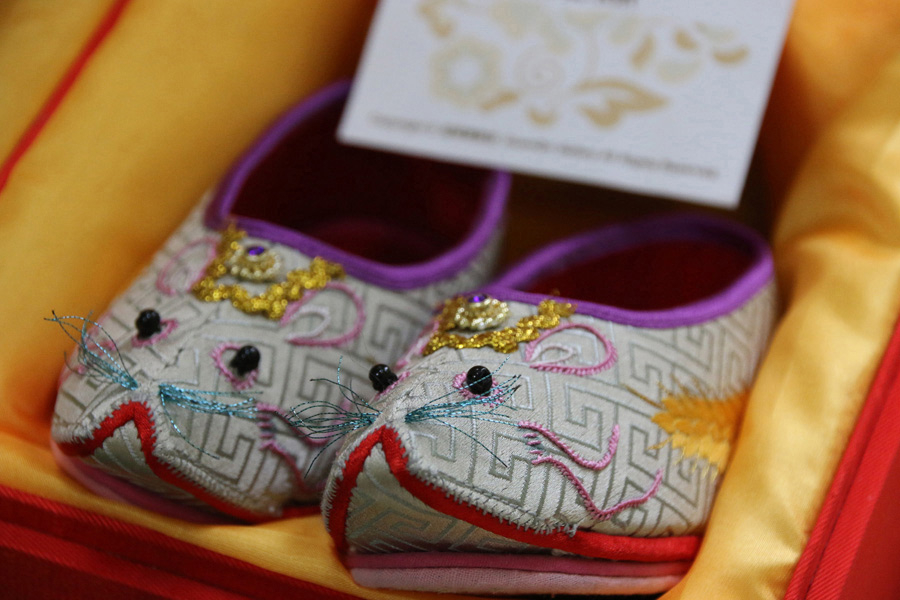
Chinese zodiac embroidered shoes by Wang Guanqin reflect the sign of the rat. /Chinadaily Photo
Chinese zodiac embroidered shoes by Wang Guanqin reflect the sign of the rat. /Chinadaily Photo
During their encounter with the 79-year-old Wang on July 21, the participants were fascinated with the embroidered shoes. They tried to make the soles and uppers of the shoes themselves under her professional guidance and learned about the cultural connotation and history of making embroidered shoes.
"I've always been crazy about embroidered shoemaking, but there are few people who could do this kind of craft nowadays. For me, it's a great chance to learn," said Cheng Guiqi, a student majoring in directing at Beijing Union University.
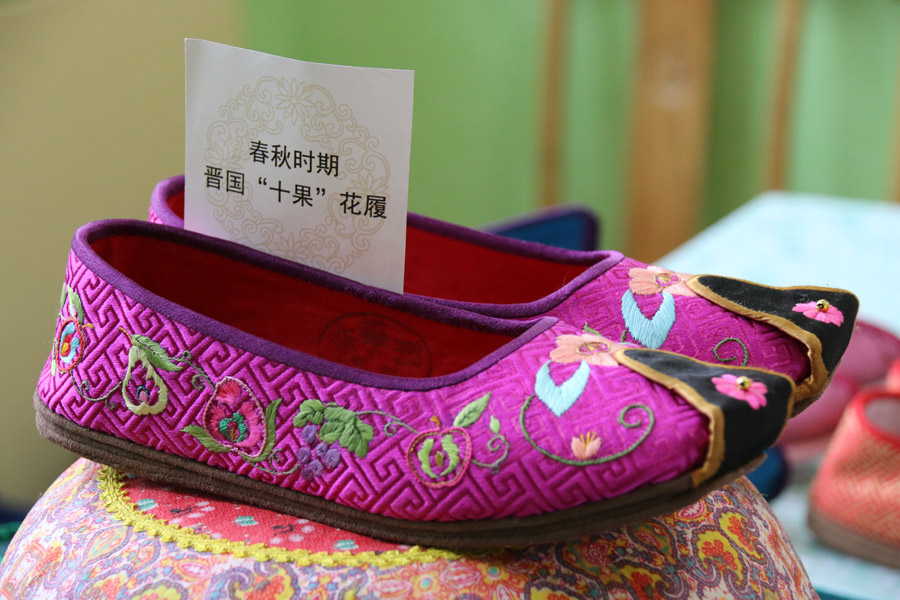
Traditional Chinese handmade shoes by Wang Guanqin, featuring patterns of 10 kinds of fruits, popular during the Spring and Autumn Period (770-476 BC). /Chinadaily Photo
Traditional Chinese handmade shoes by Wang Guanqin, featuring patterns of 10 kinds of fruits, popular during the Spring and Autumn Period (770-476 BC). /Chinadaily Photo
According to Wang, her enthusiasm for the craft came from her family's longtime affinity with the sophisticated technique developed by her great-grandmother generation.
Unlike embroidered shoes sold on the market, which are made by machine, Wang insists on designing and making shoes with her own hands.
"Each of my shoes is like a daughter," Wang said. "It's never about just making a pair of shoes. It's the cultural connotations that make each shoe unique and precious."
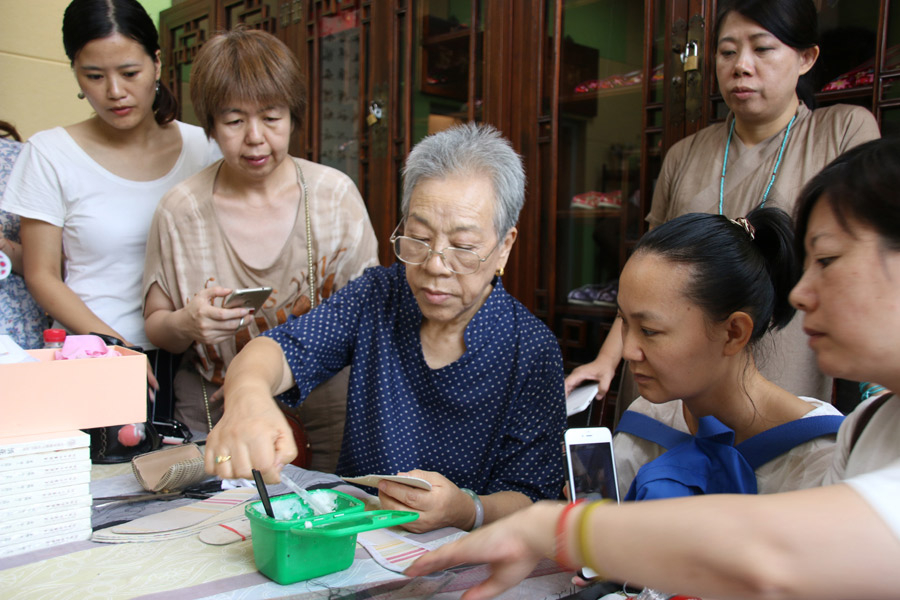
Wang shows members of the Great Seed’s intangible cultural heritage experience program how to do it. /Chinadaily Photo
Wang shows members of the Great Seed’s intangible cultural heritage experience program how to do it. /Chinadaily Photo
Her inspiration for different designs is often drawn from historical research based on Chinese literature and ancient culture. One fine example is her famous series of shoes featuring the animals of the Chinese zodiac.
For the ox, niu in the Chinese language, the embroidery features morning glories, pronounced as qianniu hua in Mandarin. She uses grass and flowers for the horse and carrot flowers for the rabbit.
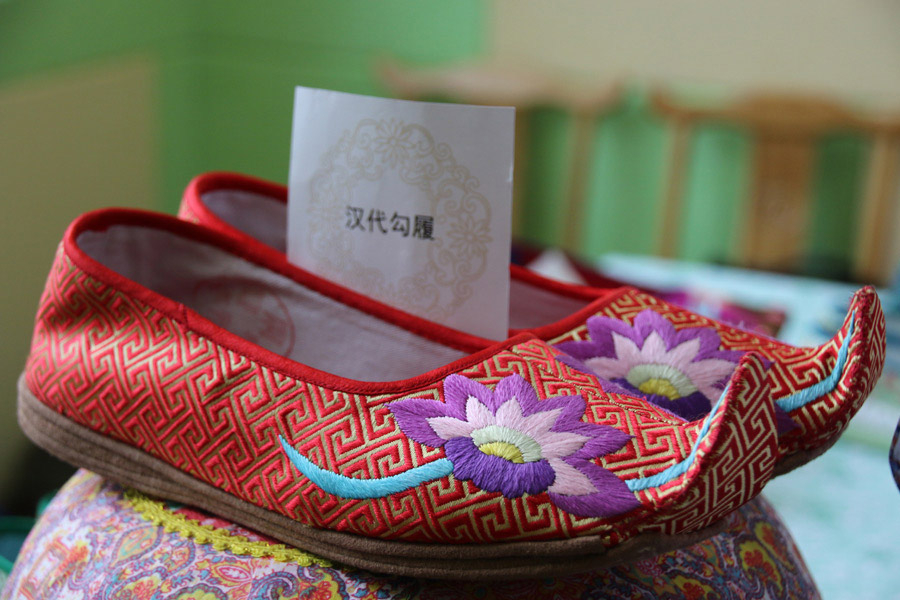
This pair of shoes by Wang Guanqin features the pattern popular during the Han Dynasty (206 B.C.-AD 220). /Chinadaily Photo
This pair of shoes by Wang Guanqin features the pattern popular during the Han Dynasty (206 B.C.-AD 220). /Chinadaily Photo
"Pigs made by machines often appear in an exaggerated way, but mine are happy pigs. No matter what angle, the pigs seem to be smiling," Wang said.
"Shoes are soulless without a cultural connotation," said Wang, who has done detailed research through continuous studies that manifest the culture of shoes in different dynasties throughout Chinese history.
In 2007, Wang's handmade embroidered shoes and her skills were included on Beijing's Intangible Cultural Heritage list. She is said to be the premier figure in Chinese embroidered shoemaking.
Her shoes have become precious gifts for special occasions, such as weddings, or been acquired.
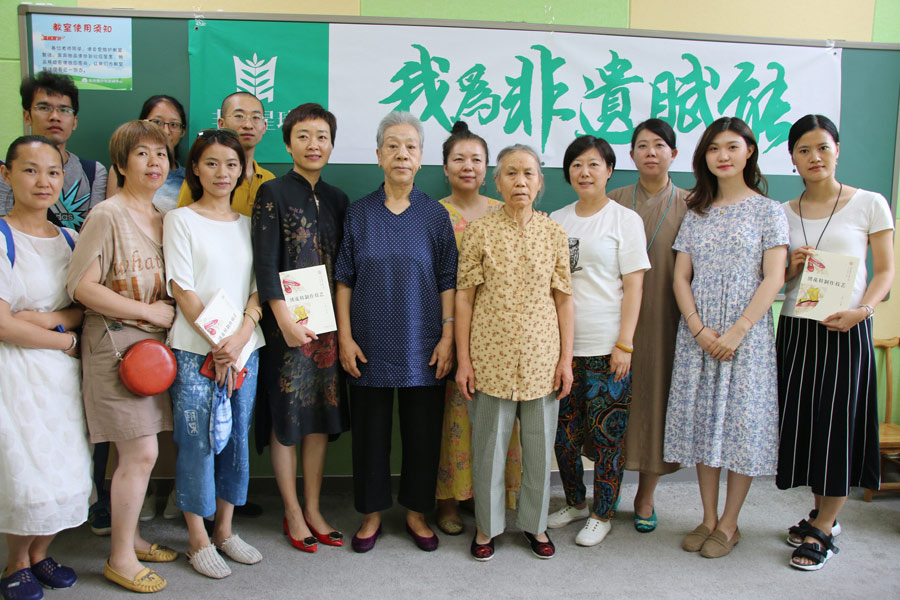
A group picture of Wang and participants in Great Seed’s intangible cultural heritage experience program in Beijing. /China Daily Photo
A group picture of Wang and participants in Great Seed’s intangible cultural heritage experience program in Beijing. /China Daily Photo
The Great Seed, a global community platform aimed at all intangible cultural heritage enthusiasts to communicate, share, experience and inherit intangible cultural heritage worldwide, is now recruiting new participants.
Through June 9, 2019, 1,000 people around the world will connect with 1,000 inheritors for an in-depth experience with different forms of intangible cultural heritages.
Source(s): China Daily