
World
14:14, 16-Jul-2018
Clean water for all is still centuries away, aid group warns
Updated
14:01, 19-Jul-2018
 ["china"]
Share







Copied
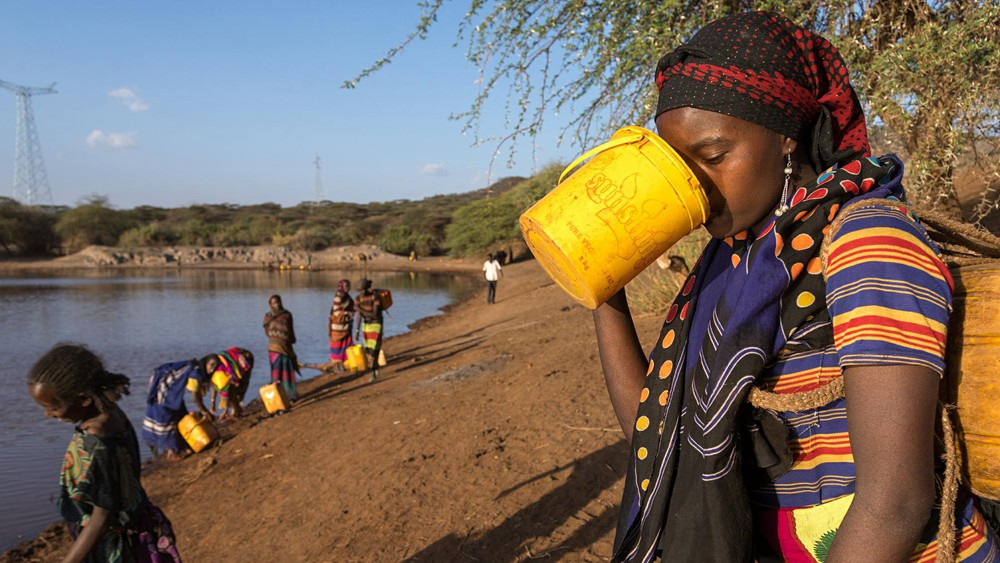
Supplying clean water and toilets for all could take hundreds of years in countries like Eritrea and Namibia unless governments step up funding to tackle the problem and its harmful effects on health, an international development agency warned on Monday.
WaterAid - which says nearly 850 million people lack clean water - predicted the world will miss a global goal to provide drinking water and adequate sanitation for everyone by 2030.
Meeting it will cost 28 billion US dollars per year, the non-profit organization said.
“Water, sanitation and hygiene is a global crisis,” said Savio Carvalho, WaterAid’s global advocacy director.
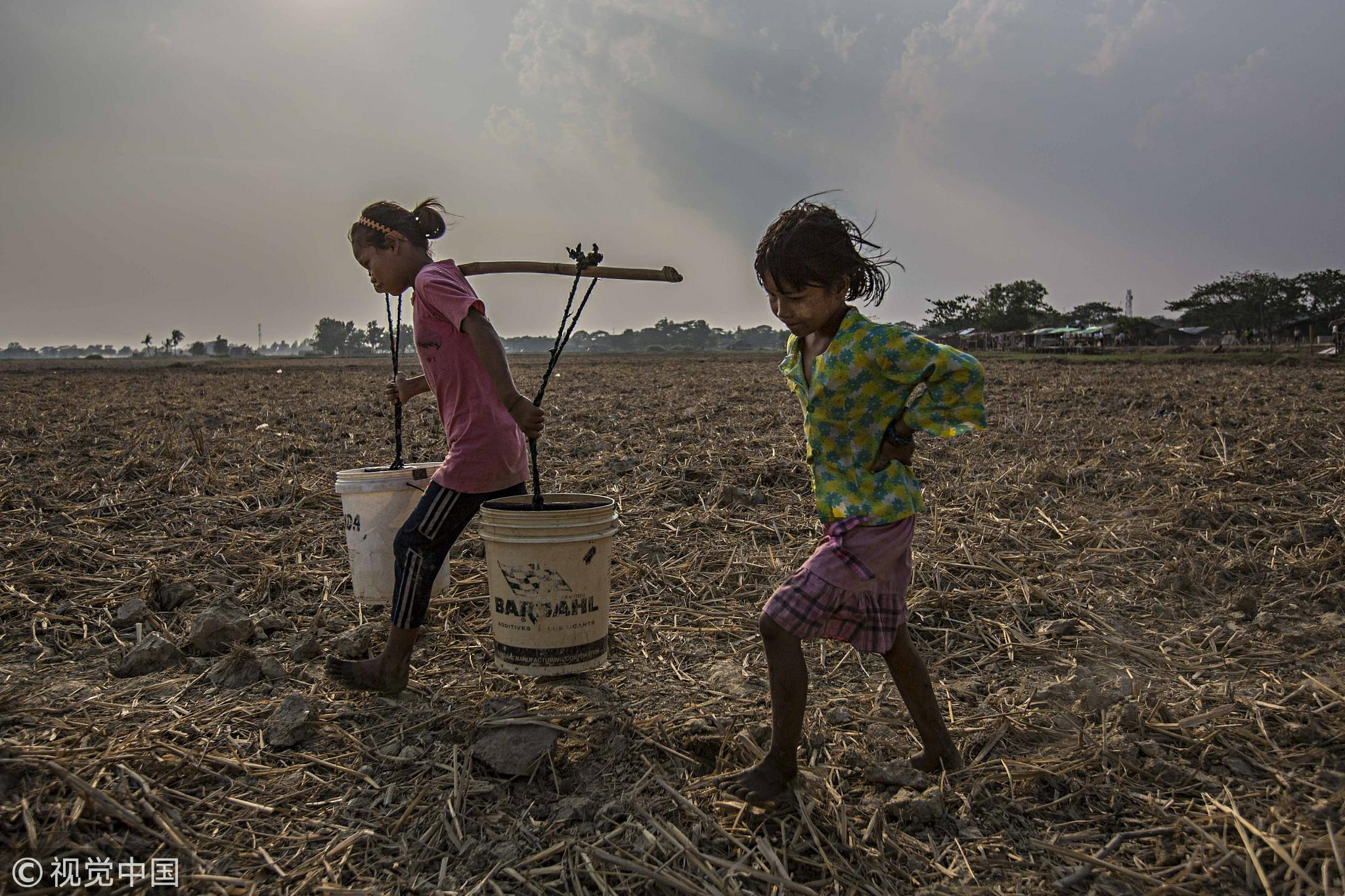
May 1, 2016: Ma Moe Thu, 11, and Zin Mar Win, 7, carry buckets of clean water across the rice paddy fields back home in Dala, Myanmar. /VCG Photo
May 1, 2016: Ma Moe Thu, 11, and Zin Mar Win, 7, carry buckets of clean water across the rice paddy fields back home in Dala, Myanmar. /VCG Photo
“We’re really calling for governments to pull up their socks,” he said.
From July 9 to 18, governments are reviewing progress on the Sustainable Development Goals, which were agreed at the United Nations in 2015, with a focus on six of the 17.
Last week, UN officials said barriers to achieving the 2030 water and sanitation targets range from conflict and water pollution to climate change, urging more efficient water use.
By the 2030 deadline, “a significant number of people” in 80 countries are unlikely to have access to clean water, while poor sanitation is expected to persist in more than 100 nations, WaterAid said.
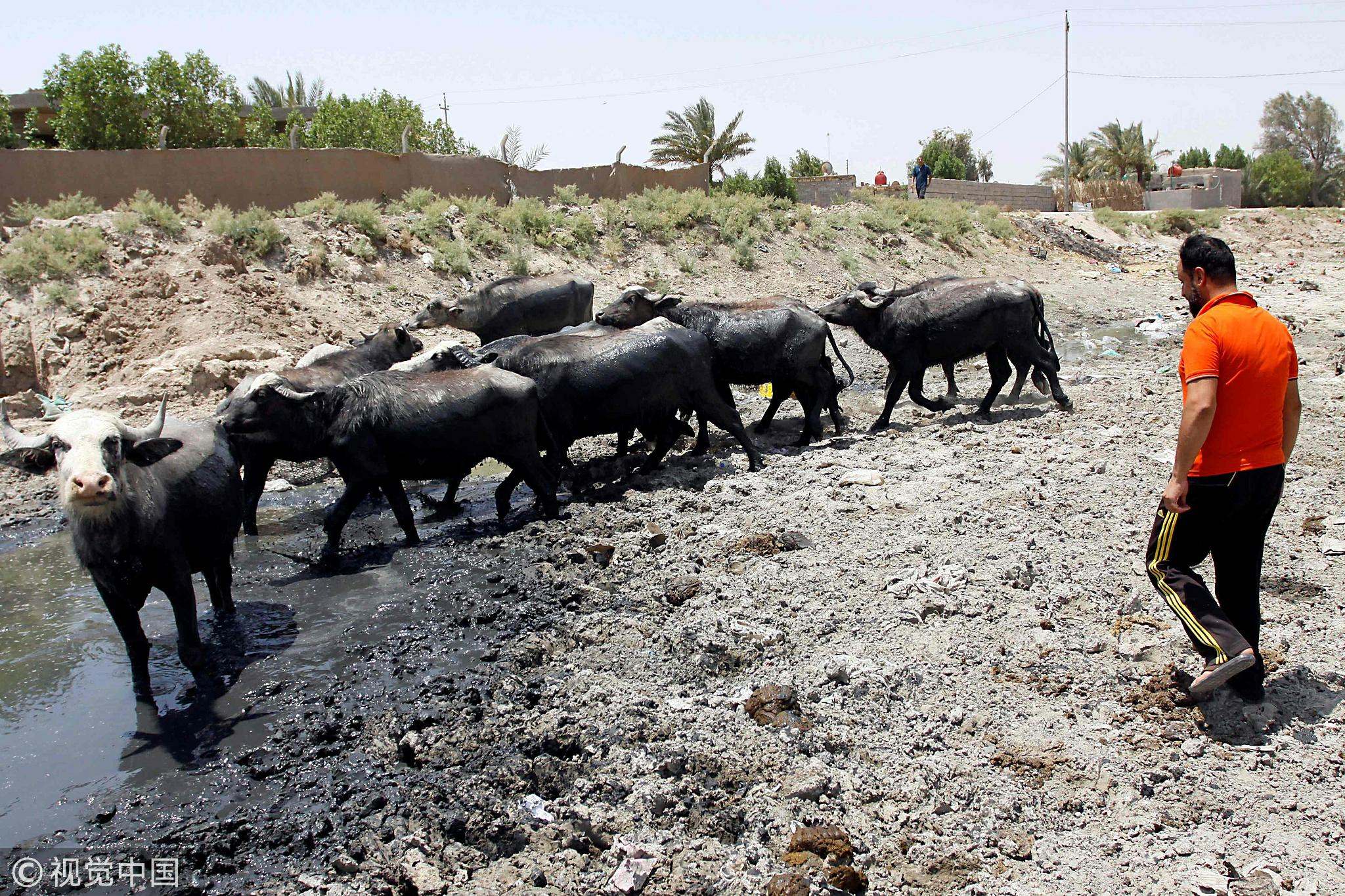
Buffaloes are seen in an empty riverbed in Umm Abbasiyat, some 60 kilometers east of Najaf, Iraq, July 5, 2018.
Buffaloes are seen in an empty riverbed in Umm Abbasiyat, some 60 kilometers east of Najaf, Iraq, July 5, 2018.
Drawing on UN data, the UK-based group calculated some countries will need hundreds of years to provide safe drinking water and toilets for all their people, meaning countries collectively are thousands of years off track.
At current rates, Namibians would have to wait until 2246 for everyone to have clean water, while all Eritreans would not get it until 2507 and Nicaraguans not until 2180, WaterAid said.
It could be 500 years before every Romanian has access to a toilet, and 450 years for Ghanaians, it added.
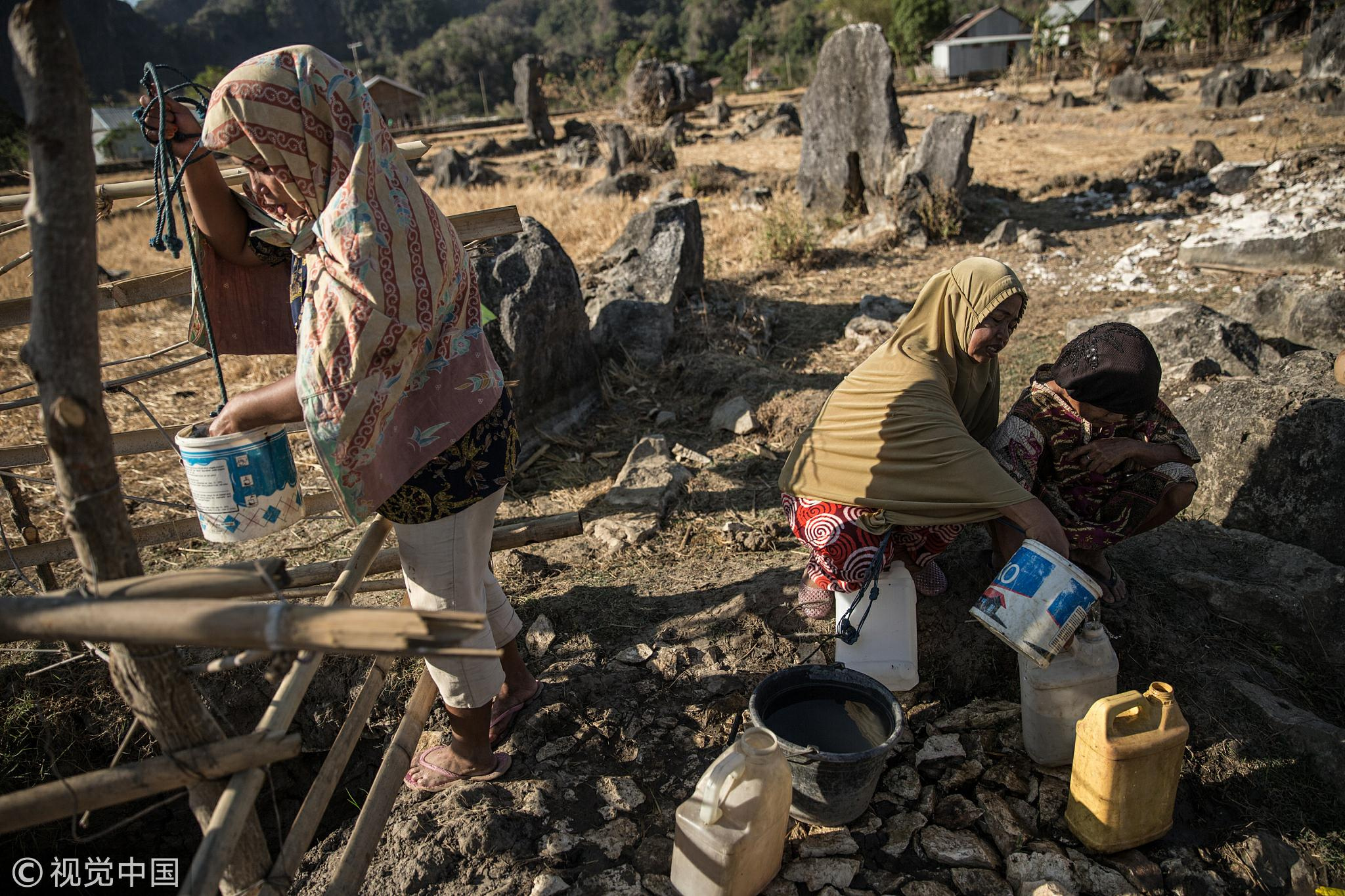
Villagers collect clean water from a lake at Leang-Leang village, Maros district, Sept. 21, 2015 in Makassar, Indonesia. /VCG Photo
Villagers collect clean water from a lake at Leang-Leang village, Maros district, Sept. 21, 2015 in Makassar, Indonesia. /VCG Photo
Governments should fund water and sanitation provision from their own budgets, and work with utilities and private companies to reach people in isolated areas, said Carvalho.
“There’s money around - it’s just not allocated in the right way,” he said, urging international donors to increase spending on water and sanitation.
Other global goals to ensure healthy lives, reduce inequality and end poverty will be jeopardized until access to water and sanitation is prioritized, noted Carvalho.
WaterAid quoted World Bank data showing the knock-on effects of inadequate sanitation - which causes child deaths from poor hygiene and preventable disease - cost 220 billion US dollars in 2015.
Some countries, including Rwanda and India, have made substantial headway towards the water and sanitation goal, but sustaining progress remains a challenge, said Carvalho.
(Cover: Borana tribe woman drinks water taken from a reservoir used for animals, Oromia, Yabelo, Ethiopia. /VCG Photo)
Source(s): Thomson Reuters Foundation