
Opinion
12:07, 15-May-2019
Theresa May's Brexit vote by 'stealth' won't work
Updated
13:11, 15-May-2019
 ["china"]
Share







Copied

Editor's note: Tom Fowdy is a British political and international relations analyst and a graduate of Durham and Oxford universities. He writes on topics pertaining to China, the DPRK, the UK and the U.S. The article reflects the author's opinion, and not necessarily the views of CGTN.
The United Kingdom government announced on Tuesday evening that it would propose legislation to the House of Commons pertaining to the legal process of Brexit in the first week of June. Downing Street argues that the proposed motion is not a vote on the specific details of Theresa May's withdrawal agreement, which proved divisive among MPs and been rejected three times, but instead concerns the legal process to move forward on the implementation of Brexit as a whole and make the necessary adjustments for such within Britain's legal system.
The legislation comes amid Theresa May's effort to engage in cross-party talks and engage in a compromise on the matters of her deal, which have yet to yield any success. Given this, the government is hoping that by getting this legal aspect of Brexit across the line, MPs can then collaborate and vote on amendments on specific issues in the future, allowing Britain's departure to move forwards. As a spokesman put it, it offers "More time and space" for talks to continue.
However, as one Democratic Unionist Party MP questioned: "What has changed?" Defeated on numerous occasions, it is quite clear that the motion is an attempt to get her deal through via the backdoor by salami slicing it and fitting the legal gears of Brexit into place, hoping a "piece by piece" process with a vested faith in compromise will do the job.
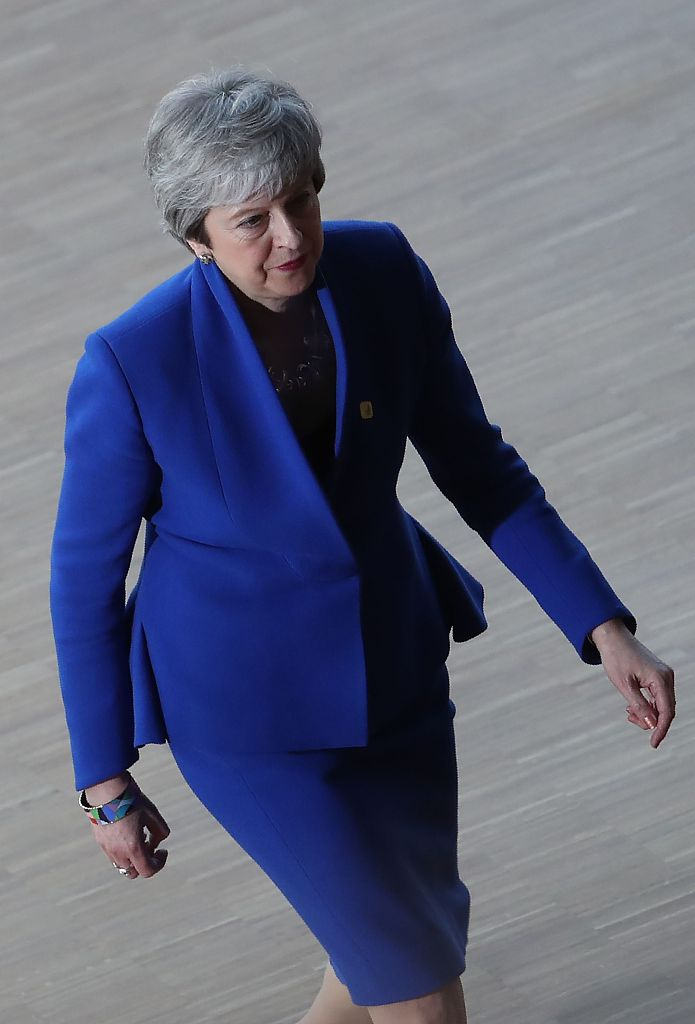
Britain's Prime minister Theresa May arrives ahead of a European Council meeting on Brexit at The Europa Building at The European Parliament in Brussels, April 10, 2019. /VCG Photo
Britain's Prime minister Theresa May arrives ahead of a European Council meeting on Brexit at The Europa Building at The European Parliament in Brussels, April 10, 2019. /VCG Photo
Yet, not all are convinced. The Labour Party is quite open that they have no confidence in the direction of talks, while many Conservative MPs remain quite adamant that the government should not give big concessions to the opposition, such as remaining in a customs union with the EU. Given this, many will perceive supporting a Brexit legal process bill will hand Theresa May the initiative and in turn, will be hesitant to offer it their support.
Finding the "Meaningful vote" on her Brexit deal defeated not once, twice, but three times, the Prime Minister has sought to plead with other parties to carve out a common consensus on moving forward with some form of Brexit. As a result, the Conservative Party have spent more than a month attempting to negotiate with the Labour Party. This has not been successful.
The problem, of course, is simple politics itself. The Labour Party does not see an incentive to support what they described on Tuesday as a "disintegrating" government. From prolonging Prime Minister's plight, the Labour Party is able to gain the initiative and political capital. They would not be willing to support any deal without massive concessions to her deal, most of which the Conservatives find untenable.
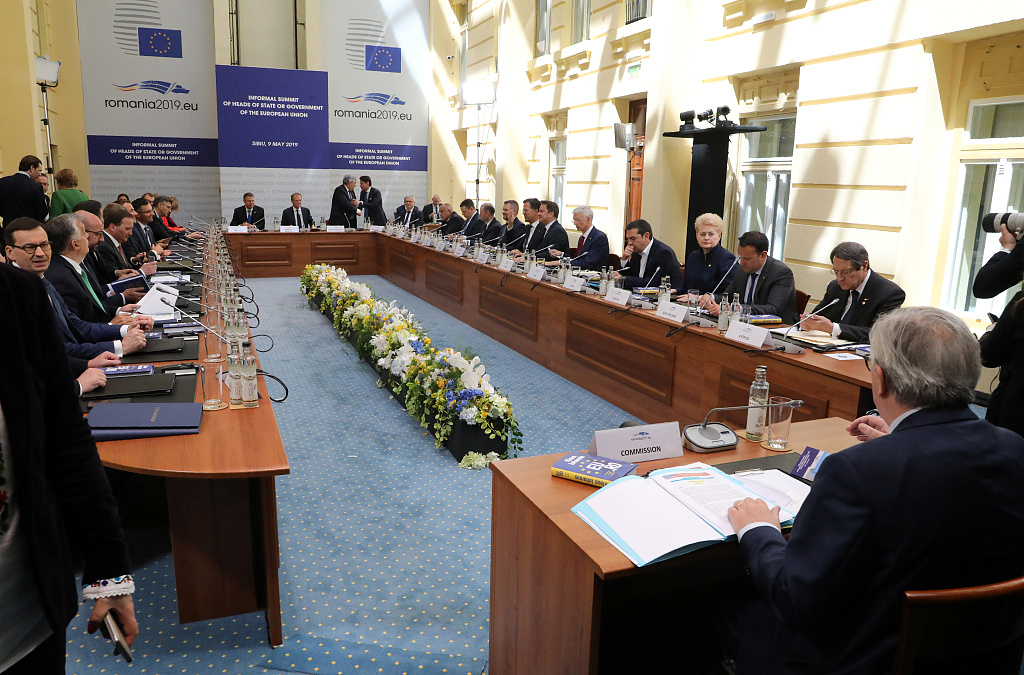
A general view shows the informal meeting of European Union leaders in Sibiu, Romania, May 9, 2019. /VCG Photo
A general view shows the informal meeting of European Union leaders in Sibiu, Romania, May 9, 2019. /VCG Photo
Yet, this hasn't stopped Theresa May from being persistent in her Brexit position. Her newest tactic now, as this vote suggests, is to try and get the Brexit ball rolling via a legal process now, kick the can of contentious issues down the road and then "make compromises later." Essentially, the logic of this vote is to get Brexit moving forwards and therefore obligate both sides, both her party and the opposition, into finding common ground. Thus she believes a vote on moving the legal procedures of Brexit forwards will hand her the initiative by default. In doing so, she is asking all around her the subtle question of "do you want Brexit or not?"
However, this again is based on clutching straws and wishful thinking. Pushing the contentious issues of Brexit aside does not remove them from people's minds, and in turn, numerous MPs are not going to vote for something which knocks their position out of the game.
First of all, although Labour's Brexit position is divided, confused and indecisive, the party as a whole will continue to find political value in derailing the process to undermine the Prime Minister. Thus, it has been made clear already they will not support anything without a "cross-party deal" beforehand, which means compromises now and not later.
Similarly, Eurosceptic MPs also are going to remain firm in preventing the deal they despise from getting in by stealth. It remains in their political objectives to bring Theresa May to defeat with a view of changing the leadership. The other parties will oppose it regardless.
So as a whole, what does this new proposal and strategy by the Prime Minister really offer? Nothing. The new vote is an attempt to obligate parliament towards the common goal of Brexit whilst trying to push the contentious issues further down the line. However, this is politics and nobody opposed to the Prime Minister will be so naïve to simply hand her the initiative when big things remain at stake for them. Thus, we shouldn't expect this Brexit "Legal" bill to truly change anything. It's a stealth attempt to push through the same deal nobody really wants.
(If you want to contribute and have specific expertise, please contact us at opinions@cgtn.com)