
Opinion
07:51, 31-May-2019
Don't get too confident about Trump's impeachment
 ["china"]
Share







Copied
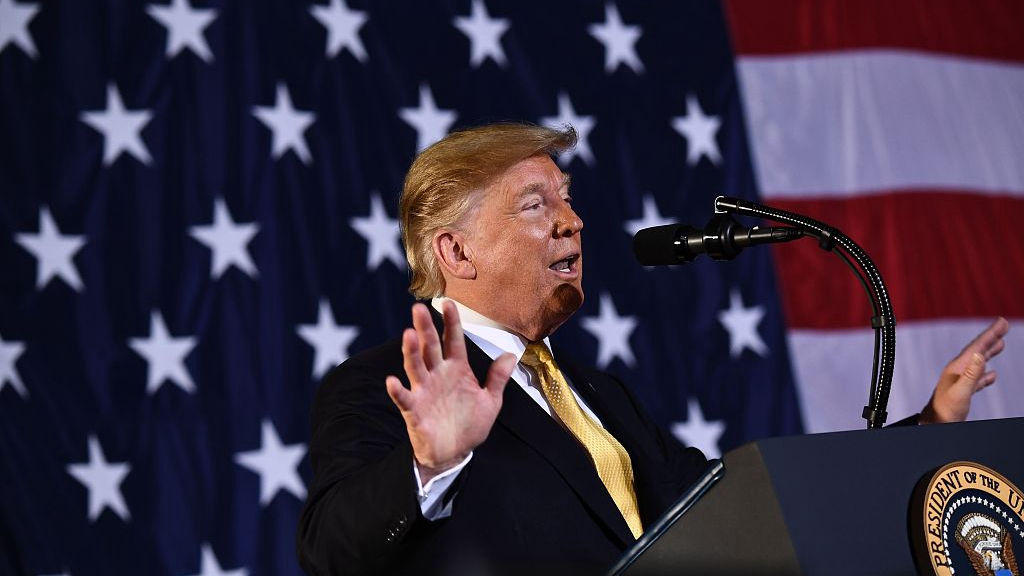
Editor's Note: Tom Fowdy is a British political and international relations analyst and a graduate of Durham and Oxford universities. He writes on topics pertaining to China, the DPRK, Britain, and the United States. The article reflects the author's opinion, and not necessarily the views of CGTN.
Wednesday night saw Robert Mueller announce the end of his two-year role as U.S. special counsel overseeing investigations into allegations of Russian interference in U.S. elections. In doing so, he made a serious of statements which took the U.S. public by surprise: That he was not able to pursue any charges against Donald Trump because to do so against a sitting president was unconstitutional.
He made it explicit that if the investigation was to be carried out further, such would require a "process other than the criminal justice system to formally accuse a sitting president of wrongdoing."
Mueller's initial report had previously found that whilst there was not enough direct evidence to accuse the president of a criminal conspiracy, nevertheless, he was not completely exonerated.
Several leading Democrats, including presidential candidates Cory Booker, Kirsten Gillibrand, and Pete Buttigieg, have moved to interpret the statement as saying Mueller was indirectly recommending an impeachment process for Donald Trump. Bernie Sanders also said he would support such a decision.
However, House Democrat speaker Nancy Pelosi appears to have shown hesitation towards the idea but nevertheless noting "nothing was off the table."
Inevitably, the events provoked an angry response from Trump on Twitter, stating: "Nothing changes from the Mueller Report. There was insufficient evidence and therefore, in our Country, a person is innocent. The case is closed! Thank you."
So the question is, what happens now? This is the seemingly the accumulative endgame of a saga that has lasted over two and a half years and has dogged American politics.
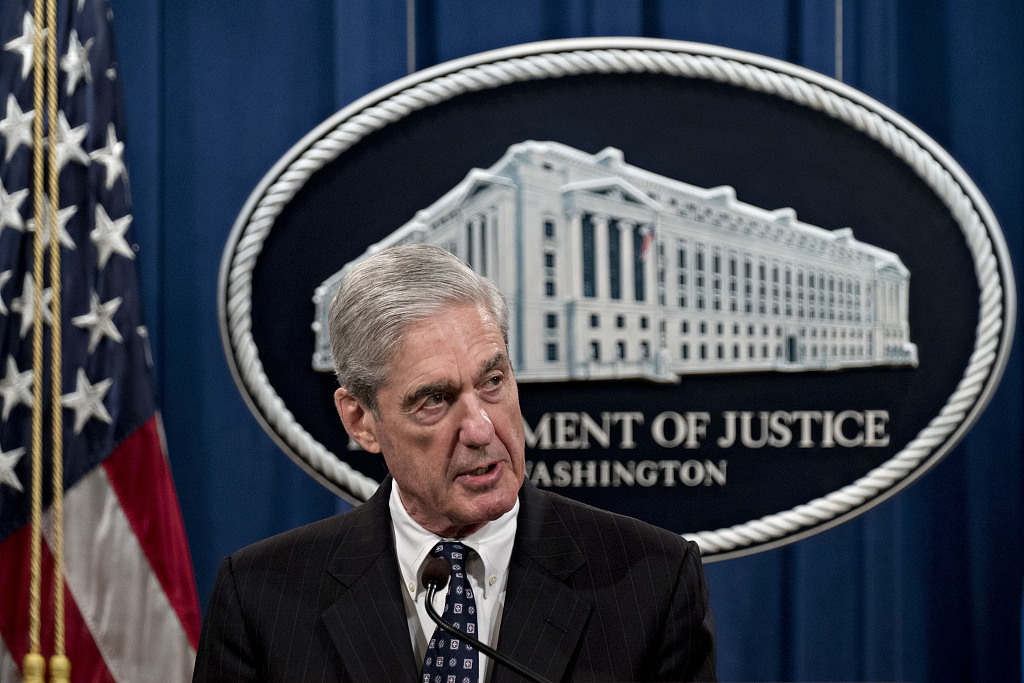
Robert Mueller, special counsel for the U.S. Department of Justice, speaks at the Department of Justice (DOJ) in Washington, D.C., U.S., May 29, 2019. /VCG Photo
Robert Mueller, special counsel for the U.S. Department of Justice, speaks at the Department of Justice (DOJ) in Washington, D.C., U.S., May 29, 2019. /VCG Photo
The Mueller probe has been the primary avenue of attack against the Trump administration and the preferred choice of weapon to delegitimize his politics.
However, impeachment does not mean a removal, only an investigation. With the Senate firmly in favor of the Republican Party and still unclear evidence as to whether Trump himself has committed a crime, his critics should be cautious of over-celebrating these developments.
In obsessing over Mueller, it should also be noted that his opponents are failing to scrutinize him in a number of crucial areas; which may serve to empower Trump if this all comes to nothing.
First of all, what is impeachment? Many automatically associate the term with the outright removal of the sitting president from power. However, it, in fact, refers to a form of investigation whereby high-ranking officials in the United States can be trialed by Congress and if proven guilty, they are removed from office.
This has two stages. Firstly, the U.S. Constitution specifies that the House of Representatives is vested with the "sole power of impeachment," meaning the House (led by Nancy Pelosi) has the exclusive privilege of opening proceedings.
The criterion concerns accusations of: "treason, bribery, or other high crimes and misdemeanors" – the specific definitions of which are not elaborated on and vested in Congress to interpret.
Secondly, whilst the House of Representatives can open proceedings, it is nevertheless the Senate who is constitutionally assigned to conduct the investigation and vote upon its conclusions.
This means that whilst Nancy Pelosi with a Democrat majority can push through an impeachment should she take it to a vote, nevertheless the next stage is vested within the Republican majority Senate.
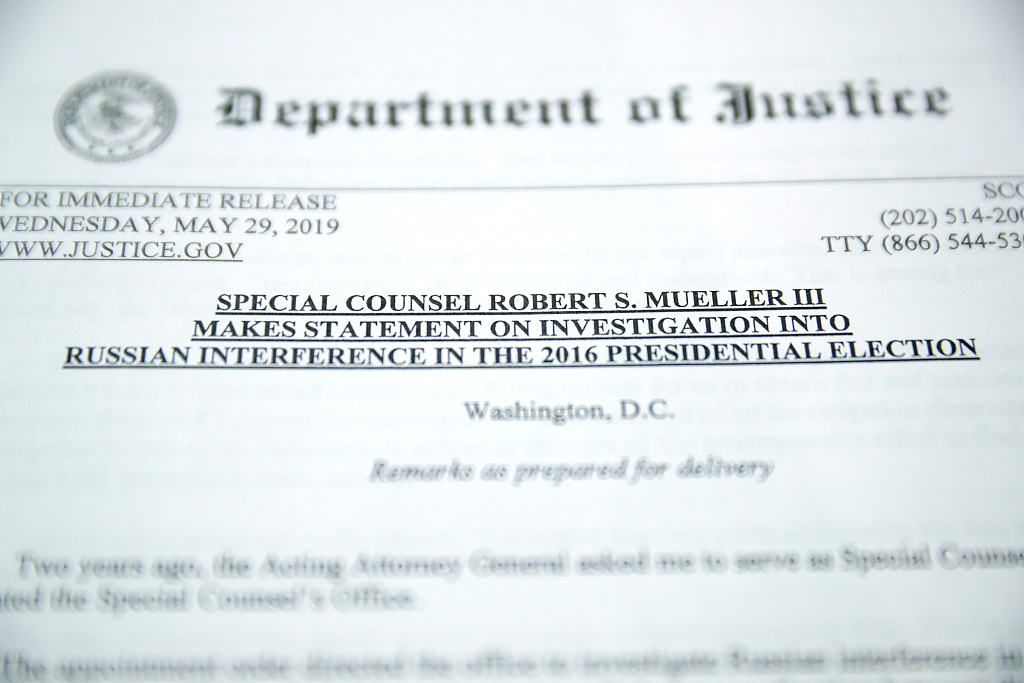
A copy of Mueller's statement about the alleged Russian investigation is made available to reporters at the DOJ in Washington, D.C., U.S., May 29, 2019. /VCG Photo
A copy of Mueller's statement about the alleged Russian investigation is made available to reporters at the DOJ in Washington, D.C., U.S., May 29, 2019. /VCG Photo
As a result, critics who are hoping for Trump's impeachment should not celebrate just yet; it doesn't guarantee nor preclude his removal from office. With the evidence against the president also still seemingly lacking, again nothing is confirmed.
As a result, the overwhelming emphasis upon the Mueller probe as the primary route of attack against Trump's presidency could easily backfire. The president could be impeached and then possibly exonerated, immediately empowering him against his opponents.
In the process of obsessing with it, his critics have failed to adequately confront the president's policies in a number of areas, including his immigration policy, his assault on the environment, his self-harming foreign policies and so on.
Most of these initiatives have been ignored with big political capital vested in the belief that he can be ousted quickly and swiftly. But will it pay off? The Republican Senate might be very well out to ensure that it doesn't.
In summary, all the cards have been placed on the table and the endgame of the Mueller saga is approaching. There is hope amongst some that it will finish Trump for once and for all.
But any shrewd observer and anyone also mindful of the abject hysteria and public "shaming" which dominates U.S. politics, would be wise to hedge their bets and keep a cool open mind about it all.
The next few months will certainly either make or break the Trump presidency, but to certainly assume that it is over right now is at best naive and overreaching.
(If you want to contribute and have specific expertise, please contact us at opinions@cgtn.com.)