
Business
11:55, 12-Jul-2018
Markets, metals and soybeans slump on tariff threats
Updated
11:54, 15-Jul-2018
 ["china","north america"]
Share







Copied

Global markets and commodity prices all suffered heavy losses on Wednesday, after the US threatened to slap a further round of tariffs on 200 billion US dollars’ worth of Chinese goods.
The latest threats, described by China’s Ministry of Foreign Affairs as “typical trade bullying,” pushed down oil and metal prices, as well as sending soybean prices to a 10-year low, as the rhetoric from the Trump administration continues to spark concern among investors, US farmers and businesses.
Stock markets down on tariff threats
As news of the latest US tariff plan emerged during morning trading in Asia, benchmarks in Shanghai, Hong Kong and Japan all fell. The Shanghai Composite ended the day down by 1.76 percent, the Hang Seng Index fell 1.29 percent and the Nikkei tumbled 1.19 percent.
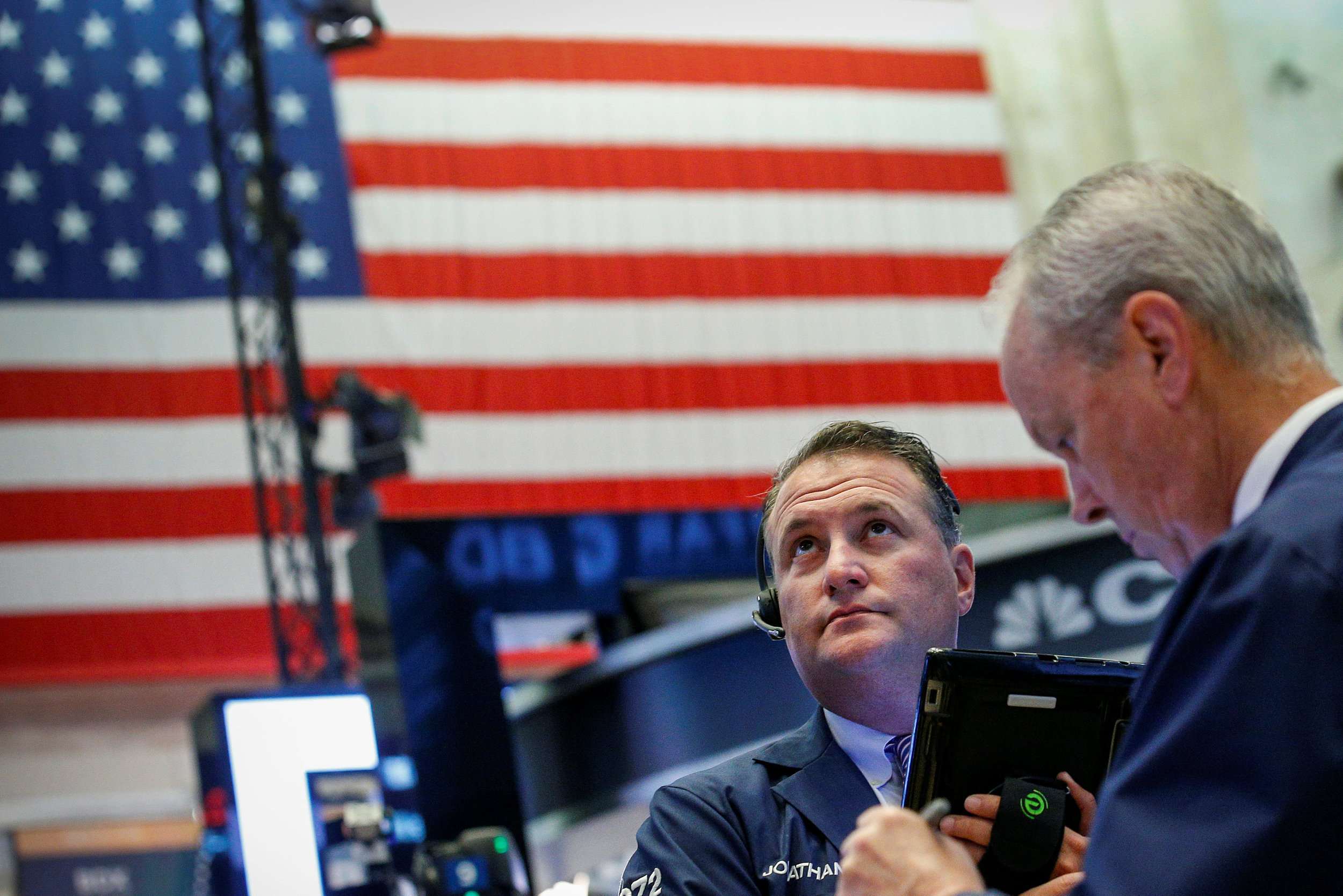
Traders work on the floor of the New York Stock Exchange (NYSE) in New York, July 11, 2018. /VCG Photo
Traders work on the floor of the New York Stock Exchange (NYSE) in New York, July 11, 2018. /VCG Photo
Investors across Europe and in the US echoed the negative sentiments, with the FTSE 100 falling 0.74 percent and the Dow Jones suffering a 0.52 percent hit.
Stocks in companies particularly exposed to China-US trade tensions were hit particularly hard, with construction equipment company Caterpillar down 2.8 percent, and aircraft manufacturer Boeing down 1.89 percent.
Chinese e-commerce giant Alibaba, listed on the New York Stock Exchange, fell 2.66 percent, and tech conglomerate Tencent continued its drop on the Hang Seng Index, falling by more than 8.4 percent in the past month.
Soybeans slump as concerns grow for US farmers
Soybean prices reached their lowest since 2008, hitting 8.55 US dollars per bushel to extend a 13 percent drop over the course of 2018.
American farmers have repeatedly warned the Trump administration against tariffs, with a statement last week from the American Soybean Association telling the president “The math is simple. You tax soybean exports at 25 percent, and you have serious damage to US farmers.”
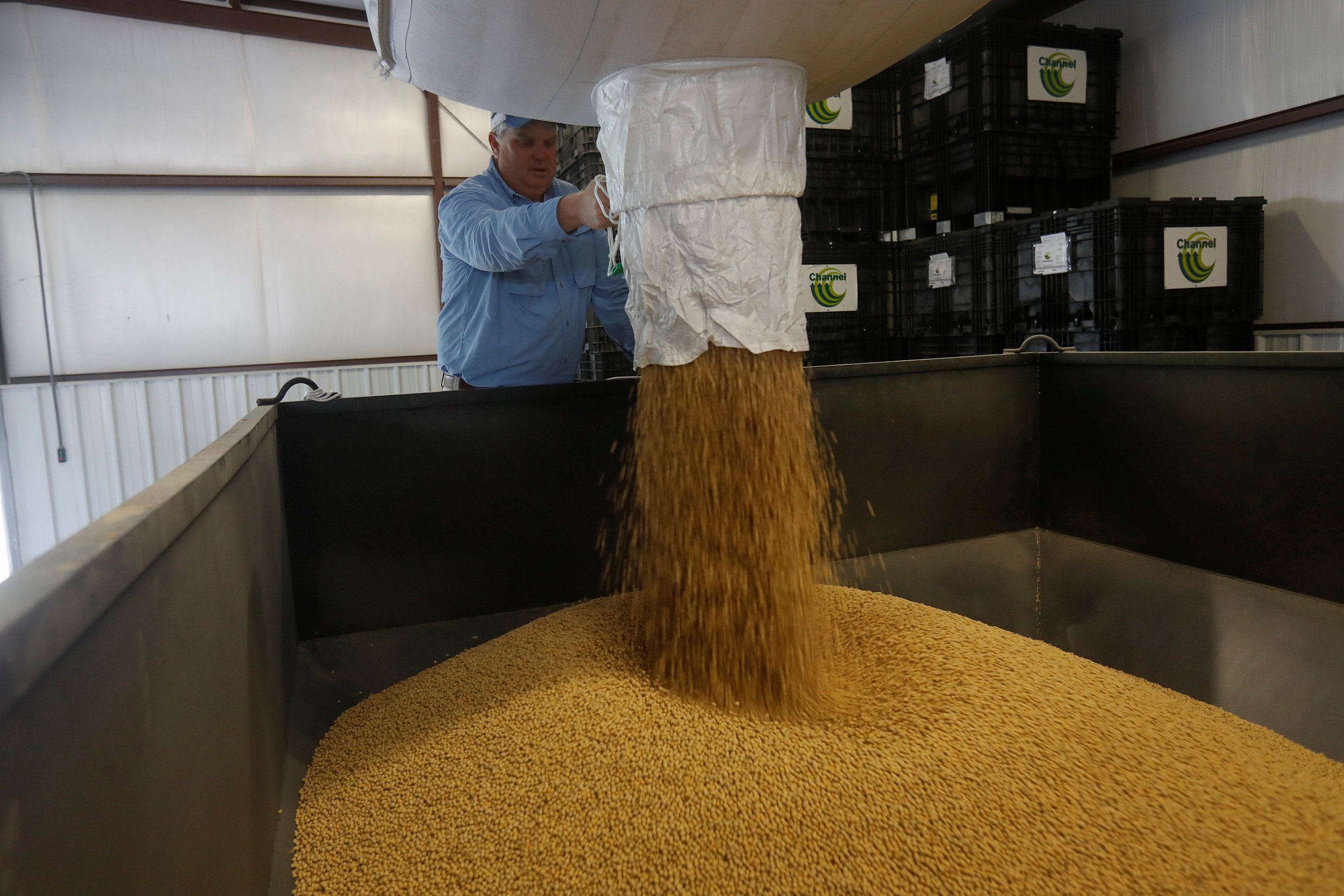
US farmers have repeatedly warned the White House against starting a trade war. /VCG Photo
US farmers have repeatedly warned the White House against starting a trade war. /VCG Photo
President Trump himself sought to ease farmers’ concerns through Twitter on Wednesday, posting “I am in Brussels, but always thinking about our farmers. Soy beans fell 50% from 2012 to my election. Farmers have done poorly for 15 years. Other countries’ trade barriers and tariffs have been destroying their businesses. I will open things up, better than ever before, but it can’t go too quickly. I am fighting for a level playing field for our farmers, and will win!”
The 10-year-low in prices that followed Trump’s tweet suggested the US agricultural sector is not sharing the same optimism as the president.
Oil, metals fall in commodities drop
Brent crude saw its biggest drop since February 2016, falling 6.9 percent in Wednesday trading. In addition to concerns over the US tariffs plan, Xinhua reported that the lifting of a force majeure on four Libyan ports was another significant factor.
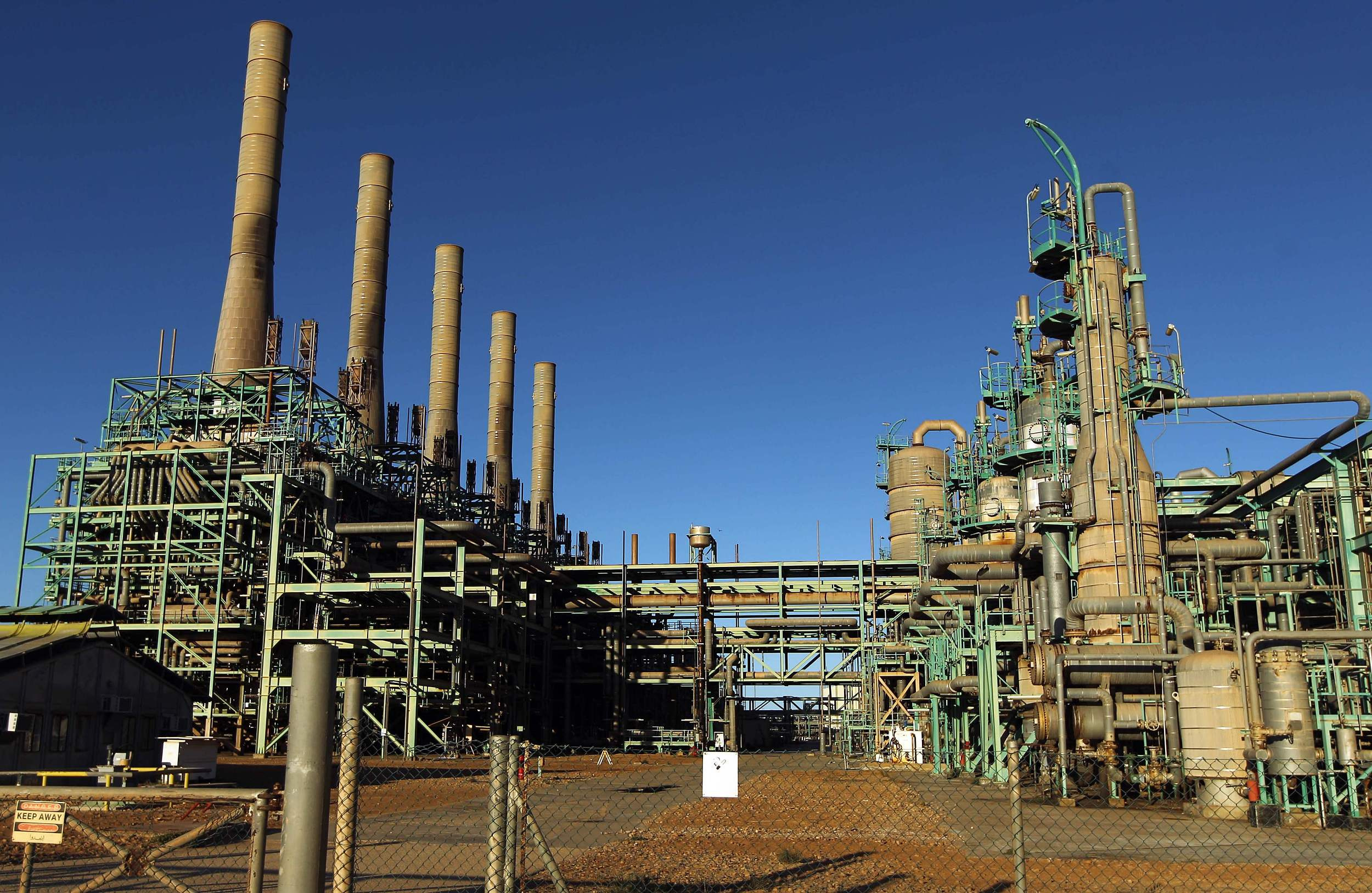
Libya is resuming oil exports from its eastern production heartland, its National Oil Corporation said on July 11, 2018, after a showdown between the war-torn country's rival authorities. /VCG Photo
Libya is resuming oil exports from its eastern production heartland, its National Oil Corporation said on July 11, 2018, after a showdown between the war-torn country's rival authorities. /VCG Photo
That increase in production, coupled with confirmation from the Organization of Petroleum Exporting Countries (OPEC) that Saudi Arabia raised production by more than 400,000 barrels per day last month, sent oil below 74 US dollars per barrel.
Despite increases to production in Saudi Arabia and Libya, OPEC also reported on Wednesday that output in Venezuela "crashed to a new 30-year low of 1.5 million barrels a day in June."
Other commodities all saw significant falls, with copper and nickel falling 3 percent and zinc down by as much as 6 percent at one point.