
China
21:57, 28-Apr-2018
Chinese university professor claims that smartphones' damage to climate is 'exaggerated'
 ["china"]
Share







Copied

When talking about climate change, most people think of the pollution from petrochemical and steel smelting. However, a new study by researchers from the McMaster University in Canada may have to overturn your perception.
"We found that the consumption of the information and communications technology industry as a whole was growing but it was incremental," said Lotfi Belkhir, associate professor at McMaster.
Does the usage of smartphones really contribute to global warming? The technology daily reporter interviewed an expert.
Professor He Liangnian from Nankai University in the northern Chinese city of Tianjin has denied the Canadian researcher’s claim that smartphones contribute to climate change, saying that whether climate change is affected directly by emissions still needs research.
"This research is not specifically aimed at smartphones, and the report tracks the carbon footprint and trends to 2040, smartphones usage is only a part of it," He said. According to the report, smartphone usage accounted for 4% of the world's carbon emissions in 2010, it will rise to 11% in 2020.
In Professor He’s view, the news was "exaggerated." "Climate change is a complex issue, whether it has a direct relationship with carbon emissions remains to be seen, and it is difficult to make it clear with an applied research report."
While not entirely endorsing the idea that the usage of smartphones is a global warming driver, Professor He does believe that the discarding process relating to smartphones does increase carbon emissions.
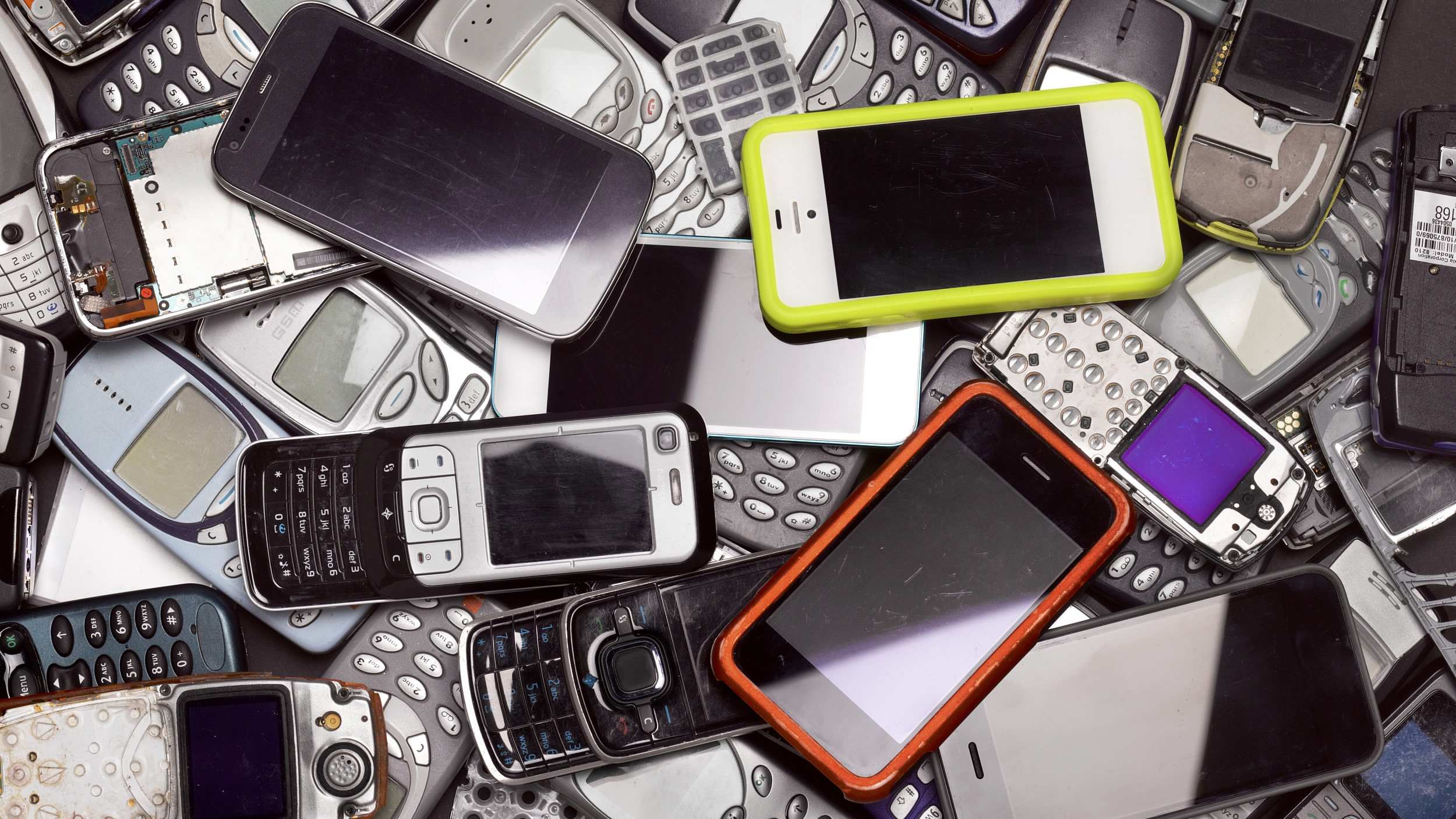
Disposed smartphones /VCG Photo
Disposed smartphones /VCG Photo
"Like an iceberg floating on the surface of the sea, only a small fraction of it is visible, and most of it is hidden under the water. So is the carbon footprint of smartphones,” He said. The "full life cycle" of smartphones should be considered when calculating the amount of carbon emitted from production to disposal.
Early in 2011, China officially implemented regulations for recycling electrical and electronic products, but smartphones were not included. The absence of regulations for smartphone recycling has become a grey area.
Professor He suggested that "we should advocate public environmental protection and conservation awareness and encourage users to actively reduce the frequency of mobile phone replacement and reduce the frequency of use. It will strengthen the binding force in the production and recycling process and encourage enterprises to make bold innovations that use more recycled materials and environmentally friendly components.”