
World
12:14, 10-Aug-2018
Fight continues after Argentina rejects bill to legalize abortion
Updated
11:44, 13-Aug-2018
 ["other","South America"]
Share







Copied
South of the Congress in central Buenos Aires, sky-blue scarves of the pro-life camp filled the streets.
To the north, it was the green of the pro-choice camp.
Wednesday night saw a historic vote on legalizing abortion in Argentina, a country with same-sex marriage and women’s rights at the vanguard of social rights legislation in Latin America.
But with abortion, at least for now, that tradition did not continue.
Senators voted 38-31 not to legalize abortion, despite campaigners estimated that over 1.5 million people were on the streets demanding it be made legal.
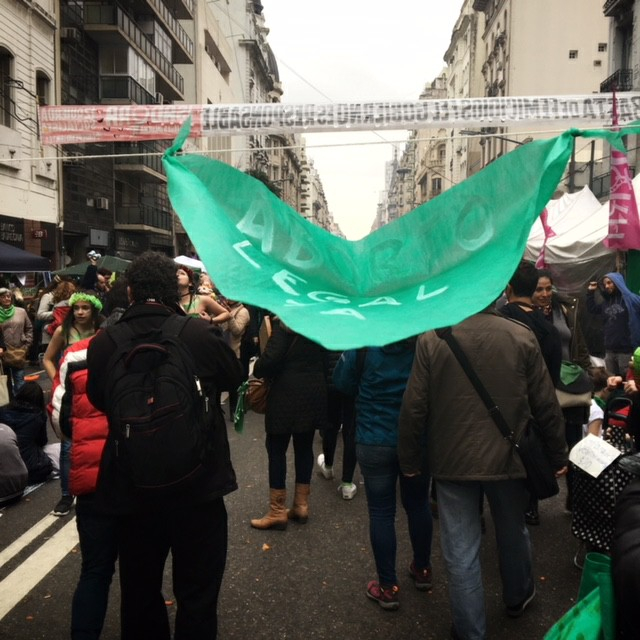
Abortion rights activists fly a pro-legalization scarf during Wednesday's march in Buenos Aires. /CGTN Photo
Abortion rights activists fly a pro-legalization scarf during Wednesday's march in Buenos Aires. /CGTN Photo
The new bill proposed legal abortions up to 14 weeks into a pregnancy.
In Argentina, terminating a pregnancy is only legal in cases of rape or if the woman’s life is in danger.
National statistics suggest there are hundreds of thousands of abortions every year, and complications from illegal abortion procedures are the main cause of maternal death.

Activists in favor of legalizing abortion comfort each other outside the National Congress in Buenos Aires after senators rejected a bill to legalize abortion, August 9, 2018. /VCG Photo
Activists in favor of legalizing abortion comfort each other outside the National Congress in Buenos Aires after senators rejected a bill to legalize abortion, August 9, 2018. /VCG Photo
Many countries in Latin America enforce outright bans on abortion. Only Cuba, Uruguay and Guyana have legalized it. So with this vote the world’s spotlight was cast on Argentina.
Despite defeat in the Senate, campaigners said there is a new aspect of the pro-choice movement.
“The demand for legal abortion is especially popular amongst teenagers,” activist and academic Cecilia Palmeiro told CGTN.
“An important component of the feminist tide is the youth, especially high school students,” she said.

A pro-choice activist demonstrates near the Senate in Buenos Aires, August 9, 2018. /VCG Photo
A pro-choice activist demonstrates near the Senate in Buenos Aires, August 9, 2018. /VCG Photo
Pro-life campaigners and supporters maintain their campaign is the defense of basic rights.
“In a pregnancy we are not talking about one body, we are talking about two,” said 23-year-old primary school teacher Ana.
“We must defend rights of the baby in the woman, but also my rights as a woman. That is why we want to save both lives: the woman's and the unborn baby's.”

Anti-abortion rights activists celebrate after lawmakers voted against a bill to legalize abortion in Argentina, Buenos Aires, August 9, 2018. /VCG Photo
Anti-abortion rights activists celebrate after lawmakers voted against a bill to legalize abortion in Argentina, Buenos Aires, August 9, 2018. /VCG Photo
The Argentine government must take credit for opening the debate on the subject of abortion that for many years has been taboo, although its most senior members do not support legalization.
Argentina is due to reform its criminal code later this month and abortion may be decriminalized in that reform. But many Argentines will continue to demand more easing of the country’s strict abortion laws.
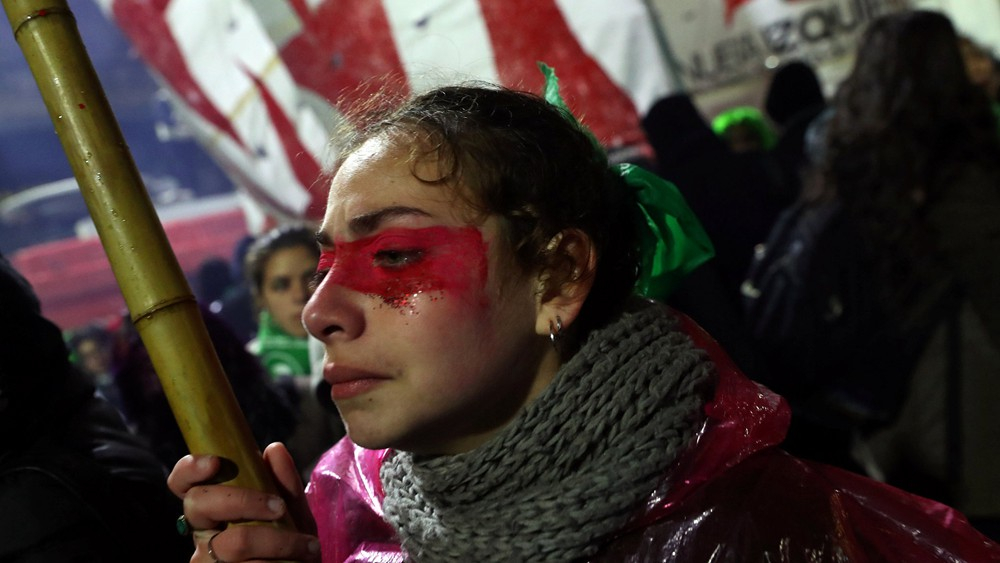
(Top image: An abortion rights activist leaves after senators rejected a bill to legalize abortion in Argentina, Buenos Aires, August 9, 2018. /VCG Photo)