
World
11:57, 25-Jul-2018
Refugee artists try to get their voices heard in Paris art world
Updated
11:51, 28-Jul-2018
 ["china"]
Share






Copied
Mohammed Abakar wants to change the public conversation about African asylum seekers in France.
He arrived two years ago from Sudan, enrolled in art college after being granted asylum, and is now working as a photographer, focusing his lens on the everyday lives of migrants that most French people very rarely see.
His camera can get inside government-run residences for asylum applicants, where journalists are rarely allowed to shoot.
“I wanted to show what refuges for migrants here in France are really like”, he told CGTN. “They’re so tiny; they’re like prison cells, so they are difficult to live in.”
His pictures highlight the cramped, impersonal nature of the spaces, where asylum applicants sleep as many as four to a room in bunks, with nowhere to put their personal belongings.

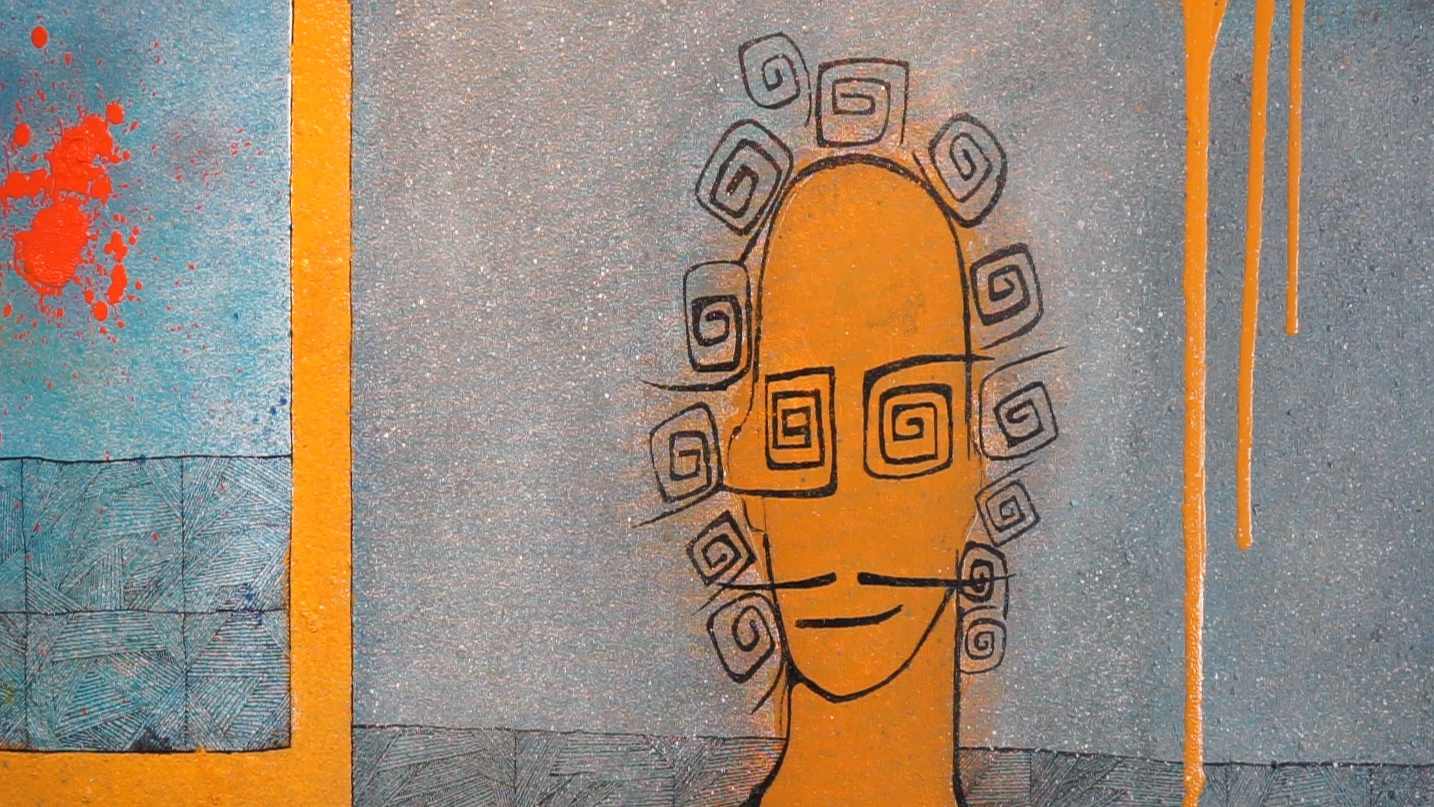
Painting by Mohammed Abdulatief /CGTN Photo
Painting by Mohammed Abdulatief /CGTN Photo
Abakar also invites recent migrants to come to his studio for portraits in the traditional dress of their home countries, aiming to highlight the artistic richness of their diverse origins.
That studio is at the Atelier of Artists in Exile – an art workshop in the north of Paris set up one year ago by theater producer Judith Depaule, after she met a Syrian theater group who were well-known in their home country, but once in Paris, had found themselves with no space to work in and no way to buy art materials.
“An artist who doesn't produce anything isn’t an artist, and if you’re a painter and you’re living in ten square meters shared with someone else, you can’t paint, it’s not possible”, she explained.
The Atelier helps artists to navigate their asylum applications and other administrative paperwork, and also aims to give each one of them personalized support in their artistic careers, putting on exhibitions and shows, and introducing them to people in the Paris art world who can help.
The story of Mohammed Abdulatief is one of the workshop’s success cases. He studied fine art in Sudan, but then had a difficult journey across the Mediterranean and Europe to arrive in Paris. His abstract paintings are inspired by traditional Nubian iconography, and also by his voyage. He’s shown his work in galleries in Paris and Amsterdam, and, thanks to the Atelier, even in the windows of the French culture ministry.
“The Atelier has been really helpful in promoting the work I do – creating events, exhibitions, and so on,” he said.
The project supports over 200 artists, ranging from painters to poets and dancers.
Choreographer Cleve Nitumbi is working on a hip-hop and dancehall-inspired retelling of his own journey across Europe, set to be performed by a dozen dancers in the autumn.
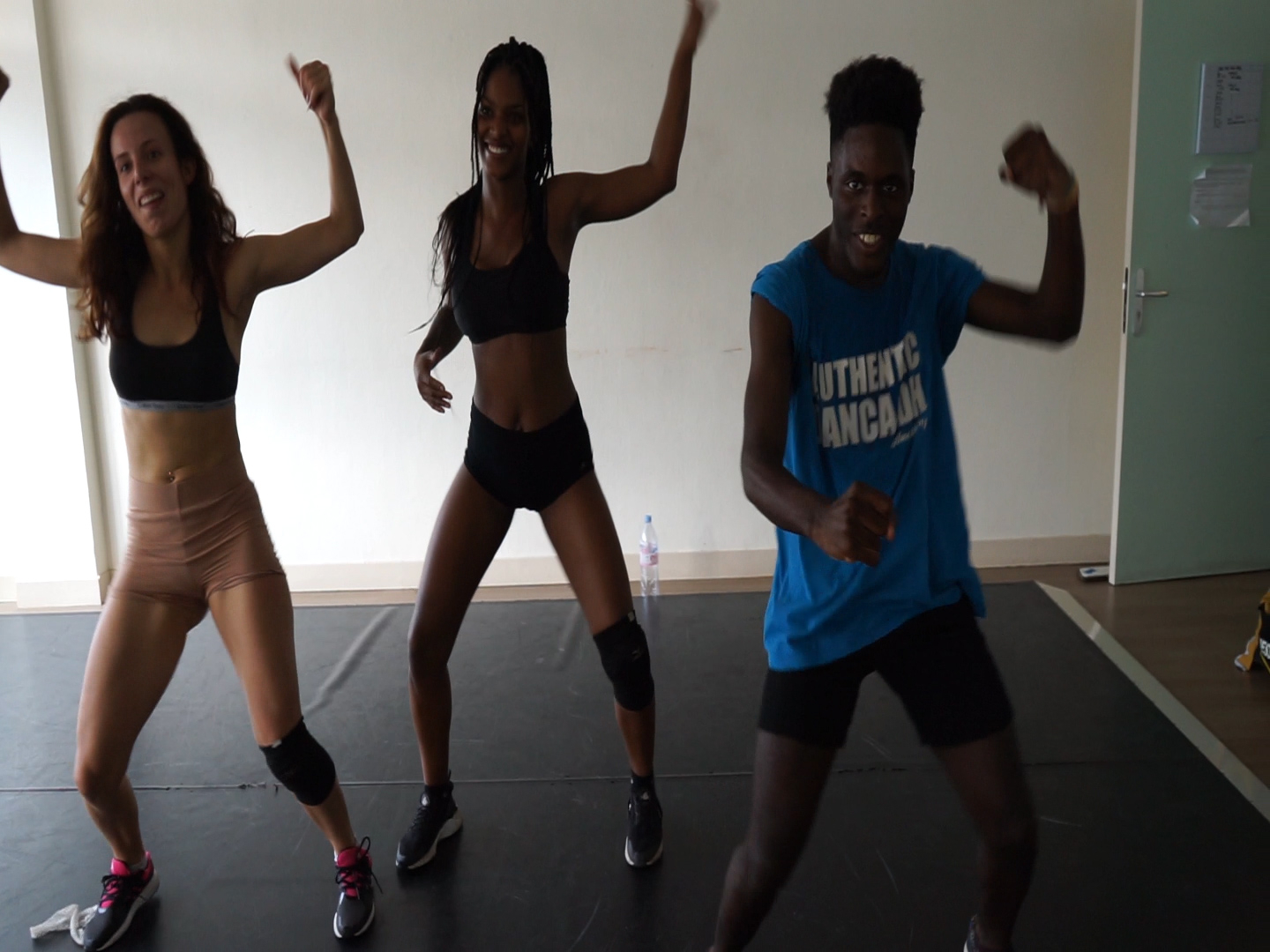
Cleve Nitumbi (R) and dancers are rehearsing. /CGTN Photo
Cleve Nitumbi (R) and dancers are rehearsing. /CGTN Photo
“I’m trying to show my own experience, but also create something in which people can recognize themselves and realize that migrants feel the same things as everyone else. I want to show them my world and share it with other people”, he said.
The Atelier has a subsidy from the city of Paris but is very reliant on local artists volunteering their time to run workshops and offering their old equipment, and on donations from the public to keep the project running.
The workshop may be short of cash, but it’s already getting the Paris art field to pay attention to the stories of migrants, told in their own voices.