
Business
19:47, 24-Apr-2018
China Green Companies Summit: China in race with US for AI dominance
 ["china"]
Share







Copied
02:14
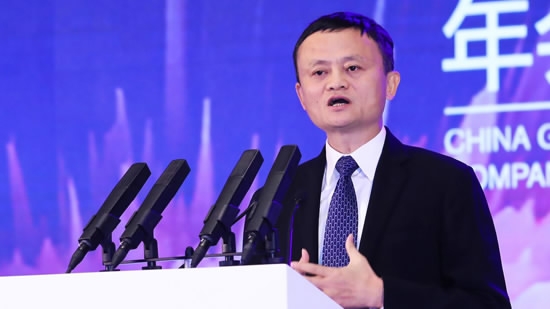
AI dominance: US or China?
Things boil down to the world's two biggest economies, again, when it comes to artificial intelligence.
As business leaders gathered in Tianjin at the ongoing China Green Companies Summit to discuss the rapidly expanding Artificial Intelligence sector and other issues, AI insiders say they're prepared to flourish in the future despite ongoing trade tensions between China and the United States.
Liang Jiaen, president of Unisound, a Beijing-based company that develops voice-recognition technology, said he believes the AI industry landscape will be dominated by either the US or China in the future. “The US has better groundwork technologies but China has advantages in terms of the scale of data it has, as well as imaginative usage of the technology.”
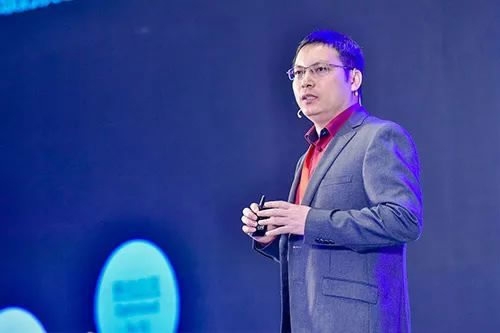
Liang Jiaen /Photo provided by China Entrepreneur Club
Liang Jiaen /Photo provided by China Entrepreneur Club
To make up for that gap in foundation technology, the company is self-developing AI chips.
Li Zhifei, founder and CEO with Mobvoi, which incorporates AI technology into its products from smart watches and speakers, holds a similar opinion. Li said the two countries each have their own edge over the other: the US has a larger pool of talents and leads with technology, but China’s application scenarios and possession of data dwarf that of the US.
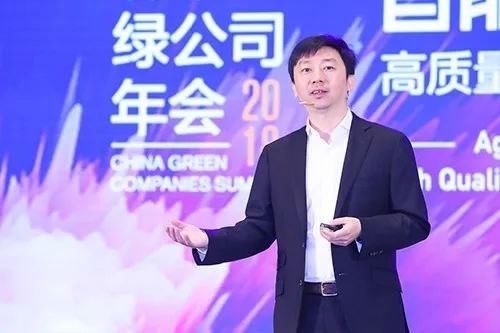
Li Zhifei /Photo provided by China Entrepreneur Club
Li Zhifei /Photo provided by China Entrepreneur Club
Meanwhile, China is trying to catch up in its groundwork research and development in the area.
Yu Kai, founder and CEO of Horizon Robotics, said his company was aware of the country’s weakness years ago and sought to develop its own processors more than three years ago.

Yu Kai /Photo provided by China Entrepreneur Club
Yu Kai /Photo provided by China Entrepreneur Club
Yu says that making home-grown processors is a decision that's proven to be right, particularly in light of US penalties on Chinese telecom equipment manufacturer ZTE.
He told CGTN that the recent ZTE case "might even affect us positively since our value is recognized.”
Besides individual efforts, China launched an ambitious plan last year to lead the global AI sector, allocating more than 150 billion US dollars for the initiative. In addition, the Ministry of Education released a detailed action plan mid-April to cultivate the world's best AI talent. The plan aims for China to be the center of AI innovation by 2030.
Jack Ma: Companies should have true global perspective
As more than 1,000 gathered for the annual China Green Companies Summit in Tianjin, China-US trade tensions and US penalties on ZTE loom large.
While not directly addressing the issue, Jack Ma of Alibaba said Chinese companies should develop a true global perspective. “The heart of globalization is to bring unique advantages to other countries and areas, and create jobs for their local businesses,” Ma said in his speech. “Globalization is a trend that will not backtrack. It’s impossible for China and the international community to live without one another.”
Companies: We should comply with foreign laws
Guo Guangchang, chair of Fosun International, said for Chinese companies to go global, complying with local rules and regulations is of utmost importance.
Many echoed Guo’s opinion. Li Zhifei, founder and CEO of Mobvoi, said the ZTE case was a lesson for outreaching companies. He told CGTN that the ZTE case "definitely gives us an important lesson in that it is super important to comply with all of the regulations of the countries that you go into.”
Wu Jun, senior researcher with Google, said at the meeting that the ZTE case showed that China doesn’t yet have enough original innovative products and ideas. But the situation should change as more investment goes into developing groundwork technology and institutes like Tsinghua University.
The three-day CGCS summit ends Tuesday.