
Politics
11:00, 01-May-2018
Palestinians convene National Council in defiance of Israel, Trump
 ["china"]
Share







Copied

The Palestinian-Israeli conflict has been an issue in the Middle East for decades, however, the last 10 years have seen some especially difficult challenges.
The first challenge was in 2007, when Hamas violently expelled Palestinian President Mahmoud Abbas’ Fatah forces from power in Gaza, following deadly street battles.
Secondly, the Palestinian Authority suspended peace talks with the Israelis due to the ongoing settlement construction in the West Bank.
Thirdly, Palestinian leadership considered US President Donald Trump’s recognition of Jerusalem as Israel’s capital, and the accompanying decision to move the US embassy to Jerusalem, a stab in the back, aiming to kill any hope of achieving peace.
The previous three stages have shaped the current Palestinian political status, and the Palestinians have turned to the Palestinian Liberation Organizations (PLO), and convened its National Council, after being dormant for years.
After much wrangling, the PLO, the sole legitimate representative of the Palestinian people which consists of 13 Palestinian factions except Hamas and the Islamic Jihad, held its first Palestinian National Council (PNC) in 22 years, at the presidential headquarters in the West Bank city of Ramallah.
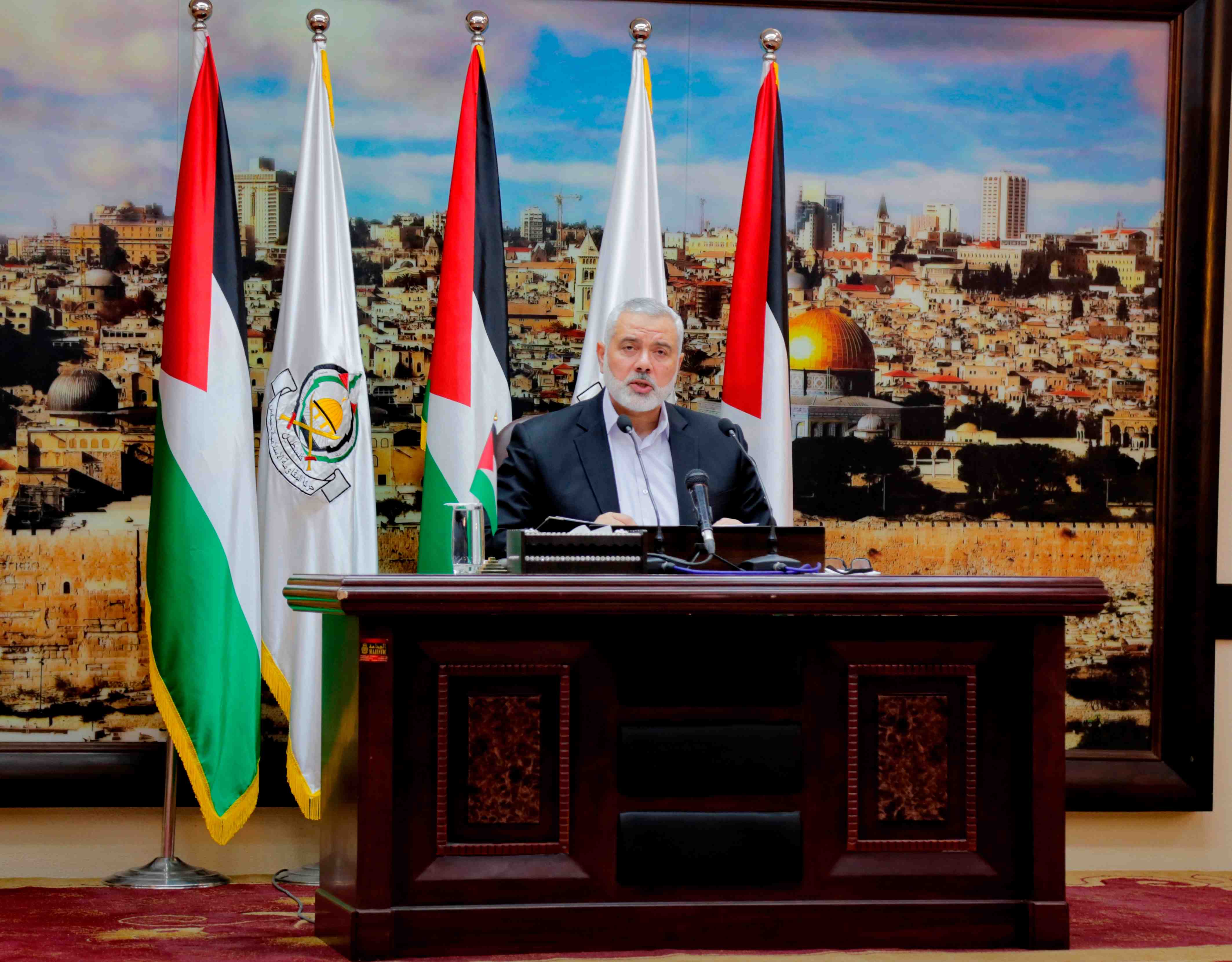
Senior Hamas leader Ismail Haniyeh during his speech on the convening of the Palestinian National Council, April 30, 2018, in Gaza, Palestine. /CGTN Photo
Senior Hamas leader Ismail Haniyeh during his speech on the convening of the Palestinian National Council, April 30, 2018, in Gaza, Palestine. /CGTN Photo
The session, held under the title “Jerusalem and Safeguarding the Palestinian Legitimacy,” is set to discuss suspending the recognition of Israel, in addition to several other critical issues in Palestinian politics, including Donald Trump’s decision on Jerusalem. “No peace without Jerusalem, the eternal capital of Palestine,” said President Abbas as he commenced his speech, urging Hamas to end division, and unite under the umbrella of the PLO.
"We want to live with the Israelis on the basis of the two-state solution. We will not accept Trump’s deal. We will not accept the US as the only peace broker,” Abbas said, warning that the Palestinians might be forced to make difficult decisions regarding their relations with the US and their neighbors.”
The meeting which was attended by 700 members from inside and outside Palestine, was boycotted by three Palestinian organizations including Hamas, the Islamic Jihad and the Popular Front for the Liberation of Palestine (PFLP). Hamas demanded making changes on the policies of the PLO, including the suspension of its recognition of Israel and halting security coordination in the West Bank, as prerequisites for participating in the meeting.
“The manner in which President Abu Mazen is running the Palestinian situation stabilizes uniqueness and desire to remove other Palestinian forces,” Hamas leader Ismail Haneya said in a televised speech aired hours before Monday’s PNC meeting.
The Palestinian National Council (PNC) is the legislative body of the Palestine Liberation Organization (PLO). It elects its Executive Committee (PLO EC), which assumes leadership of the organization between its sessions.
Hamas said it was against the holding of the council without national consensus, and called instead for a “national rescue conference.” Palestinian sources said that the PNC meeting will discuss the transformation of the Palestinian Authority from an authority based on the Oslo agreements to a formal state in the occupied territories.
For Palestinians, Trump’s Jerusalem decision has made the US more of a political enemy than an honest peace broker. PLO officials said that the PNC meeting was a must, in order to approve new political programs based on seeking new peace sponsors, other than the Unites States, such as Russia or China.