
Africa
09:55, 05-Mar-2019
Ethiopian and Eritrean leaders visit S Sudan to promote peace, integration
 ["china"]
Share







Copied
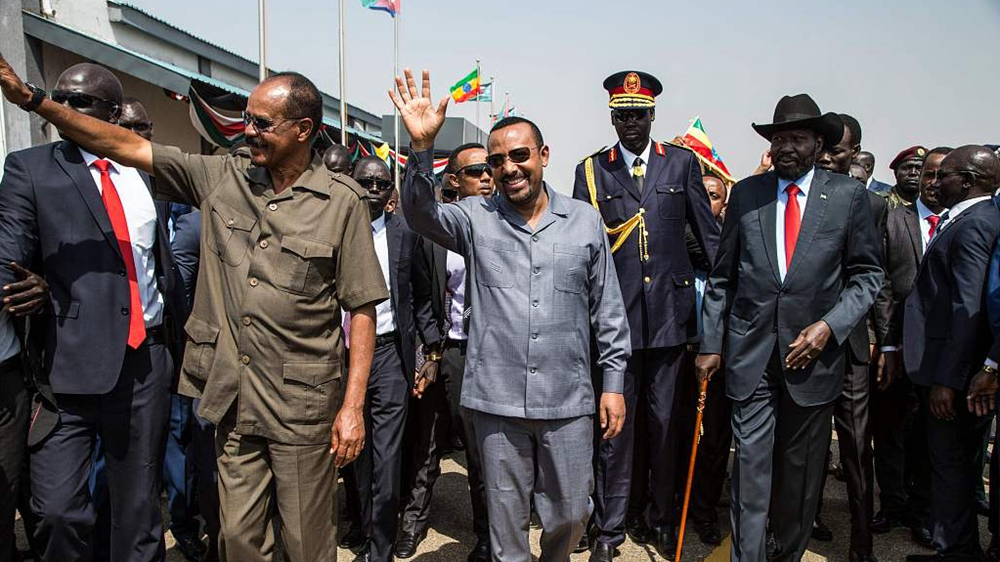
The leaders of Ethiopia and Eritrea on Monday visited South Sudan to consolidate the ongoing effort to restore peace and stability in the world's youngest republic.
Ethiopian Prime Minister Abiy Ahmed and Eritrean President Isaias Afwerki held closed-door meeting with South Sudan's host President Salva Kiir and discussed wide-ranging issues, including how the three countries can support each other on regional matters said Nhial Deng Nhial, South Sudan's foreign affairs minister.
"In the course of the discussion, the three leaders focused on the need to advance the cause of regional integration," said Nhial.
The minister said the two leaders of the Horn of African countries have been playing a constructive role in steering South Sudan toward peace, adding that the leaders reiterated that they are committed to pushing for the smooth implementation of the peace agreement.
"The three leaders emphasized the need to work together to consolidate peace in the Republic of South Sudan in all ways possible and to seek to coordinate the position of the three countries on both regional and global issues," said Nhial.
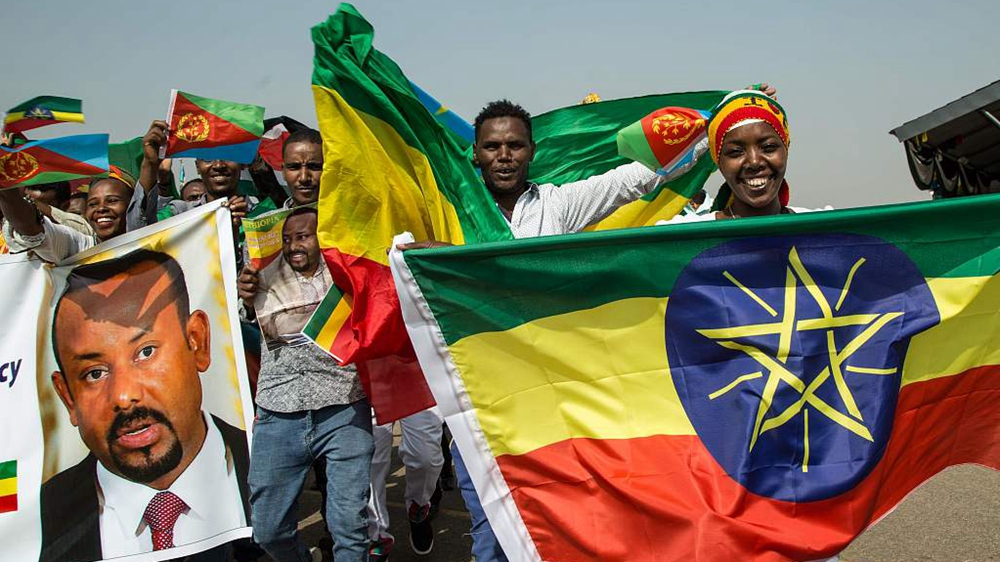
People hold Ethiopian and Eritrean flags as they wait for the arrival of Eritrea's president and Ethiopia's prime minister at Juba International Airport in Juba, March 4, 2019. /VCG Photo
People hold Ethiopian and Eritrean flags as they wait for the arrival of Eritrea's president and Ethiopia's prime minister at Juba International Airport in Juba, March 4, 2019. /VCG Photo
He revealed that the visit was in accordance with the ongoing Intergovernmental Authority on Development (IGAD) efforts to engage the holdout group of the National Salvation Front (NAS) led by Thomas Cirilo and the movement led by Paul Malong, a former army chief turned rebel, to join the peace process.
In 2011, South Sudan broke away from Sudan after a long independence struggle, but just two years later, war broke out again when Kiir accused his former deputy Riek Machar of plotting a coup.
Nearly 400,000 people are estimated to have died and millions have fled their homes, many of them pushed to the brink of starvation.
The United Nations has cautioned that tens of thousands face starvation as fighting continues despite the pact.
(With inputs from agencies)