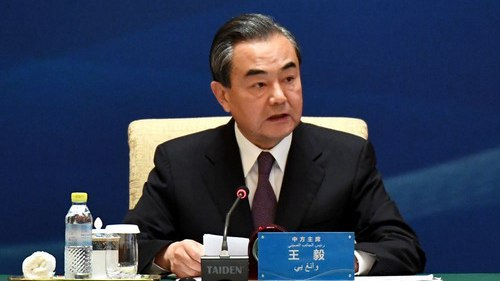
China and Arab states should take the opportunity to form a strategic partnership and to enhance political trust and resolutely support each other's core interests, said Chinese State Councilor and Foreign Minister Wang Yi on Tuesday.
While hosting the eighth ministerial meeting of China-Arab States Cooperation Forum (CASCF) in Beijing, Wang said China will always be Arab states' honest partner and treat them equally.
China will never interfere in Arab states' internal affairs and will unswervingly support those states to take paths of development that suit their own conditions, added Wang.
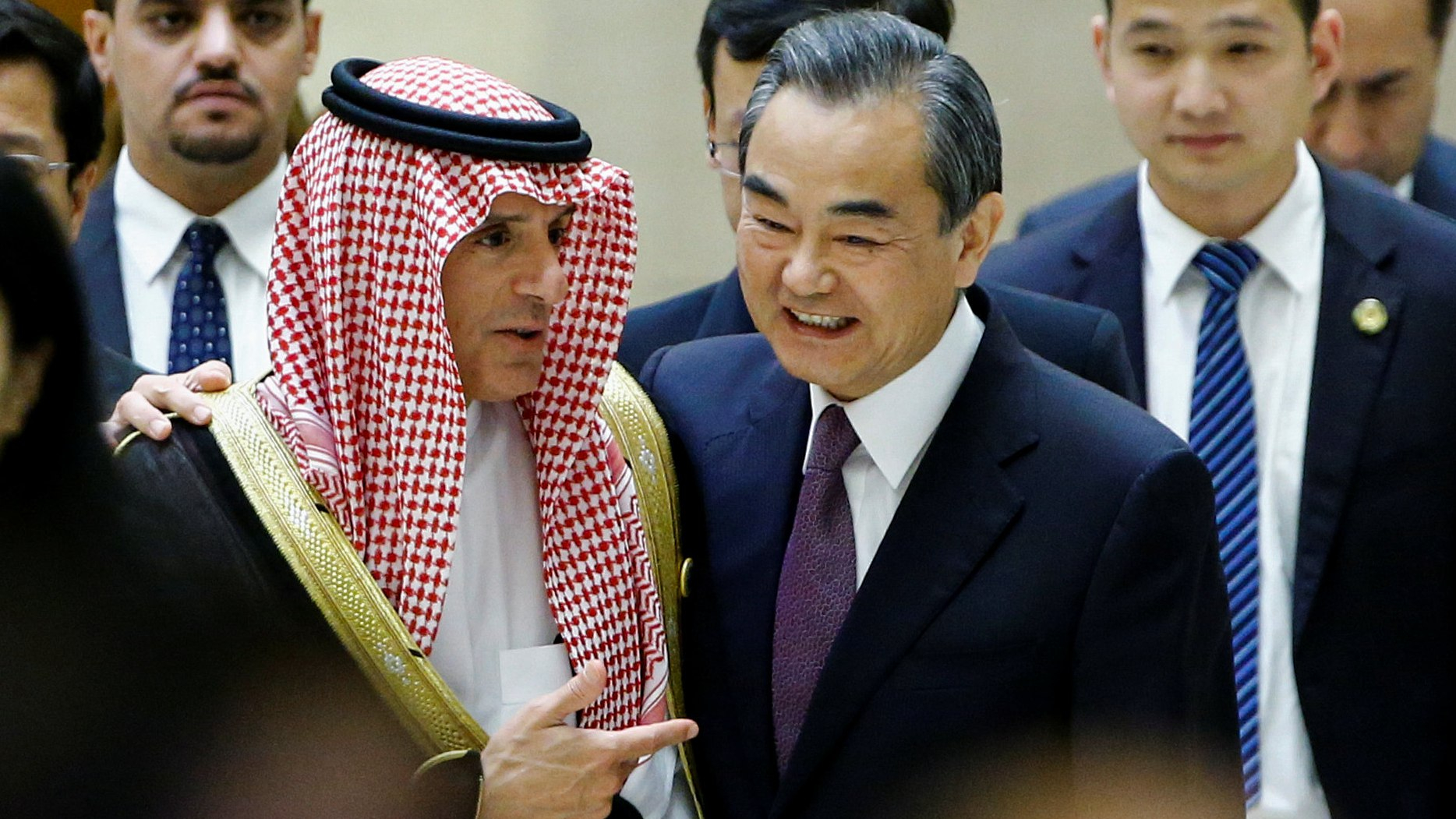
Chinese State Councilor and Foreign Minister Wang Yi and Saudi Arabia's Foreign Minister Adel bin Ahmed Al-Jubeir arrive for a news conference at the eighth ministerial meeting of the CASCF in Beijing, China, July 10, 2018. /Reuters Photo
Chinese State Councilor and Foreign Minister Wang Yi and Saudi Arabia's Foreign Minister Adel bin Ahmed Al-Jubeir arrive for a news conference at the eighth ministerial meeting of the CASCF in Beijing, China, July 10, 2018. /Reuters Photo
The Chinese state councilor also expressed his hope for the Arab states to continue standing by China on issues related to China's core interests.
Wang also emphasized that it is a milestone moment when Chinese President Xi Jinping announced that China and Arab states had agreed to establish a "future-oriented strategic partnership of comprehensive cooperation and common development" at the forum's opening ceremony.
He said the enhancement of ties marks a new historic chapter in China-Arab relations.
China's attitude toward hotspot issues in the Middle East
Concerning the hotspot issues in the Middle East, Wang urged that the "peaceful, equal, constructive and inclusive" means should be adopted to address them.
He called for political solutions and promoting dialogues and negotiations, saying the issues should be dealt with equality and fairness, instead of using coercive measures for compromise.
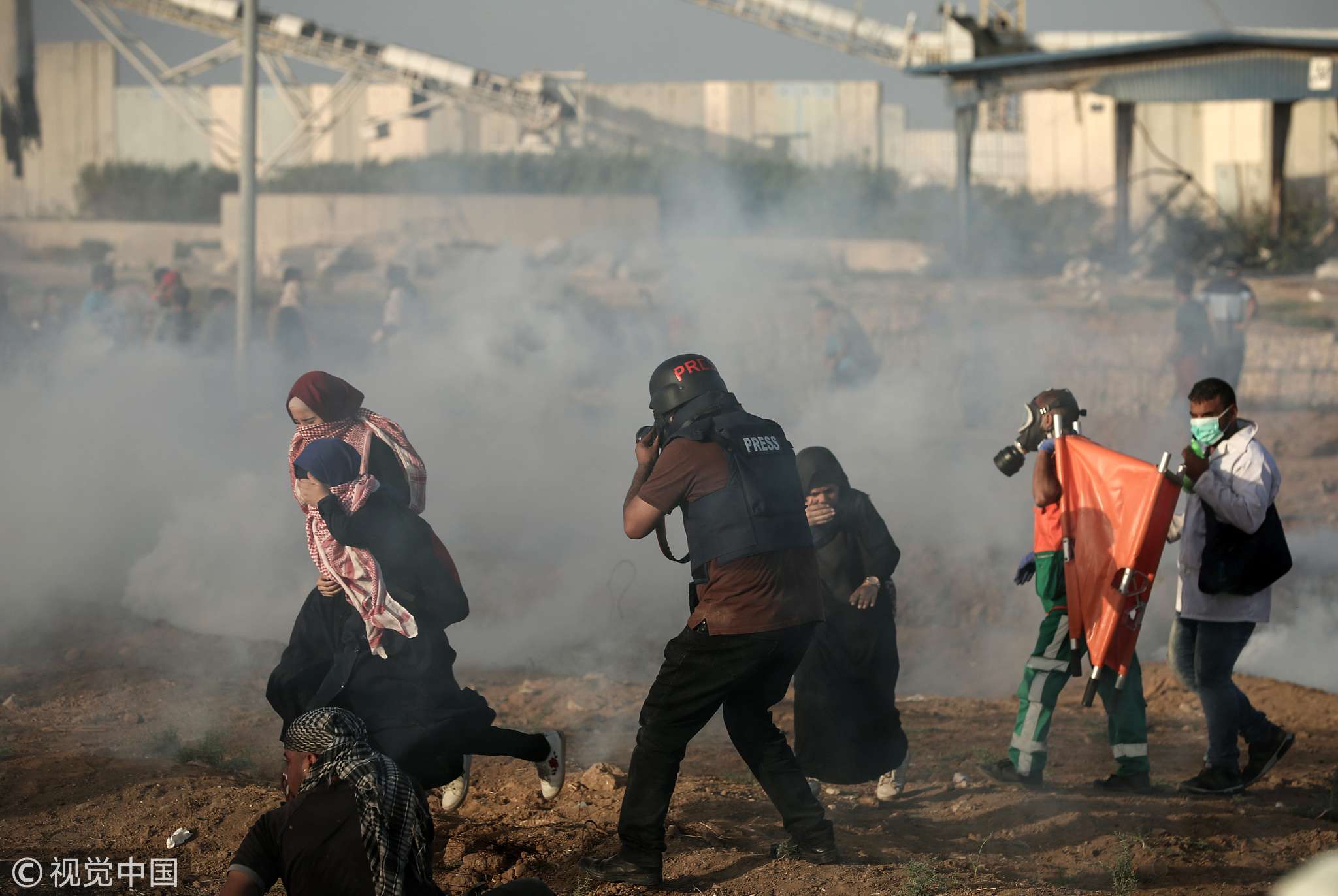
People run from tear gas smoke during clashes between Palestinian citizens and Israeli forces in Gaza, Palestinian territory, July 3, 2018. /VCG Photo
People run from tear gas smoke during clashes between Palestinian citizens and Israeli forces in Gaza, Palestinian territory, July 3, 2018. /VCG Photo
Wang added that the history and reality of the region should be considered, and the goal of easing tensions and restoring peace in the area should be achieved gradually.
The Chinese Foreign Minister said the legitimate rights of all sides should be protected, adding that an open and stable regional peace framework should be worked out without any exclusive arrangements.
On Palestine
Also in his speech at this year's ministerial meeting of CASCF, Wang stressed that the Palestinian issue is the root of conflicts in the Middle East.
He said the Palestinian issue should not be marginalized, and the rights for the Palestinians to establish their own independent country should not be up for sale.
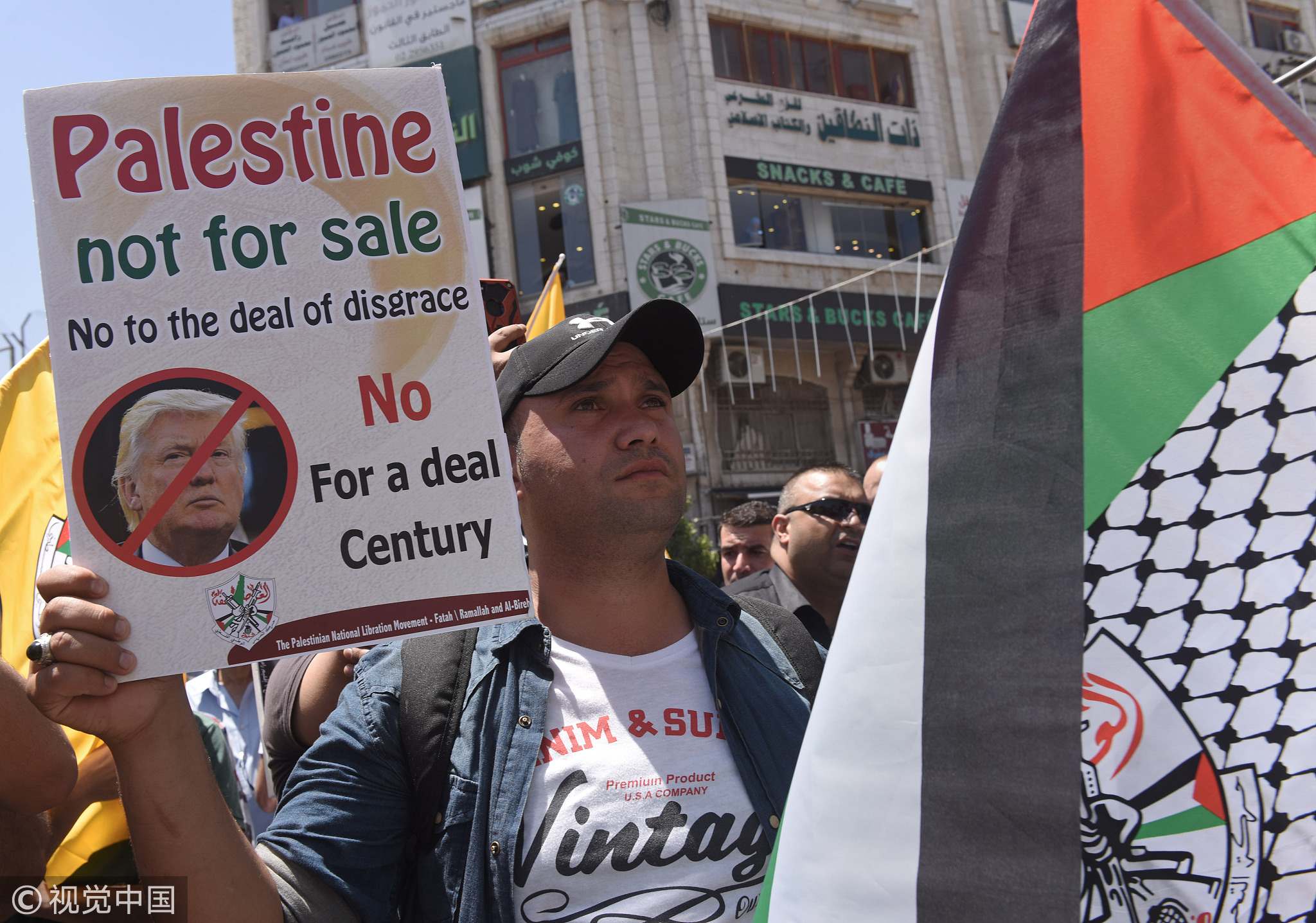
A Palestinian holds a sign against US President Donald Trump's yet to be revealed plan for peace with Israel at a demonstration in Ramallah, West Bank, July 2, 2018. /VCG Photo
A Palestinian holds a sign against US President Donald Trump's yet to be revealed plan for peace with Israel at a demonstration in Ramallah, West Bank, July 2, 2018. /VCG Photo
China will continue to support the establishment of an independent state of Palestine with full sovereignty, based on the pre-1967 borders, with East Jerusalem as its capital, Wang said.
He added that China supports the convening of new international meetings on the Palestinian issue and will continue to provide humanitarian aid to Palestine.
On economic cooperation
At the forum, Wang also pointed out the prospects of economic cooperation between China and Arab states under the Belt and Road Initiative.
He said China's further opening up chimes with the increasing industrialization and economic diversification in those states.
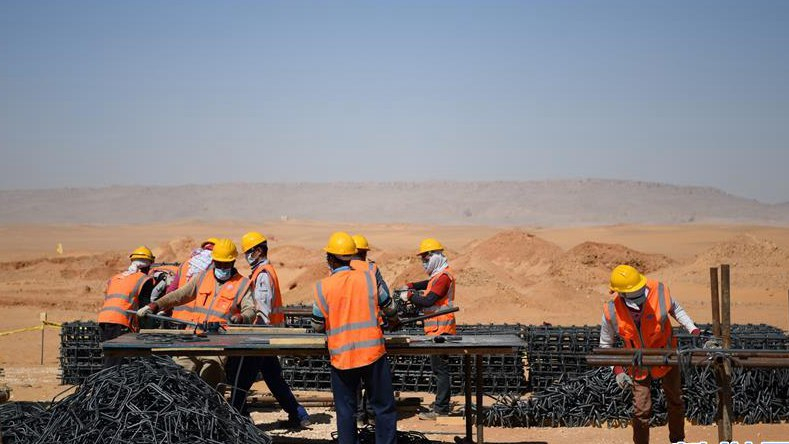
Chinese workers at the site for the first photovoltaic electricity generating program undertaken by Chinese enterprises in Aswan, Egypt, May 10, 2018. /Xinhua Photo
Chinese workers at the site for the first photovoltaic electricity generating program undertaken by Chinese enterprises in Aswan, Egypt, May 10, 2018. /Xinhua Photo
Wang particularly mentioned the possibility for China's industrial complexes in Egypt, United Arab Emirates, Saudi Arabia and Oman to collaborate with neighboring ports including the Khalifa Port in Abu Dhabi and the Port of Djibouti.
Furthermore, Wang said the two sides should strengthen cooperation in both traditional and high tech industries, covering areas such as oil and gas, finance, satellite navigation and artificial intelligence.

 ["china"]