
Asia Pacific
16:22, 01-Apr-2019
Vietnamese suspect escapes death penalty over airport death of DPRK man
Updated
21:49, 01-Apr-2019
 ["china"]
Share







Copied
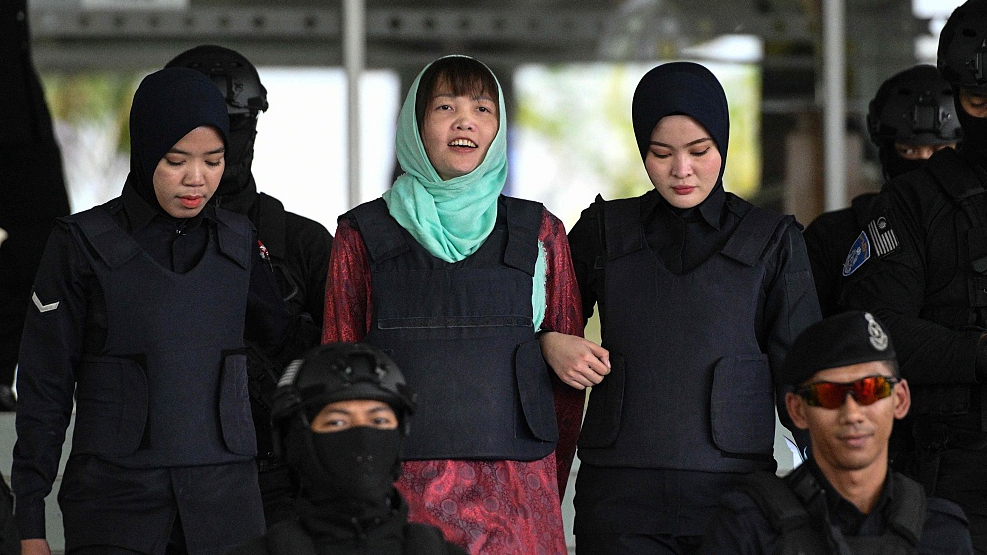
Doan Thi Huong, a Vietnamese woman, was on Monday sentenced to three years and four months imprisonment for the death of a man from the Democratic People's Republic of Korea (DPRK) at a Malaysian airport in 2017, after pleading guilty to a lesser charge filed by prosecutors.
The prosecutors alternated the charge to "voluntarily causing hurt by dangerous weapons or means" as instructed by the attorney general from the previous murder charge, which carries mandatory capital punishment if convicted.
Huong promptly pleaded guilty to the new charge and the judge sentenced her three years four months in prison.
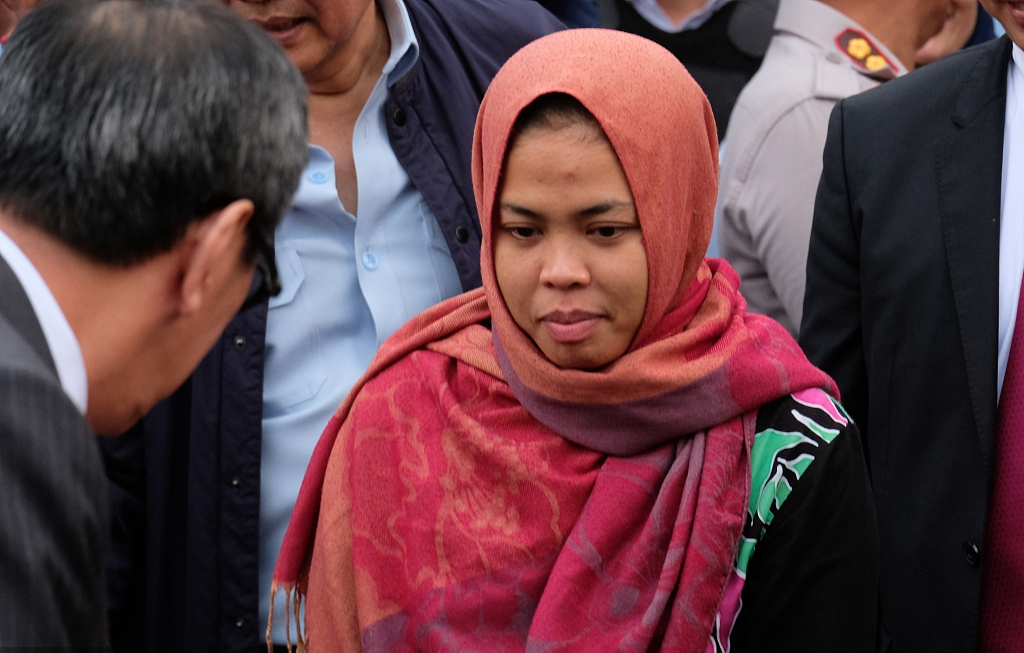
Siti Aisyah who was charged together with Huong in the case.arrived in Indonesia through Halim Perdana Kusuma Airport, in Jakarta, March 11, 2019. /VCG Photo
Siti Aisyah who was charged together with Huong in the case.arrived in Indonesia through Halim Perdana Kusuma Airport, in Jakarta, March 11, 2019. /VCG Photo
The prison term would be counted from February 15, 2017, the date she was arrested. Huong's counsel Hisyam Teh Poh Teik told reporters that the defense team expected Huong would be released by the first week of May, with the two years already served and the remaining one-third granted remission.
"I love you so much thank you so much. I am happy. Thank you for the government of Malaysia," she said to the media as she smiled and waved while being led away by police.
In March, Malaysian prosecutors withdrew the murder charge against Siti Aisyah, the Indonesian woman who was charged together with Huong in the case. Siti Aisyah was released on March 11 but Huong's application to have her murder charge dropped was rejected by the attorney general.
Here is a timeline of key events in the case:
The DPRK man died after being attacked at Kuala Lumpur International Airport on February 13, 2017.
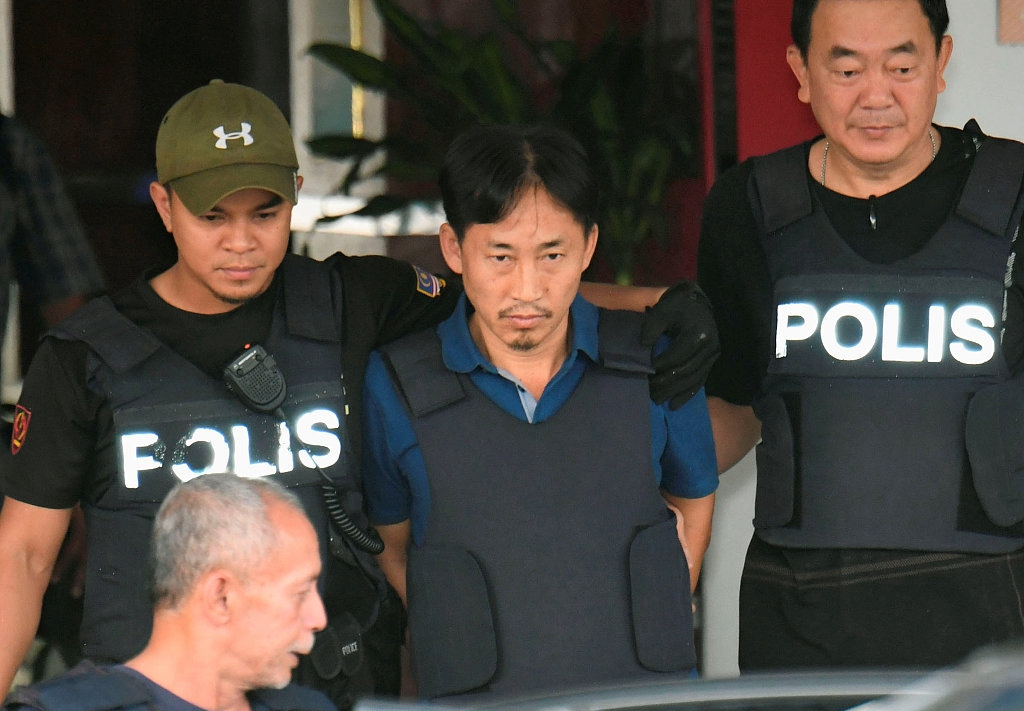
Ri Jong Chol leaves a Sepang police station to be deported in Malaysia, March 3, 2017./VCG Photo
Ri Jong Chol leaves a Sepang police station to be deported in Malaysia, March 3, 2017./VCG Photo
Both women, Doan Thi Huong and Siti Aisyah, were accused of killing the man by smearing VX nerve agent on his face. They have both denied the charges.
Kuala Lumpur then arrested DPRK citizen Ri Jong Chol in connection with the case.
Over the following days, investigators said diplomats and airline employees from the isolated regime were sought for questioning.
Tensions escalated after DPRK baned all Malaysians from leaving Pyongyang. Malaysia retaliated and the international community called for calm amid allegations of hostage holding.
In early March, Ri was released from custody and deported from Malaysia.
At the end of the month, Malaysia's then-prime minister Najib Razak announced an agreement had been reached to return the man's body to the DPRK, and in October, the two women went on trial.
(With inputs from agencies)