
Domestic
15:44, 10-May-2019
Chinese descendants retrace their families' overlooked history in the U.S.
 ["china"]
Share







Copied
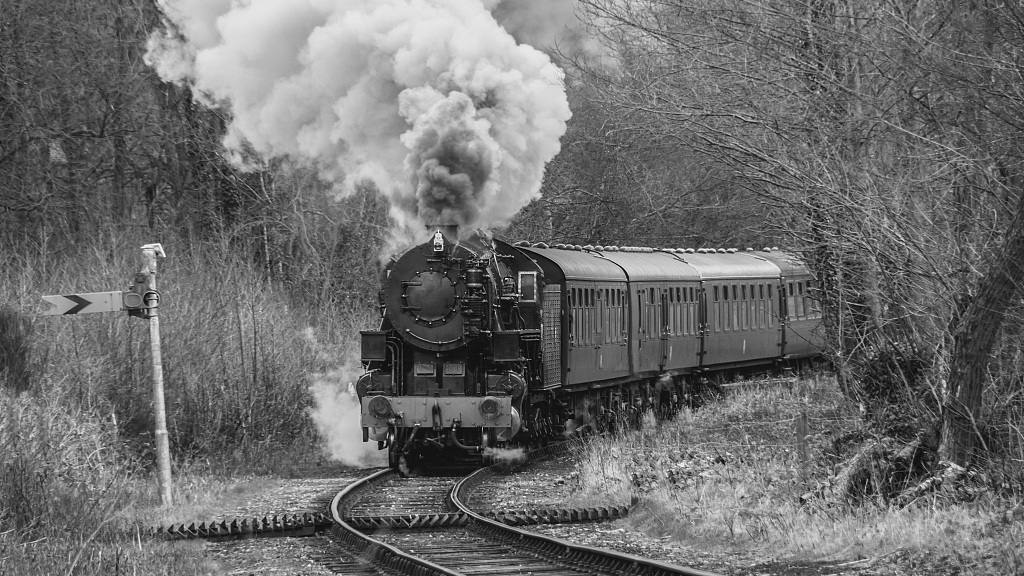
As we started our drive in the state of Utah, I was listening to Sports Radio.
I was stunned when the radio hosts started talking about the big celebrations for the Golden Spike ceremony this week.
After all, I'm talking about Sports Radio!
At several buildings throughout the capital of Salt Lake City, exhibitions proudly display the region's place in history.
At the Department of Heritage and Arts, I see the slogan Before Mars, Before the Moon, There was the Golden Spike.
The actual historic Golden Spike is on display in the state capitol building. I get to see it, but no pictures or video are allowed.
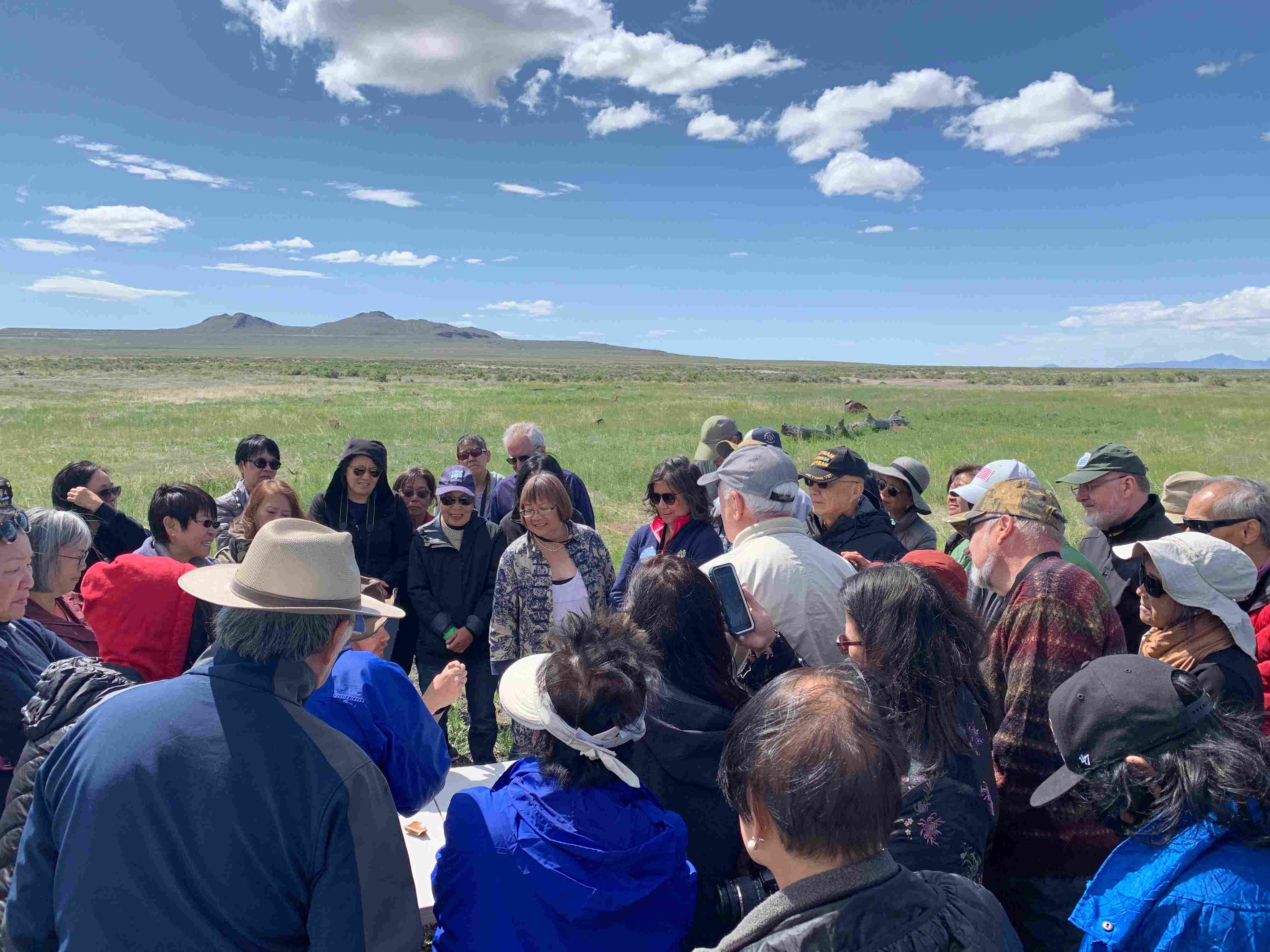
Members of the Chinese Railroad Workers Descendants Association tour the areas where Chinese rail workers once worked and lived, May 8, 2019. /CGTN Photo
Members of the Chinese Railroad Workers Descendants Association tour the areas where Chinese rail workers once worked and lived, May 8, 2019. /CGTN Photo
The Golden Spike, also known as The Last Spike, is the ceremonial 17.6-carat gold final spike to join the rails of the First Transcontinental Railroad across the United States on May 10, 1869 in Utah, which helped connect the Eastern part of the country to the Western part.
It was a monumental achievement.
And at the heart of it were Chinese workers.
According to information from the Spike 150 Committee, an organization to celebrate the 150-year anniversary of the Golden Spike, the estimated amount of Chinese laborers was between 15,000-25,000.
The next largest group was the Irish, at between 10,000-12,000. But from there it drops off significantly, with the next largest group being members of the Latter-day Saints listed at between 3,000-4,000 workers.
Chinese rail workers set records
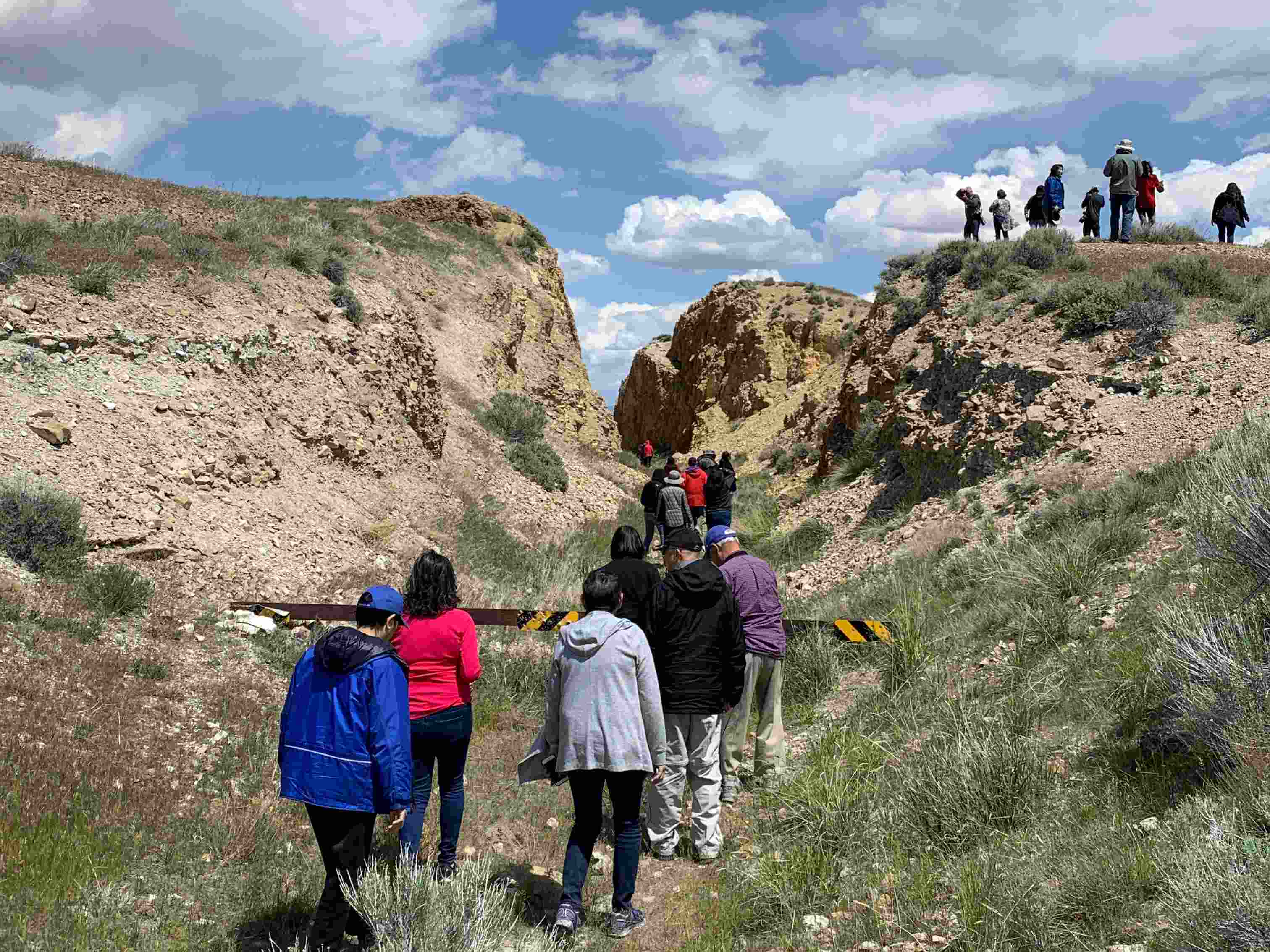
It takes at least a three-hour drive north and west of Salt Lake City into the Great Salt Lake Desert. /CGTN Photo
It takes at least a three-hour drive north and west of Salt Lake City into the Great Salt Lake Desert. /CGTN Photo
On April 28, 1869, the Central Pacific Railroad set a record of laying 10 miles of track, using thousands of Chinese workers and scores of Irish workers.
The total number of miles of track laid by the Central Pacific Railroad is 690, which went through the Sierra Nevada Mountain Range and what was then called the Great American desert.
It was backbreaking and dangerous work.
Workers had to use explosives and bear incredibly difficult weather conditions.
But despite all their hard work, the famous Last Spike ceremony photograph doesn't include any Chinese.
On display at the state capitol, there is one photo taken around the time of the event that includes four Chinese workers.
But it's very hard to see their faces, let alone even spot where they are.
For generations, American history books have left out the contributions of the Chinese rail workers or relegated their role to just a few sentences.
But at the state capitol building, there is an entire display devoted to the topic, which was put together by the Chinese Railroad Workers Descendants Association.
Descendants retrace their family history
One of the descendants of the Chinese workers who built the First Transcontinental Railroad. /VCG Photo
One of the descendants of the Chinese workers who built the First Transcontinental Railroad. /VCG Photo
The organization has also been sponsoring trips this week to the areas where the Chinese rail workers lived.
I went along for the journey, which took us at least a three-hour drive north and west of Salt Lake City into the Great Salt Lake Desert.
On the trip, I met Leona Lau, whose mother only recently told her that her great-great grandfather worked on the railroad.
"I'm on a journey to find whatever I can about him," said Lau. "I'm very touched by the endurance of the men who came here from China, who had no family with them, and the years they spent working in these adverse conditions, knowing that it reached like 30 below during the winter. And they were able to survive and also save some money too, because my great great grandfather went back to China. Whatever he saved bought some land, had sons. I wouldn't be here if it wasn't for him."
The railroad tracks are long gone and not much else remains.
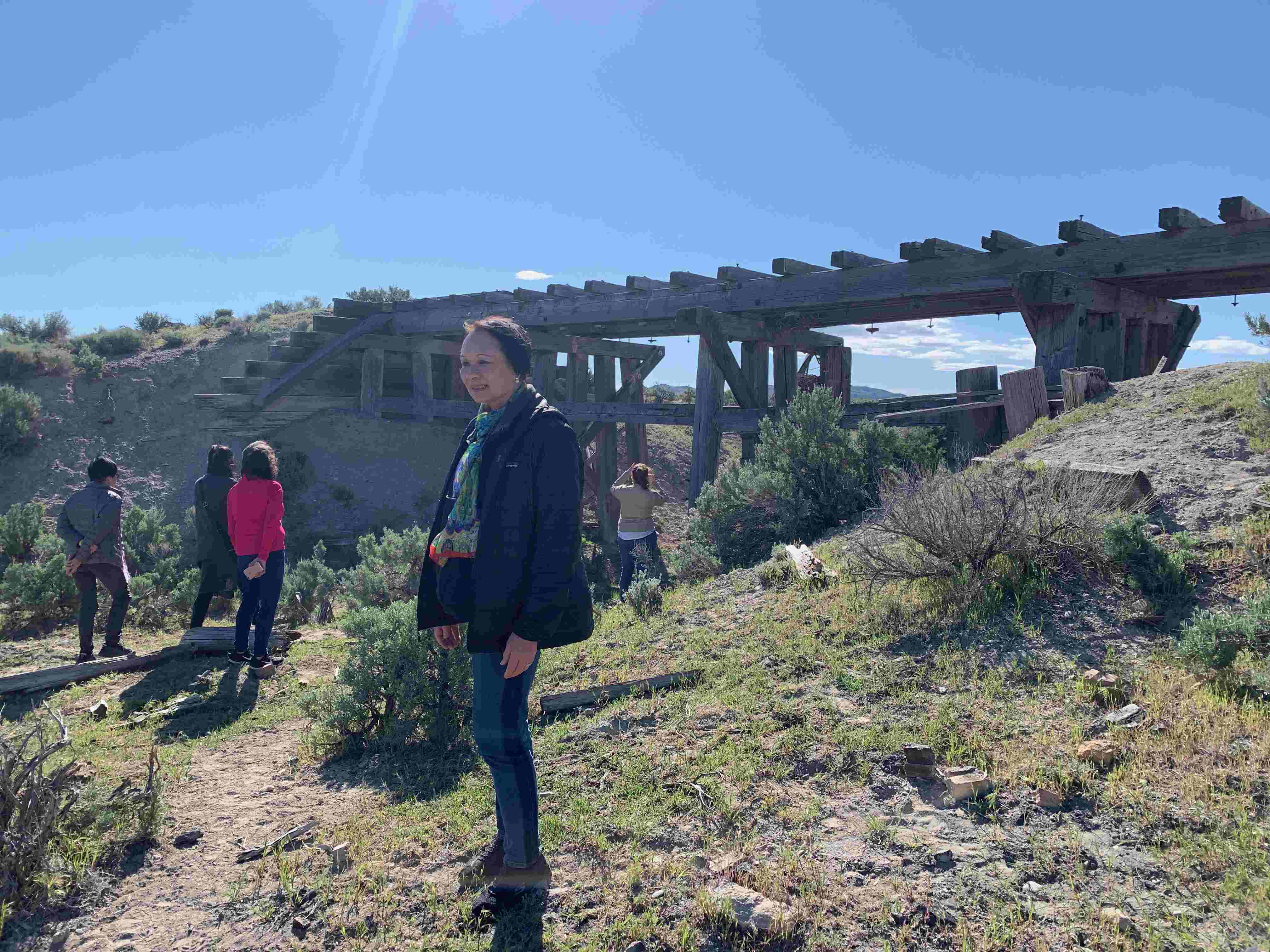
But we do come across a trestle.
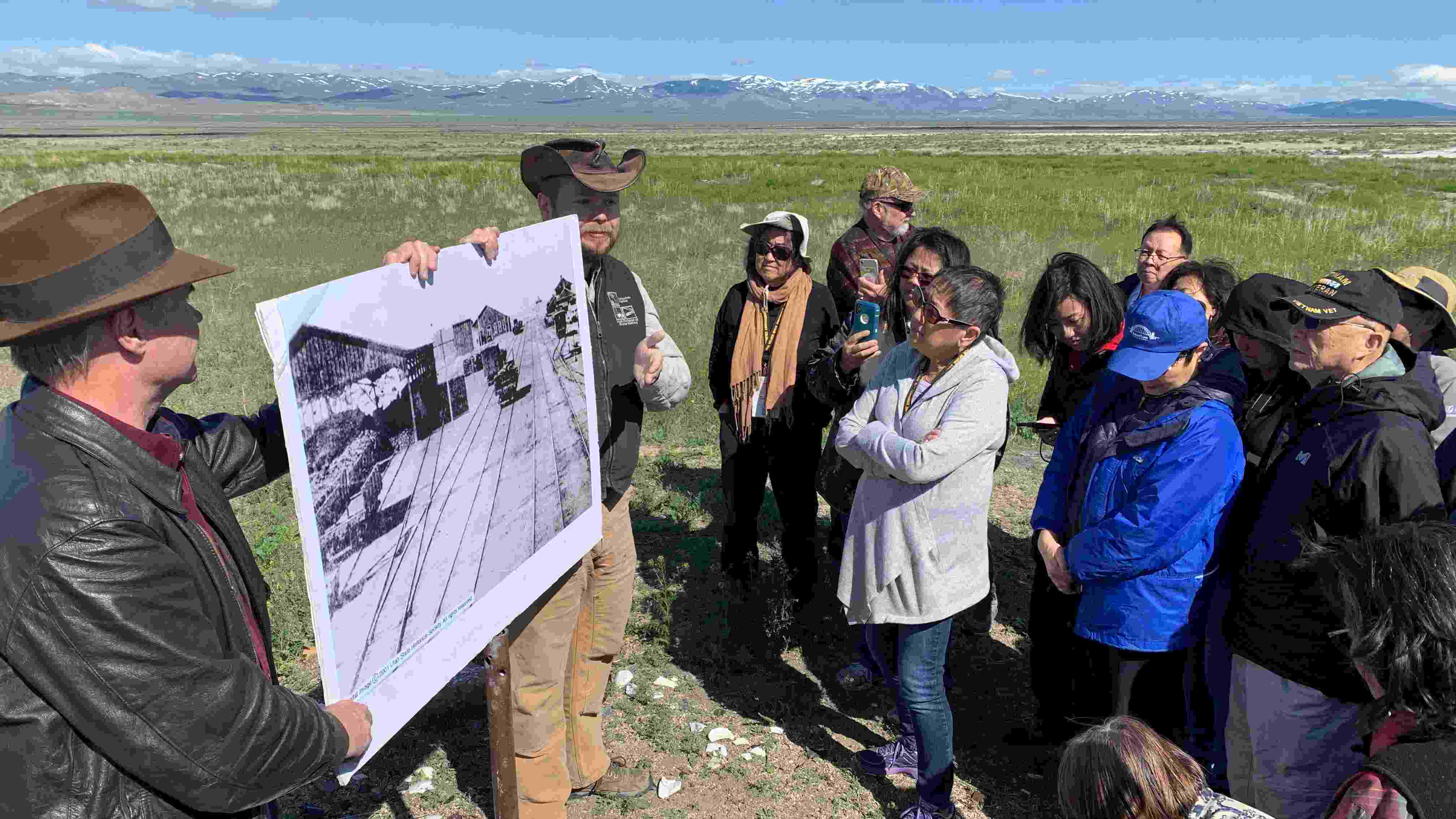
Despite all their hard work, the famous Last Spike ceremony photograph doesn't include any Chinese. /CGTN Photo
Despite all their hard work, the famous Last Spike ceremony photograph doesn't include any Chinese. /CGTN Photo
Though it's been rebuilt, it's still in the same place where it supported the transcontinental railroad back in 1869.
We also come across a crater in the ground that has part of rusty spindle that was used as a turntable to turn the train around.
Back in those days, trains could only go forward, not backward.
I also meet a man who appears to be observing every detail of the trip closely.
Raymond Chong is an engineer from Texas.
He made a documentary about his family's journey called My Odyssey: Between Two Worlds.
His great-great grandfather, Bein Yiu Chung, worked on the actual transcontinental railroad.
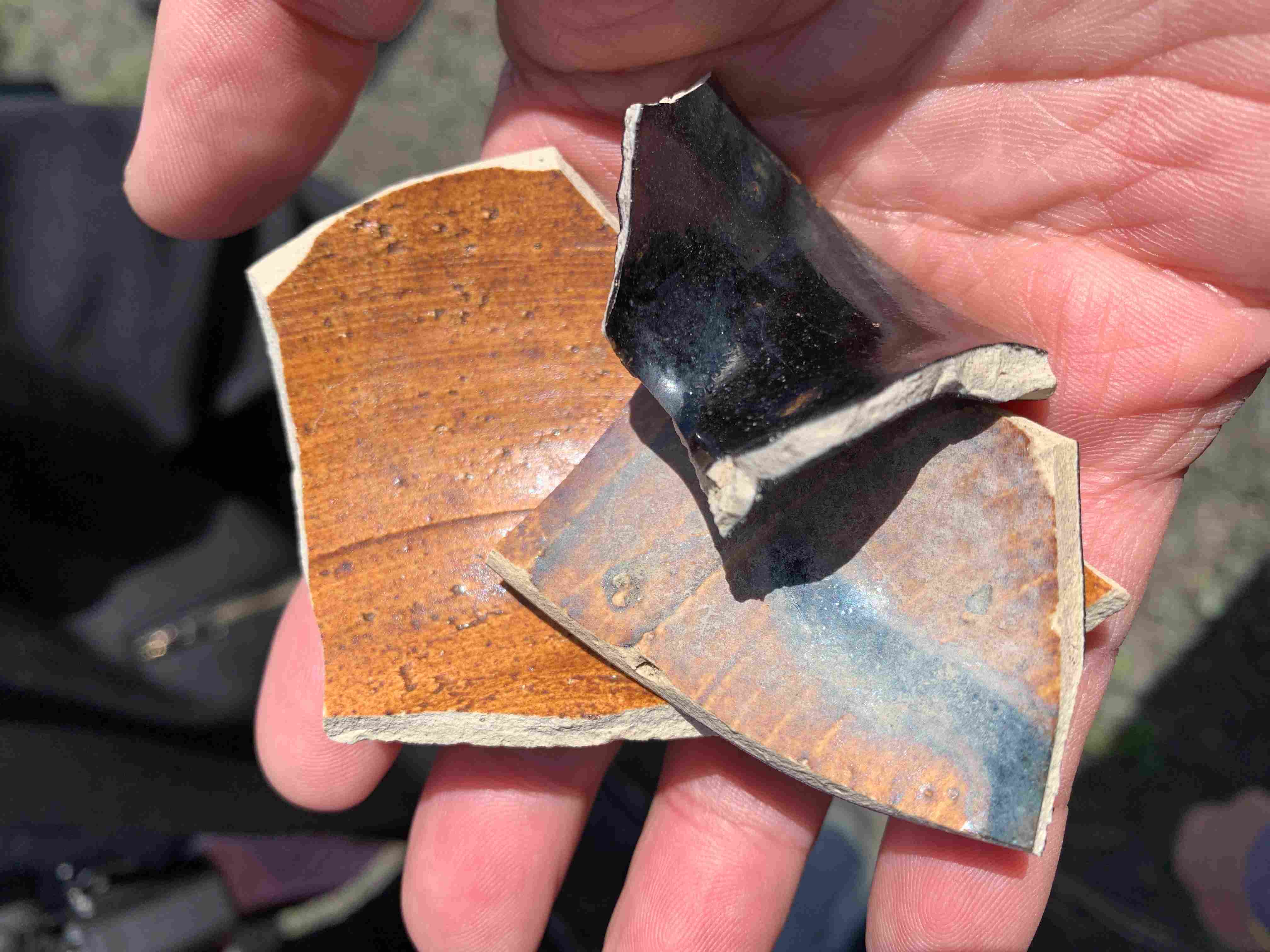
Fragments are from artifacts previously recovered from the area, May 8, 2019. /CGTN Photo
Fragments are from artifacts previously recovered from the area, May 8, 2019. /CGTN Photo
"American history books were whitewashed. The transcontinental railroad was significant but didn't talk about the Chinese at all," said Chong. "I'm just glad to be here in this moment. It reflects my heritage as an American and my heritage as a Chinese and to represent my great grandfather.”
Archaeologist Michael Polk is leading the group on the tour.
He says there just aren't that many archaeologists studying the role of the Chinese rail workers.
He says there are less than a handful in the state of Utah, and probably less than twenty in all of the United States.
But he says learning the stories of the descendants is extremely helpful to their own understanding too.
He also hopes more information on who the workers were can ultimately be discovered in China.