
Opinions
22:43, 06-Oct-2018
An ill-conceived smear: American leaders make absurd statements about China (Part II)
Updated
22:16, 09-Oct-2018
 ["china"]
Share







Copied
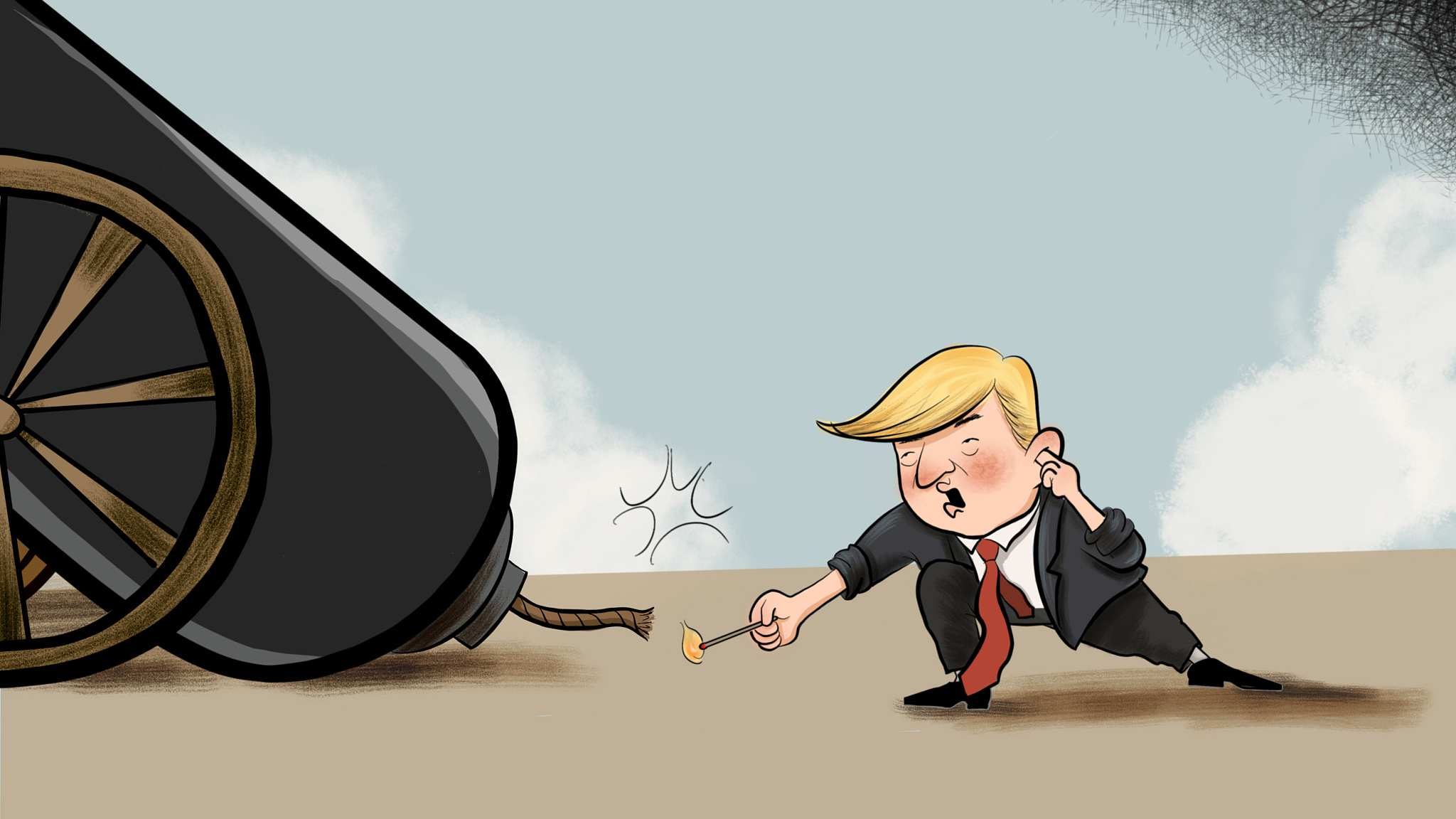
Editor's note: This is an edited translation from an editorial piece from People's Daily originally published in Chinese on October 5.
Myth No. 8: China is "militarizing" the South China Sea. This is a deliberate misrepresentation. China has indisputable sovereignty over the islands in the South China Sea and its adjacent waters.
Now, while promoting the construction of civil facilities on China's own islands and reefs, China is deploying necessary defense facilities, which is the right of self-protection and self-defense granted to sovereign states by international law and is not "military aggression" at all.
The United States has strengthened its military deployment in the region under the pretext of "freedom of navigation and flight," and has repeatedly sent warships and warplanes to the airspace near the Chinese islands. Who has been "militarizing" the South China Sea? Who is making trouble in the South China Sea? Who is creating tension in the South China Sea?
Myth No. 9: China brings with it a "debt trap" to some developing countries. This is all about fomenting discord between China and its partners. China has always carried out economic and trade cooperation with developing countries in the spirit of mutual benefit and win-win development, provided assistance to the best of China's ability, and worked to enhance the autonomy and sustainable development of the countries concerned.
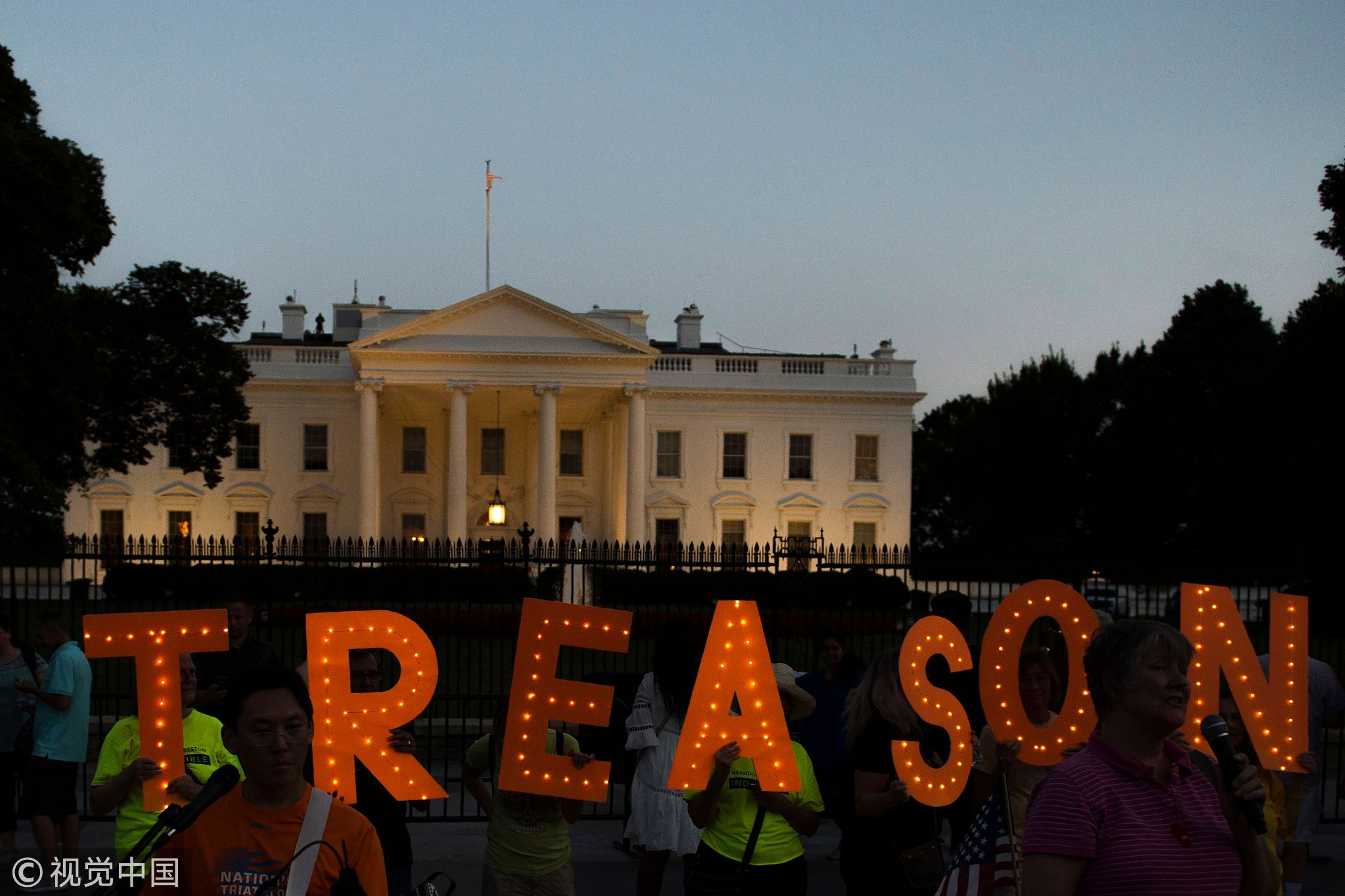
Activists hold letters reading the word "Treason" in front of the White House during a sunset demonstration to denounce the link between the 2016 Trump campaign and Russia in Washington DC, July 29, 2018. /VCG Photo.
Activists hold letters reading the word "Treason" in front of the White House during a sunset demonstration to denounce the link between the 2016 Trump campaign and Russia in Washington DC, July 29, 2018. /VCG Photo.
China's assistance has been widely welcomed. At the recent Beijing Summit of Forum on China-Africa Cooperation, African leaders expressed their willingness to achieve mutual benefit and common development with China.
The heartfelt gratitude of African nations stands in stark contrast with the feeble accusation by the US. The US should adjust its approach and take practical actions to become a trusted partner of developing countries.
Why does the US have to think hard to come up with unfounded accusations and blame China for "interfering with the domestic affairs of the United States"? Some media and think tanks in the US have given the answer: firstly, shift the focus. Some people were disturbed by the investigation into the administration's “Russia Scandal,” so the US government had to bring more countries into the mess to create a diversion.
Secondly, bash China to garner support in the upcoming election. The mid-term elections to be held on November 6 is the core event of current and next-stage American domestic politics. All the actions taken by American politicians are meant to serve the goal of winning the election. Therefore, bashing and scapegoating China have become the means for some American politicians to win votes.
Thirdly, apply pressure on China. The US has failed to make substantial gains in its trade standoff with China, so it resorts to harsher tones and tougher actions to force China to yield. Unfortunately, its efforts will be wasted.
Wang Yi, State Councilor and Foreign Minister of the People's Republic of China, responded forcefully to the US' unfounded accusations, pointing out that China has always adhered to the principle of non-interference in the domestic affairs of other nations.
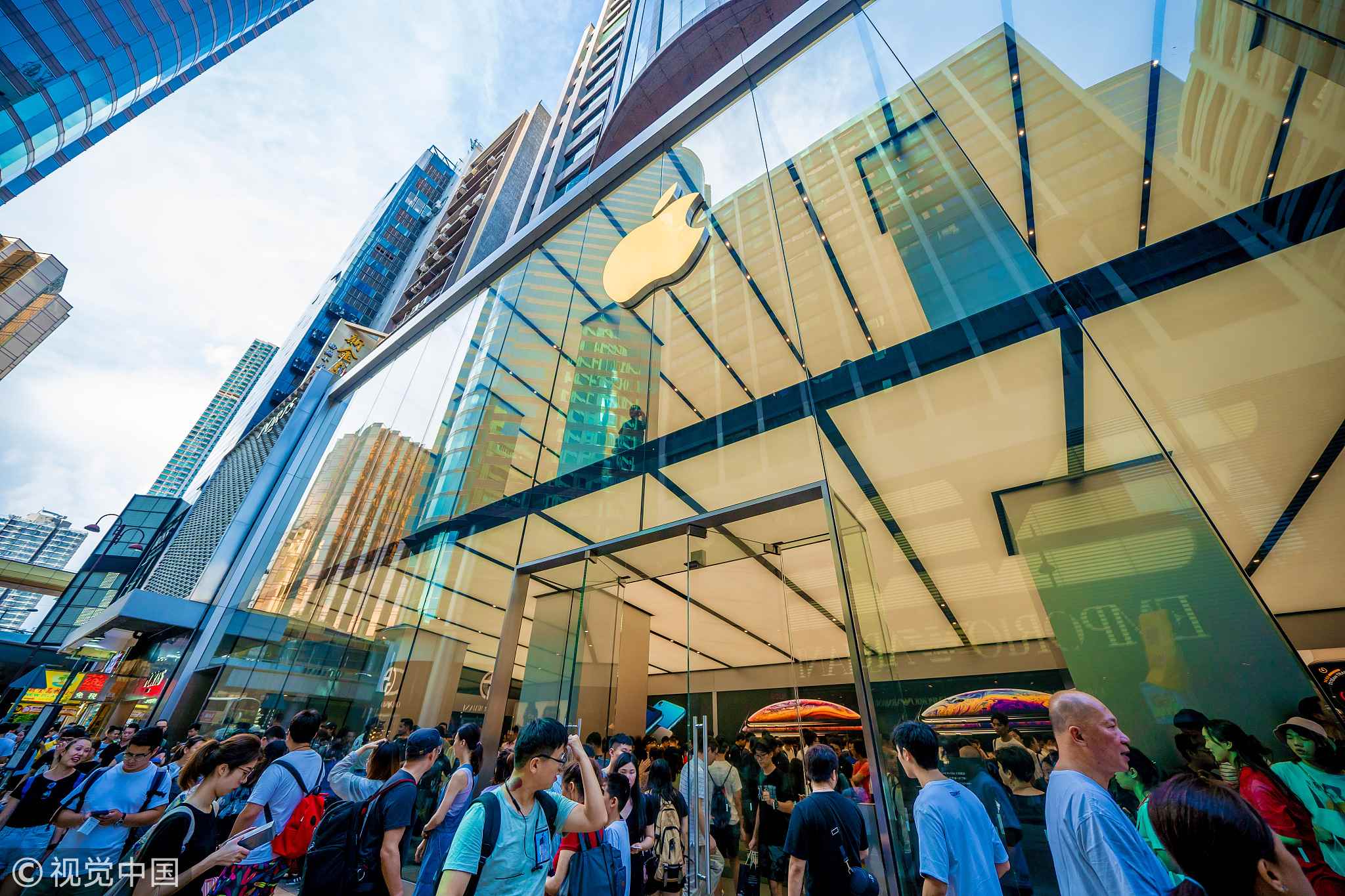
The Apple Store in Hong Kong Canton Road on September 23, 2018. /VCG Photo.
The Apple Store in Hong Kong Canton Road on September 23, 2018. /VCG Photo.
It's the case in the past, present, and future. He appealed to other countries to abide by the purposes of the UN Charter and refrain from interfering with the domestic affairs of other countries.
So, which country in the world is most keen on interfering with the domestic affairs of other countries? History and reality tell the most compelling stories. The United States has initiated "peaceful evolution" and "color revolution" in various parts of the world, frequently slammed sanctions on other countries, and pursued "double standards" with the international law by abandoning it if it's against the US.
For example, the US was hell-bent on Russia's intervention in the 2016 US general election, while Russian official reports clearly indicate that the US has meddled with the Russian presidential election, Duma and local elections from 2011 to 2017.
Recently at the UN Security Council, Bolivian President Morales took stock of the US interventionist actions ranging from sponsoring coups in other countries to military intervention. Justice will eventually prevail.
The US has an even worse record in interfering with China's domestic affairs. Since the founding of the People's Republic of China, the US has never stopped interfering with China's domestic affairs concerning Taiwan, Tibet, Xinjiang, and human rights.
The US has ostensibly pursued the One China Policy, but since the signing of the August 17th communique, the US has sold arms to Taiwan more than 80 times, with a cumulative amount of more than 52 billion US dollars. The US sells weapons to a province in China, which is the most serious interference with China's domestic affairs.
Frankly speaking, the US has been troubled not only by "anxiety disorder” on elections but also by serious "anxiety disorder” on China. At this critical juncture, both sides need to focus on long-term, conduct in-depth thinking, and make decisions with a cool-headed.
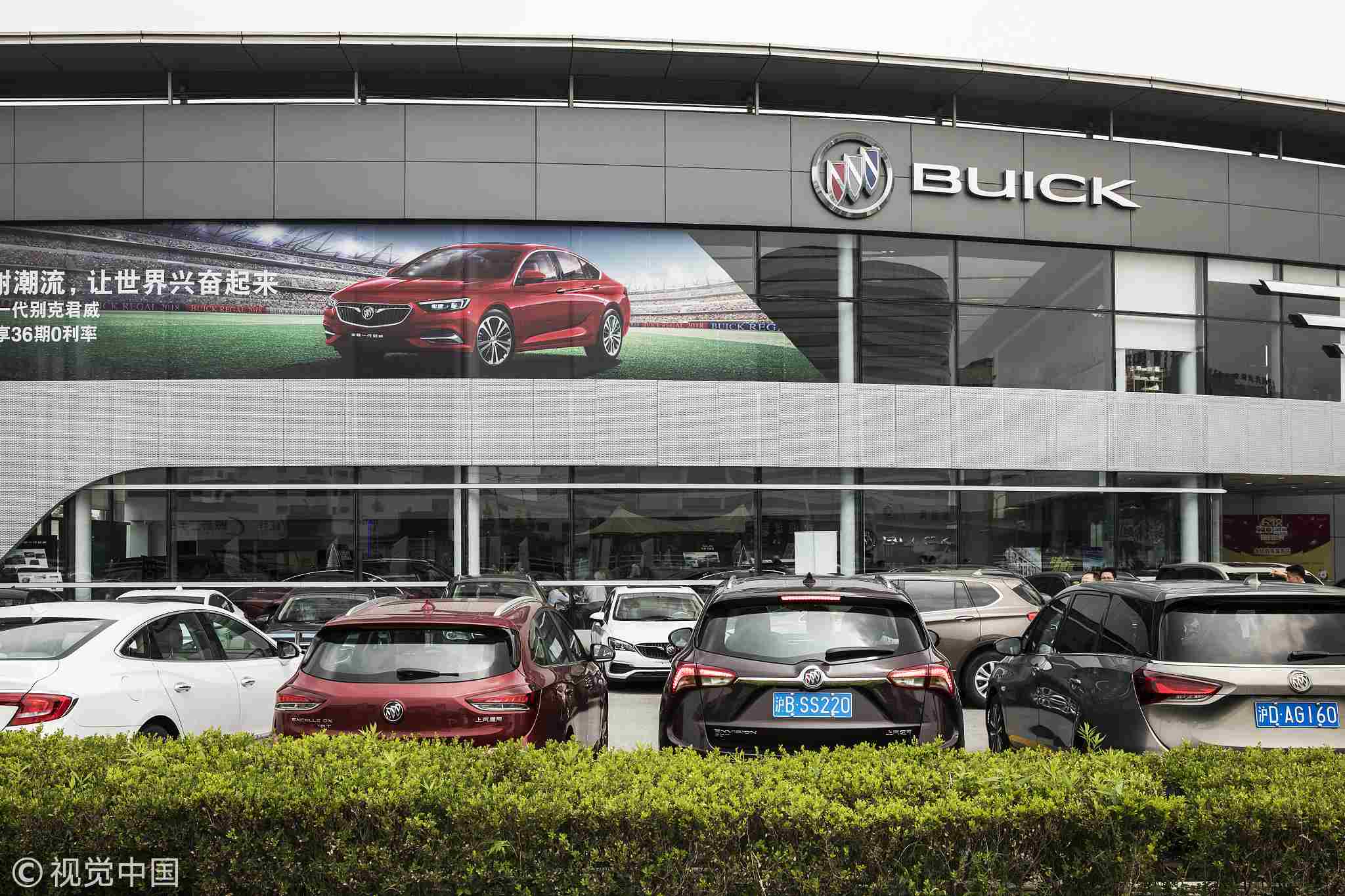
General Motors Co. (GM) Buick vehicles sit parked outside a car dealership in Shanghai, China, on July 8, 2018. /VCG Photo.
General Motors Co. (GM) Buick vehicles sit parked outside a car dealership in Shanghai, China, on July 8, 2018. /VCG Photo.
It should be noted that as two great powers, China and the US can neither destroy nor change one another. More importantly, the two countries share a wide range of common interests; and China-US cooperation can lead to many good things beneficial to both countries and the world.
“Both sides are stronger together and weaker apart,” a line that reflects the essence of China-US relations. The US government and all walks of society should ponder; nearly 30 years after the Cold War, does the US really want to have a replay of "McCarthyism"?
The quality of China-US relations, to a great extent, determines the trend of the global development in the 21st century and matters to the future and destiny of mankind.
China has always been committed to upholding the principle of non-conflict, non-confrontation, mutual respect, and win-win cooperation with the United States, enhancing mutual trust, expanding cooperation, managing differences and maintaining the healthy and stable development of China-US relations. We expect the US to get closer to China rather than get farther apart.
(If you want to contribute and have specific expertise, please contact us at opinions@cgtn.com.)