
Asia Pacific
14:50, 02-Jun-2019
U.S., Japan, ROK differ on DPRK missile assessment
 ["china"]
Share







Copied
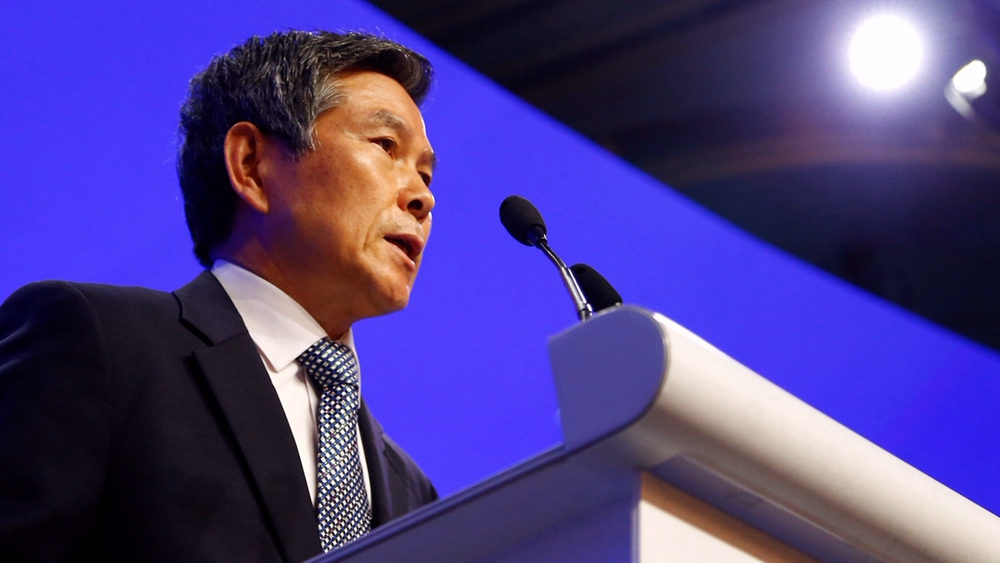
Two opposite viewpoints came to the forefront at the plenary on Korean security at the Asia Security Summit that is underway in Singapore.
Jeong Kyeong-doo, the Minister of National Defence for the Republic of Korea (ROK), expressed optimism towards the developments in the Korean Peninsula in recent years, while his Japanese counterpart, Takeshi Iwaya came across as more critical.
The ROK minister, in fact, fended off calls to increase pressure on the Democratic People's Republic of Korea (DPRK) after it test-fired missiles last month.
Jeong told the delegates at the defense summit: "There are discussions whether or not it is a short-range ballistic missile. There is a perspective that it is a Russian Iskander missile, or it is a new tactical ballistic missile.”
When asked whether the tests were a violation of a military agreement between the ROK and the DPRK to halt acts of aggression against each other, Jeong said the DPRK was "in fact acting within the boundaries" of the agreement and tensions between their militaries "have been lowered to a significant extent."
Highlighting the need to “maintain the momentum of dialogue,” Jeong called on the international community to "assure North Korea that the decision to denuclearize is the right decision."
Shawn Ho, an expert on the Korean Peninsula and Associate Research Fellow at Singapore's S. Rajaratnam School of International Studies, said the Japanese minister seemed sure that what DPRK fired were ballistic missiles.
“From the Japanese government's position, this would mean that they consider the launches to have been a violation of UN Security Council resolutions since those resolutions forbid ballistic missile launches by the DPRK,'' he said.
During his address at the plenary, Japanese Defense Minister Iwaya reiterated that the DPRK remains a threat to global security, and urged the international community to work closely to achieve denuclearization of the Korean Peninsula.
“We need to remind ourselves of the undeniable fact that there has been no essential change in North Korea's nuclear and missile capacities,” Iwaya said.
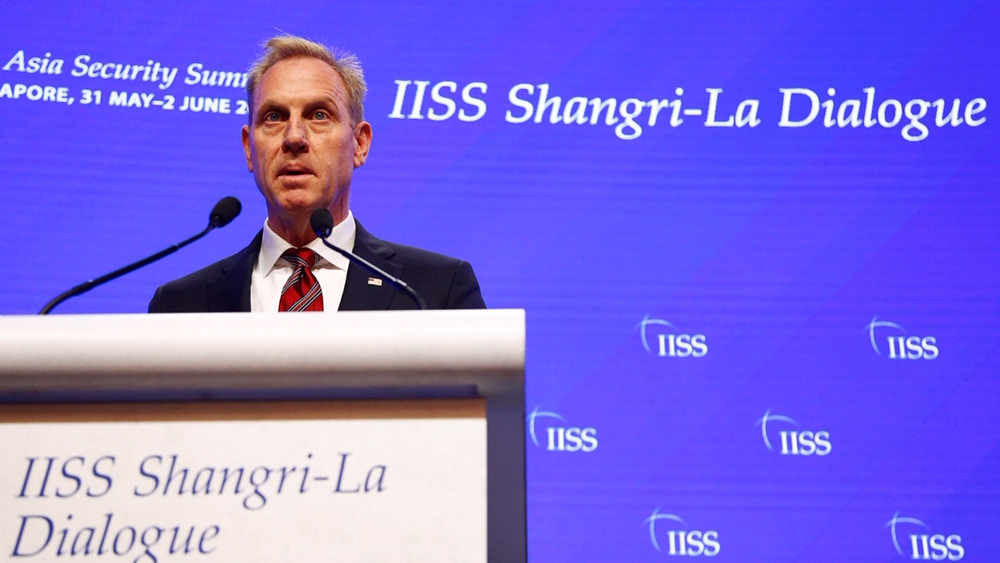
Acting U.S. Defense Secretary Patrick Shanahan during his address at the IISS Shangri-la Dialogue. /Reuters Photo
Acting U.S. Defense Secretary Patrick Shanahan during his address at the IISS Shangri-la Dialogue. /Reuters Photo
U.S. acting secretary Patrick Shanahan called the DPRK an "extraordinary threat” to regional and global security.
"We acknowledge that North Korea has neared a point where it could credibly strike regional allies, U.S. territory, and our forward-deployed forces. North Korea remains an extraordinary threat and requires continued vigilance," Shanahan said.
He also expressed the need to achieve fully verified denuclearization of the DPRK.
Lieutenant General Shao Yuanming, Deputy Chief of Staff, Joint Staff Department of the Central Military Commission of China said: "China has always followed the United Nation Security Council's decisions regarding the DPRK consistently, seriously, comprehensively and strictly."
Despite stalemate at the second summit in Hanoi, experts like Shawn Ho are hopeful.
"The sense that I get from the plenary session and comments is that the U.S. and the ROK are still keeping the door open for future dialogue and negotiations with the DPRK," Ho said.
(Cover: Republic of Korea's National Defense Minister Jeong Kyeong-doo speaks at the IISS Shangri-la Dialogue in Singapore. /Reuters Photo)