
World
21:12, 17-Jul-2018
Iraqi police use batons to disperse protesters as unrest spreads
Updated
20:53, 20-Jul-2018
 ["china"]
Share







Copied
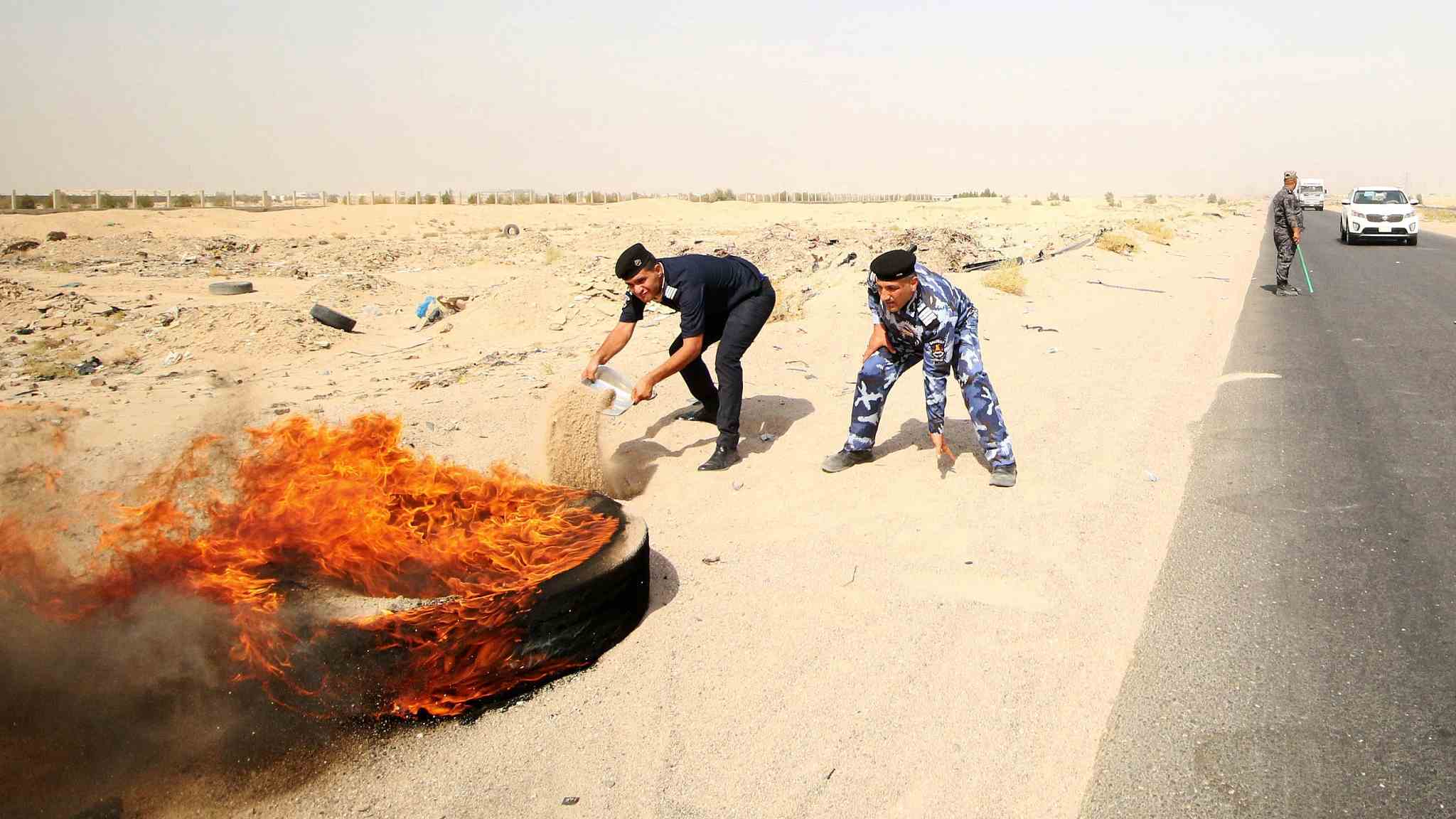
Unrest in southern Iraqi cities over poor basic services continued for a ninth day on Tuesday as police wielded batons and rubber hoses to disperse about 250 protesters gathered at the main entrance to the Zubair oilfield near Basra.
Protesters have attacked government buildings, branches of political parties and powerful Shi’ite militias and stormed the international airport in the holy city of Najaf as the unrest gathered pace.
Many Iraqis believe their leaders do not share the country’s oil wealth. Some demonstrators said foreign laborers were robbing them of employment at oil companies.
Officials and industry sources said the protests have not affected output at Zubair, run by Italy’s Eni, and the other major oilfields including Rumaila developed by BP and West Qurna 2 managed by Lukoil.
Three protesters have been killed, including one at West Qurna 2.
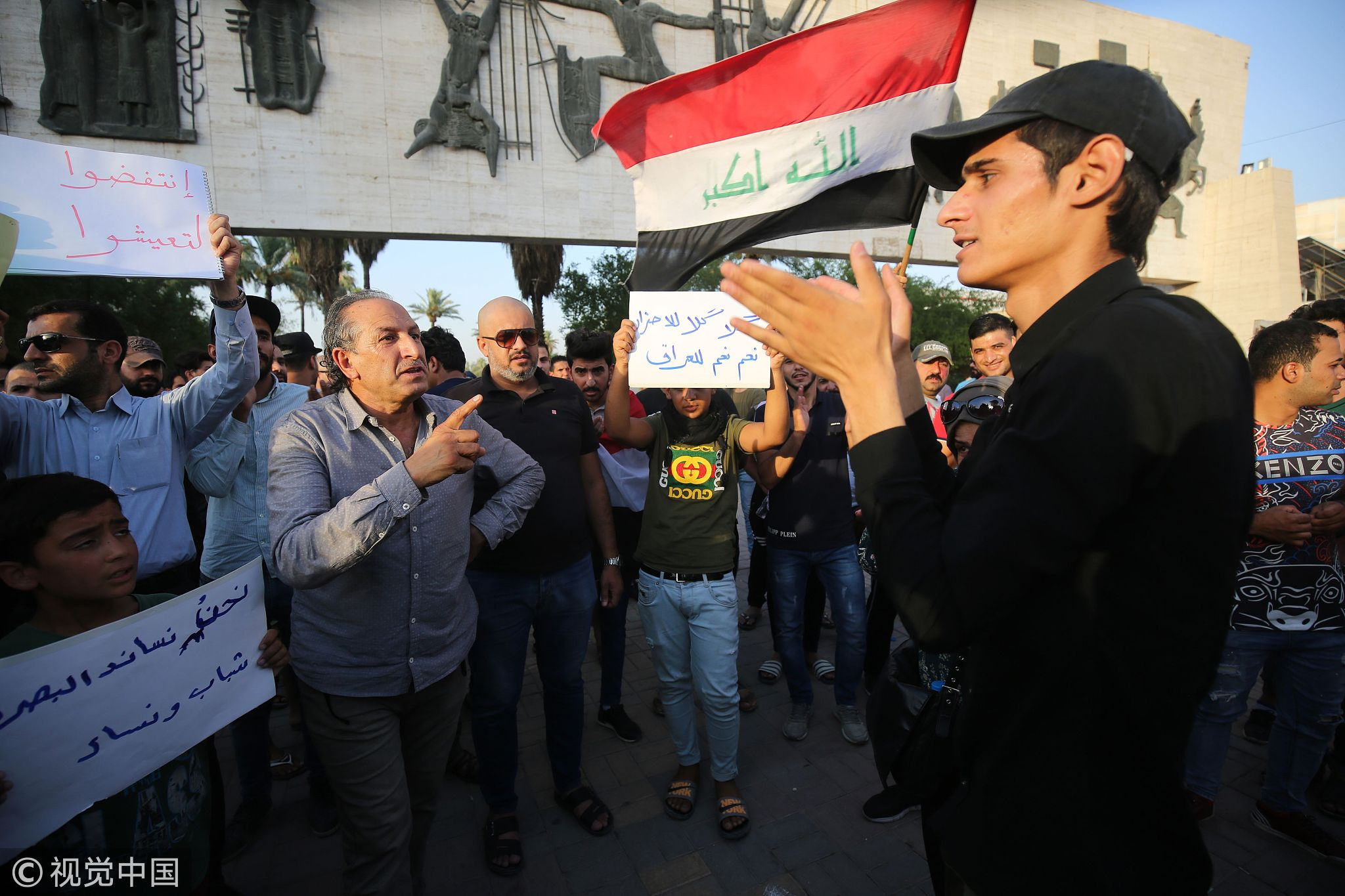
Iraqis wave national flags and hold up signs during a demonstration against unemployment in the capital Baghdad's Tahrir Square on July 16, 2018. /VCG Photo
Iraqis wave national flags and hold up signs during a demonstration against unemployment in the capital Baghdad's Tahrir Square on July 16, 2018. /VCG Photo
“We the people of Basra hear about the Iraqi oil and its huge revenues, but we never enjoy its benefits,” said 24-year-old protester Esam Jabbar, who said he was unemployed.
“Strangers have decent jobs at our oilfields and we don’t have the money to pay for a cigarette. That’s wrong and must be stopped.”
At the gate of Zubair field, police beat protesters on their backs and legs with batons and rubber hoses.
Blood ran down one policeman’s face after protesters hurled stones. Policemen also threw sand to put out tires that the protesters had set ablaze.
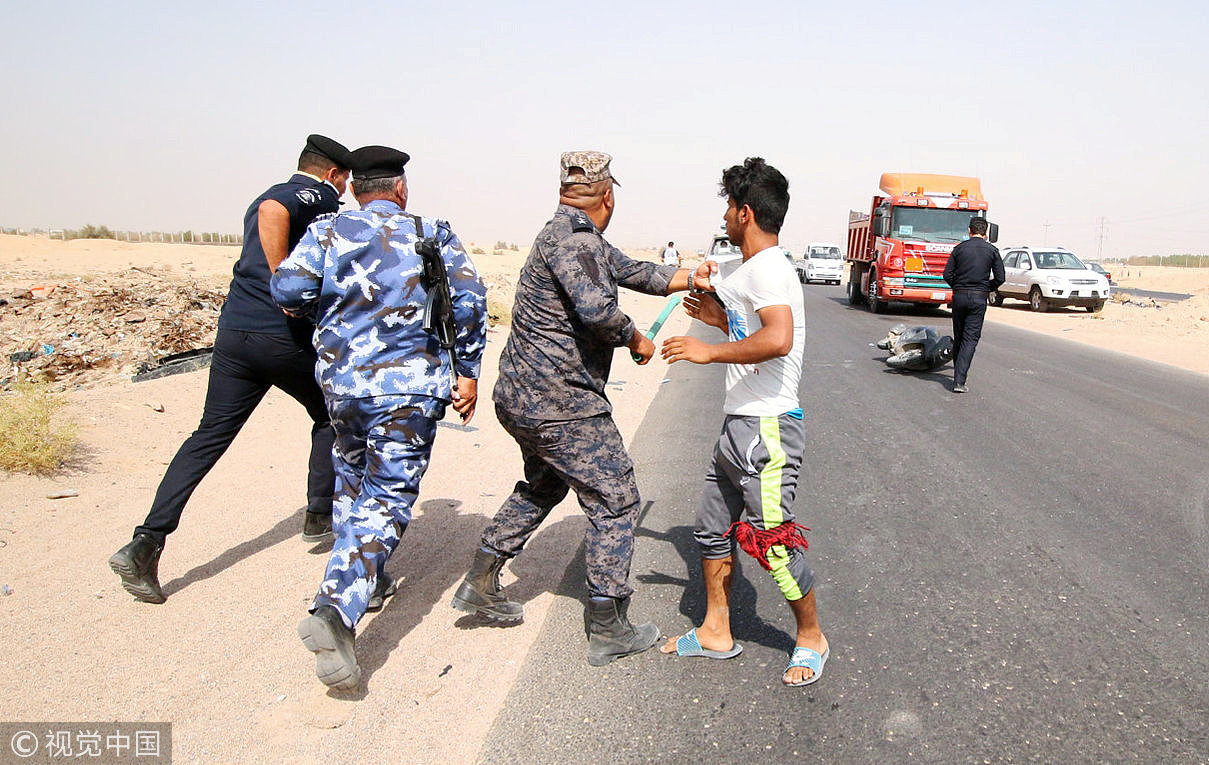
An Iraqi policeman arrests a demonstrator during a protest at the main entrance to the giant Zubair oilfield near Basra, Iraq, July 17, 2018. /VCG Photo
An Iraqi policeman arrests a demonstrator during a protest at the main entrance to the giant Zubair oilfield near Basra, Iraq, July 17, 2018. /VCG Photo
Iraq is the second-largest producer in the Organization of the Petroleum Exporting Countries after Saudi Arabia.
Crude exports account for 95 percent of state revenue and any disruptions could badly damage its already limping economy at a time when Iraq needs tens of billions of dollars to rebuild after the three-year war with ISIL.
Prolonged instability in the south could drive up global oil prices. Production at the Zubair field was 475,000 bpd, an Iraqi oil official said in May.
Iraq exported an average of 3.566 million barrels per day from its southern oilfields so far in July, said senior oil officials, levels confirming that the troubles have not disrupted crude shipments from the region.
Demonstrators, who have endured sweltering heat to press their demands, show no sign of letting up. They have vented anger in Basra, the biggest city in the south, Samawa, Amara, Nassiriya, Najaf, Kerbala and Hilla.
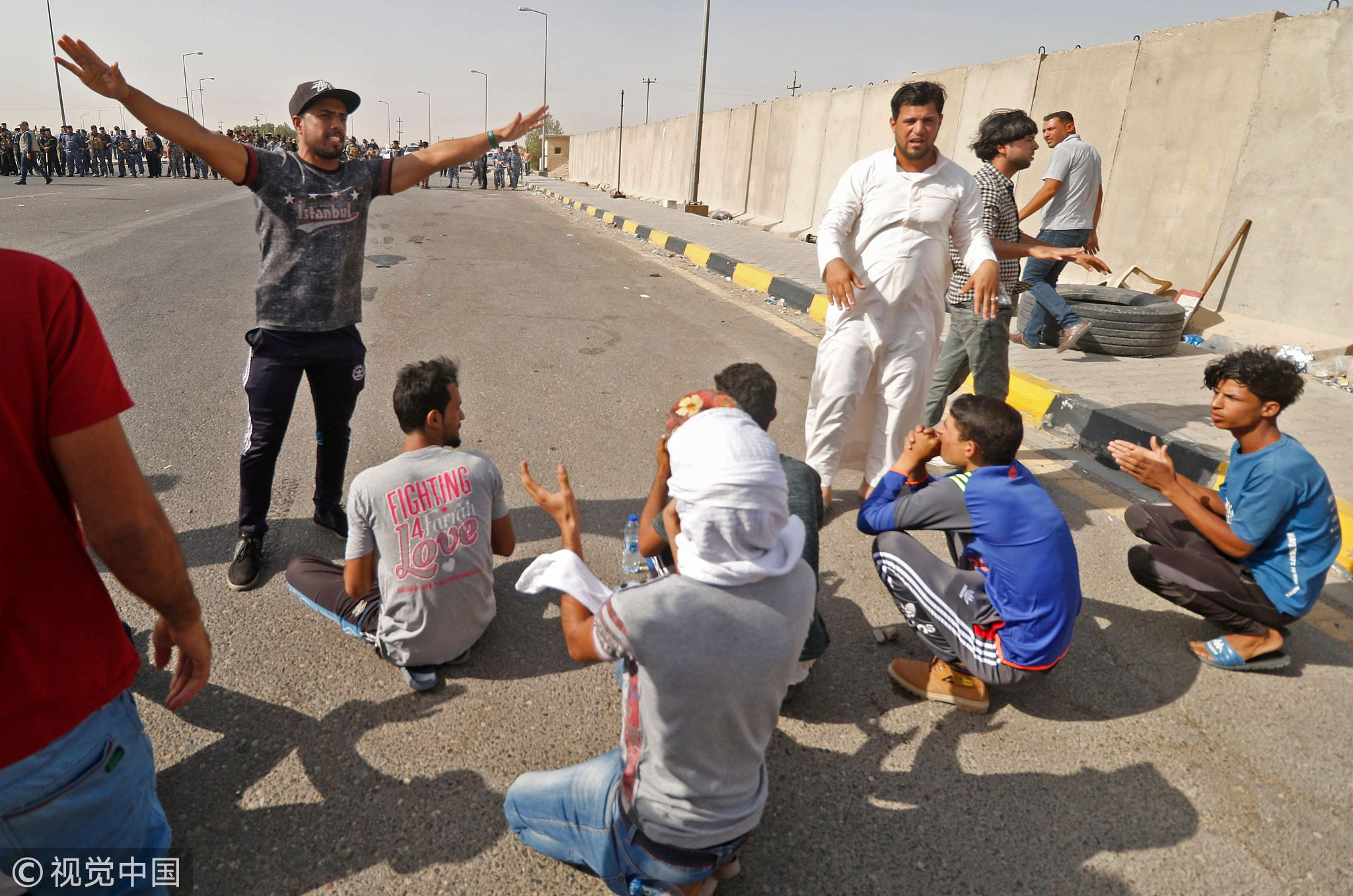
Iraqi protesters demonstrate against unemployment and a lack of basic services outside the oil fields of al-Zubayr, about 20 kilometers southwest of the southern city Basra, July 17, 2018. /VCG Photo
Iraqi protesters demonstrate against unemployment and a lack of basic services outside the oil fields of al-Zubayr, about 20 kilometers southwest of the southern city Basra, July 17, 2018. /VCG Photo
“We had orders not to use live fire but we also have orders not to allow anyone to disrupt operations at oilfields and we will take necessary measures to keep the protesters away from the fields,” said a policeman at the scene.
Protests over the same issues have occurred in the past. The unrest this time is more widespread and is politically sensitive.
Prime Minister Haider al-Abadi is seeking a second term after a May 12 parliamentary election tainted by allegations of corruption.
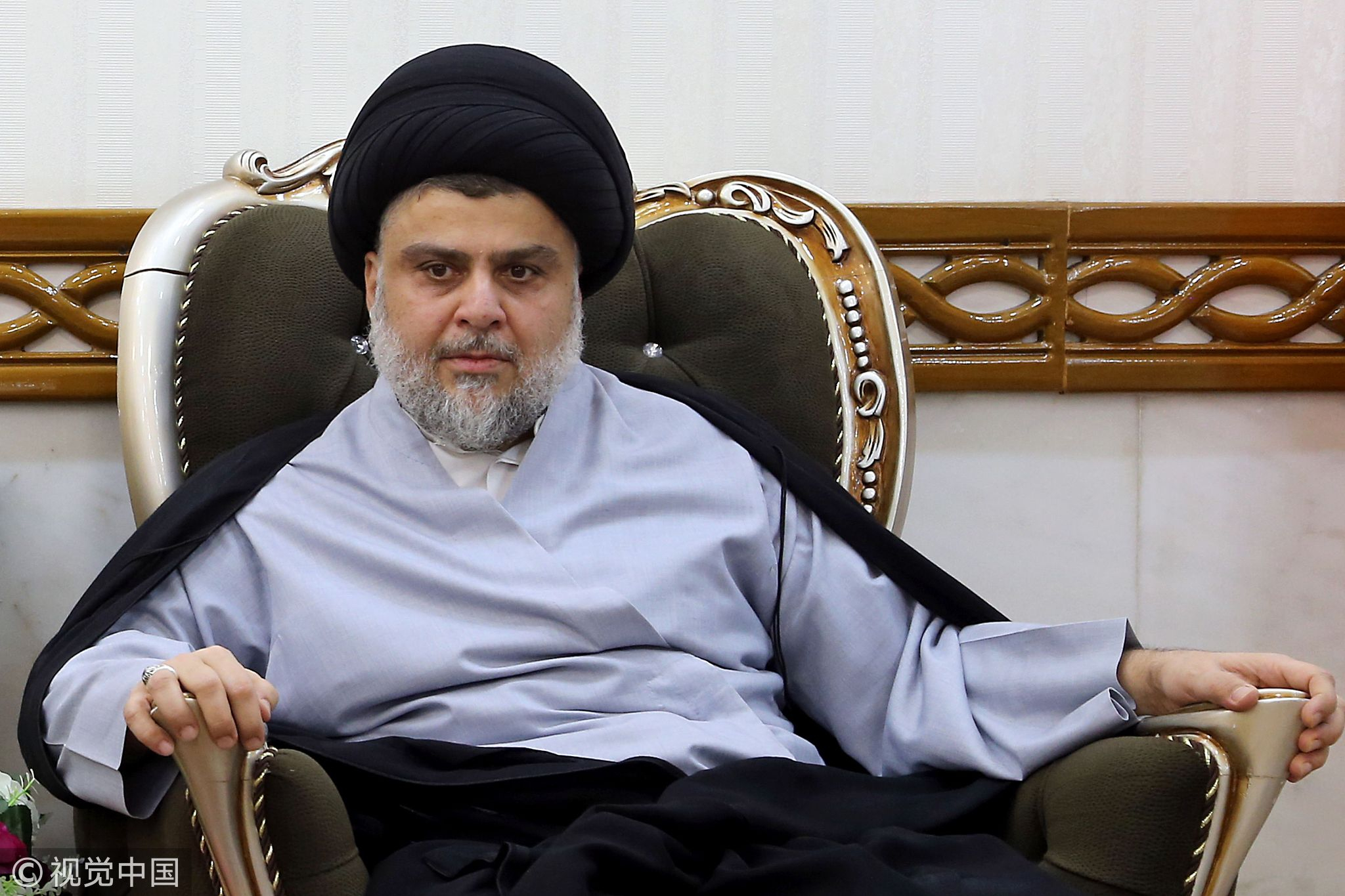
Iraqi Shiite cleric and leader Moqtada al-Sadr at a meeting with Iraqi Prime Minister in Najaf, June 23, 2018. /VCG Photo
Iraqi Shiite cleric and leader Moqtada al-Sadr at a meeting with Iraqi Prime Minister in Najaf, June 23, 2018. /VCG Photo
Politicians are struggling to form a coalition government. Populist Shi’ite cleric Moqtada al-Sadr, whose political bloc won the majority in the poll, may now be in a stronger position to influence the choice of prime minister.
He defeated Iranian-backed rivals by promising to generate jobs, help the poor and eradicate corruption.
In a meeting with government officials carried on state television, Abadi promised to allocate funds for water and electricity and create jobs in Basra, once dubbed the “Venice of the Middle East” for its network of canals.
Source(s): Reuters