
Business
15:09, 04-May-2018
China opens iron ore futures trading to foreigners
 ["china"]
Share







Copied
02:21
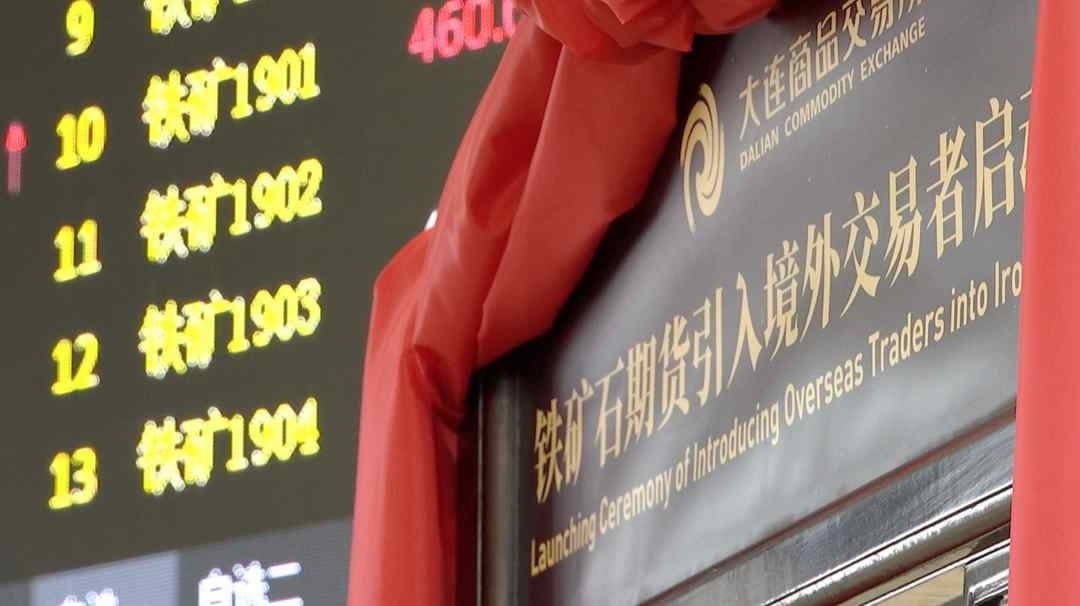
China’s Dalian Commodity Exchange started introducing overseas dealers into its iron ore futures on Friday. The move follows the debut of China’s crude oil futures last month — another initiative in opening up markets while having more of a say in pricing commodities.
Overseas traders can now participate directly via Chinese futures companies or overseas brokers without going through the hassles of establishing a local firm to trade. While the contracts are renminbi-denominated, companies can put down deposits in US dollars.
As the world’s largest iron ore importer, China's impact on global prices so far has been limited. The Platts Iron Ore Index determines the prices. While the index considers bids and offers from some “widely-traded brands” to assess its spot market value for the raw material, it is not based on publicly traded prices.
Dalian's iron ore futures are already one of the world's top ten actively traded futures contracts with a trade volume of 329 million lots last year — over 20 times the second largest iron ore derivative market of Singapore.
“China‘s domestic iron ore futures have been listed for five years with smooth operation and prices becoming accepted by the industry. We are inviting overseas traders now to increase the global influence of the iron ore futures,” said Wang.
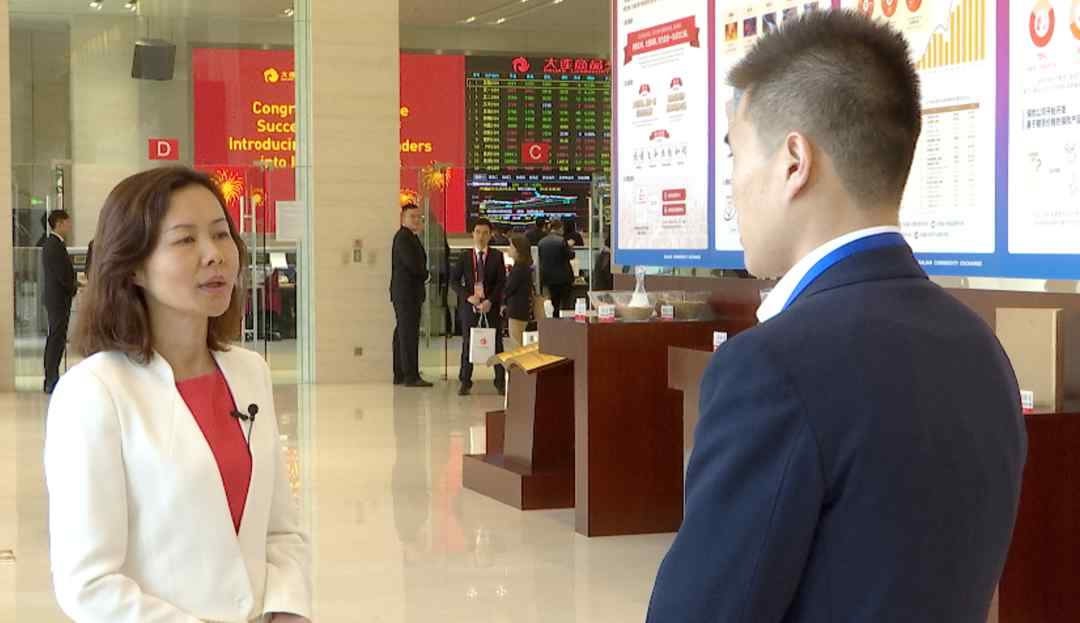
Rochelle Wei [L], the CEO for J.P. Morgan Futures Co. LTD, speaks with CGTN at the Dalian Commodity Exchange. /CGTN Photo
Rochelle Wei [L], the CEO for J.P. Morgan Futures Co. LTD, speaks with CGTN at the Dalian Commodity Exchange. /CGTN Photo
Companies like J.P. Morgan have high hopes for the internationalized iron ore futures.
“The enormous opportunity for the Dalian Iron ore contract is that it will, over time, reduce the occasionally observed price disparity to other international exchange products and revert to a price that reflects global trade fundamentals. J.P. Morgan Futures Co. Ltd is already a member of the Dalian Commodity Exchange and is currently set up to trade for on-shore clients. We are optimistic that we will satisfy all the operational, technology and control requirements to facilitate access for our international client base in due course,” said Rochelle Wei, the CEO for J.P. Morgan Futures Co. LTD.
Opening up to global traders, however, means ironing out kinks like currency conversion and delivery issues. More consolidation in the steel industry is also needed to gain more pricing power of the raw material.