
Opinions
15:55, 09-May-2018
Opinion: Xi-Kim Summit and how DPRK is strengthening its int'l negotiating position
 ["china"]
Share







Copied
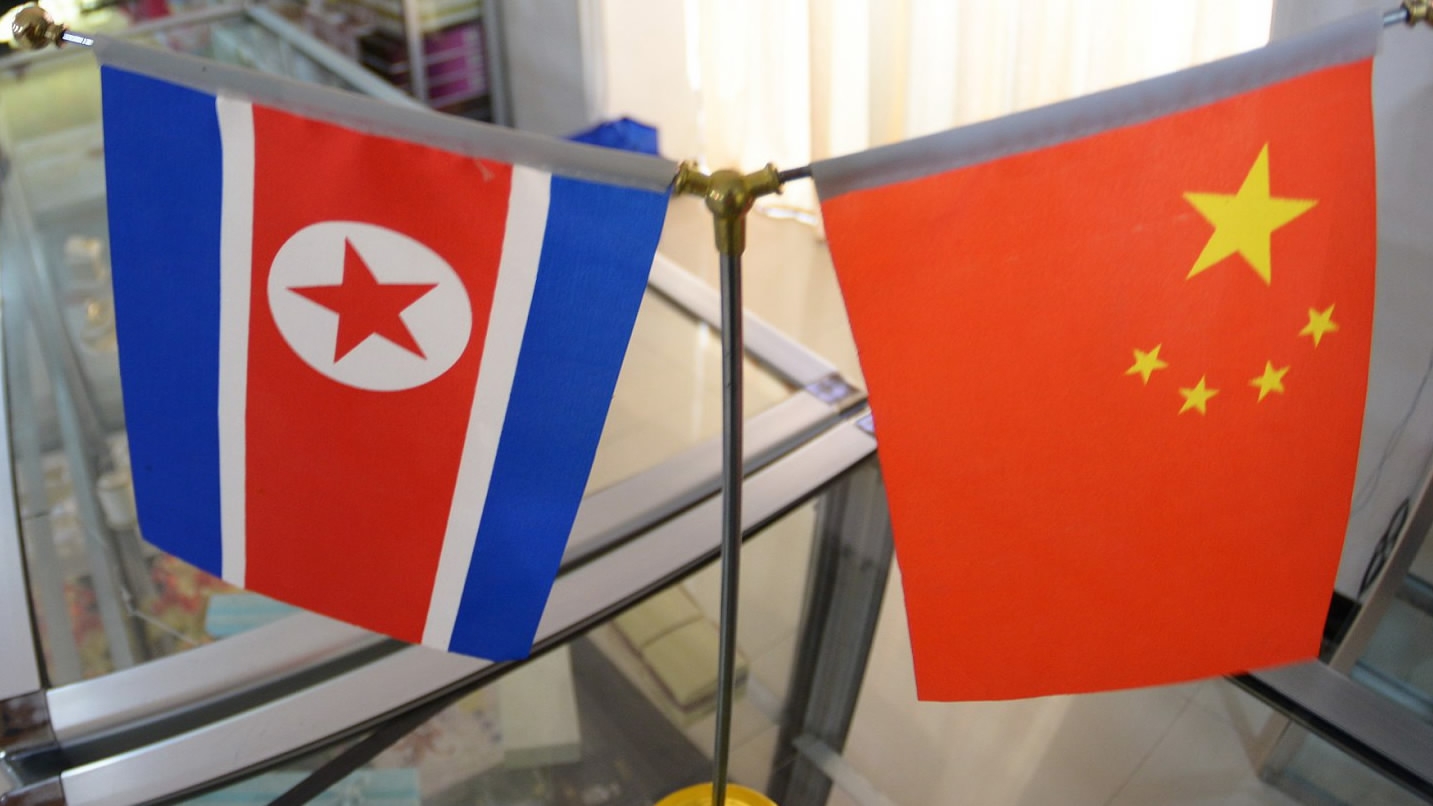
On May 7, the DPRK leader Kim Jong Un made a surprise visit to Dalian, China. This was his second visit to China in just 40 days. Kim's two visits to China in such a short period of time exceeds any routine diplomatic practices. This unusual turn of events is of course closely related to the rapid changing situation on the Korean Peninsula.
First of all, the DPRK needs to consolidate relations with China to strive for greater bargaining power in the inter-Korean talks and the coming Kim-Trump summit.
Although the DPRK has eased tensions with the US and ROK recently, the structural contradictions between the two sides have not disappeared.
The DPRK and the Republic of Korea (ROK) are still contending for who would play the leading role if the Korean Peninsula ever became unified.
The US-ROK alliance is still a threat to DPRK’s security. And the US’ hostility towards the DPRK administration and human rights still exists.
Recently, on the eve of the Trump-Kim summit, the US side still emphasized that it would continue the maximum pressure and military deterrence until the DPRK completely realized denuclearization. The US hyped a Libya-style nuclear abandonment model, requiring the DPRK to abandon its nuclear program in the short term.
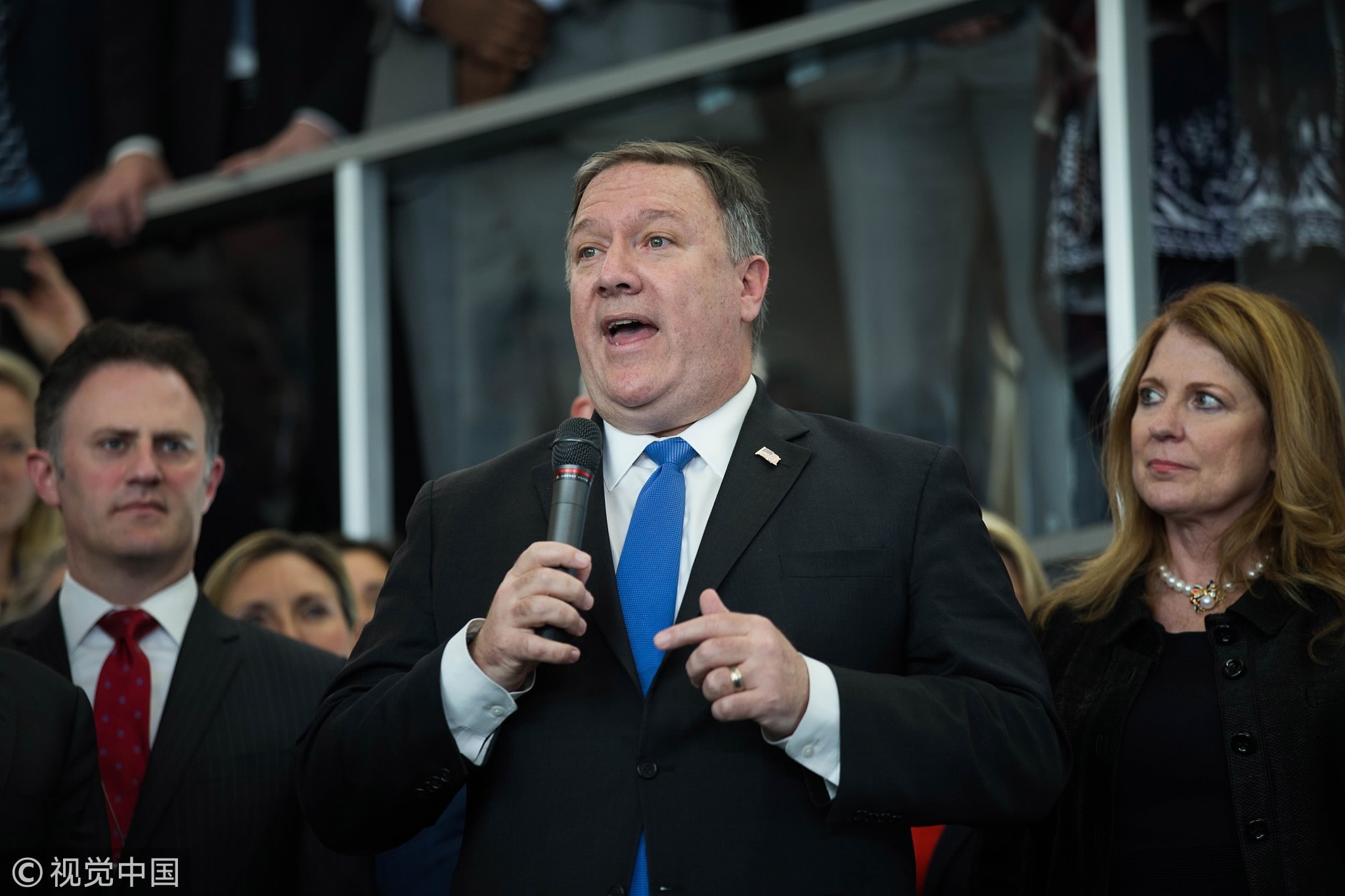
US Secretary of State Mike Pompeo (C) makes remarks during a welcome ceremony with his wife Susan Pompeo (R) in the lobby of the Harry S. Truman Building, May 1, 2018./VCG Photo
US Secretary of State Mike Pompeo (C) makes remarks during a welcome ceremony with his wife Susan Pompeo (R) in the lobby of the Harry S. Truman Building, May 1, 2018./VCG Photo
On May 2, Mike Pompeo, the new Secretary of State, said that the DPRK needed permanent, verifiable, and irreversible dismantlement (PVID) of weapons of mass destruction (WMD), and the previous CVID was upgraded to a PVID.
On May 4, the US National Security Adviser John Bolton met Japan’s National Security Director Masaru Toruchi, saying that the US is demanding that the DPRK permanently abandon all weapons of mass destruction, including nuclear, chemical and biological weapons.
What the US demanded for the DPRK has expanded from denuclearization to the abandonment of WMDs. The attitude of the US continues to spur DPRK’s nerves.
On May 6, a spokesman for the DPRK criticized the US’s acts of pressure on the DPRK saying they were “dangerous moves to return the situation to its original point.”
Under high pressure from the US, the DPRK urgently needs to strengthen coordination with China, strive for China's support, and avoid the DPRK-US summit in full accordance with the design of the US.
Secondly, the second Xi-Kim summit has demonstrated China's indispensable role in the denuclearization of the Korean Peninsula and the transition from Armistice Agreement to Peace Agreement.
The summit reaffirmed DPRK’s willingness to achieve denuclearization, which will enhance mutual trust and promote the detente process.
Kim Jong Un made it clear that the denuclearization of the Korean Peninsula is a clear and consistent position of the DPRK side. He hopes that the denuclearization will be achieved in “phased and synchronous measures”.
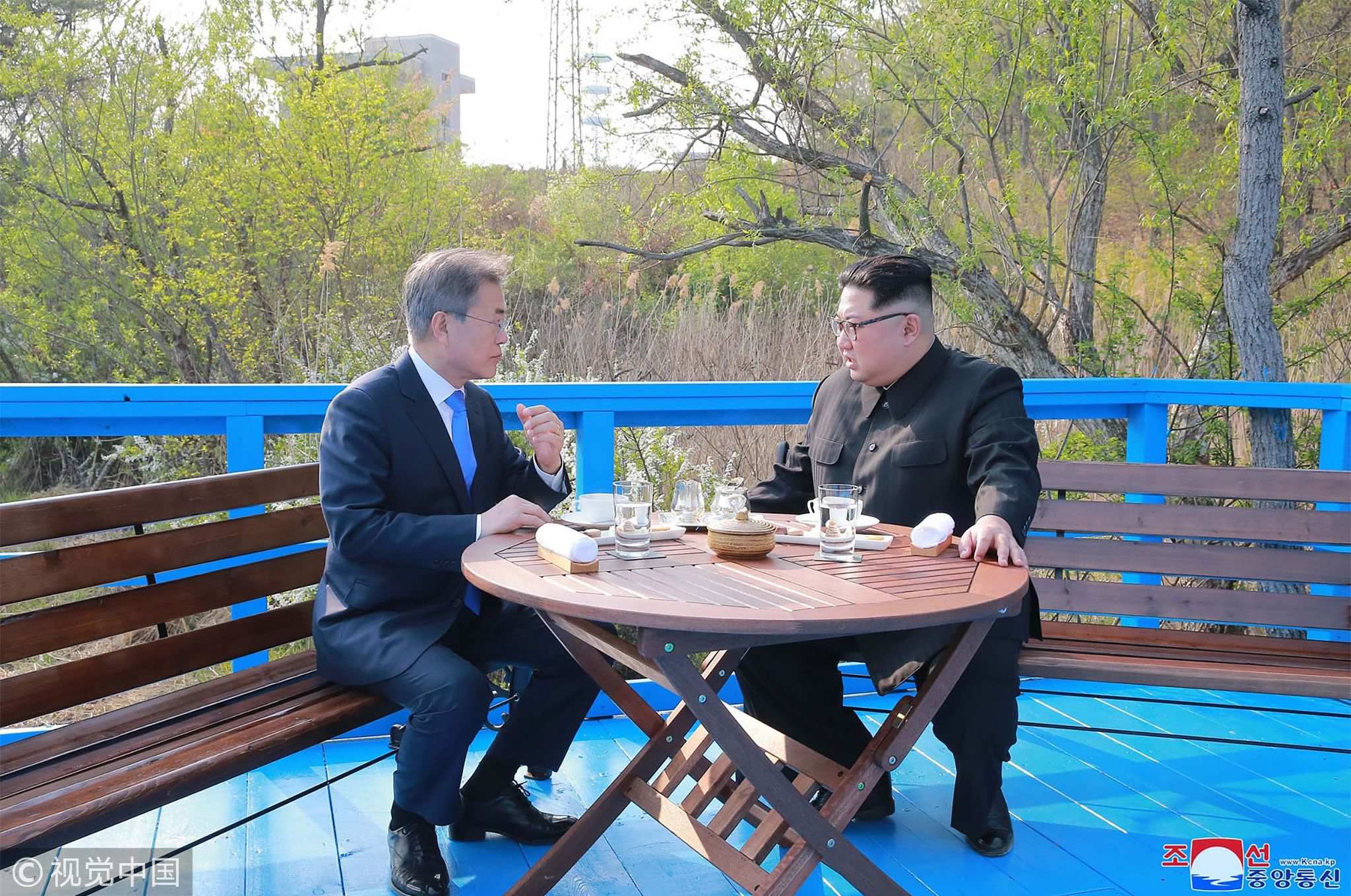
DPRK leader Kim Jong Un (R) talks with South Korean President Moon Jae-in on a bridge next to the military demarcation line at the truce village of Panmunjom, April 27, 2018./VCG Photo
DPRK leader Kim Jong Un (R) talks with South Korean President Moon Jae-in on a bridge next to the military demarcation line at the truce village of Panmunjom, April 27, 2018./VCG Photo
The leaders of both sides in their recent "Declaration of Panmunjom" emphasized the transition from an armistice agreement to a peace agreement as soon as possible.
China is a signatory to the armistice agreement and jurisprudentially should continue to play an important role in the peace agreement.
The absence of security and mutual trust between the DPRK and the US and the ROK has made China an important guarantor to build the peace mechanism. Just on the day of the Xi-Kim summit, President Xi held telephone talks with President Trump to discuss the Korean Peninsula issues, showing China's important role in coordinating all parties.
Thirdly, the Xi-Kim summit will consolidate bilateral relations between China and the DPRK, which is an important move of China’s periphery diplomacy.
The DPRK is one of China's most important neighboring countries, which has great geopolitical and strategic significance for China. The development of China-DPRK relations is conducive to making China’s peripheral security and peace in Northeast Asia.
The Summit put forward four consensuses on China-DPRK relations in the new era, namely, strengthening the traditional friendship between both sides, confirming the major strategic significance of bilateral relations, strengthening high-level exchanges and strategic communications, and enhancing non-governmental exchanges. This will clear the direction for the healthy and stable development of China-DPRK relations in the future.
After all, the Xi-Kim summit further confirmed the general tone of the denuclearization of the Korean Peninsula and the easing of regional situations, which is also the reason why President Trump welcomed the summit.
(Wang Fudong is assistant research fellow at the Division of Korean Peninsula Studies under China Institute of Contemporary International Relations. The article reflects the author's opinion, and not necessarily the views of CGTN.)