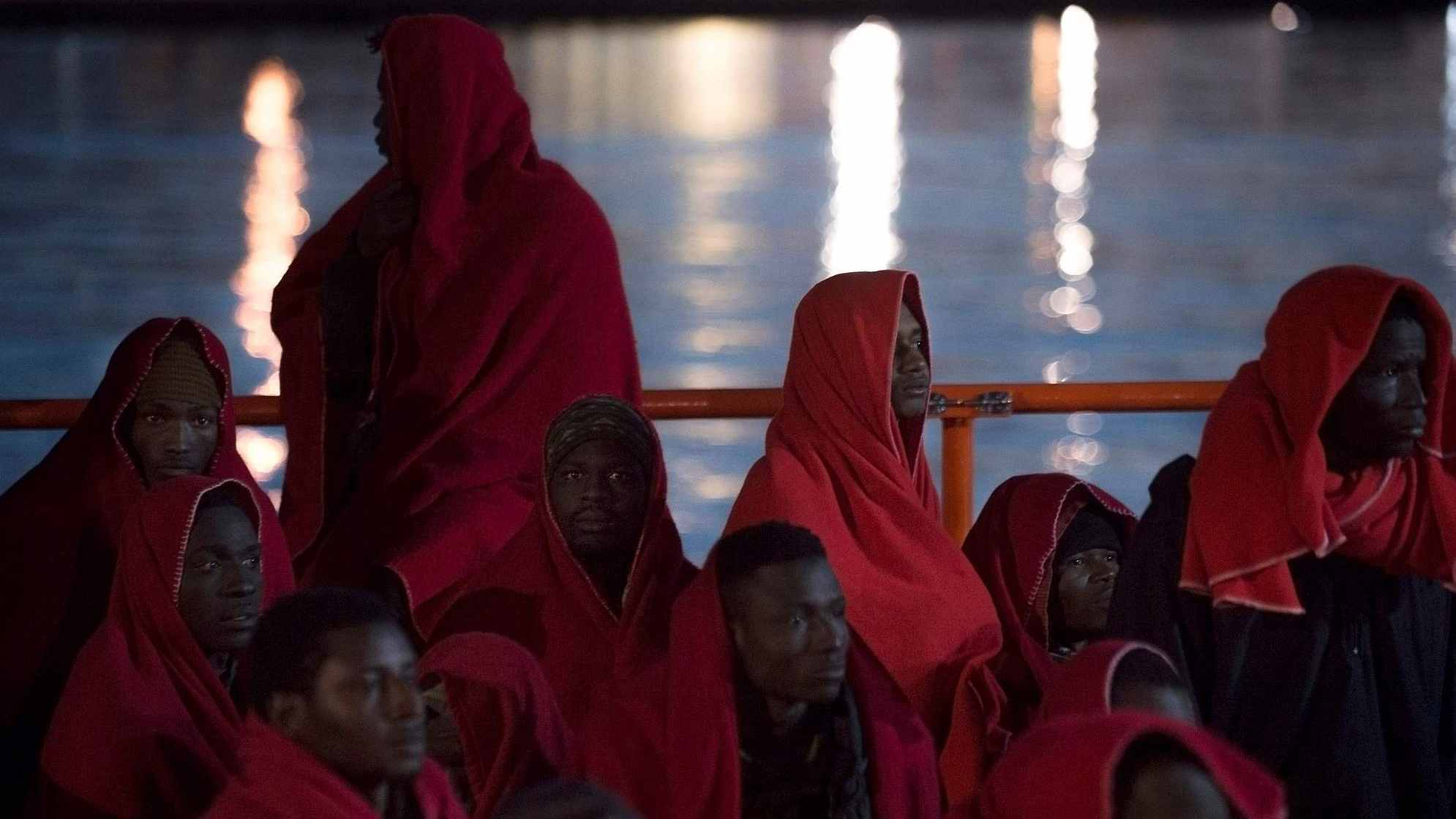
Finally, the first group of migrants rescued by the
Aquarius charity-run vessel have arrived at a port in Valencia on Sunday.
629 migrants were refused entry by Italy and Malta a week ago and remained at sea for about 36 hours before Spain said it would accept at least some of the migrants.
Though the Aquarius issue has been temporarily resolved, the flow of migrants, the protests in European countries and the quarrel on the refugee migration issues are continuing.
A migrant stands on board a Spanish coast guard vessel as it arrives at the southern Spanish port of Malaga on January 13, 2018 after the rescue of an inflatable boat carrying 54 Africans off the Spanish coast. /VCG Photo
A migrant stands on board a Spanish coast guard vessel as it arrives at the southern Spanish port of Malaga on January 13, 2018 after the rescue of an inflatable boat carrying 54 Africans off the Spanish coast. /VCG Photo
Where are the migrants from?
These migrants on the Aquarius come from 26 countries, mainly Africa but also Afghanistan, Bangladesh and Pakistan, according to Doctors Without Borders (MSF).
A large number of people have fled Africa and the Middle East as a result of terror and civil war.
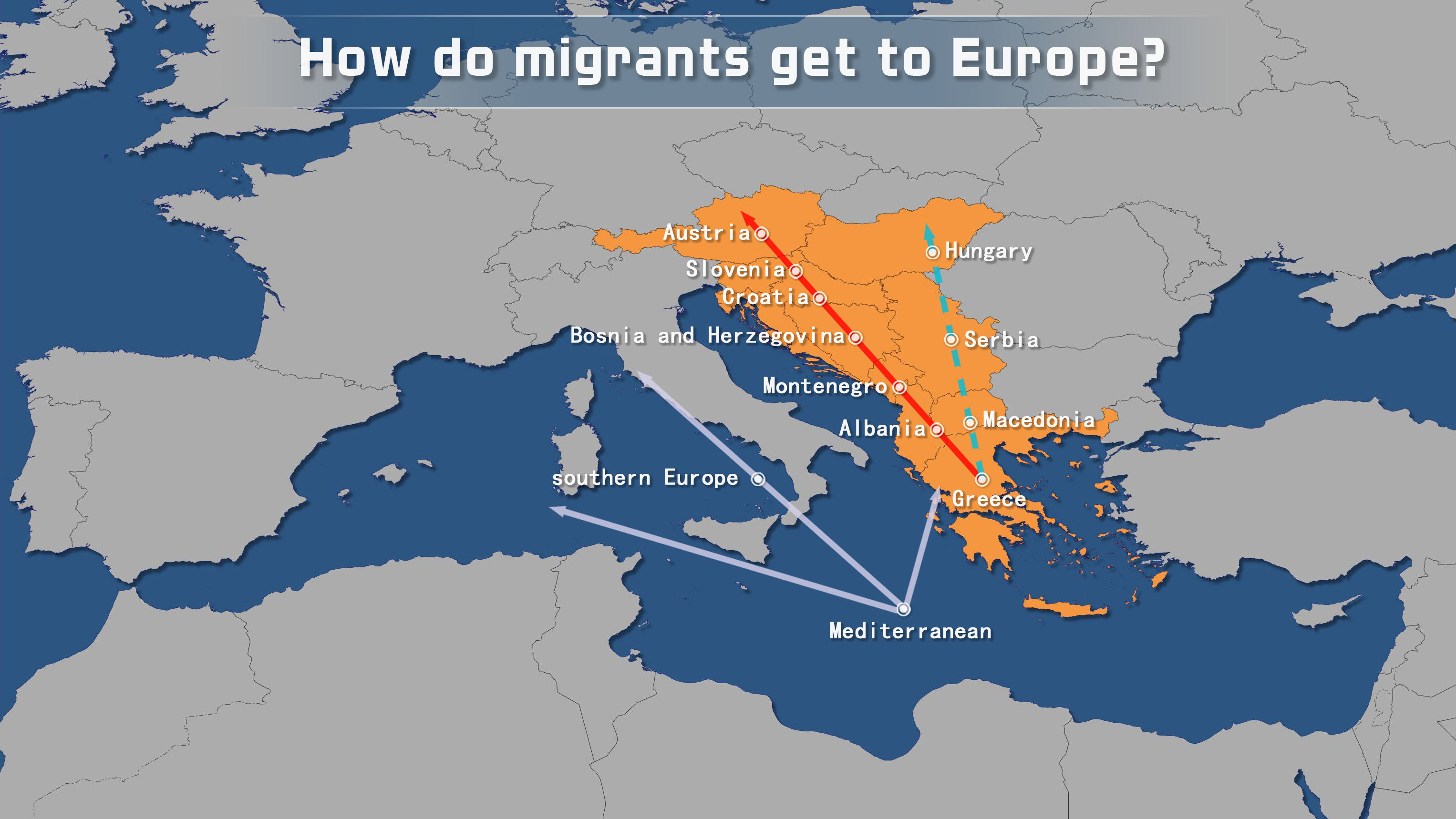
There are two main routes for refugees to enter Europe.
In addition to the access to southern Europe through the Mediterranean, the other passage through Greece, Macedonia, Serbia, Hungary, and other countries is called the "Balkans passage", which has been cut off by the countries along with closing the border to the refugees.
However, it is reported that the refugees have opened up a "new Balkan passage" in the past two years, starting from Greece, running along Albania, Montenegro, Bosnia and Herzegovina, Croatia and Slovenia, to Austria.
How has Europe responded?
Italy
Italian interior minister Matteo Salvini called on France to accept 9,000 migrants after its refusal of the Aquarius.
On Saturday, thousands of people took to the streets of the Italian capital Rome to
protest against the new government's hard-line policies against migrants landing on Italy's shores.
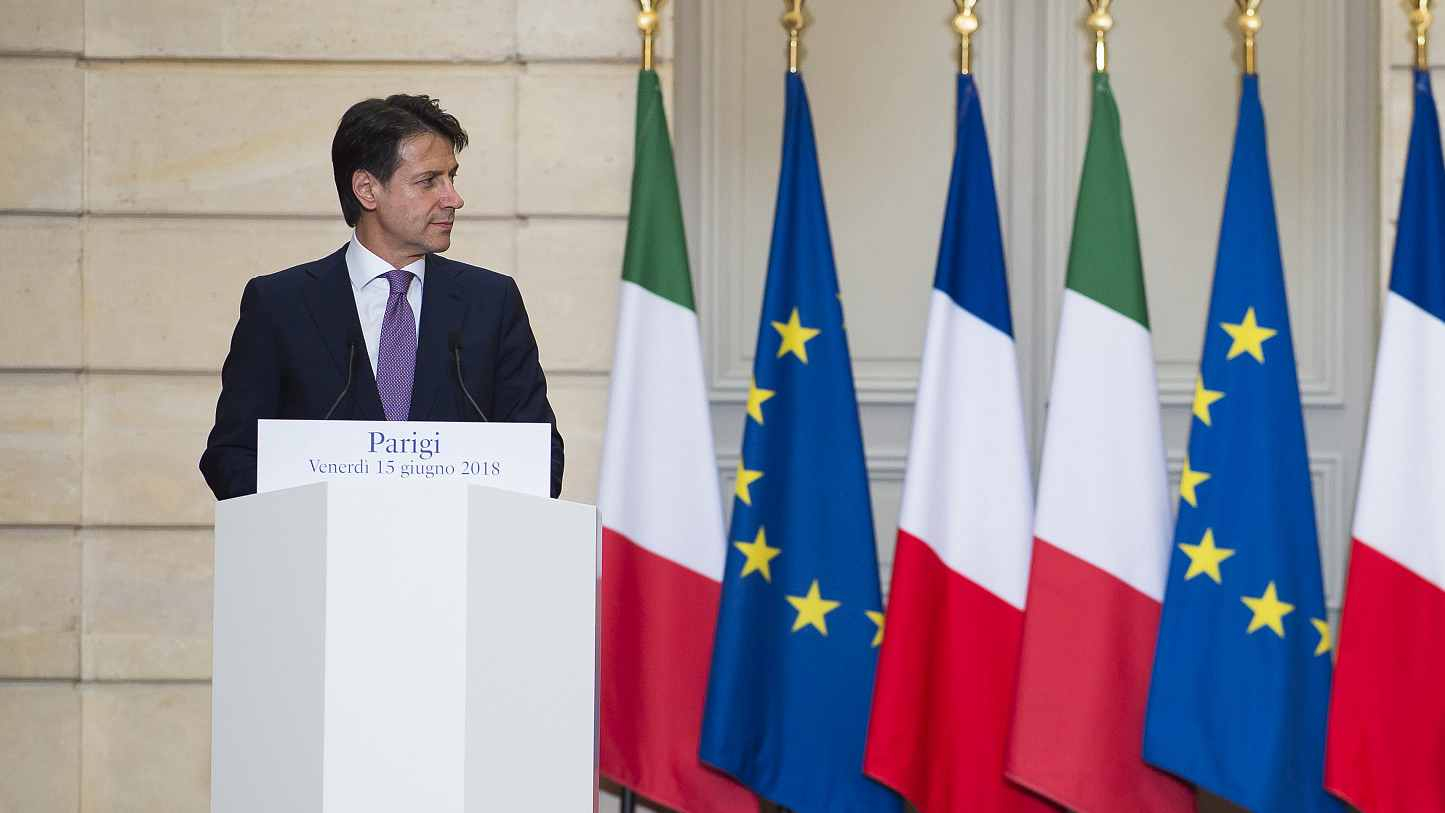
Italian Prime Minister Giuseppe Conte and French President Emmanuel Macron (not pictured) during a press conference at Elysee Palace in Paris on June 15, 2018. /VCG Photo
Italian Prime Minister Giuseppe Conte and French President Emmanuel Macron (not pictured) during a press conference at Elysee Palace in Paris on June 15, 2018. /VCG Photo
More than 73,300 migrants reached Italy in 2017, a 14 percent increase over the same period in 2016 and some 10,000 refugees are expected to follow in 2018.
Spain
Most Spaniards support the idea of welcoming and helping to integrate refugees, pollsters say.

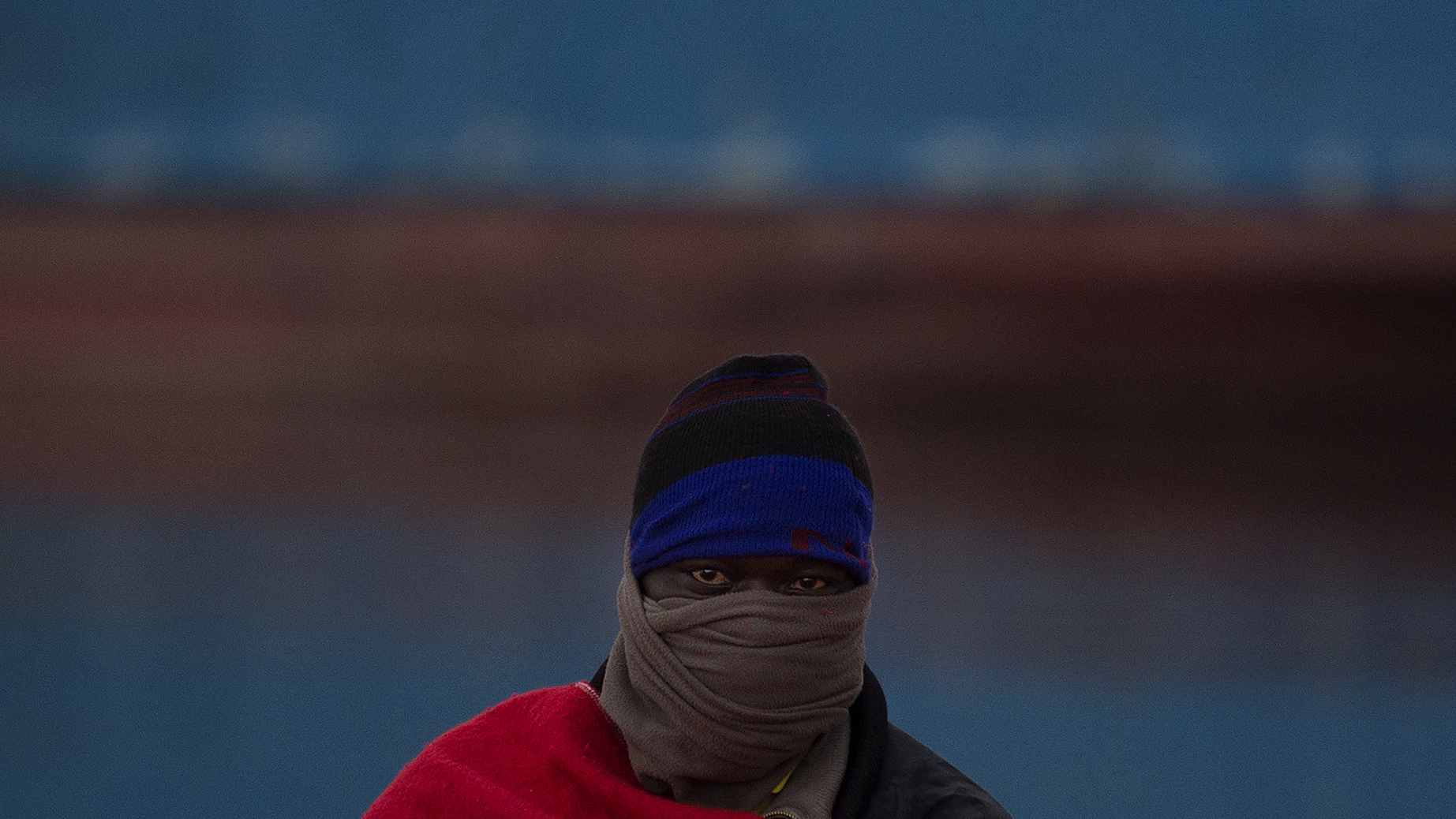
Migrants, part of a group intercepted aboard a dinghy off the coast in the Mediterranean Sea, stand after arriving on a rescue boat at the port of Malaga, Spain, January 13, 2018. /VCG Photo
Migrants, part of a group intercepted aboard a dinghy off the coast in the Mediterranean Sea, stand after arriving on a rescue boat at the port of Malaga, Spain, January 13, 2018. /VCG Photo
Through the first five months of 2018, some 35,455 migrants reached European shores, with 11,792 of them arriving in Spain, the Wall Street Journal reported.
Germany
Migration is an issue that demands a European solution, German Chancellor Angela Merkel insisted on Saturday
Merkel's refugee policy, which has led to more than 1.6 million migrants arriving in Germany in the last three years, is blamed for a surge in support for the far-right Alternative for Germany (AfD).
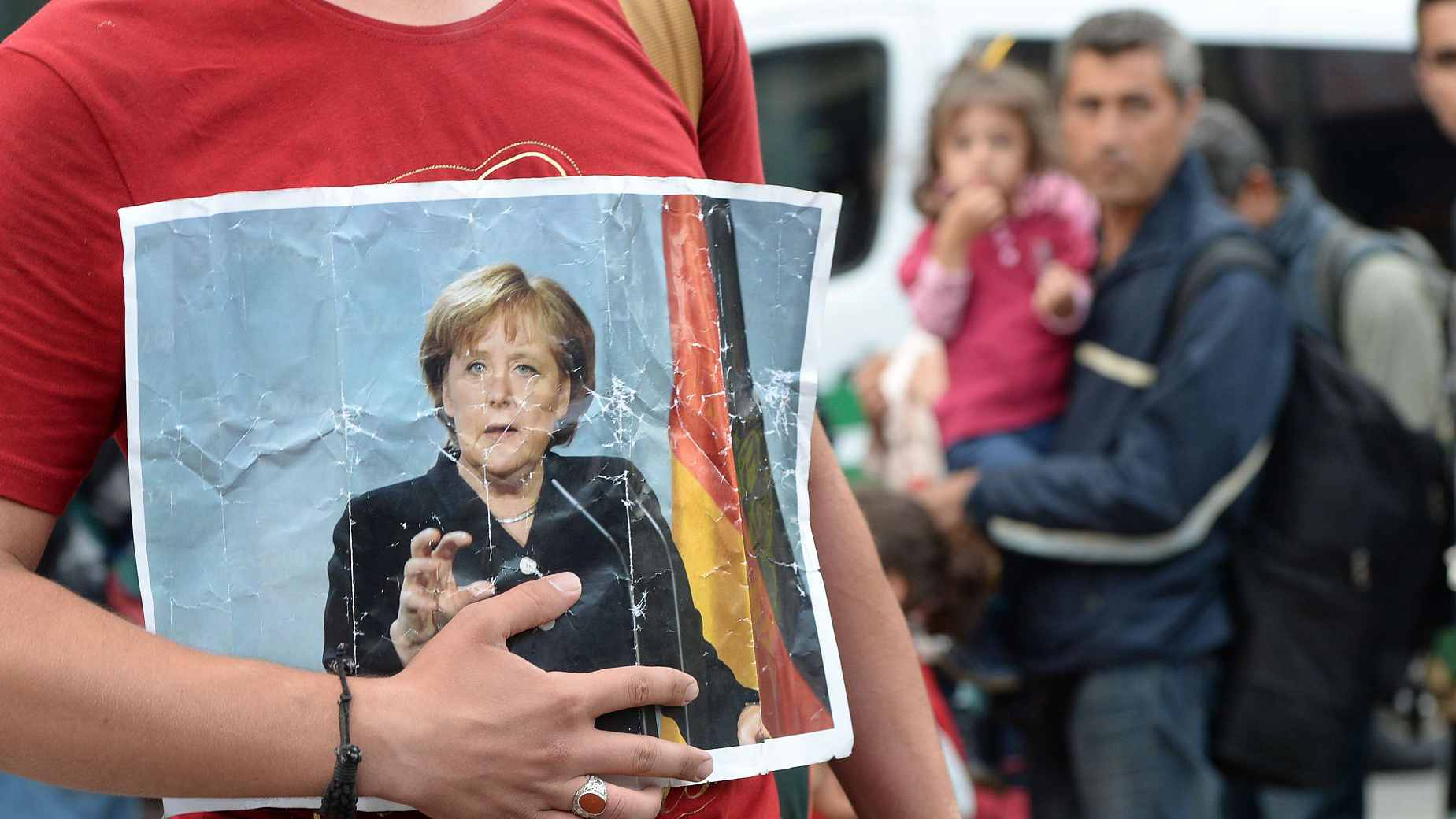
In this file photo taken on September 5, 2015, a refugee holds a picture of German Chancellor Angela Merkel after the arrival of refugees at the main train station in Munich, southern Germany. /VCG Photo
In this file photo taken on September 5, 2015, a refugee holds a picture of German Chancellor Angela Merkel after the arrival of refugees at the main train station in Munich, southern Germany. /VCG Photo
Merkel adopted an open-door migrant policy in 2015, and has rejected Horst Seehofer, the German interior minister and head of the Christian Social Union (CSU), who proposed to turn away migrants who are registered in other EU states.
France
It was reported on Sunday that France has offered to take in some migrants from the Aquarius rescue ship following a turbulent week surrounding the stricken vessel.
Earlier, French President Emmanuel Macron condemned the decision to reject the ship as "cynical and irresponsible".
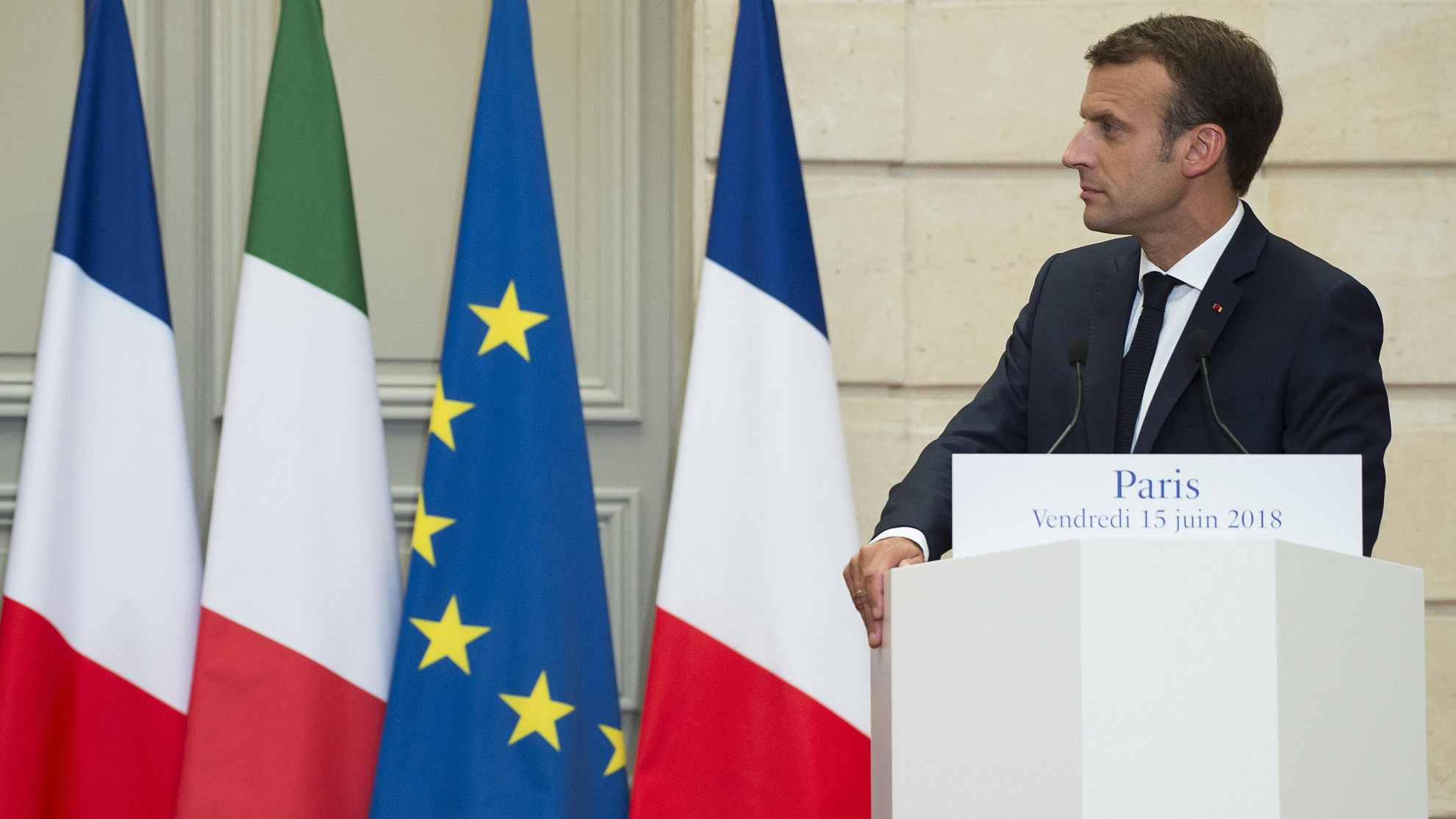
Italian Prime Minister Giuseppe Conte (not pictured) and French President Emmanuel Macron during a press conference at Elysee Palace in Paris on June 15, 2018. /VCG Photo
Italian Prime Minister Giuseppe Conte (not pictured) and French President Emmanuel Macron during a press conference at Elysee Palace in Paris on June 15, 2018. /VCG Photo
He
urged Italy's new prime minister to work with France, Germany and Spain on resolving migration issues rather than siding with an anti-immigration "axis" emerging within the European Union on Friday.
EU
According to the EU’s asylum laws—which are under revision—migrants must apply for asylum in the country where they first enter Europe.
Around one million migrants and refugees arrived in Europe in 2015, three to four times more than in 2014, the International Organization of Migration (IOM) and The UN Refugee Agency (UNHCR) estimates.
In September 2015, the EU adopted a plan to apportion 120 thousand refugees by Member States to solve the refugee crisis, but the plan was opposed by many Eastern European countries.
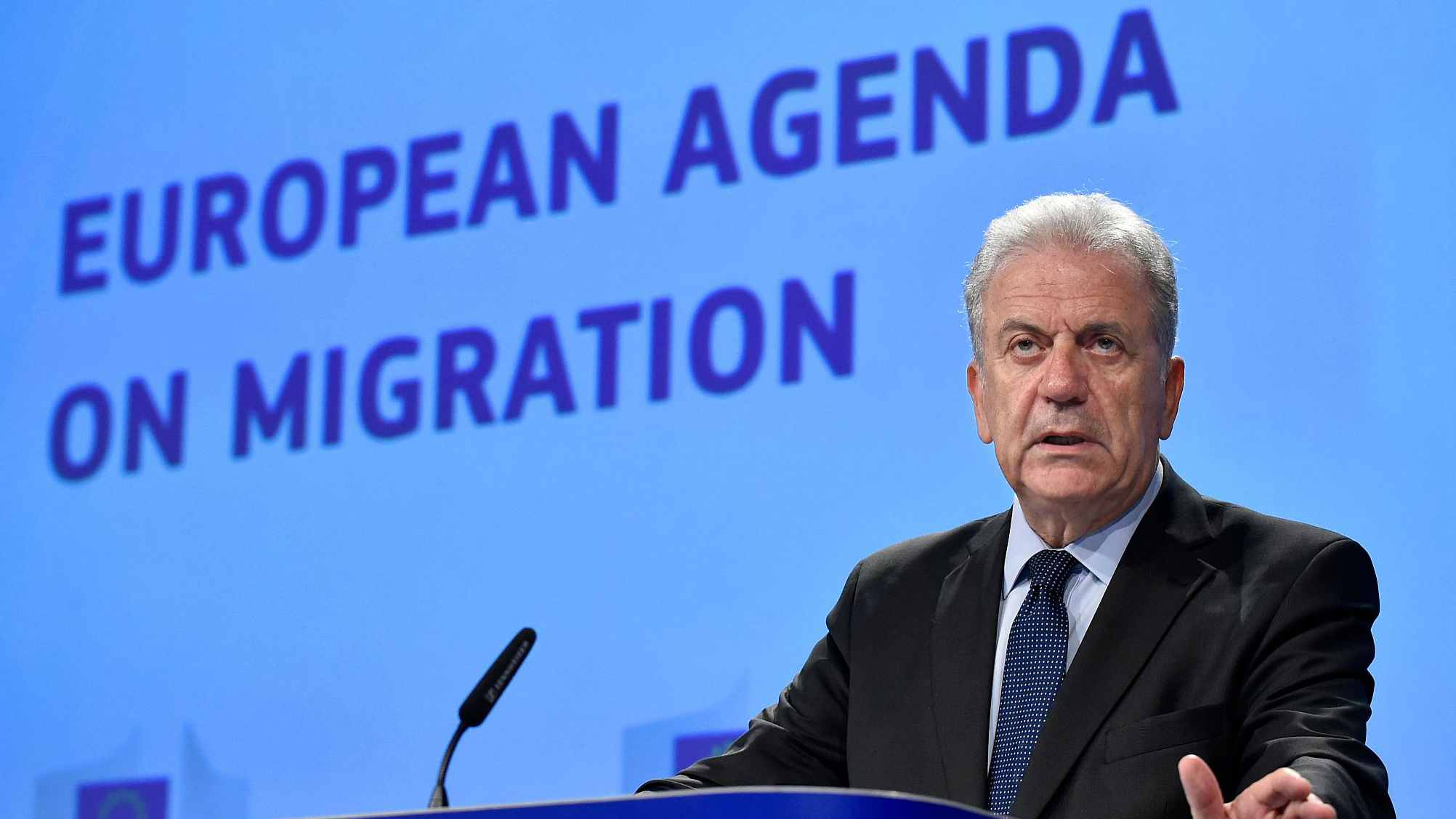
EU Migration Commissioner Dimitris Avramopoulos gives a joint press conference on managing migration and upgrading the EU Visa Information System at the EU Headquarters in Brussels, on May 16, 2018. /VCG Photo
EU Migration Commissioner Dimitris Avramopoulos gives a joint press conference on managing migration and upgrading the EU Visa Information System at the EU Headquarters in Brussels, on May 16, 2018. /VCG Photo
Up to now, only 16 refugees have been received in Slovakia, 12 refugees have been received in Czech, and none have been received in Poland or Hungary.
Donald Tusk, President of the Council of Europe, admitted in February that the policy of compulsory apportionment of refugees was "lacking in practical operation" and proved to be "ineffective" in practice.
An EU poll showed that the issue is the top concern of European voters.
Where should these migrants go?
United Nations secretary general Carlos Guterres said on Monday that he is concerned that Europe's space to protect refugees is "shrinking."
"It’s very clear that Europe needs to reform its asylum system in a collective manner; there’s a lot of resistance to that but there’s no other way,” UN refugee chief Filippo Grandi said on Wednesday.
00:57
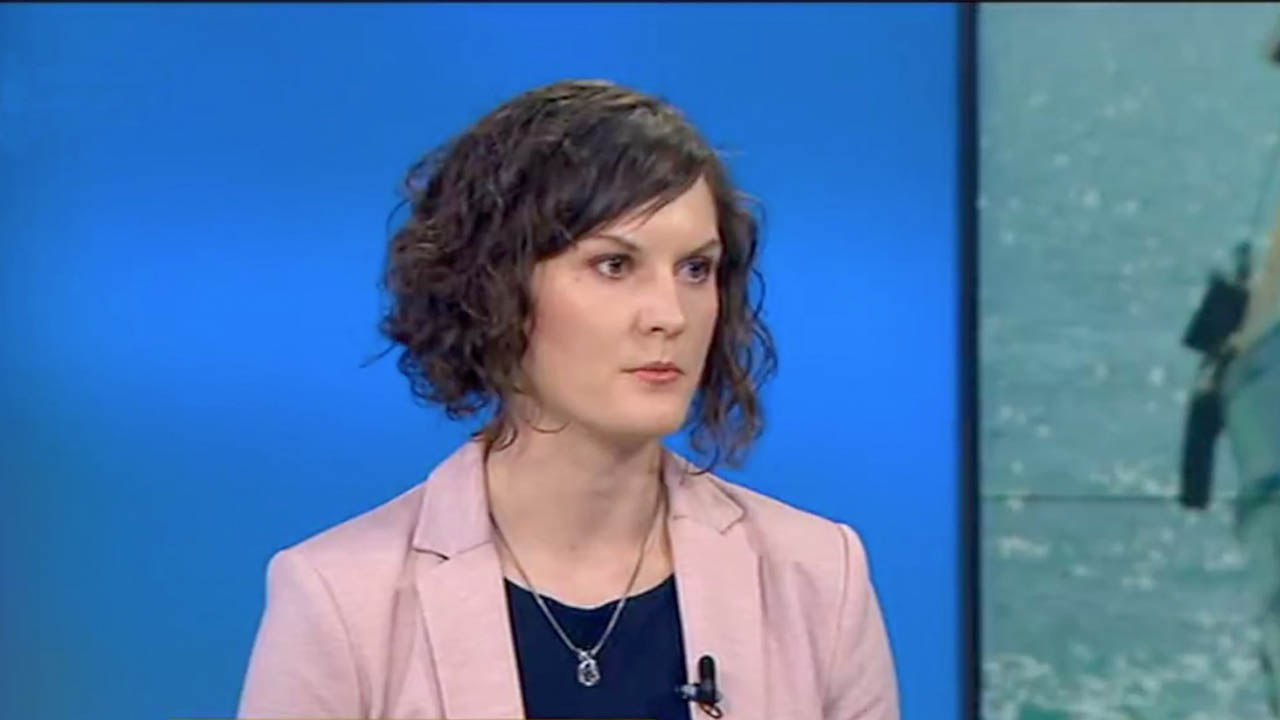
Susan Fratzke, a policy analyst from the Migration Policy Institute told CGTN that international law points out who is able to claim protection, but in practice, many people are not qualified for refugee protection.
According to the UN's refugee agency, over 2,000 asylum seekers have died or gone missing, feared drowned since the beginning of 2017 amid calls for the Central Mediterranean route to be closed.
The dispute over migration policy is coming to a head shortly before a key European Council summit, scheduled for June 28-29, which may help to relieve the awkwardness among European countries.

 ["china"]