Campaigning begins for Brazil's unpredictable presidential election
Updated
12:19, 20-Aug-2018
CGTN
["china"]
Share
Copied
Campaigning for Brazil's wildly unpredictable presidential race officially got under way on Thursday with jailed former president Luiz Inacio Lula da Silva's name among the 13 candidates formally registered.
Candidates and their parties are now authorized to petition voters on the streets and online ahead of the October 7 poll.
Around a hundred participants from Lula's powerful leftist Workers' Party (PT) campaigned in front of Sao Paulo's Municipal Theater, while Ciro Gomes of the center-left Democratic Workers' Party took to the streets of northern Rio de Janeiro promising to "save Brazil."
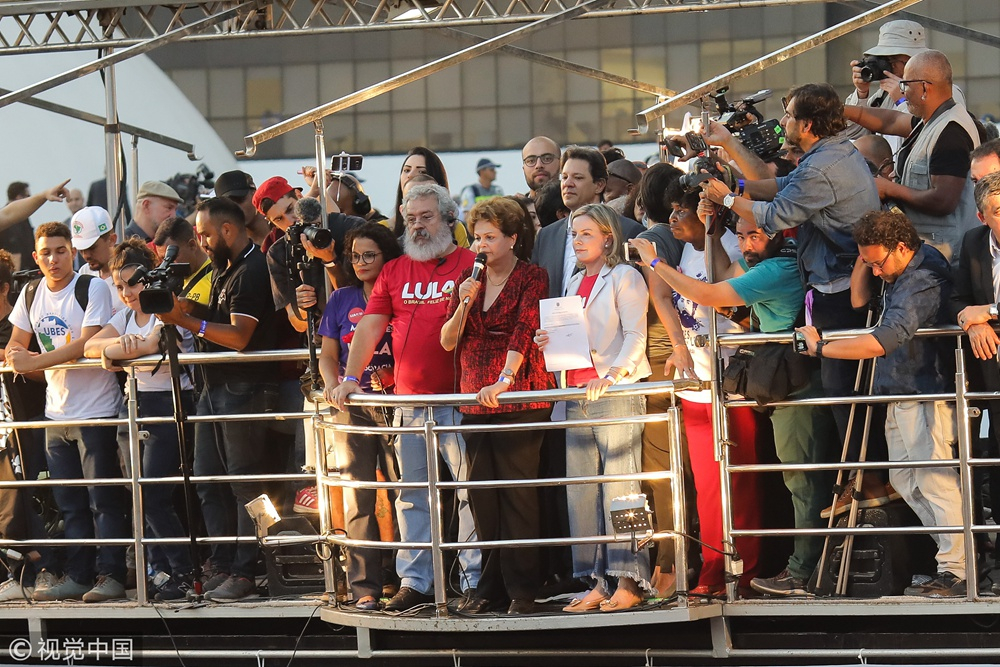
Dilma Rousseff (C), Brazil's former president, speaks to a crowd of demonstrators at the Free Lula March in front of the Superior Electoral Court in Brasilia, Brazil, August 15, 2018. /VCG Photo
Dilma Rousseff (C), Brazil's former president, speaks to a crowd of demonstrators at the Free Lula March in front of the Superior Electoral Court in Brasilia, Brazil, August 15, 2018. /VCG Photo
Environmentalist candidate Marina Silva, one of the front-runners, visited a health center in Sao Paulo while releasing an Internet video calling on Brazilians to "make the change," after twice before falling short in presidential elections.
Former banker Henrique Meirelles of the center-right Democratic Movement party of outgoing President Michel Temer, promised on social media to deliver economic growth.
Former Sao Paulo Governor Geraldo Alckmin of the center-right Social Democratic Party was due to take part in a women's meeting in his stronghold later in the day.
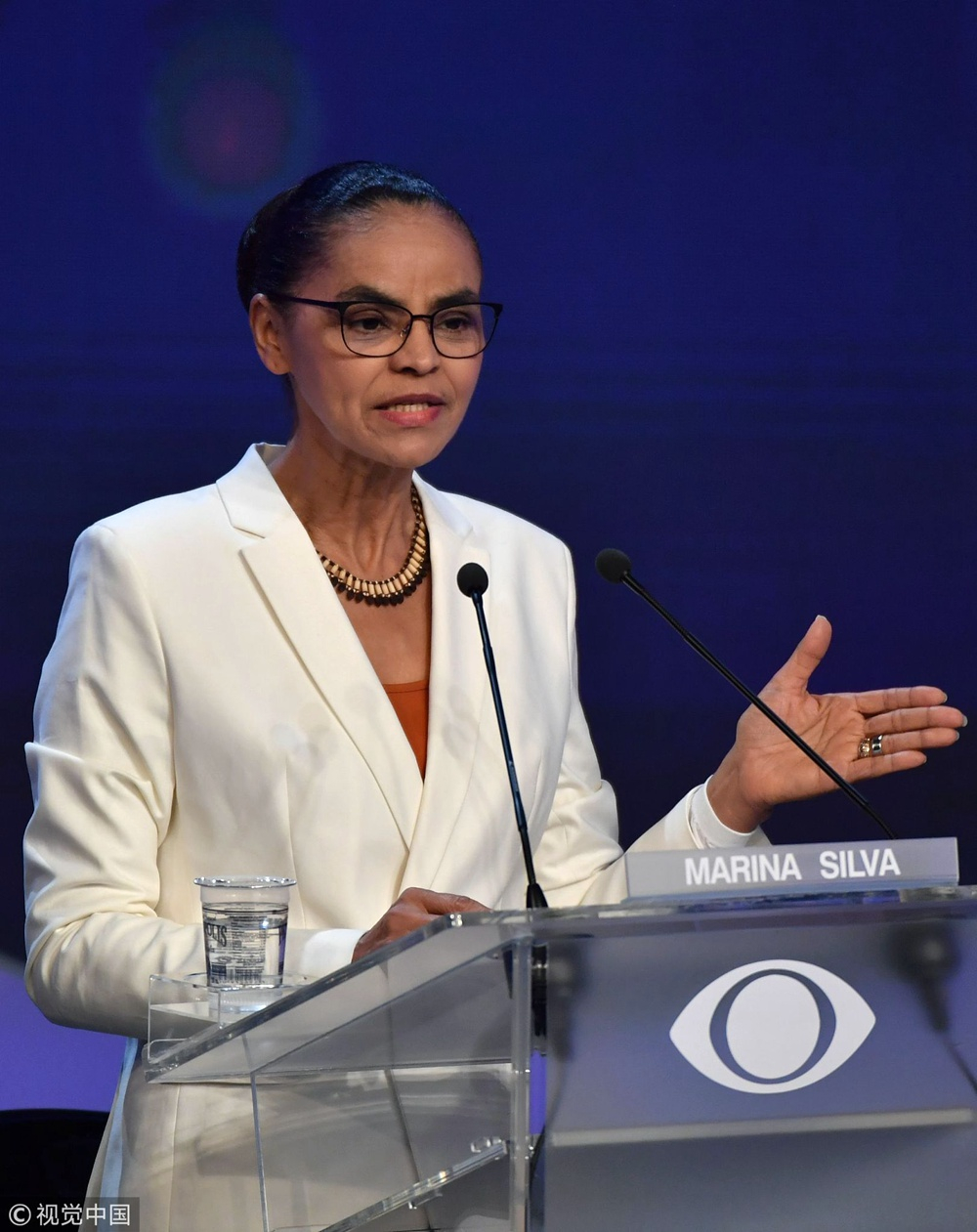
Brazilian presidential candidate Marina Silva speaks during the first presidential debate in Sao Paulo, Brazil, August 9, 2018. /VCG Photo
Brazilian presidential candidate Marina Silva speaks during the first presidential debate in Sao Paulo, Brazil, August 9, 2018. /VCG Photo
Lula to be kept off ballot?
Campaigning, though, won't deflect from the major talking point in these elections, over whether or not the incarcerated Lula will be allowed to stand.
The 72-year-old is serving a 12-year sentence for accepting a seaside apartment as a bribe and under Brazil's Clean Slate law he is likely to be prevented from standing for the race. The law bans politicians from seeking public office if they have been convicted of a crime and it has been upheld on appeal.
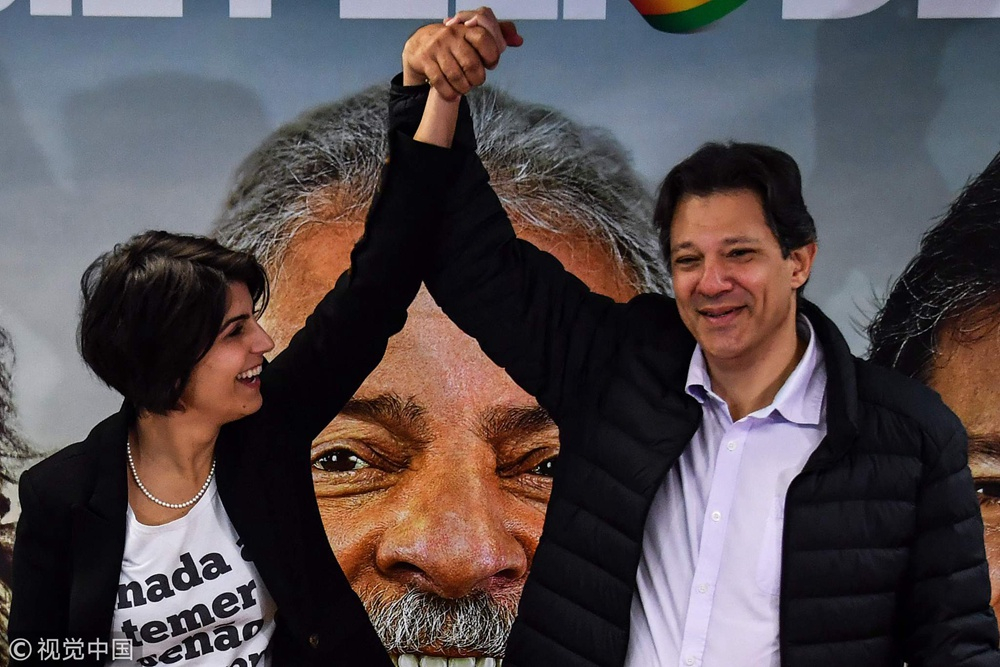
The electoral court has until September 17 to rule on Lula's candidacy and should he be barred, former Sao Paulo Mayor Fernando Haddad would likely run in his place.
Justice Rosa Weber, who heads the court, has said it will quickly make a decision that political analysts expect will come before campaign advertising on TV and radio begins on August 31.
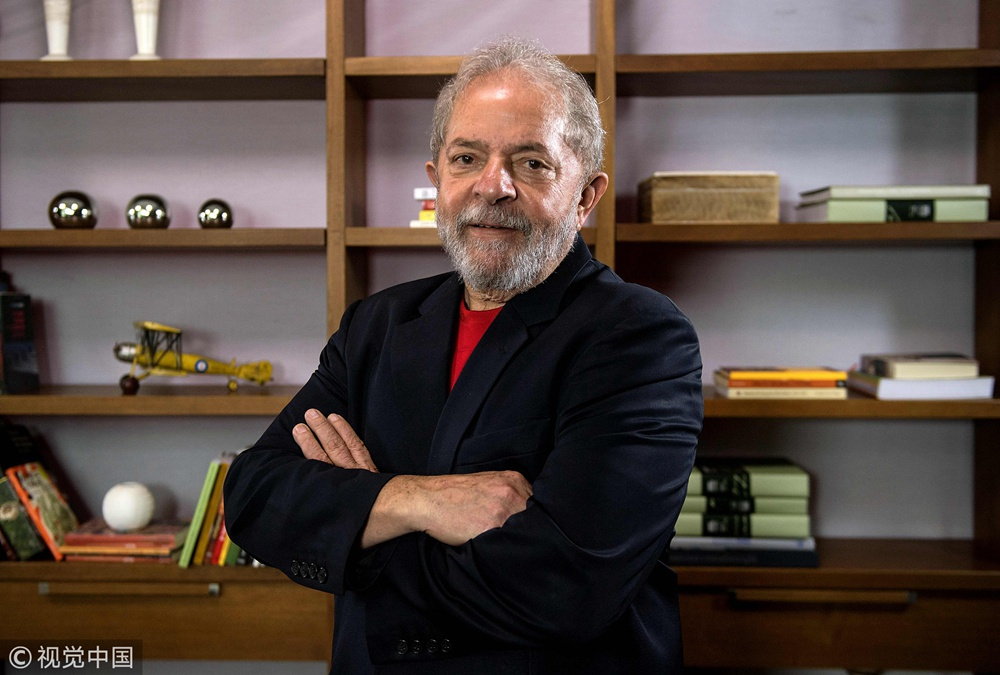
Former Brazilian President Luiz Inacio Lula da Silva poses for a picture during an interview with at Lula's Institute in Sao Paulo, Brazil, March 1, 2018. /VCG Photo
Former Brazilian President Luiz Inacio Lula da Silva poses for a picture during an interview with at Lula's Institute in Sao Paulo, Brazil, March 1, 2018. /VCG Photo
Former Sao Paulo Mayor Fernando Haddad (R) of the Workers' Party will run with Manuela D'Avila (L) of Brazil's Communist Party for president and vice president if Lula is banned. /VCG Photo
Former Sao Paulo Mayor Fernando Haddad (R) of the Workers' Party will run with Manuela D'Avila (L) of Brazil's Communist Party for president and vice president if Lula is banned. /VCG Photo
Few in Brazil doubt Lula will be barred from running.
"There is no doubt he will be disqualified. It is a legal fact. After all it was he who signed the Clean Slate into law," said Senator Katia Abreu, a farm lobby leader and vice presidential candidate for PT rival the Brazilian Labor Party.
If the electoral court bans Lula, his lawyers are expected to appeal to the Supreme Court. That could suspend his ban, which could delay his case beyond a September 17 deadline for changing names on the ballot.
"Lula will try to delay a final ruling as far as possible, but the Supreme Court will uphold the TSE (Superior Electoral Court) decision," said Ricardo Ismael, politics professor at the Catholic University of Rio de Janeiro.
Lula still leads in the presidential polls ahead of right-winger Jair Bolsonaro, with Alckmin and Silva coming next.
Polls suggest voters are disillusioned with the state of their country as it struggles with recession and reels from a raft of corruption scandals. Voting is obligatory in Brazil but some polls suggest at least a third of voters would skip it while another poll said a third were planning on deliberately spoiling their ballot.
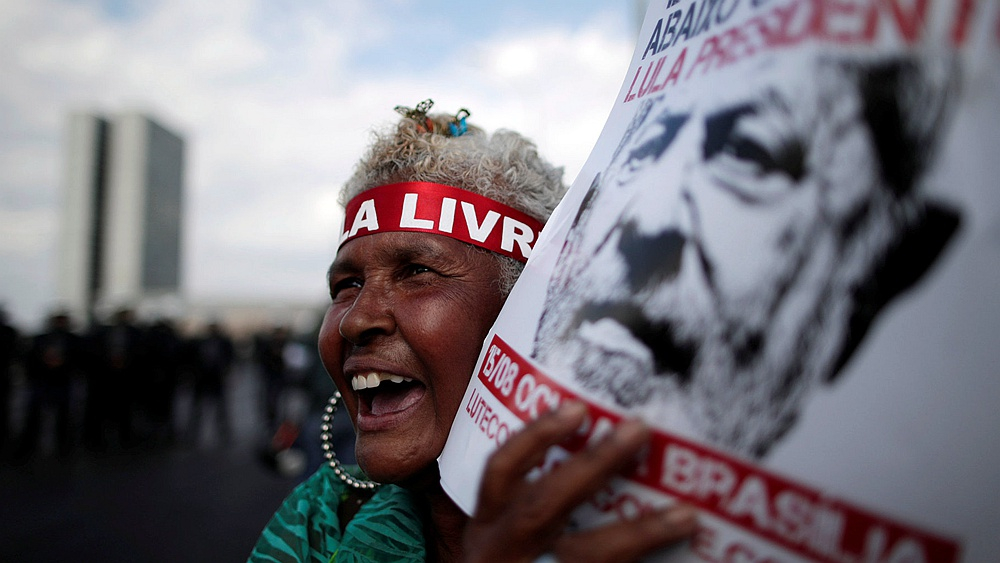
(Top photo: A supporter of imprisoned former Brazilian President Luis Inacio Lula da Silva attends a march before his Workers' Party officially registers his presidential candidacy, in Brasilia, Brazil, August 15, 2018. /VCG Photo)

 ["china"]