
Politics
20:09, 13-Aug-2018
Iran vows not to renegotiate landmark nuke deal with US
Updated
19:37, 16-Aug-2018
 ["china"]
Share







Copied
00:27
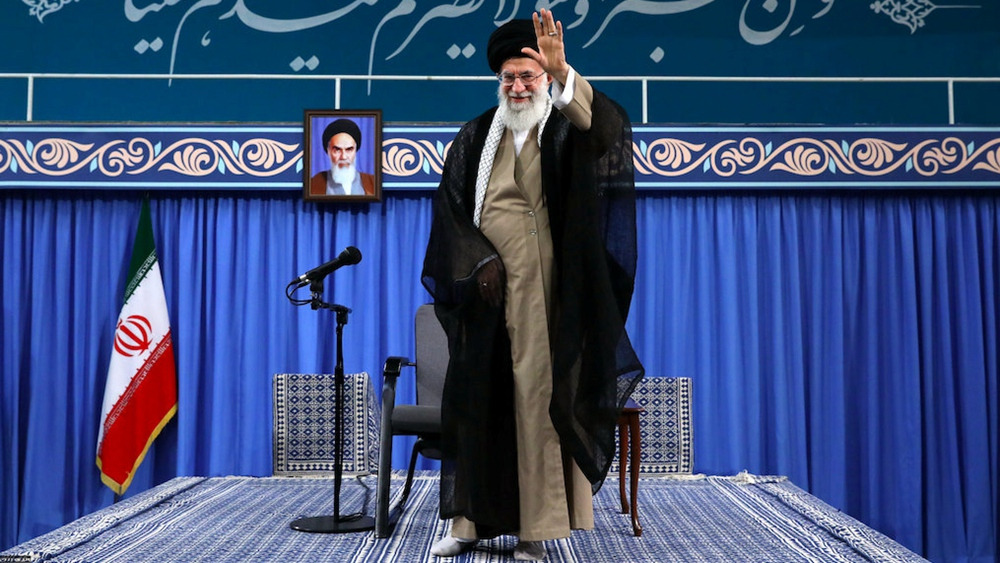
Iran will never enter a new round of talks with the United States over the 2015 nuclear deal as Washington is "bullying and cheating" in negotiations, Iran's Supreme Leader Ayatollah Ali Khamenei said Monday.
Tehran will not again sit at the negotiation table with the "cheating" US government, Khamenei's official website said.
"During negotiations, Americans only give promises using apparently assuring words, but want real concessions from the opposite side and do not accept promises," he said.
Negotiations with the United States at the present time will certainly be to Iran's disadvantage and are "forbidden," the Iranian top leader noted.
"We can only embark on negotiating with the United States after we reach the economic, political and cultural power that we have in mind so that the US pressures and ballyhoo would not be able to affect us," he added.
He also said that while foreign sanctions hurt Iran's economy, most of the country’s economic problems are the result of internal mismanagement, Iran's Press TV reported on Monday.
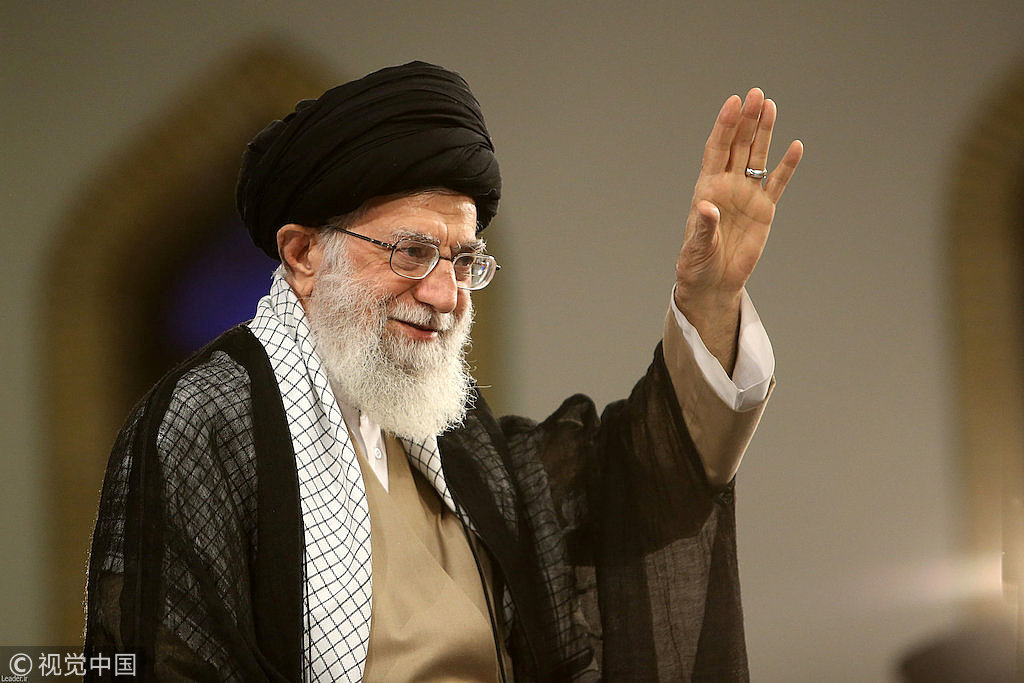
Iran's Supreme Leader Ayatollah Ali Khamenei is seen at the Hussayniyeh of Imam Khomeini in Tehran, Iran, August 13, 2018. /VCG Photo
Iran's Supreme Leader Ayatollah Ali Khamenei is seen at the Hussayniyeh of Imam Khomeini in Tehran, Iran, August 13, 2018. /VCG Photo
"Economic experts and many officials believe the cause of this issue is not foreign, it's internal. Not that sanctions don't have an impact, but the major impact is related to performances,” the supreme leader was quoted as saying while addressing ordinary Iranians at a meeting in Tehran Monday.
“With better management and planning, we can resist the sanctions and overcome them,” Khamenei reportedly said.
Iraqi Prime Minister Haider al-Abadi also said on Monday that his government would not abide by any other US sanctions on Iran except the US dollar ban in transactions.
"I did not say we abide by the US sanctions against Iran. Iraq's decision with respect to Iran is not to deal [with Iran] in US dollars," Abadi told a press conference after his weekly cabinet meeting.
"We will abide by them to protect the interests of our people," Abadi said, citing that non-compliance with the US sanctions will harm Iraq's interests.
The United States re-imposed strict sanctions against Iran on Tuesday, with Trump threatening to penalize businesses from third countries that continue to operate in the Islamic Republic.
Iran's currency rial has lost about half of its value since April under the threat of revived US sanctions, with heavy demand for dollars among ordinary Iranians trying to protect their savings.
The cost of living has also soared, sparking sporadic demonstrations against profiteering and corruption.
Iran has denounced the sanctions as “US unilateralism.”
Read more:
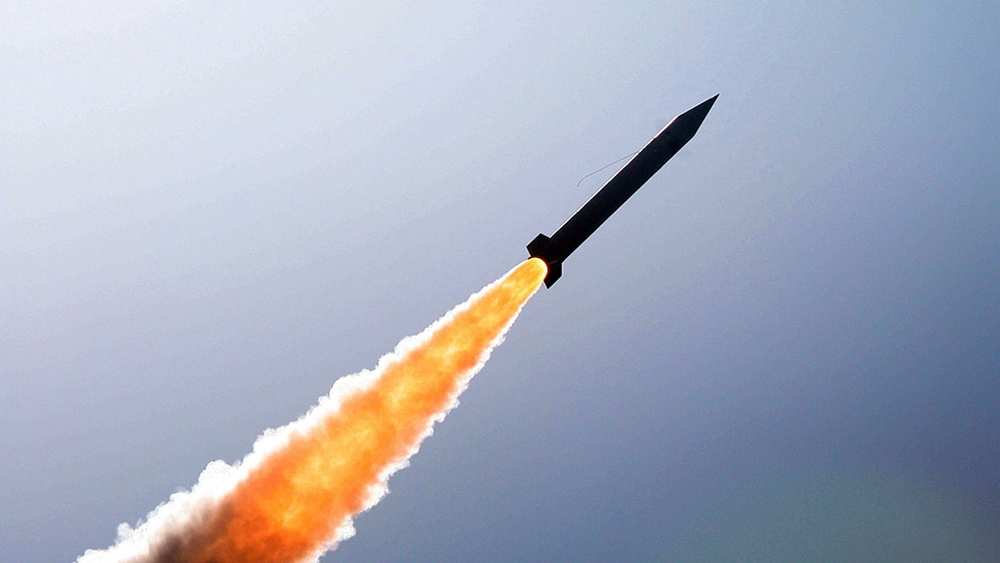
A Zelzal rocket is launched during a test in Iran, September 27, 2009. /VCG Photo
A Zelzal rocket is launched during a test in Iran, September 27, 2009. /VCG Photo
In the meantime, Tehran has just unveiled a next-generation short-range ballistic missile, called the Fateh Mobin.
The defense ministry said it would do all it could to increase its missile capabilities.
Iran's missile program is a major bone of contention with world powers, particularly the United States, but Tehran sees it as critical in a particularly hostile region.
(Cover: Iran's Supreme Leader Ayatollah Ali Khamenei addresses a group of ordinary Iranians at a meeting in Tehran, Iran, August 13, 2018. /Reuters Photo)
(With inputs from Reuters)