
World
09:30, 10-Jul-2018
Trump weighs in on breastfeeding debate and defends formula
Updated
09:00, 13-Jul-2018
 ["china"]
Share







Copied
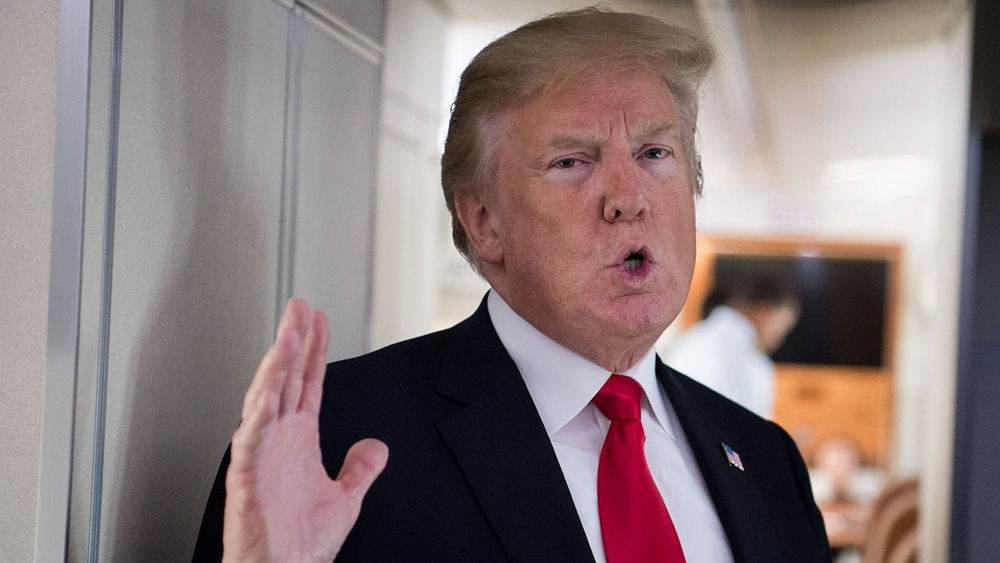
President Donald Trump weighed in Monday to defend women's "access" to formula milk, after an article accused the United States of seeking to torpedo a World Health Organization resolution on breastfeeding.
A weekend report in The New York Times stated that US delegates to a recent WHO meeting sought to delete from a resolution on infant nutrition language that urged member states to "protect, promote and support" breastfeeding.
The US reportedly pressured Ecuador to drop sponsorship of the text, threatening trade sanctions and military aid cuts. In the end, the Times said, the Russians stepped in to introduce the measure, and the final resolution preserved most of the original wording.
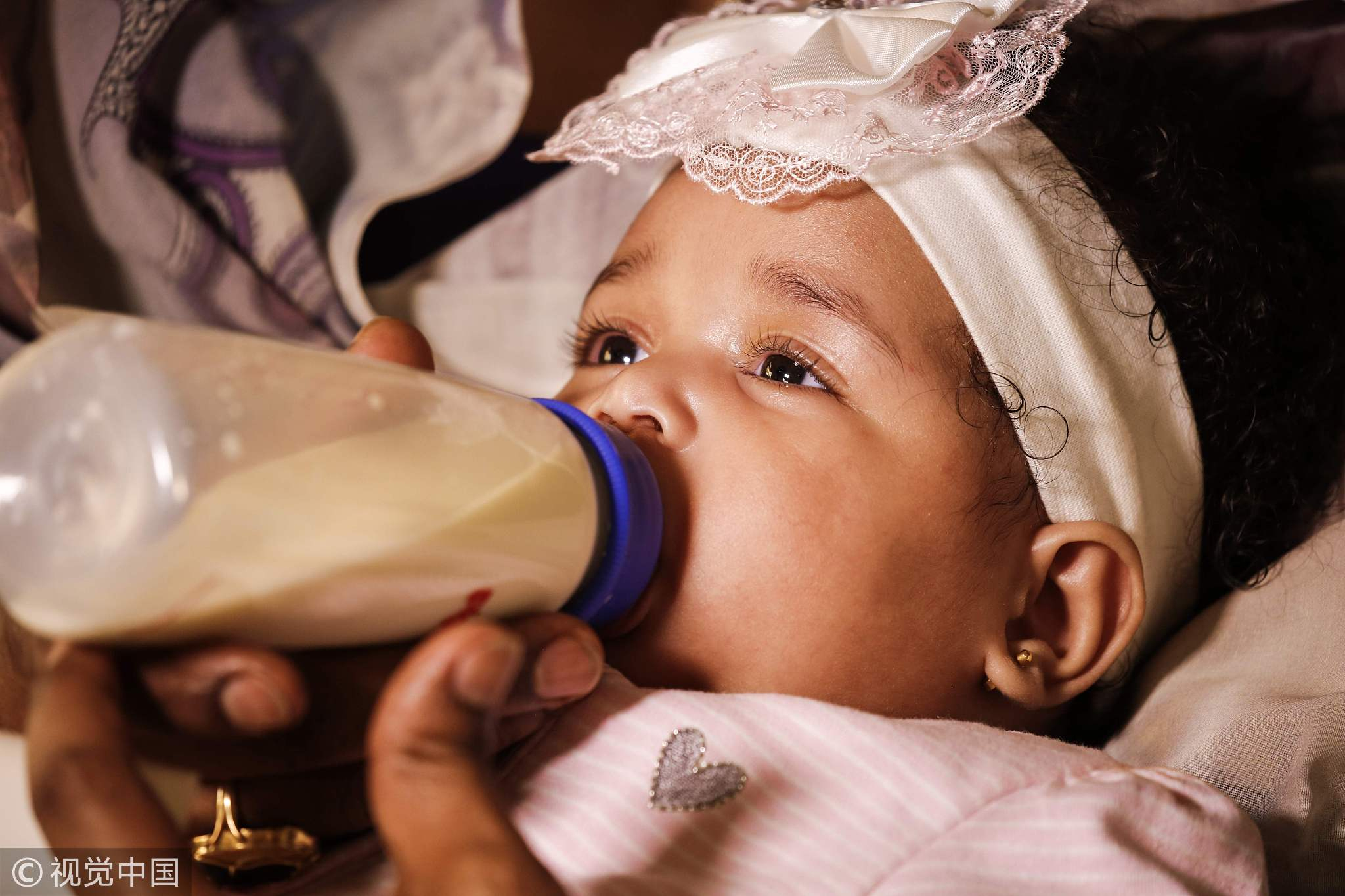
Four-month-old Sudanese infant Lojien is fed baby formula by her grandmother, Manal Fadlallah,at her home in a suburb of the capital Khartoum, March 4, 2017. /VCG Photo
Four-month-old Sudanese infant Lojien is fed baby formula by her grandmother, Manal Fadlallah,at her home in a suburb of the capital Khartoum, March 4, 2017. /VCG Photo
Noting that the US position aligned with infant formula manufacturers, the paper cited the case as an example of the Trump administration siding with corporate interests on public health and environmental issues.
Trump hit out at the Times article, while saying the US was committed to ensuring women are not "denied" formula.
"The failing NY Times Fake News story today about breast feeding must be called out," the president tweeted.
"The US strongly supports breast feeding but we don't believe women should be denied access to formula. Many women need this option because of malnutrition and poverty."
Health experts said the president's stance suggested a lack of knowledge about the issues.
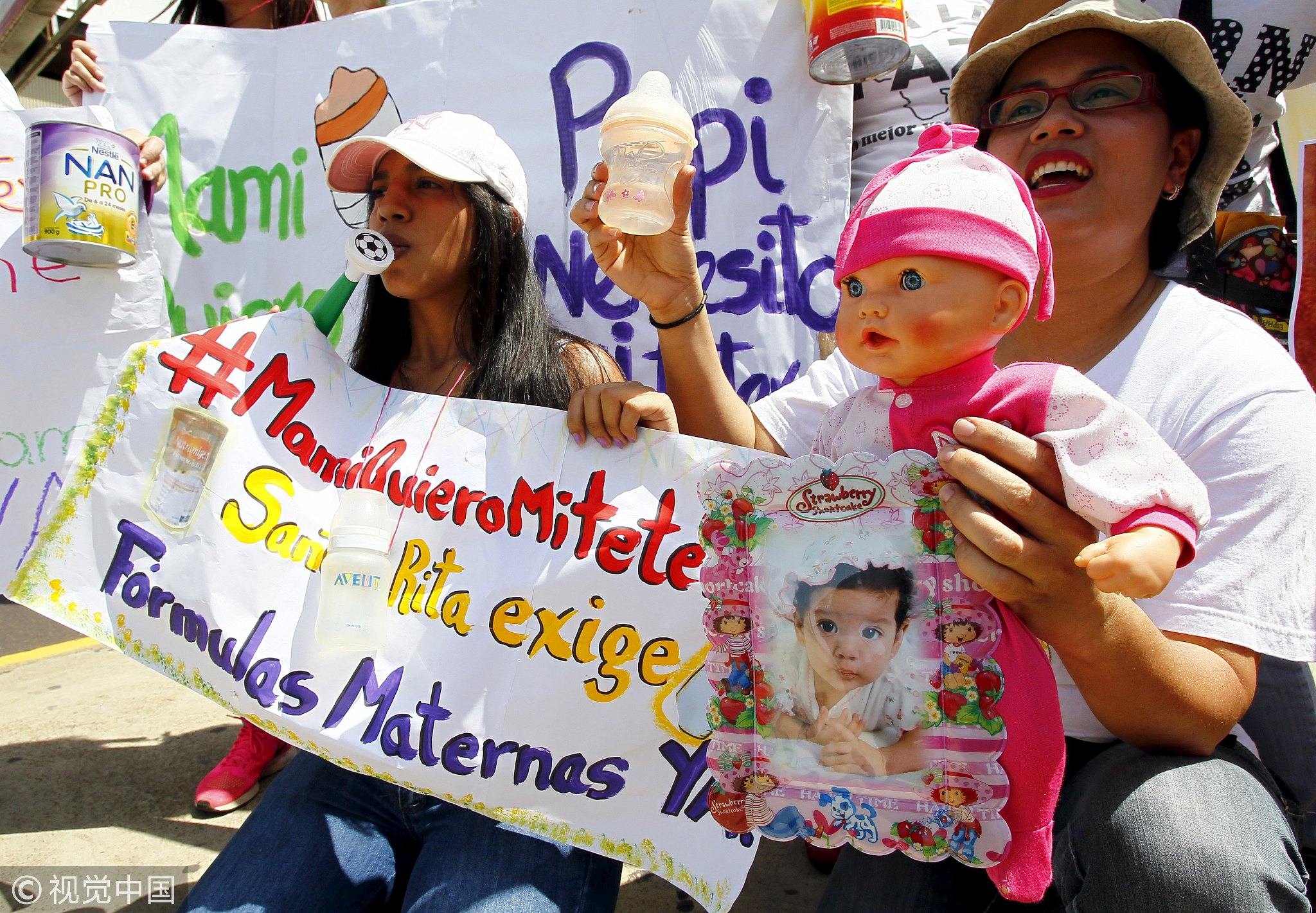
A woman carries a doll and a feeding bottle during a demonstration demanding a solution to the shortage of infant formula in stores, in the state of Zulia, Venezuela, June 14, 2015. /VCG Photo
A woman carries a doll and a feeding bottle during a demonstration demanding a solution to the shortage of infant formula in stores, in the state of Zulia, Venezuela, June 14, 2015. /VCG Photo
"Malnutrition and poverty are the precise settings where you absolutely do need to breastfeed, because that's the setting where access to safe and clean water for reconstituting powdered formula is often impossible to find," said Dr. Michele Barry, director of the Center for Innovation in Global Health in the Stanford School of Medicine.
The State Department meanwhile described as "false" the notion that Washington had threatened a partner country.
"The United States believed the resolution as originally drafted called on states to erect hurdles for mothers seeking to provide nutrition to their children," said a State Department official.
"We recognize not all women are able to breastfeed for a variety of reasons," it added, saying they should have "full information about safe alternatives."
Ecuador's Health Minister Veronica Espinosa said her country had fought for passage of the resolution and "did not give in to private or commercial interests, or any other form of pressure."
The WHO has long advocated exclusive breastfeeding until six months of age, and partial breastfeeding for up to two years or more.
But baby formula represents a huge global market, which was worth 47 billion US dollars in 2015, according to Euromonitor International, with emerging markets accounting for most current growth.
Source(s): AFP