
World
18:00, 23-Apr-2018
Will India's new death penalty end rape culture?
 ["other","Asia-Pacific"]
Share







Copied
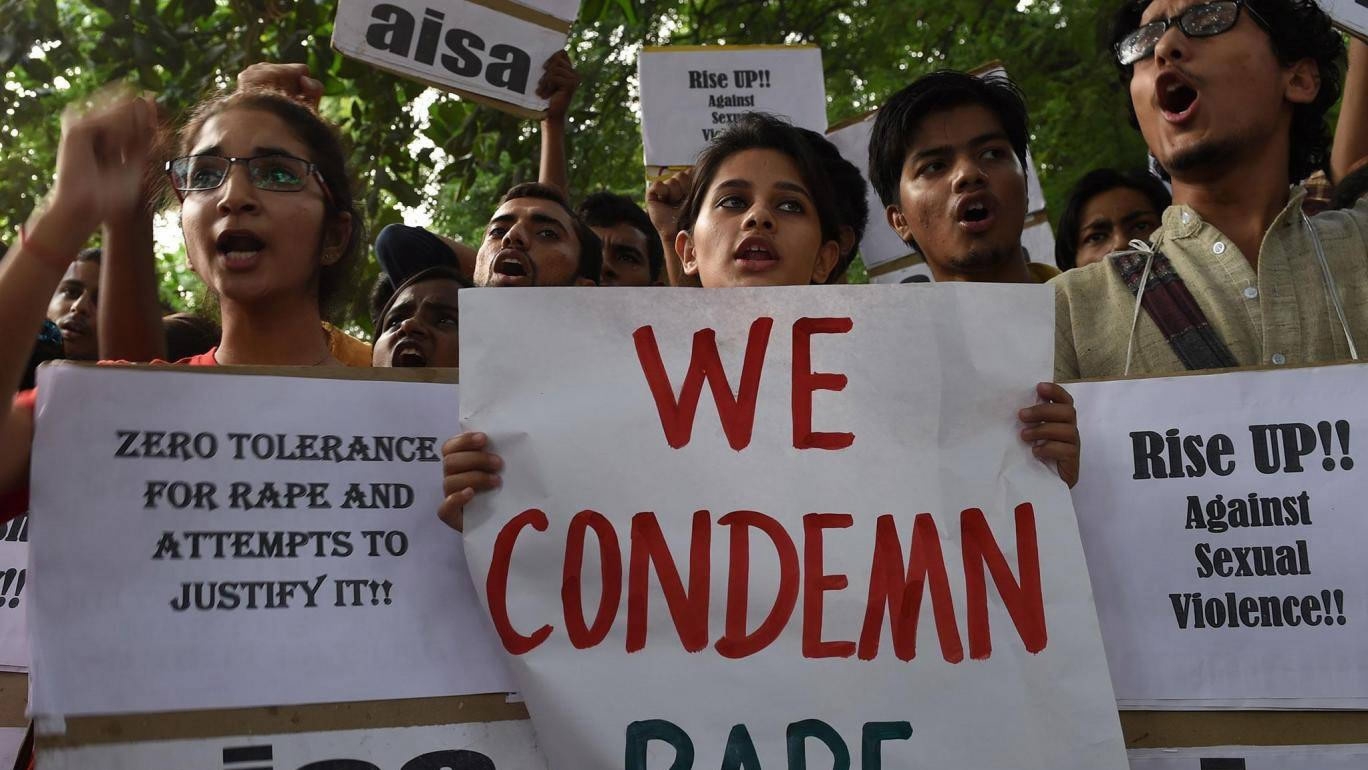
Does the order for the death penalty for a child rapist mean the end of the country's "rape culture"? It is difficult to say.
India's Cabinet has approved the introduction of the death penalty for those who rape children who are under the age of 12.
In addition to the death penalty for a rapist of girls under 12, the minimum punishment has been extended from 10 to 20 years for cases in which the victim is under the age of 16.
The penalty for rape of women was raised from seven to 10 years.
The cabinet also approved the creation of more fast-track courts to deal with rape cases.
The approval happened amid the civil outrage after a series of high-profile rape crimes in the country.
The case of an eight-year-old girl who was raped and murdered by eight men followed an earlier case in which a 16-year-old girl was assaulted by a ruling party member last June. Both cases caused some of the largest protests nationwide seen since the notorious rape crime against a university student in 2012.
Governmental Reluctance
After several days of failing to address the issue in public, Indian Prime Minister Narendra Modi finally broke his silence during a speech in Delhi on Friday, promising justice for "our daughters."
As the Cabinet approved the order, which is going to be sent to the president for his consent - his approval is seen as a formality.
Modi’s failure to speak out soon enough fueled criticism that his government was not doing enough to protect women.
Lax implementation of laws and slow-paced trials fuel "rape culture" in India, with many accusing police of being slack in cases involving influential people.
The politician remained free for almost a year after police rejected pleas from the victim to file a rape case against the lawmaker.
He was finally arrested last week after the teenager tried to set herself on fire outside the residence of the state chief minister, triggering a wave of protests.
40,000 rapes were reported in 2016. 40 percent of those cases featured child victims, and the increase in those cases was 12 percent.
Social Barriers
After Jyoti Singh, a 23-year-old physiotherapist, was gang raped on a private bus in the capital city of Dheli and later died of injuries in 2012, new laws and practices ensued.
But all were just paper reforms.
There are multiple barriers for a woman who need to approach a police station after being sexually assaulted.
For victims from poor families or a lower caste, they may not even have their complaint of sexual assault registered. Alternatively, the police pressured women to settle their complaints for money.
Even if an investigation starts, families or victims don’t know about the availability of free legal aid or the monetary compensation they are owed, and many are unaware of the safety initiatives aimed at protecting women that were brought in after 2012.
Cultural Tension
The patriarchal culture in Indian tradition has been considered as a major attributor to rape culture, alongside the religious tension, which was crucial to a recent case.
The eight-year-old victim in the rape and murder case was a Muslim girl drugged and held captive by eight Hindu men in January in Jammu and Kashmir state. The intention was to push the Muslim community out of the region.
The demographic imbalances in the society due to illegal sex-selection abortion - which currently stands at 112 boys to 100 girls - also contribute to the severe crime against women.
As with many of the other extreme divisions between people that cause social conflicts and cultural tensions, how long it will take to uproot rape culture will remain a pertinent question.
(With input of Reuters and AFP)