
North America
19:02, 08-May-2019
Is Trump's Middle East policy just more of the same?
 ["china"]
Share







Copied
Every four years a U.S. president comes up for election. But when a new face takes the oath of office, is there a change in foreign policy, particularly in regard to the Middle East? Or do leaders stick to the script?
U.S. President Donald Trump's Middle East foreign policy, in many people's view, seems to deviate from the standard U.S. position. He has ripped up the Iran nuclear deal made under the Barack Obama administration, which at the time pointed to rosier relations in a long-running adversarial relationship.
But on closer inspection, the U.S. policies in the Middle East don't seem to have changed much from president to president in recent years.
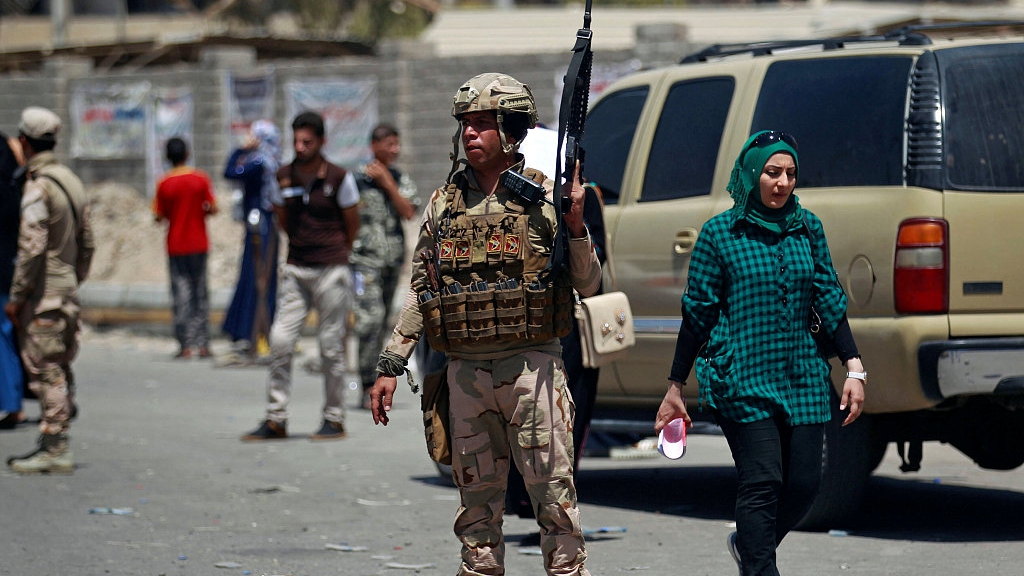
A soldier stands guard at the University of Mosul, Iraq, July 24, 2017. /VCG Photo
A soldier stands guard at the University of Mosul, Iraq, July 24, 2017. /VCG Photo
Many forget, for example, that Obama was once labelled the "Drone King" for his widespread, covert use of unmanned aerial vehicles in Middle East operations. Preliminary numbers from the Trump administration already has him poised to surpass Obama's.
And that's saying a lot.
The Bureau of Investigative Journalism said Obama's predecessor, George W. Bush, carried out just 57 covert strikes in Pakistan, Somalia, and Yemen. These were countries outside active battlegrounds. During Obama's term, that number rose nearly 10 times.
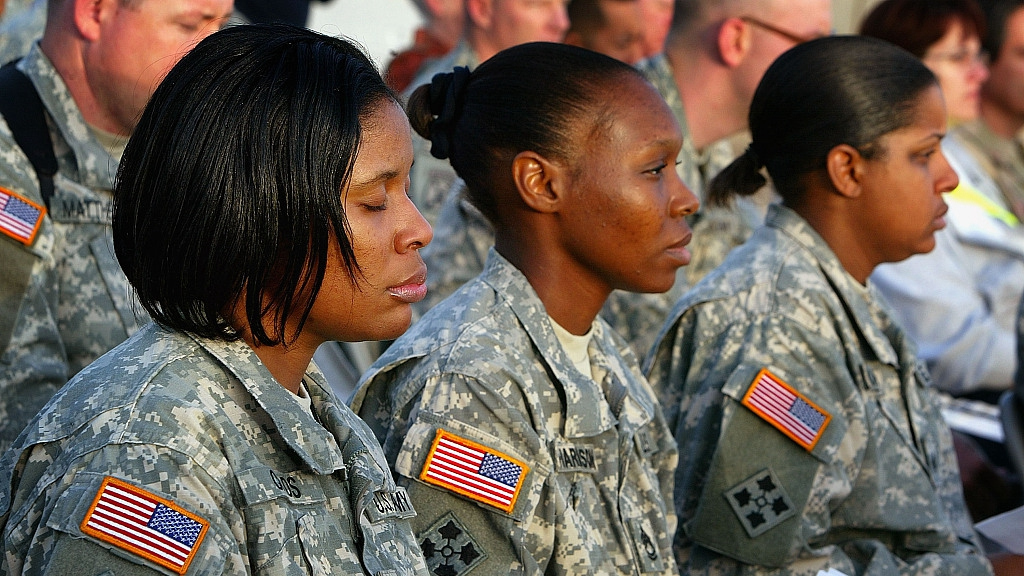
U.S. military staff attend an Easter sunrise service at Camp Liberty in Baghdad, Iraq. /VCG Photo
U.S. military staff attend an Easter sunrise service at Camp Liberty in Baghdad, Iraq. /VCG Photo
This shows that Obama, who'd campaigned on de-escalating military operations in the Middle East, had a hand in military actions in many parts of the region. These figures are in addition to the larger-scale operations in Afghanistan, Iraq, and – later in his presidency – Libya and Syria.
This leads to the idea that there's a persistent foreign policy under the surface – one that any president will struggle to change.
Michael Glennon, a professor of international law at Tufts University, wrote about this in his 2014 book, "National Security and Double Government," saying that U.S. national security policy has hardly changed from Bush to Obama and that a network in the government exercises power over national security.
To some, a glimpse at recent administrations' foreign policy reveals a pattern; that entrenched interests in the U.S. are hard to loosen – even for a president.
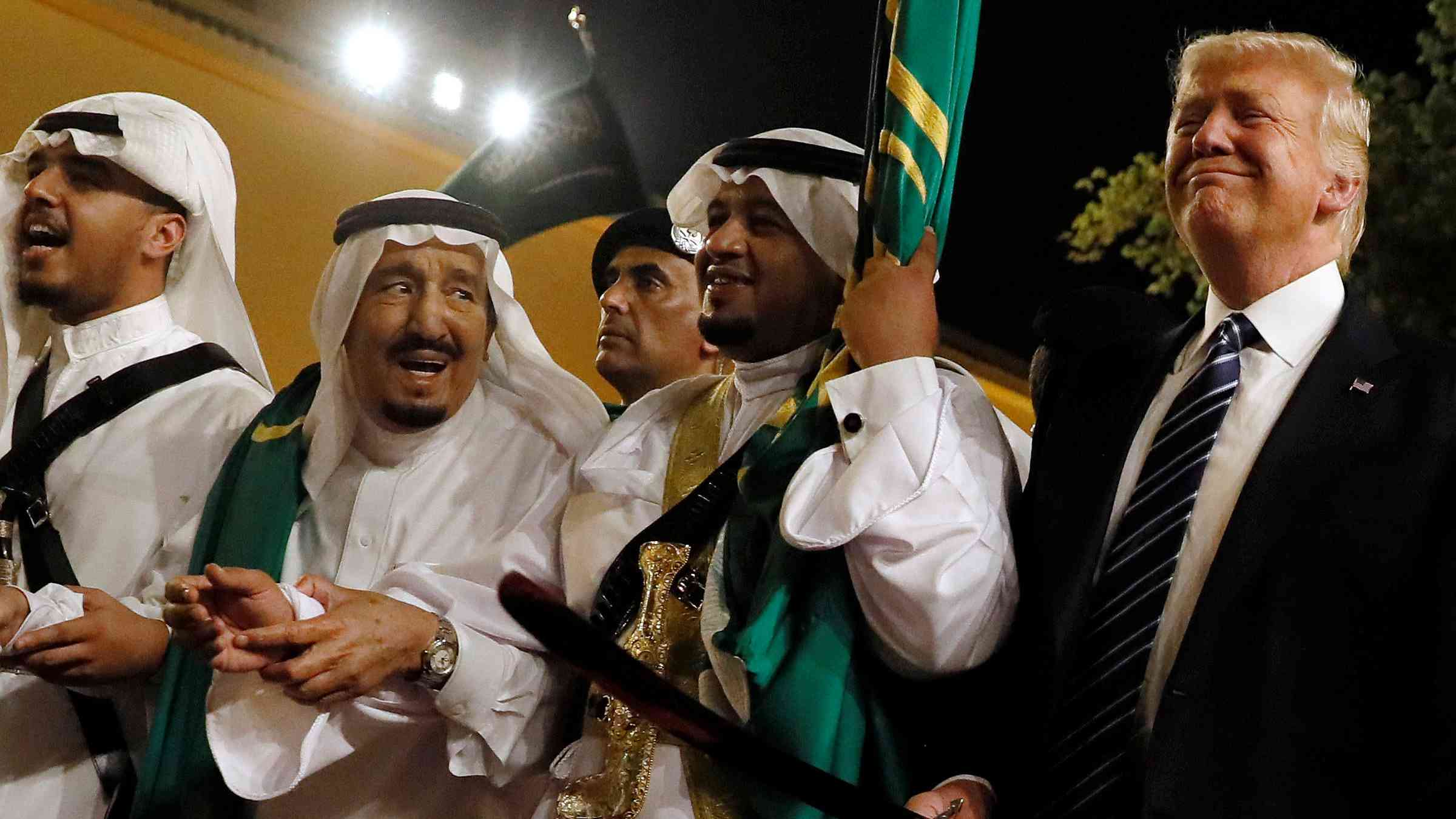
(Cover: Saudi Arabia's King Salman bin Abdulaziz Al Saud (2nd L) welcomes U.S. President Donald Trump (R) to dance with a sword during a welcome ceremony at Al Murabba Palace in Riyadh, Saudi Arabia, May 20, 2017. /VCG Photo)