
Politics
10:00, 03-Sep-2018
EU 'strongly' opposes May's Brexit plan
Updated
09:27, 06-Sep-2018
 ["europe"]
Share







Copied
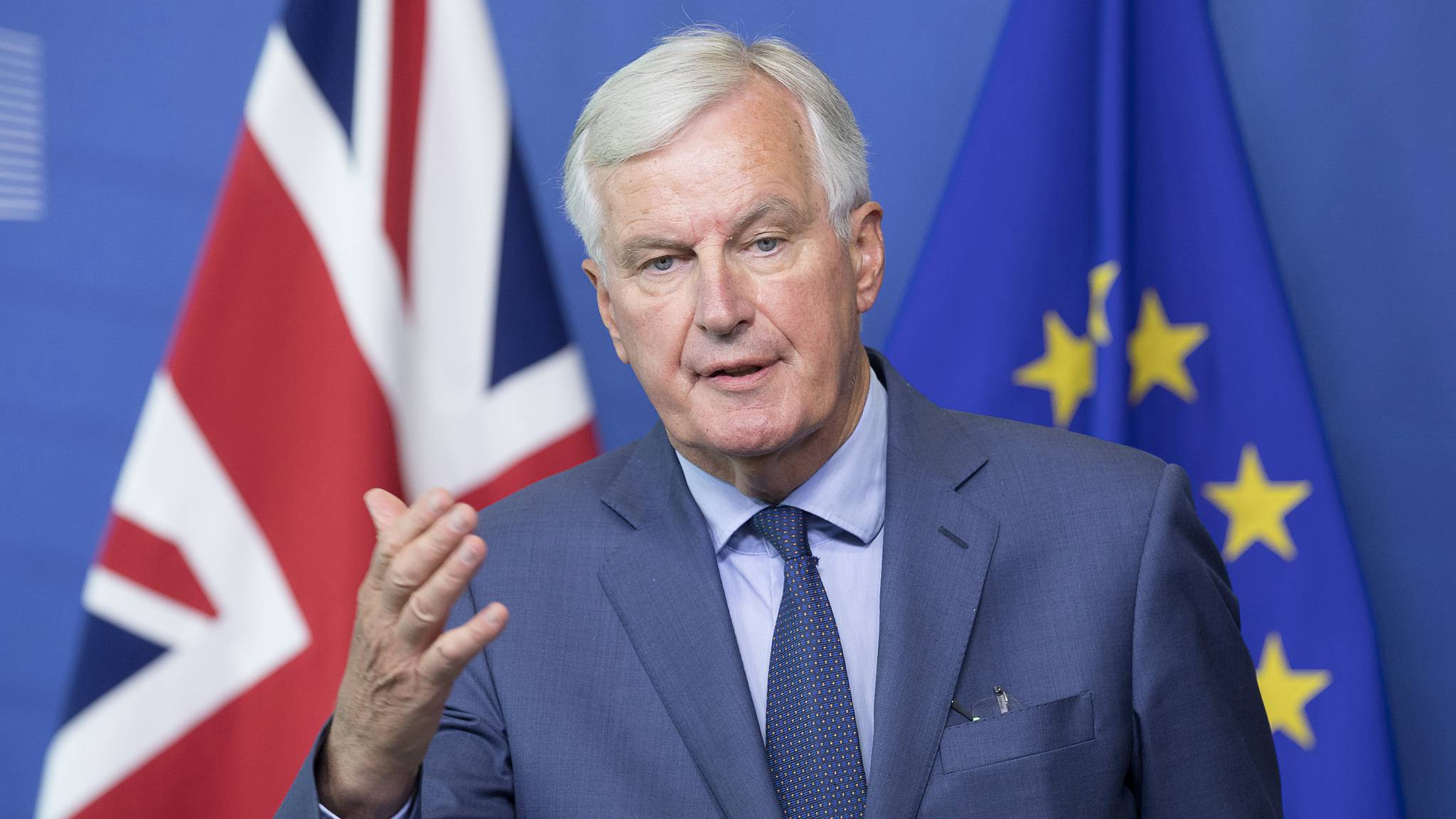
EU's chief Brexit negotiator Michel Barnier said on Sunday he is "strongly opposed" to Prime Minister Theresa May's "Chequers proposal," following a report cited May saying she would not allow compromise to her Brexit strategy.
Writing in the Sunday Telegraph newspaper, May said she would not allow compromises to her Brexit strategy that went against the national interest, seeking to ease fears among some in her Conservative Party that she will cave in to Brussels’ demands in negotiations.
Barnier said plans for a "common rulebook" for goods but not services were not in the EU's interests, reported the BBC. "Our own ecosystem has grown over decades," he said. "You can not play with it by picking pieces."
Barnier said the negotiations between the UK and the EU could be extended to mid-November, beyond the informal deadline laid in October.
Domestically, May is struggling to sell what she calls her business-friendly Brexit to her own party and across a divided country.
May has insisted what has become known as the Chequers plan, which is designed to protect cross-border trade, is in Britain's national interest.
But her words drew skepticism, including from the former Brexit negotiator David Davis.
The backlash
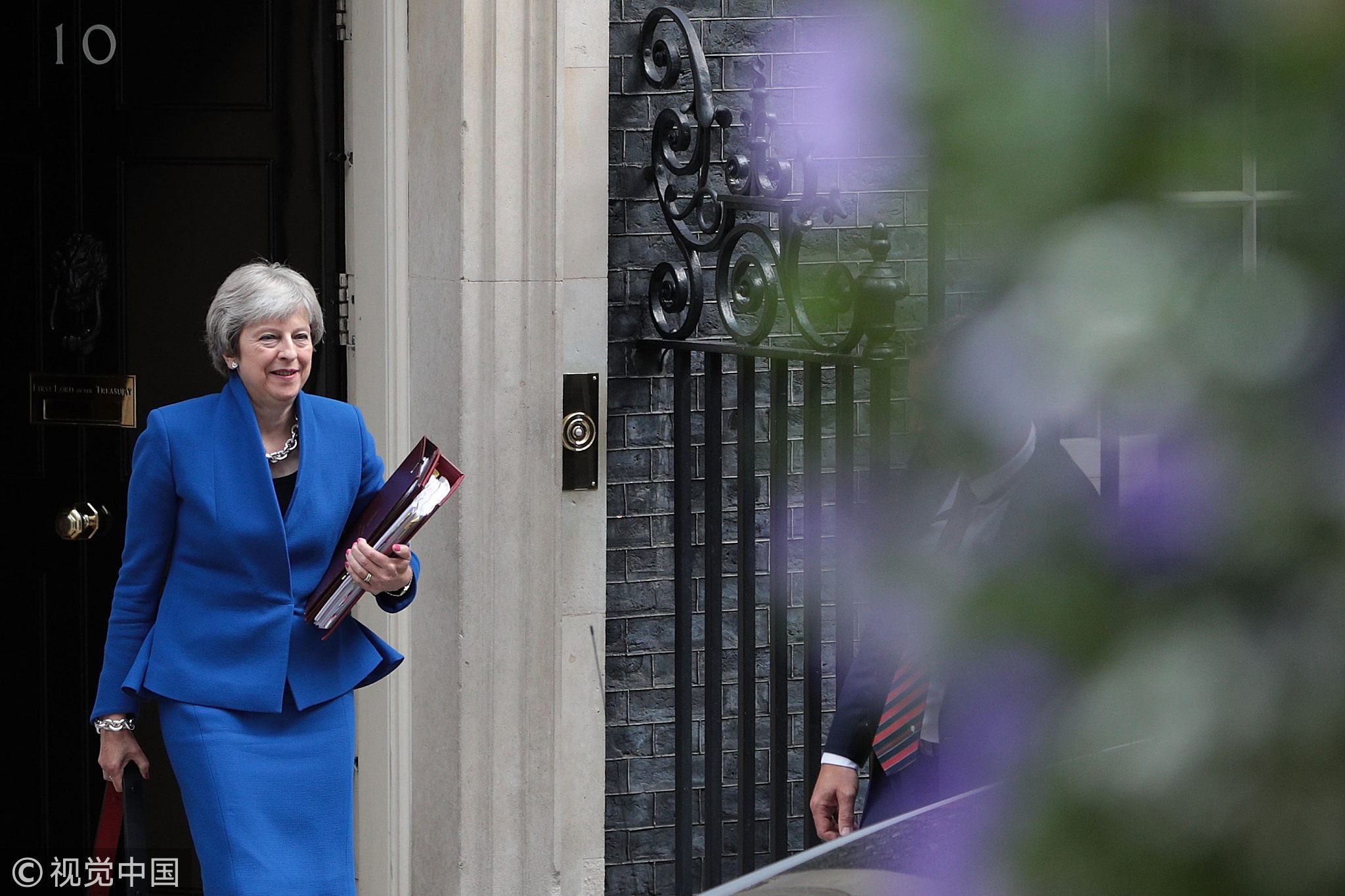
File photo of UK Prime Minister Theresa May. /VCG Photo
File photo of UK Prime Minister Theresa May. /VCG Photo
Davis, who resigned in protest over the Chequers plan after two years as May's chief negotiator, said the proposal was "almost worse than being in" the EU, and that May could use ‘national interest’ as a caveat to justify further concessions.
"You're not going to turn around said to parliament 'Oh, I agreed this, but that wasn't in the national interest' are you?" he told the BBC.
Trade minister Liam Fox, who also campaigned for Brexit but still supports May, said it was now up to the EU to respond to the British proposal, when asked whether he thought further compromises would be necessary.
Parliament returns from its summer break on Tuesday.
Any agreement Britain is able to strike with EU will need approval from the British parliament – presenting a major headache for May who runs a minority government propped up by a deal with a small Northern Irish party and whose own Conservative party are deeply divided over Brexit.
"The coming months will be critical in shaping the future of our country and I am clear about my mission," May wrote in the article.
She also ruled out a second referendum on Britain's EU membership, countering increasingly vocal campaigning for another public vote on the terms of the Brexit.
"To ask the question all over again would be a gross betrayal of our democracy," May said.
May also reiterated that Britain would be ready to leave the EU without a deal if the two sides cannot agree on the divorce terms.
Difficult talks lie ahead.
Both Britain and the EU have stepped up contingency planning in case the two sides are unable to reach a deal in time, setting financial markets on edge and weakening sterling at the prospect of economic disruption.
Source(s): Reuters