
Sports
11:32, 22-Oct-2018
Wimbledon serves an ace with final-set tie-breaks
Updated
11:17, 25-Oct-2018
 ["europe"]
Share







Copied
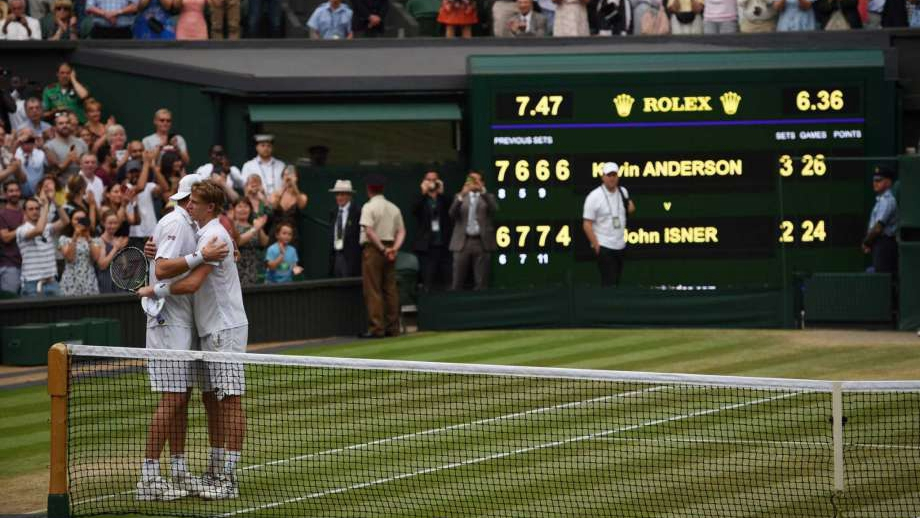
As is often the case with traditional sports tournaments that have a rich history, old habits die hard. However, Wimbledon has put this theory to shame. Despite a narrative that dates back to 1877, the All England Club has succumbed to the pressures from players and pundits alike to introduce a final-set tie-break – kicking in when the score reaches 12-12.
From next year, Wimbledon will join the US open as the second of four grand slams to use a final-set decider in a bid to adapt to the pace of modern life. And it's precisely that pace which many players are hoping to see in their matches during the summer tournament, but none more so than John Isner, who holds the record for the longest match in history. In 2010, he defeated Nicolas Mahut 70-68 in the final set of the match that took 11 hours over three days to complete.
Although, ironically, it wasn't the memory of that particular Isner play which spurred the powers to be into action, but rather this year's semi-final against Kevin Anderson. The match lasted a total of six hours and 36 minutes, including a near three-hour fifth set which Anderson eventually took 26-24. But it didn't stop there with the match duration having a ripple effect into the final, which was played less than 48 hours later. The severely fatigued South African had no chance with world No.2 Novak Djokovic defeating him in straight sets.
As Anderson explained afterwards: “Of course my body didn't feel great. It's not going to when you've played so much tennis.”
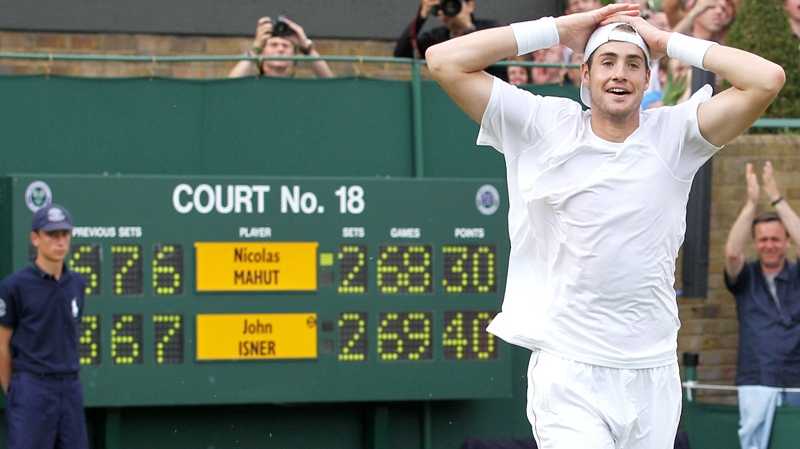
John Isner reacts after defeating Nicolas Mahut in their epic men's singles match during the 2010 Wimbledon tournament. /AP
John Isner reacts after defeating Nicolas Mahut in their epic men's singles match during the 2010 Wimbledon tournament. /AP
In the past, the giants of the game have often voiced their criticism of particularly lengthy matches. Rodger Federer said after a 13-11 final-set defeat to Anderson this year that long games were “rough on the players playing and also the players that follow that court.”
But the real nail in the coffin was when Andy Murray, as the commentator, sat through four hours and 48 minutes of Rafael Nadal's win over Juan Martin del Petro. The Brit openly said: "As a player, I really like best of five, but it was really, really long to sit there.” If even one of the leading figures in tennis was getting frustrated what hope was there for the rest of us."
In an age of short attention spans, our patience for six-hour-plus matches is wearing thin. Wimbledon, the spiritual home of marathon matches, has finally heeded the advice of some of its most influential faces and re-written a rule that has a history as long as some of its games.
Although change is necessary, it often comes at a price with many fearful that the All England Club will lose some of its most spectacular closing moments. However, the club chairman Philip Brook acknowledged the need for compromise as the sport progresses into the 21st century.
“While we know the instances of matches extending deep into the final set are rare; we feel that a tie-break at 12-12 strikes an equitable balance between allowing players ample opportunity to complete the match to advantage, while also providing certainty that the match will reach a conclusion in an acceptable timeframe.”
In the latest of a long string of innovations - the modern Wimbledon has shown a willingness to adapt to make the sport into more of a spectacle. The loss of a potential few hours of play is a small price to pay for the All England Club to take the crown as the most progressive major. Who's next - Australia Open and Roland Garros?