
Tech & Sci
12:58, 10-Jun-2018
Solar-powered device pulls drinkable water from desert air
 ["china"]
Share







Copied
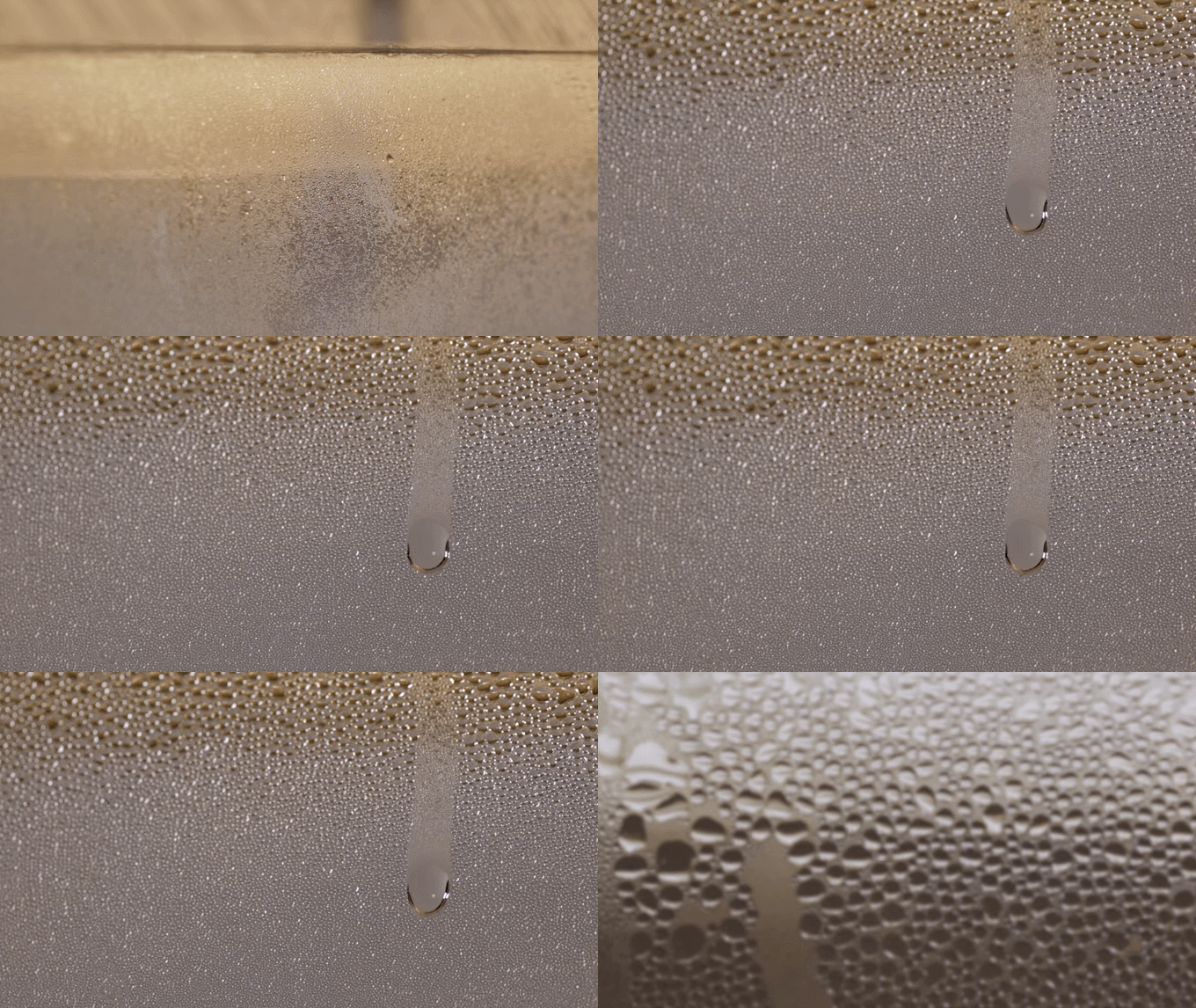
Engineers from the University of California (UC), Berkeley have developed a water harvester that can extract drinkable water at very low humidity and at low cost, making it ideal for people living in arid, water-starved areas of the world.
In a video on the university's YouTube page, they reported the results of the first field test in Arizona's desert where the relative humidity drops from a high of 40 percent at night to as low as 8 percent during the day.
The researchers used a highly porous material called a metal-organic framework (MOF) with many internal channels and holes. A sugar-cube-sized MOF might have an internal surface area the size of six football fields.
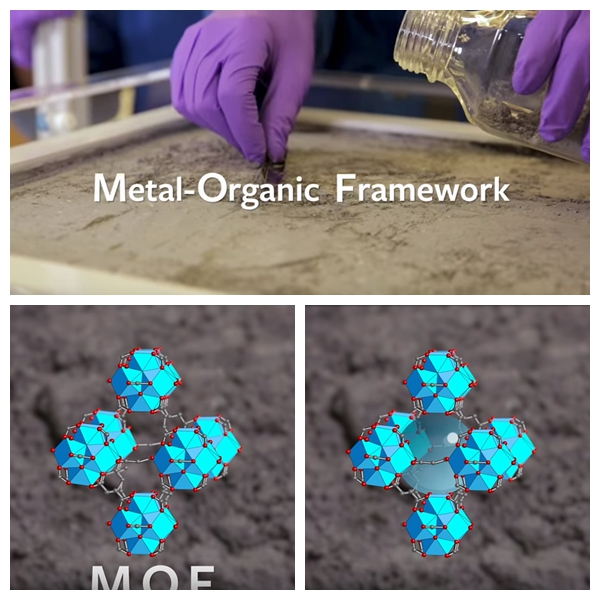
UC Berkeley's illustrations of a metal-organic framework (MOF) and the way it grabs water /Photo courtesy of UC Berkeley
UC Berkeley's illustrations of a metal-organic framework (MOF) and the way it grabs water /Photo courtesy of UC Berkeley
This surface area can easily absorb gases or liquids and quickly releases them when heated by sunlight.
In the field test, they used MOF-801, which is made from expensive metal zirconium. The material could harvest about 200 milliliters of water per kilogram of MOF.
Also, Omar Yaghi, a chemistry professor at UC Berkeley, reported that he has created a new MOF based on aluminum, called MOF-303, which is at least 150 times cheaper and captures twice as much water as what they got in lab tests.
This will enable a new generation of harvesters producing more than 400 milliliters (three cups) of water per day from one kilogram of MOF.
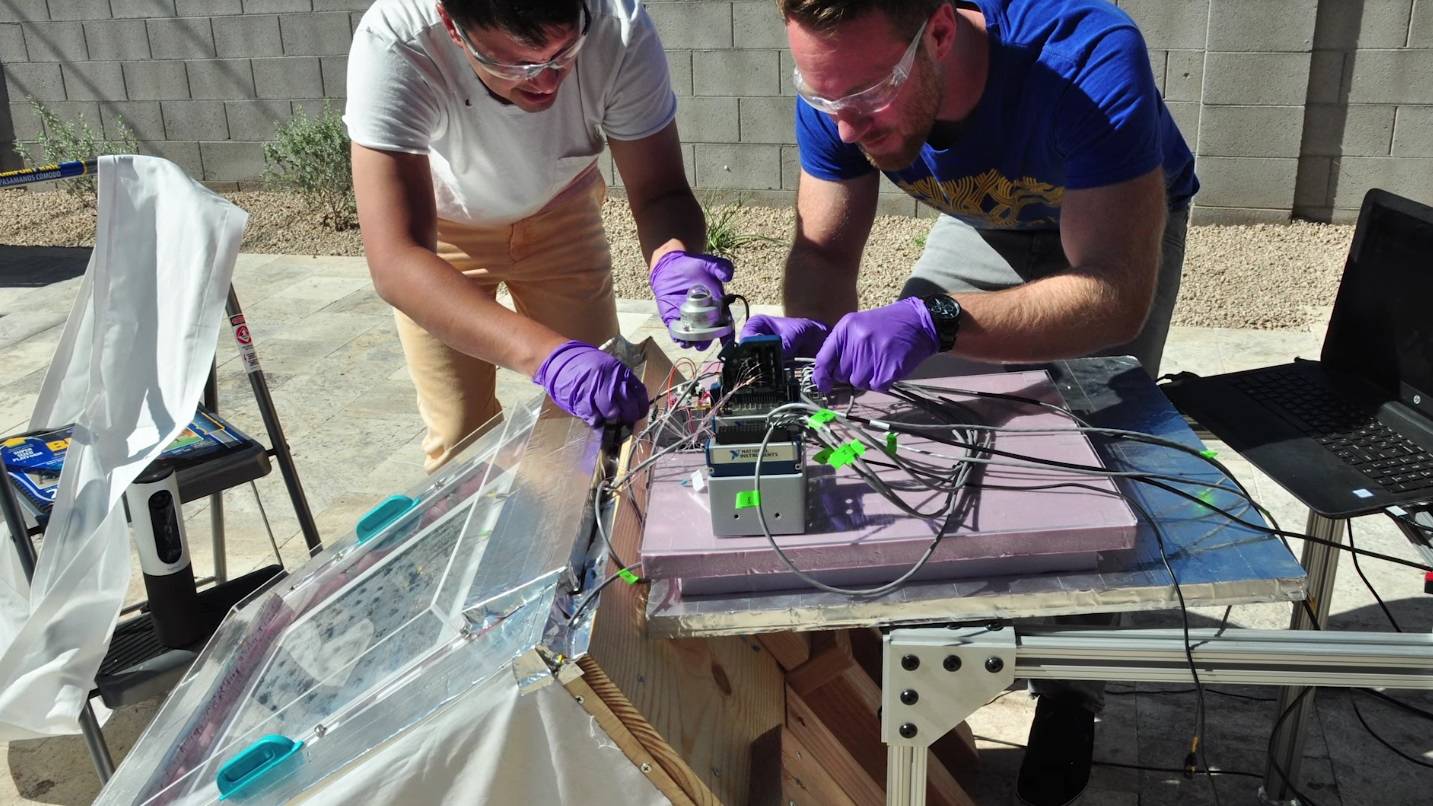
Researchers set up a water-harvesting apparatus. /Photo courtesy of UC Berkeley
Researchers set up a water-harvesting apparatus. /Photo courtesy of UC Berkeley
The harvester is essentially a box within a box, according to the engineers. The inner box holds a 1,858-square-centimeter bed of MOF grains open to the air to absorb moisture and it is encased in an about 61-centimeter plastic cube with transparent top and sides.
The released water condensed on the inside of the outer box and fell to the bottom, where the researchers collected it with a pipette.
"The key development here is that it operates at low humidity, because that is what it is in arid regions of the world," said Yaghi, who is eagerly awaiting the next field test, which will test the more economical aluminum-based MOF.
[Top image: Gif shows water droplets condensing on the inside of the outer box in a lab setting. /Photo courtesy of UC Berkeley]
Source(s): Xinhua News Agency