
Politics
13:20, 27-Apr-2018
Merkel aims to sway Trump as Iran, tariff deadlines loom
 ["north america"]
Share






Copied
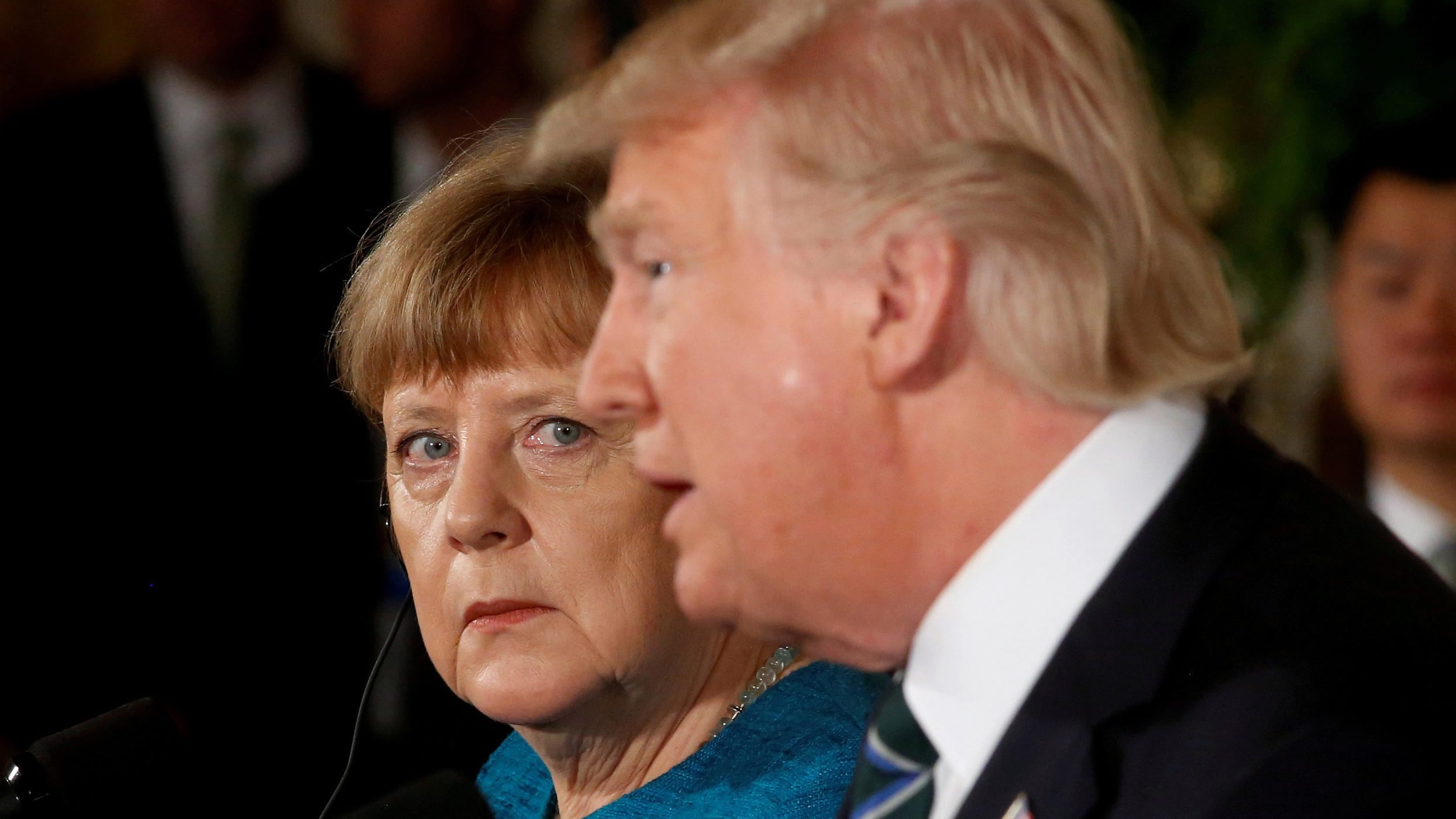
Days after waving goodbye to French President Emmanuel Macron, Donald Trump is to welcome German Chancellor Angela Merkel to the White House on Friday for a more low-key meeting.
Macron was the invitee for the first state visit of Trump's presidency, rounding off three days of pomp and photo-ops with a rare address to a joint session Congress. By contrast, Merkel will be treated to a businesslike working lunch and joint press conference.
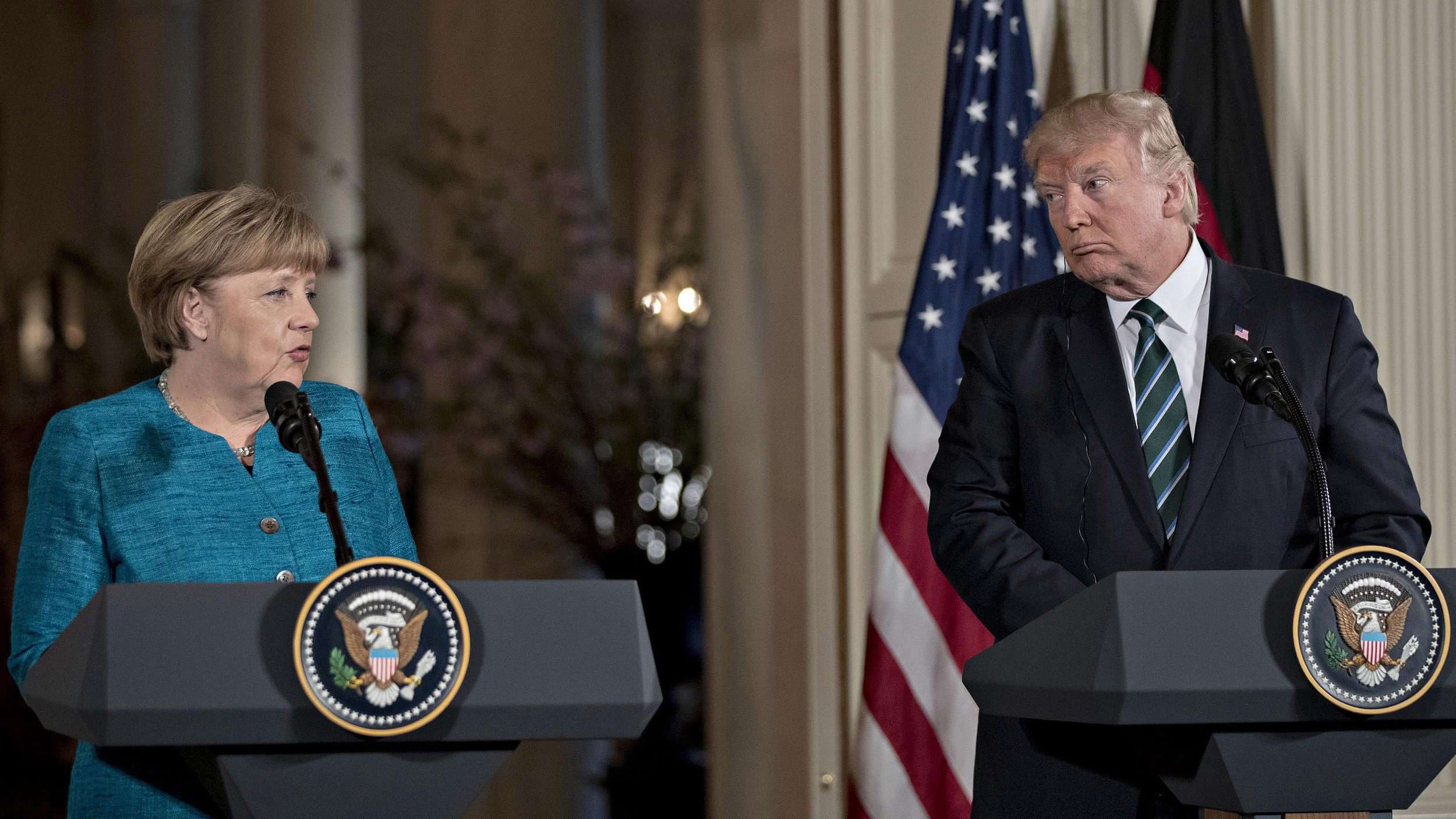
German Chancellor Angela Merkel and US President Donald Trump at a news conference in the East Room of the White House, March 17, 2017. /VCG Photo
German Chancellor Angela Merkel and US President Donald Trump at a news conference in the East Room of the White House, March 17, 2017. /VCG Photo
Style, optics and personal warmth may differ, but the German leader's message is expected to be similar to that of the French president – they coordinated a European approach in Berlin last week.
The priorities are dictated by two nearing deadlines: The EU's exemption from steel and aluminum tariffs expires on May 1, and Trump must decide whether to re-impose sanctions on Iran on May 12.
Transatlantic tiffs
Merkel and Macron speak with a single European voice on many policy clashes with the US. In addition, Germany refused to join the airstrikes on Syria in early April and has been lambasted by Trump on both its trade surplus with the US and its levels of military spending. The Trump-Merkel agenda will feature plenty of differences.
Trade: Trump has repeatedly complained about the trade deficit his country runs with Berlin, which hit 64 billion US dollars in 2017. The EU exemption from US tariffs on steel and aluminum is due to expire on May 1, and the bloc has threatened retaliatory measures. The US has in turn suggested new tariffs could be put on German cars.
German officials told Reuters that Merkel would seek to discuss a broader package covering a variety of industries. The issue is complicated by the need to negotiate with the EU bloc, but as leader of Europe's richest country Merkel holds influence.
Iran nuclear deal: Merkel is committed to the Iran nuclear deal and Macron lobbied Trump hard to stick with the agreement struck in 2015. However, the US president has repeatedly hit out at the "worst deal ever" and Macron said as he left the US that he feared for its future.
France, Germany and Britain have been working on a side-package that they hope could sway the US president.
Multilateralism: Trump's "America First" policy is in stark contrast to Merkel's preference for multilateral deals. The Paris Climate deal is a headline example of their differing approaches - Germany is one of the strongest backers, the US plans to withdraw.
There are also tensions over the proposed Transatlantic Trade and Investment Partnership – essentially a US-EU trade deal that Germany believes would be a huge boon to both economies. Negotiations were suspended after Trump took office.
Military spending: German spending on defense is around 1.2 percent of GDP – well below the 2 percent that all NATO countries have committed to targeting. Trump has repeatedly hit out at Berlin on the issue, though German domestic appetite for higher military spending is low.
One solution, US officials told the New York Times, would be for Germany to commit to buying more US military hardware: Military spending would increase and the trade deficit would be lowered.
Syria: The US, France and the UK launched coordinated strikes on Syria in the wake of alleged chemical weapons use by the Syrian government – Merkel issued a statement of support but refused to join.
Russia: Nord Stream 2, the planned Russian gas pipeline under the Baltic Sea to Germany, has raised eyebrows in Europe and the US at a time when Moscow's foreign policy is under scrutiny. The pipeline circumvents Ukraine and the Balkan states, costing those countries significant sums in transit fees.
Critics, including Trump, say it will make Europe dependent on Moscow and boost the Russian economy. Merkel recently accepted there were "political" aspects to the project, having previously said it was purely an economic deal.
Migration: Trump and Merkel's policies on migration couldn't be further apart. The US president accused Merkel of making a "catastrophic mistake" by welcoming over one million migrants in 2015. Trump, by contrast, has sought to literally build a wall to cut down on immigration to the US.
US and Europe
The differences in the Merkel-Trump and Macron-Trump personal relationships are clear, even as both European leaders seek similar outcomes – it's not certain whether either can influence the White House.
The perception of a change in dynamics in Europe's leadership, however, is something the German chancellor is eager to reverse.
Merkel's relationship with Barack Obama was close, and she positioned herself and her country as Europe's leading voice for the US. With the elections of Trump and Macron, that position is less secure.

German Chancellor Angela Merkel welcomes then US President Barack Obama on Nov. 17, 2016 at the Chancellery in Berlin. /VCG Photo
German Chancellor Angela Merkel welcomes then US President Barack Obama on Nov. 17, 2016 at the Chancellery in Berlin. /VCG Photo
As Merkel spent six months putting together a coalition in Germany and with Britain weighed down by Brexit, Macron stepped into a vacuum and embarked on a series of diplomatic excursions aimed at boosting France's image on the world stage. One of the more eye-catching was building a relationship with the US president that few others have managed.
Merkel has so far struggled to match the easy Macron-Trump rapport – she spoke to the US president for the first time in five months in March. AFP reported that German diplomats pushed hard -- and unsuccessfully -- for a two-day meeting with Trump in the hope of improving their personal relationship.
Trump is hugely unpopular in Germany, with just 11 percent of Germans having confidence in him according to a poll cited by the Washington Post. However, positive ties with the US – particularly on trade – remain essential to Berlin.
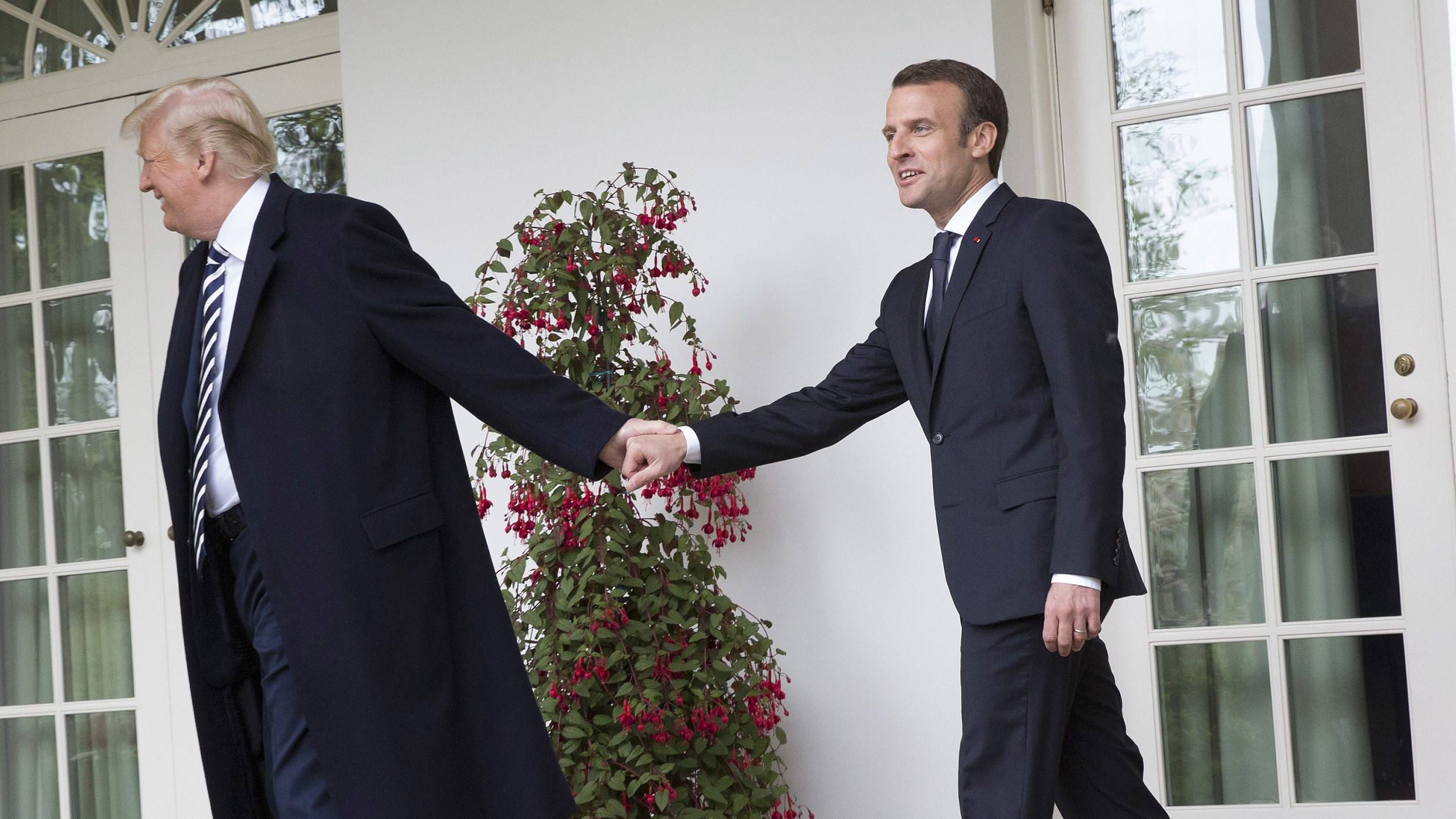
US President Donald Trump leads Emmanuel Macron, France's president, towards the Oval Office during a state visit at the White House, April 24, 2018. /VCG Photo
US President Donald Trump leads Emmanuel Macron, France's president, towards the Oval Office during a state visit at the White House, April 24, 2018. /VCG Photo
Some analysts fear Germany is losing influence on the US. Others question whether, for all the positive signs in the relationship, Macron will have much impact on the US president's decision-making.
Merkel will hope her trip to Washington can kick-start a working relationship with Trump, and that her businesslike approach cuts through ahead of two fast-approaching deadlines.