
Politics
15:06, 04-Jun-2018
Netanyahu travels to Europe with Iran on his mind
 ["china"]
Share







Copied
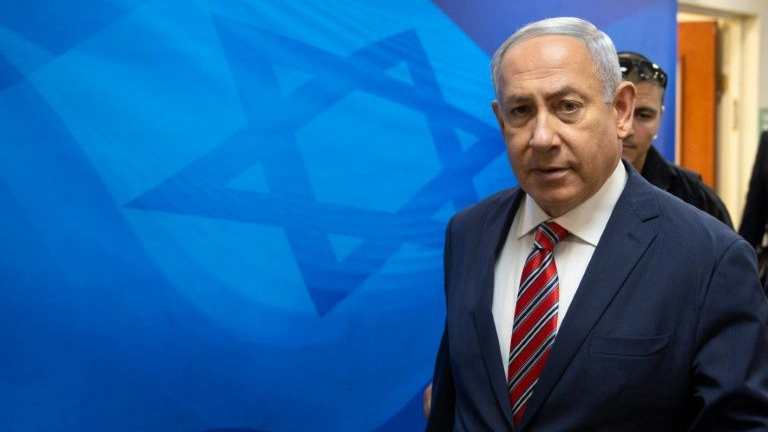
Israeli Prime Minister Benjamin Netanyahu sets out Monday on a three-day European tour with the international nuclear deal with Iran a key subject.
With partners in Berlin, Paris and London still reeling from US President Donald Trump's decision last month to exit the hard-fought 2015 accord, Netanyahu is expected to seek European cooperation on a still-to-be-determined Plan B.
"The aim to prevent Iran from developing any kind of nuclear capacity was always the foundation of international policy on Iran," Israel's ambassador to Germany, Jeremy Issacharoff, told AFP ahead of the visit.
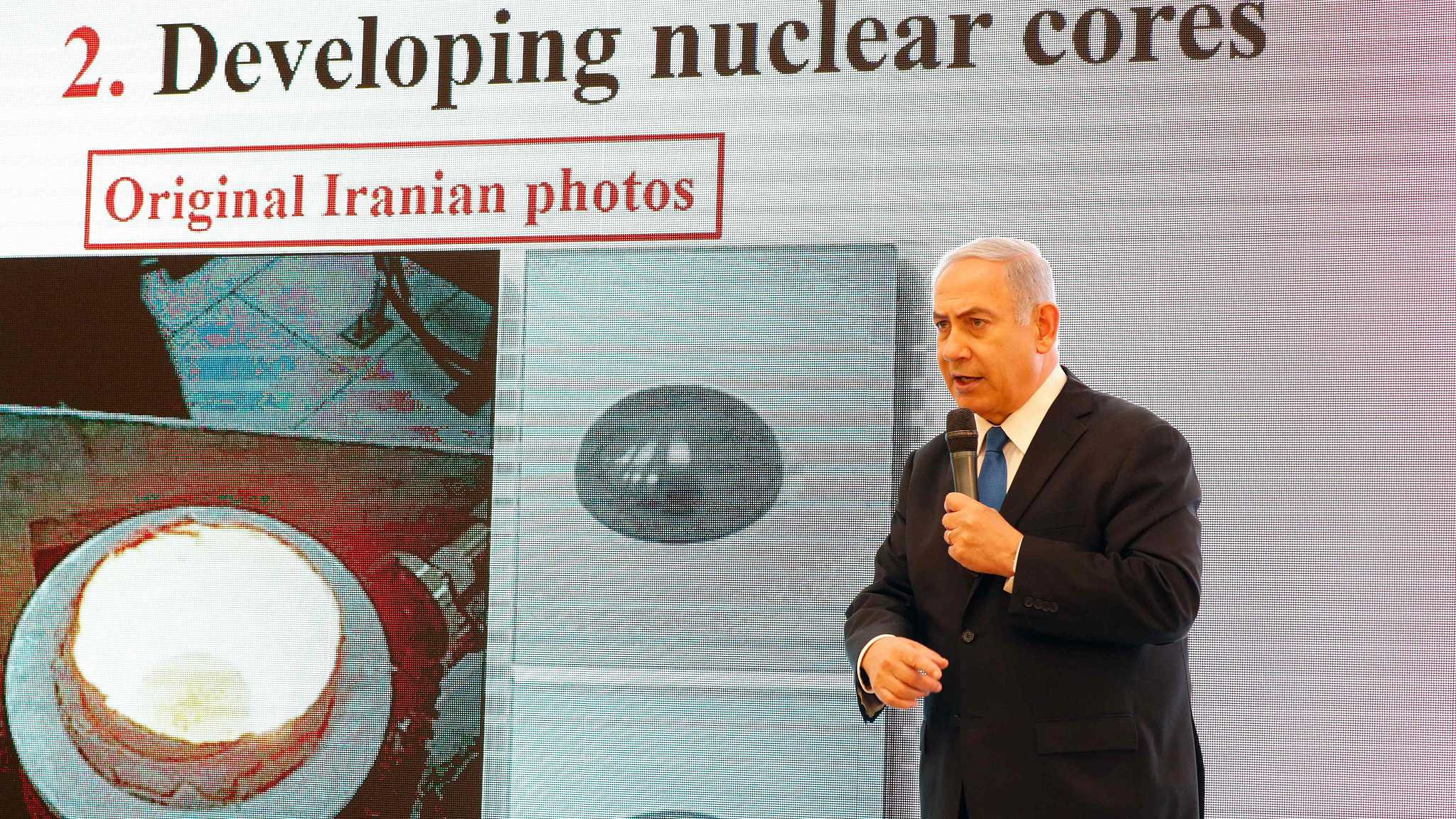
Israeli Prime Minister Benjamin Netanyahu delivers a speech on Iran's nuclear program at the defense ministry in Tel Aviv, April 30, 2018. /VCG Photo
Israeli Prime Minister Benjamin Netanyahu delivers a speech on Iran's nuclear program at the defense ministry in Tel Aviv, April 30, 2018. /VCG Photo
Issacharoff said that despite "differences of opinion" on how to achieve the aim of hemming in Iran on nuclear matters, "we share the same goal."
Germany, France and Britain are three of the signatories of the 2015 Joint Comprehensive Plan of Action (JCPOA) between world powers and Iran, aimed at keeping Tehran from acquiring nuclear weapons.
Netanyahu, who has railed against the deal which offers sanctions relief in exchange for strict limits on Iran's nuclear activities, will hold talks with Chancellor Angela Merkel in Berlin Monday, followed by a joint news conference.
He will continue on to Paris for meetings with French President Emmanuel Macron on Tuesday and British Prime Minister Theresa May on Wednesday.
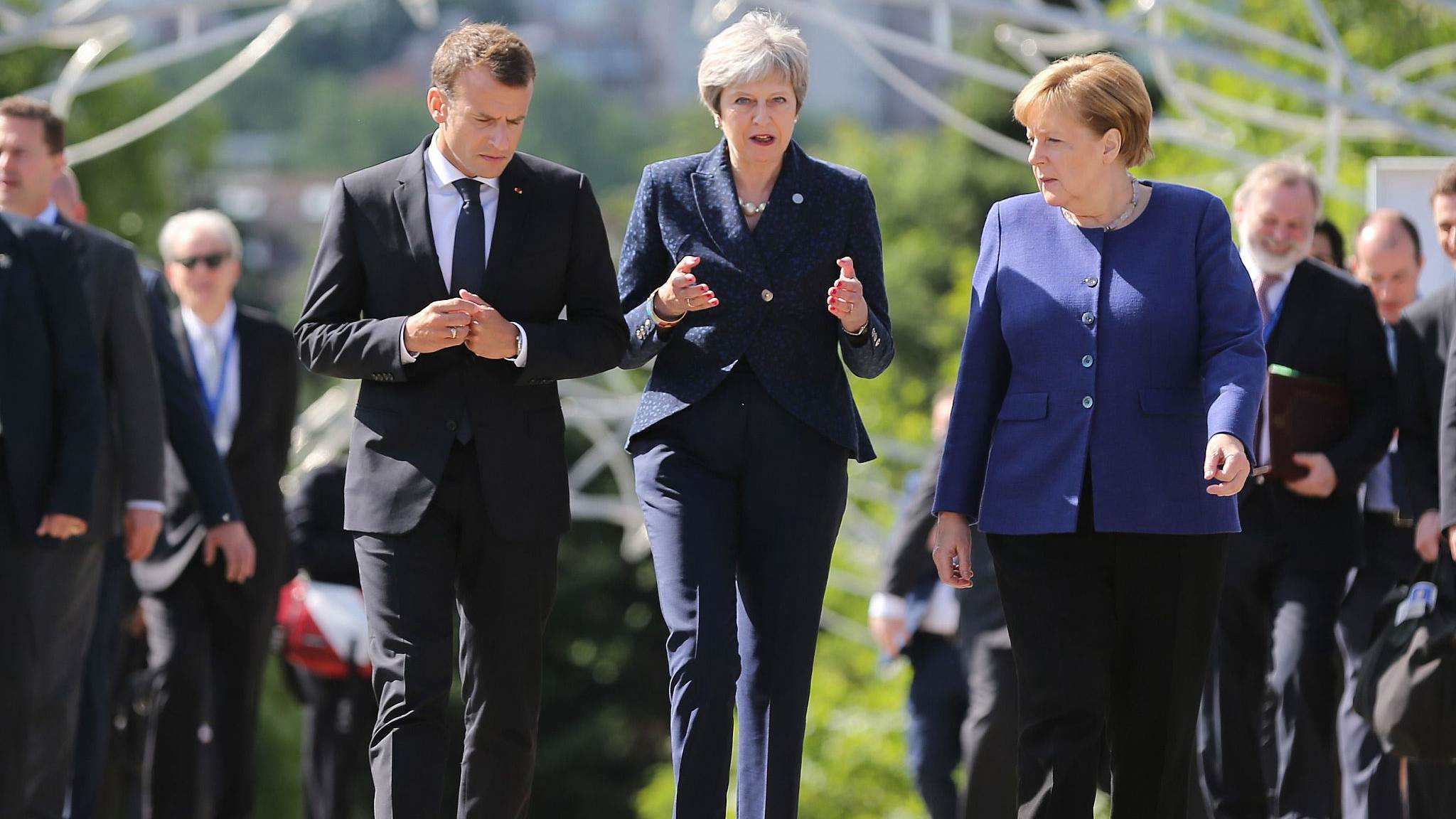
French President Emmanuel Macron, British Prime Minister Theresa May and German Chancellor Angela Merkel walk during the EU-Western Balkans Summit in Sofia, Bulgaria, May 17, 2018. /VCG Photo
French President Emmanuel Macron, British Prime Minister Theresa May and German Chancellor Angela Merkel walk during the EU-Western Balkans Summit in Sofia, Bulgaria, May 17, 2018. /VCG Photo
In the face of the US retreat, all three leaders strongly defend the agreement as the best way to head off a regional arms race and have vowed with Russia and China, the two other signatory countries, to keep it alive.
German Foreign Minister Heiko Maas exchanged opinions on the Iran nuclear deal with his Chinese counterpart Wang Yi on Thursday and insisted that Berlin "wants to maintain the nuclear agreement and make sure Iran maintains it too."
Read more on Maas's meeting with Wang: Chinese FM dispels EU's worries over 16+1 cooperation between China, CEE countries
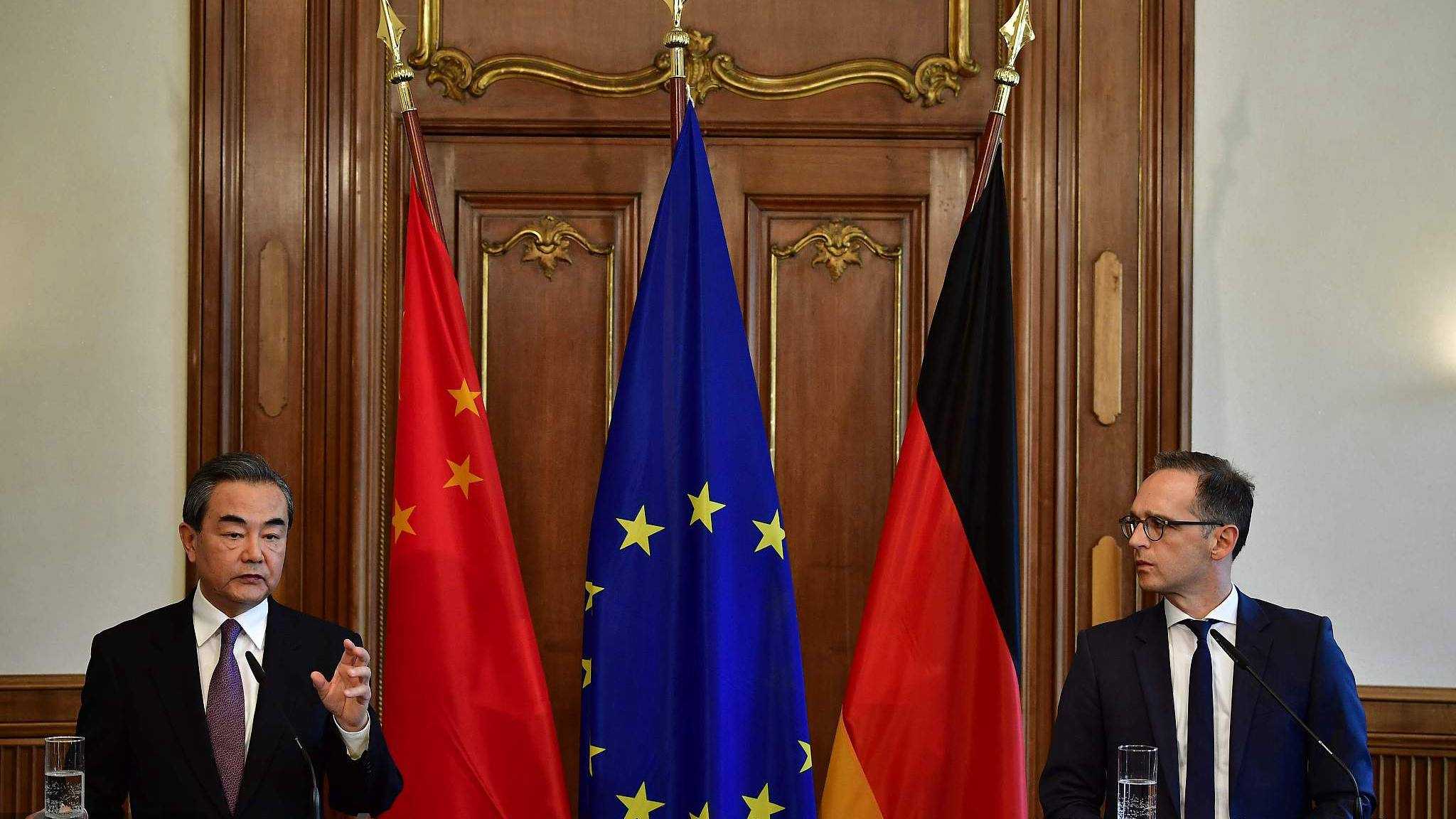
Chinese State Councilor and Foreign Minister Wang Yi (L) and his German counterpart Heiko Maas hold a joint press conference in Berlin, May 31, 2018. /VCG Photo
Chinese State Councilor and Foreign Minister Wang Yi (L) and his German counterpart Heiko Maas hold a joint press conference in Berlin, May 31, 2018. /VCG Photo
Supporters also fear the reimposition of US sanctions could hit European firms that have done business with Iran since the accord was signed.
Merkel has acknowledged that while European powers see the JCPOA as the best guarantee against an Iran with nuclear weapons, it is "not perfect."
The Europeans have proposed hammering out a supplementary deal with Tehran covering its ballistic missile programme as well as its interventions in countries such as Lebanon, Syria, Iraq and Yemen.
Western powers view Iran's meddling as destabilizing for the region while Israel sees it as a direct threat to its existence.
"I will discuss with them ways to block Iran's nuclear aspirations and Iran's expansion in the Middle East," Netanyahu said last week of his European meetings, noting the issues were "crucial to Israel's security."
Israel is considered the leading military power in the Middle East and believed to be the only country in the region to possess nuclear weapons.
Source(s): AFP