
Opinions
16:49, 03-Aug-2018
Opinion: China and ASEAN can maintain peace in South China Sea
Updated
16:43, 06-Aug-2018
 ["china"]
Share







Copied
Editor’s Note: Luo Yongkun is an associate research fellow at the China Institutes of Contemporary International Relations in Beijing. The article reflects the author's opinion, and not necessarily the views of CGTN.
The South China Sea issue has attracted the world’s attention in recent years. Although China and ASEAN (Association of Southeast Asian Nations) countries have done their uttermost to maintain peace and stability in the region, Western countries often challenge them by hyping up the issue.
However, history has shown that the South China Sea is peaceful without interference from Western countries.
Since the end of the Cold War, China and ASEAN countries have successfully communicated and consulted on the South China Sea issue diplomatically. They signed the Declaration on Conduct of Parties (DOC) in the South China Sea in 2002 and held 15 senior official meetings on implementation of the DOC in the following years.
As a result, Guidelines for the Implementation of the DOC were signed and negotiations on a Code of Conduct (COC) in the South China Sea started.
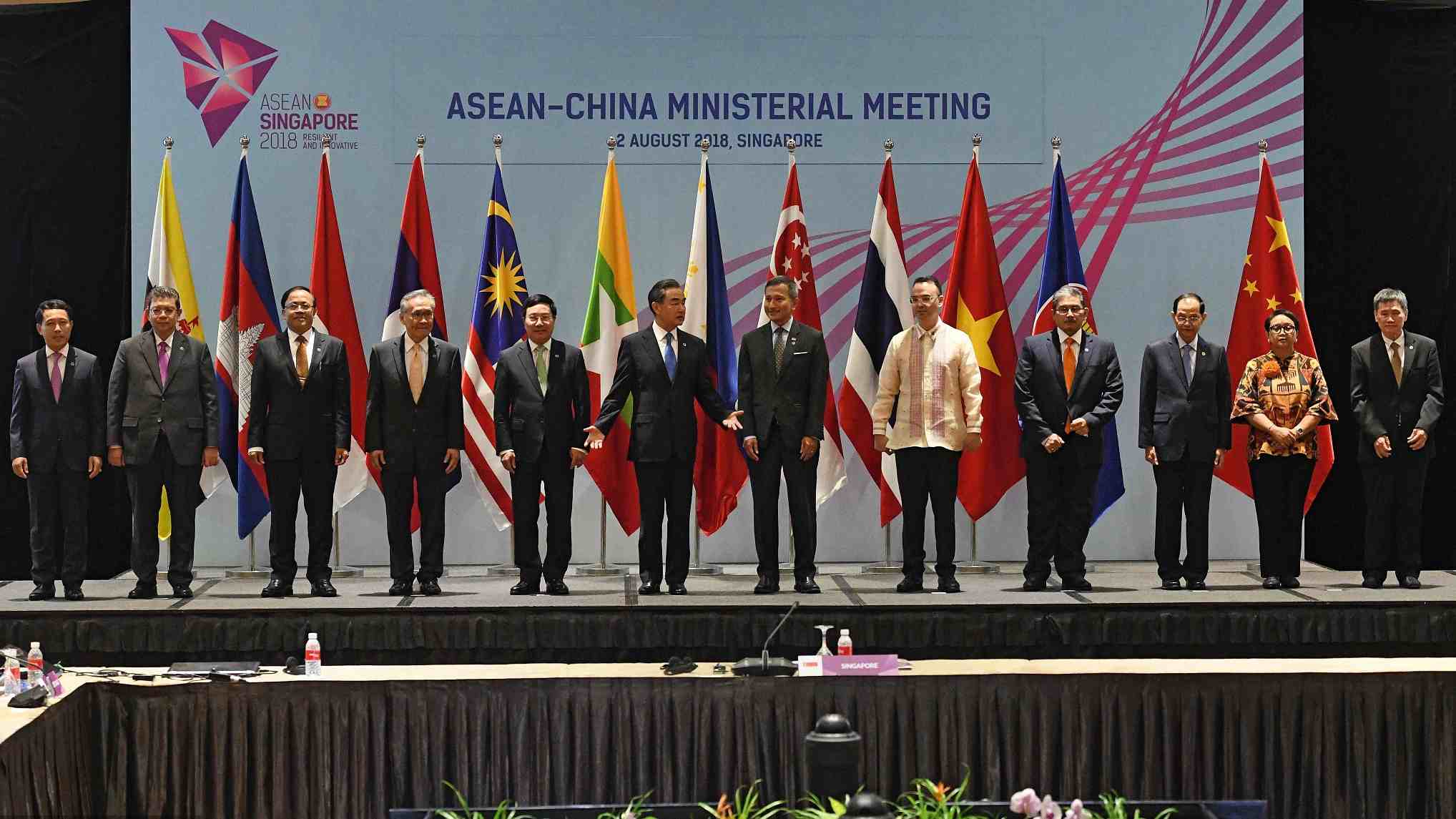
On August 2, 2018, China and ASEAN introduced a single draft COC negotiating text, facilitating future negotiations and enhancing mutual trust.
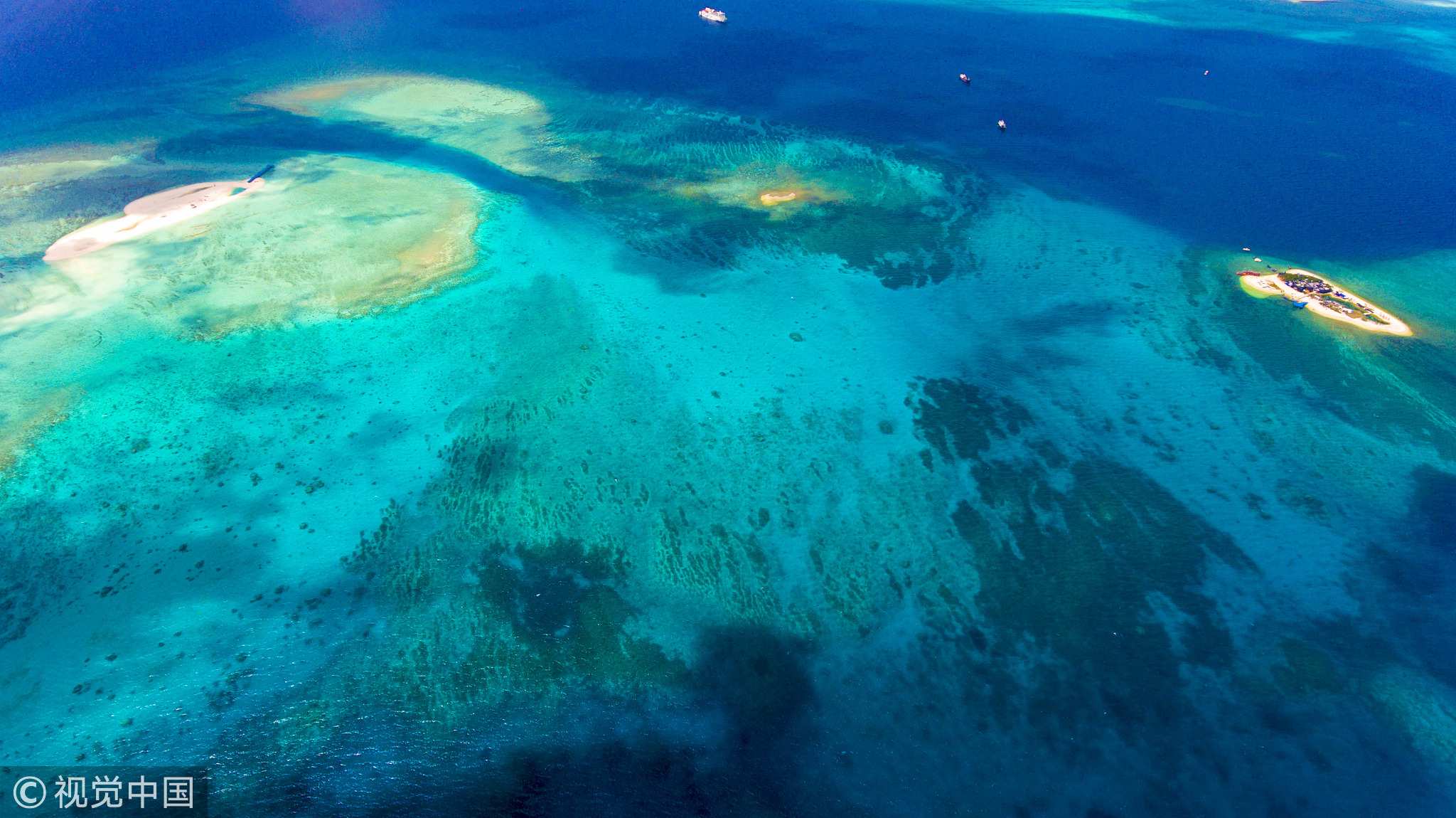
A bird's eye view of Sansha, Hainan province, China. /VCG Photo
A bird's eye view of Sansha, Hainan province, China. /VCG Photo
The South China Sea has witnessed peace and stability without conflict and confrontation for decades.
China and ASEAN countries had no intention to fight each other even during the period of arbitration between China and the Philippines, which was the most difficult moment faced by the region in recent years.
The ability for China and ASEAN to manage the tension in the South China Sea has significantly improved. It is Western countries that stir up tensions in the region for the purpose of damaging the relationship between China and ASEAN countries.
The reason why China and ASEAN countries are able to coordinate and manage the South China Sea issue is that they always struggle for peace and prosperity.
First, China and most ASEAN countries are strategic partners, meaning they are partners and friends, paying attention to comprehensive cooperation and coordination in various fields.
They cooperate for peace, stability and prosperity in the region rather than confrontation and conflict. It is quite different from the West’s preferred military alliances, whose cooperation focuses on security, aiming to fight against a certain country.
The strategic cooperation between China and ASEAN has strengthened their relations, especially economic and social, over the past decades.
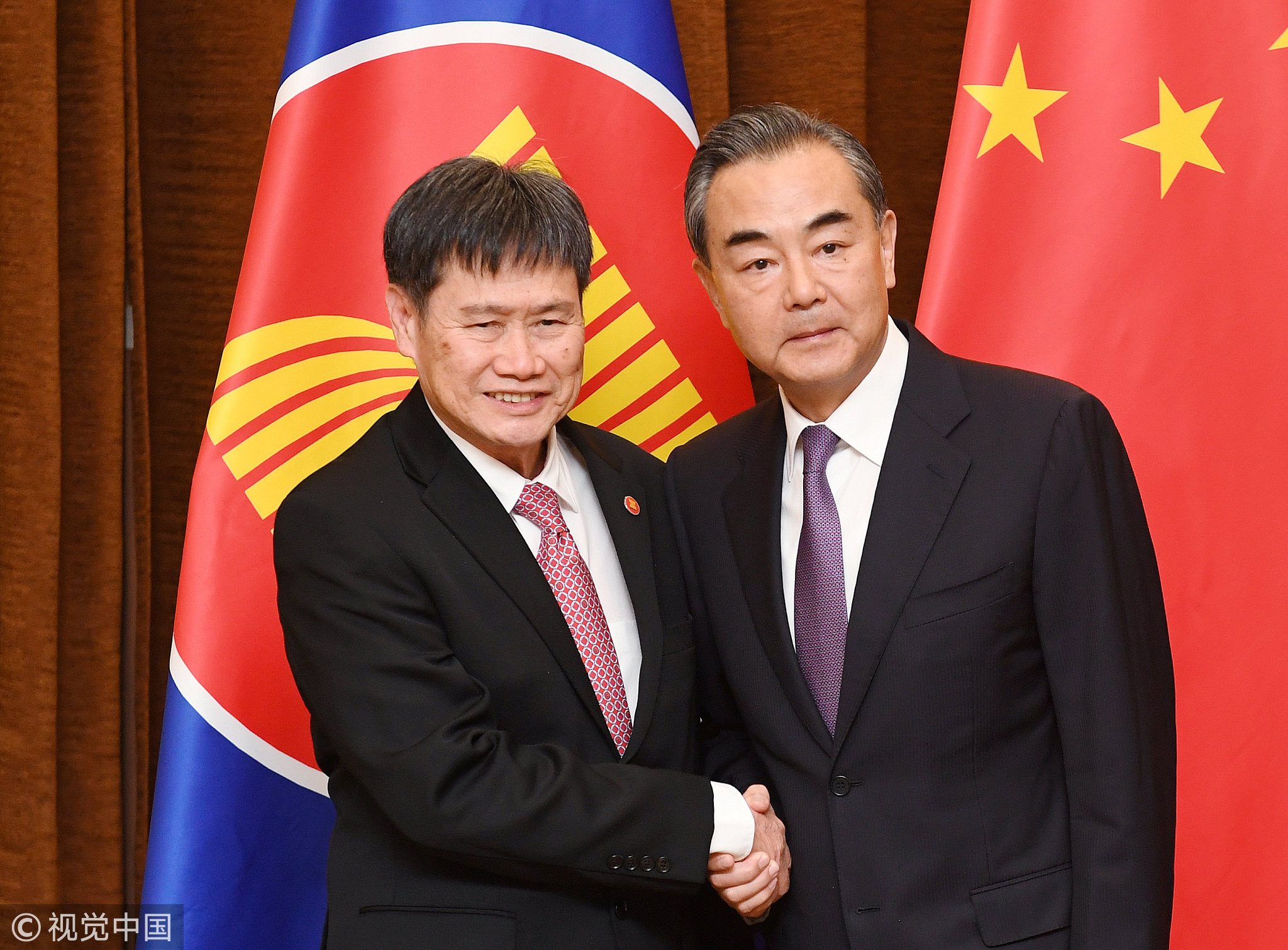
ASEAN Secretary-General Lim Jock Hoi (L) is greeted by Chinese Foreign Minister Wang Yi before a meeting at the Foreign Ministry in Beijing, June 12, 2018. /VCG Photo
ASEAN Secretary-General Lim Jock Hoi (L) is greeted by Chinese Foreign Minister Wang Yi before a meeting at the Foreign Ministry in Beijing, June 12, 2018. /VCG Photo
Secondly, both China and ASEAN share a culture of peace. China emphasizes harmony and peace, discussion and communication within ASEAN. That’s why even if disputes emerge, the two sides always manage to work towards peaceful dialogue and discussion. War is not welcome: that is the consensus between China and ASEAN.
Whatever difficulties they encounter in the South China Sea issue, they will try to avoid conflict and confrontation by discussing a possible solution and pushing for economic cooperation.
The South China Sea issue is not an obstacle to further cooperation. Instead, it is a problem that China and ASEAN countries are trying to solve collaboratively.
Peacefully resolving disputes through negotiation between the parties directly concerned, and working together to maintain peace and stability in the South China Sea is the right way to manage the issue. It is a wise approach for China and ASEAN.
Now the two parties are exploring a new approach for development and cooperation in the South China Sea, which is an important hub for the 21st Century Maritime Silk Road. Undoubtedly, a peaceful South China Sea and a peaceful maritime silk road are in the interest of all.