
Opinions
18:39, 14-May-2018
Opinion: Sino-US trade dispute appears to be reversing on ZTE case
 ["china"]
Share







Copied
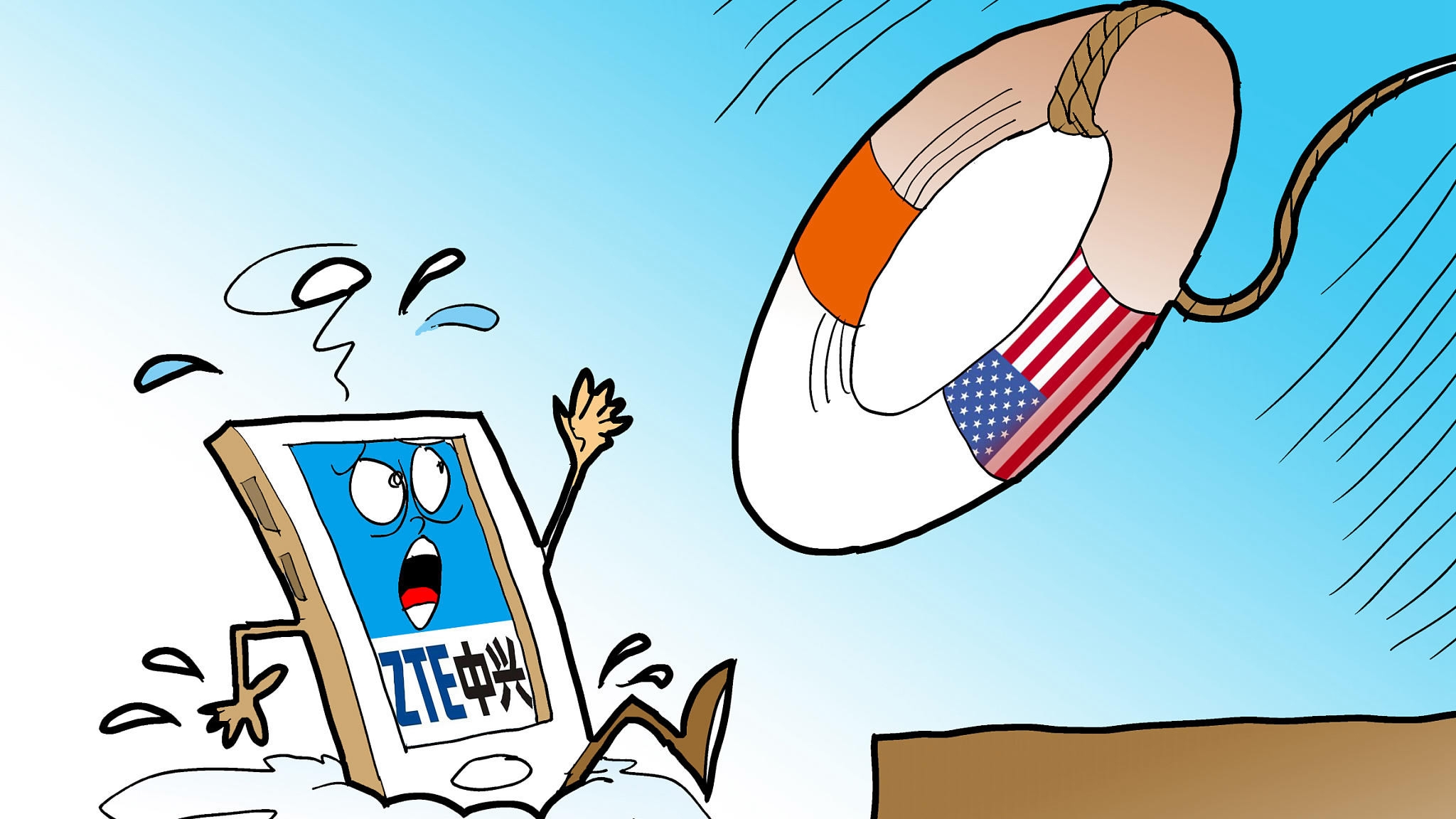
The capricious American president Donald Trump surprised the world once again as he pledged on Sunday to help Chinese telecommunications giant, ZTE, after the US government denied it access to its American suppliers.
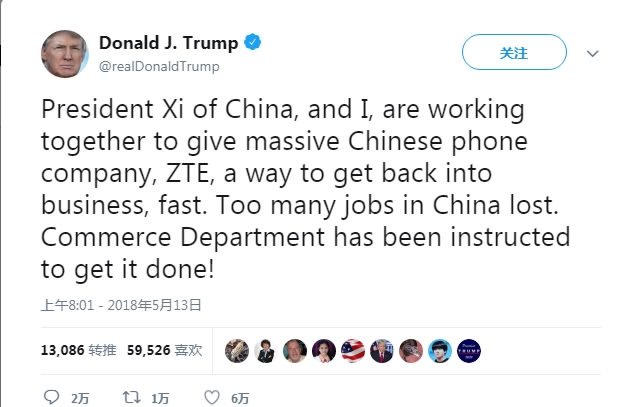
On Sunday, Trump tweeted that he and Chinese president Xi Jinping "are working together to give massive Chinese phone company, ZTE, a way to get back into business, fast. Too many jobs in China lost. Commerce Department has been instructed to get it done!"
Trump's move will likely be seen as a concession to China in the ongoing talks between Beijing and Washington to resolve the trade conflict. When a US delegation visited China recently for talks to end a trade stand-off, a resolution of the ZTE case was among Beijing's main demands.
Why has Trump suddenly asked the US Department of Commerce to save ZTE?
ZTE bought 2.3 billion US dollars' worth of American goods in 2017. Its major American suppliers include Qualcomm, Intel and Texas Instruments. It is also the fourth largest smart phone manufacturer in the US market, and has hundreds of partners in the United States, creating tens of thousands of jobs.
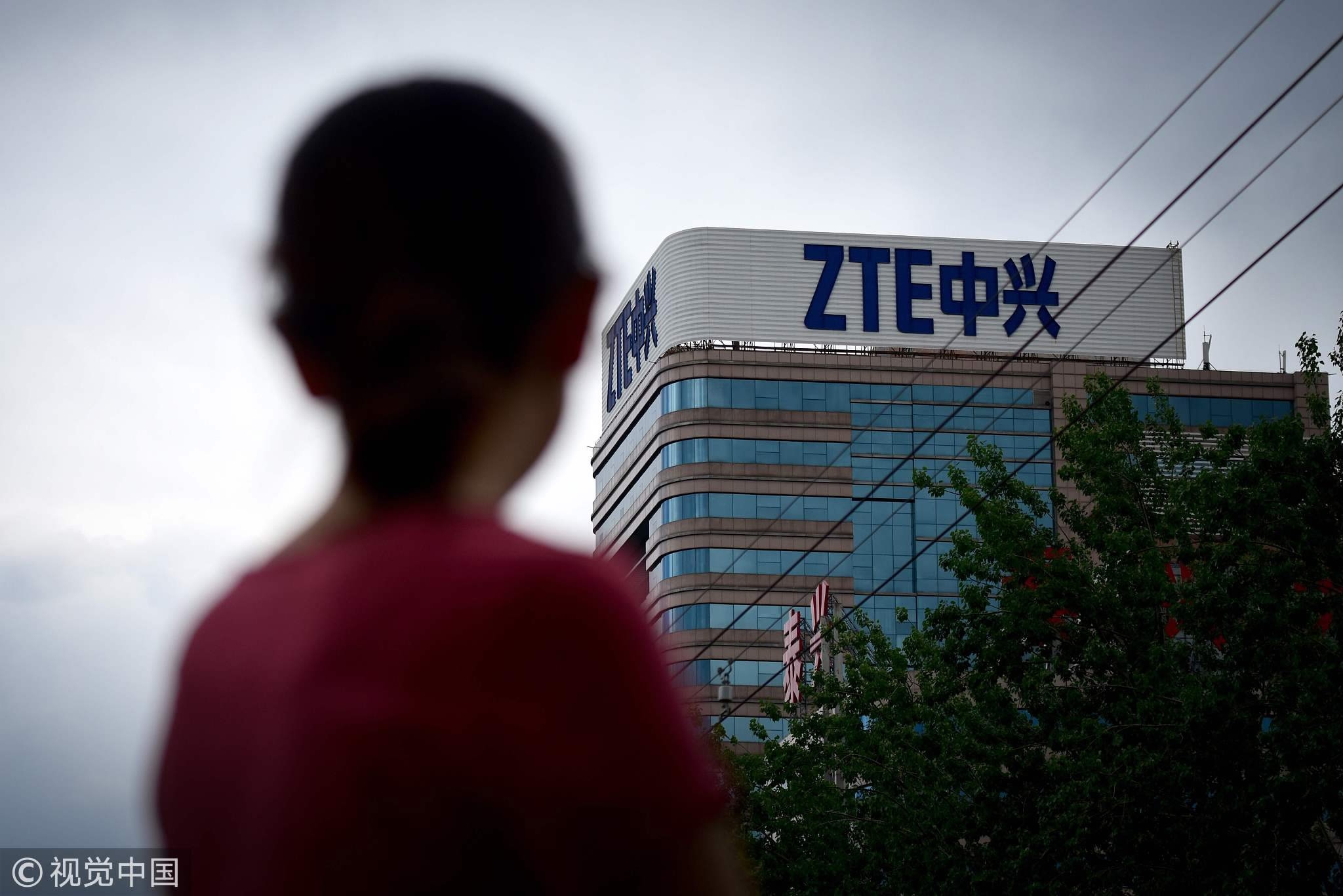
The ZTE logo is seen on a building in Beijing, May 2, 2018. / VCG Photo.
The ZTE logo is seen on a building in Beijing, May 2, 2018. / VCG Photo.
From this perspective, the relief of ZTE is indeed beneficial to the interests and employment of the United States. However, it is clear that Trump will not require the US Department of Commerce to change its stance because of this factor. Otherwise, ZTE wouldn’t have been imposed a sanction.
Liu Zhiqin, senior research fellow from the Chong Yang Institute of Financial Studies at Renmin University of China, says it is noteworthy that Trump’s attitude has become a turning point for both ZTE and the US as it has provided ZTE with an opportunity to renegotiate and discuss with its partner in Washington. He also thinks that what have been expressed on Trump’s Twitter is only the verbal promises unless ZTE meets all their preconditions and requirements.
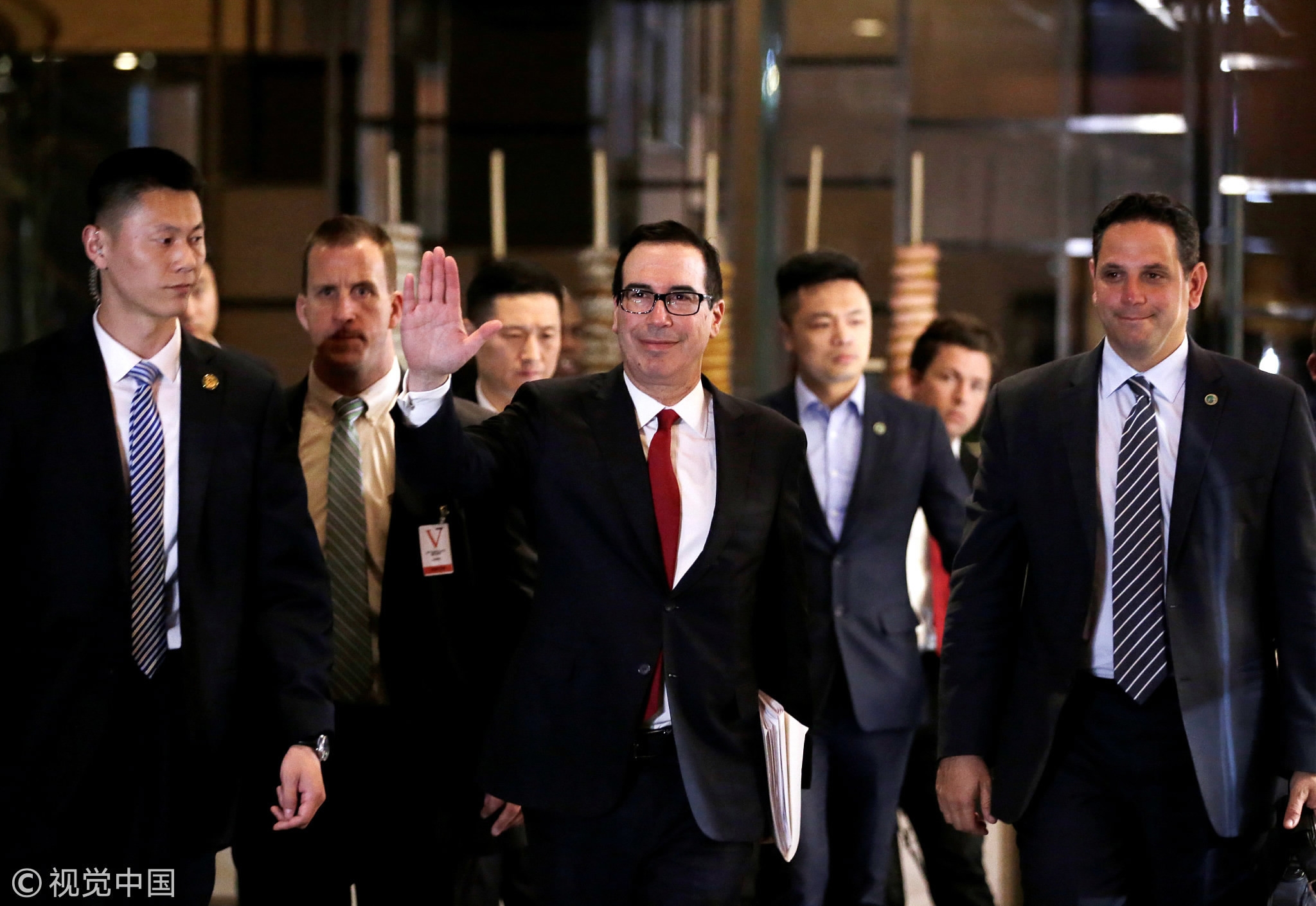
US Treasury Secretary Steven Mnuchin, a member of the US trade delegation to China, waves to the media as he returns to the hotel in Beijing, China, May 3, 2018. / VCG Photo.
US Treasury Secretary Steven Mnuchin, a member of the US trade delegation to China, waves to the media as he returns to the hotel in Beijing, China, May 3, 2018. / VCG Photo.
The Trump administration proposed to impose a punishing tariff of 50 billion US dollars on China’s imports in early April, and has thus led to China responding with a punishing tariff of 50 billion US dollars on American goods. Although it seems that a ”trade war” is imminent, the loss of both sides is not Trump's real goal for the businessman-turned president who has been in business for half a century.
But Liu said that in order to interest both sides, three steps should be taken.
“Firstly, in terms of financial, we have to open up. Some good foreign investors have already applied for the 51 percent share holdings in Chinese financial institutions; secondly, capital market and service industry must also open up for the investors; and thirdly, it is the intelligence property protection must be safeguarded.”
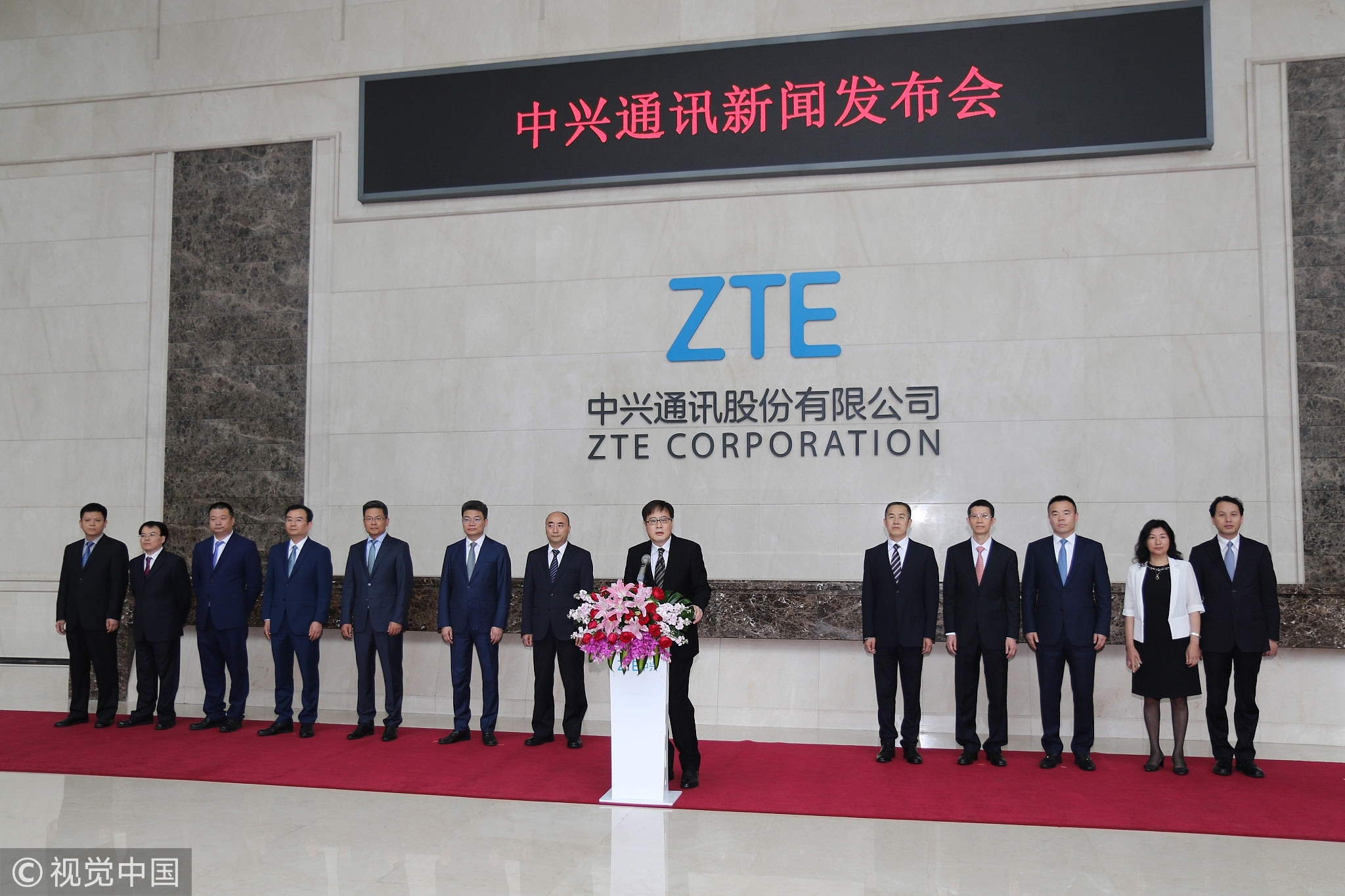
April 20, 2018: ZTE Corporation holds a press conference at the headquarters of Shenzhen for the issuance of a ban on ZTE's export authority by the US Department of Commerce. /VCG Photo.
April 20, 2018: ZTE Corporation holds a press conference at the headquarters of Shenzhen for the issuance of a ban on ZTE's export authority by the US Department of Commerce. /VCG Photo.
However, Trump clearly knows that while exerting pressure on China over trade issues, he is still inseparable from China on many international issues. In particular, on the recent DPRK and Iran issues, he needs to maintain a good relationship with China.
Even the New York Times believes that “by saying the United States would work to bring ZTE back to life, Mr. Trump took pressure off the American-Chinese relationship at a crucial moment. Mr. Trump’s meeting with the North Korean (DPRK) leader, Kim Jong Un, has been scheduled for next month and will hinge on China, which has fashioned itself as an intermediary with Mr. Kim.”
Just as the late British Prime Minister Lord Palmerston said in the 19th century: "We have no eternal allies, and we have no perpetual enemies. Our interests are eternal and perpetual," the same applies to Sino-US relations. For Trump, as long as it can reach its trade agreement, anything can be put on the negotiation table.