Malaysians – at least those who hadn’t stayed up to wait for the results – woke up on Thursday to earth-shattering news. Against all odds, the opposition Pakatan Harapan had won the general election, ousting the ruling Barisan Nasional coalition after more than 60 years in power.
This now sets the stage for Malaysia’s first change in government since independence in 1957.
And at its head will be a well-known figure: former prime minister Mahathir Mohamad.
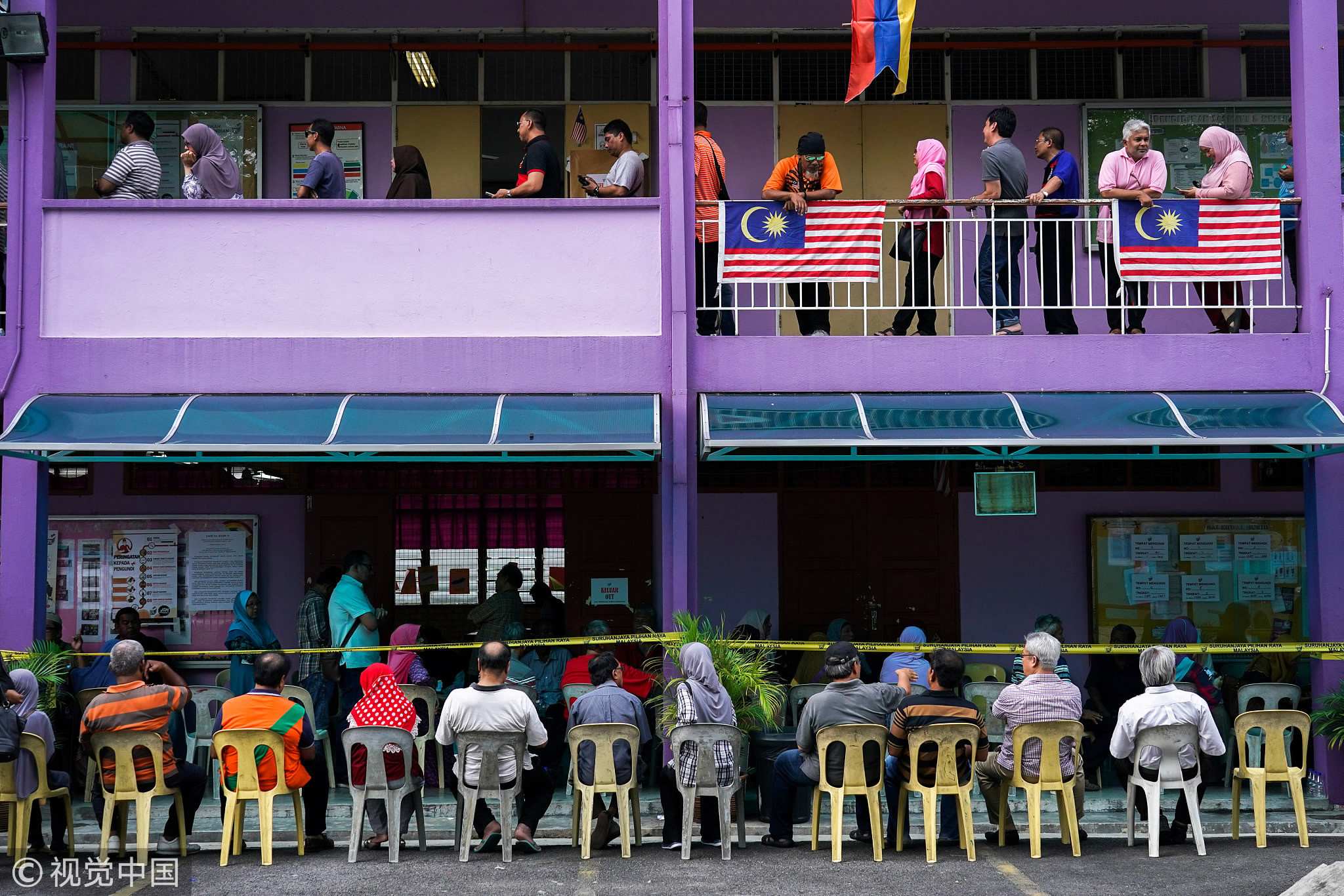
People line up to vote during the general election in Kuala Lumpur, Malaysia, May 9, 2018. /VCG Photo
People line up to vote during the general election in Kuala Lumpur, Malaysia, May 9, 2018. /VCG Photo
A series of firsts
After hours of waiting, election results were finally announced around 3:00 a.m. local time (2000 GMT on Wednesday) – opposition coalition Pakatan Harapan (PH) had won 113 seats, giving it a simple majority in the 222-seat parliament.
Prime Minister Najib Razak’s Barisan Nasional (BN) won 79 seats, while the rest went to a smattering of smaller parties.
The historic result surprised even analysts, most of whom had predicted another win for BN.
This marks the end of BN rule after six decades in power, and comments on social media reflected the feeling that Malaysia was entering a new era.
“New day. New hope. New beginning,” said Twitter user @daniaazmi95.
People line up to vote during the general election in Alor Setar, Malaysia, May 9, 2018. /VCG Photo
People line up to vote during the general election in Alor Setar, Malaysia, May 9, 2018. /VCG Photo
In another first, Mahathir looks set to become the world’s oldest prime minister at age 92.
Mahathir vs. Najib
Before polling stations even opened, Wednesday’s election was already being touted as the fiercest political battle in Malaysian history, pitting Najib – plagued by accusations of corruption and gerrymandering – against his former mentor Mahathir, making a political comeback at the head of the opposition.
With these two political veterans going head-to-head, all eyes were on how majority ethnic Malay voters would behave: would these traditional BN supporters stand by the coalition or throw in their lot with Mahathir, a former BN prime minister?
Voter turnout was also seen as crucial, with low participation likely to favor the incumbent government.
The fall of BN
After seeing its support drop drastically over the last two elections, BN was under pressure to do better this time around.
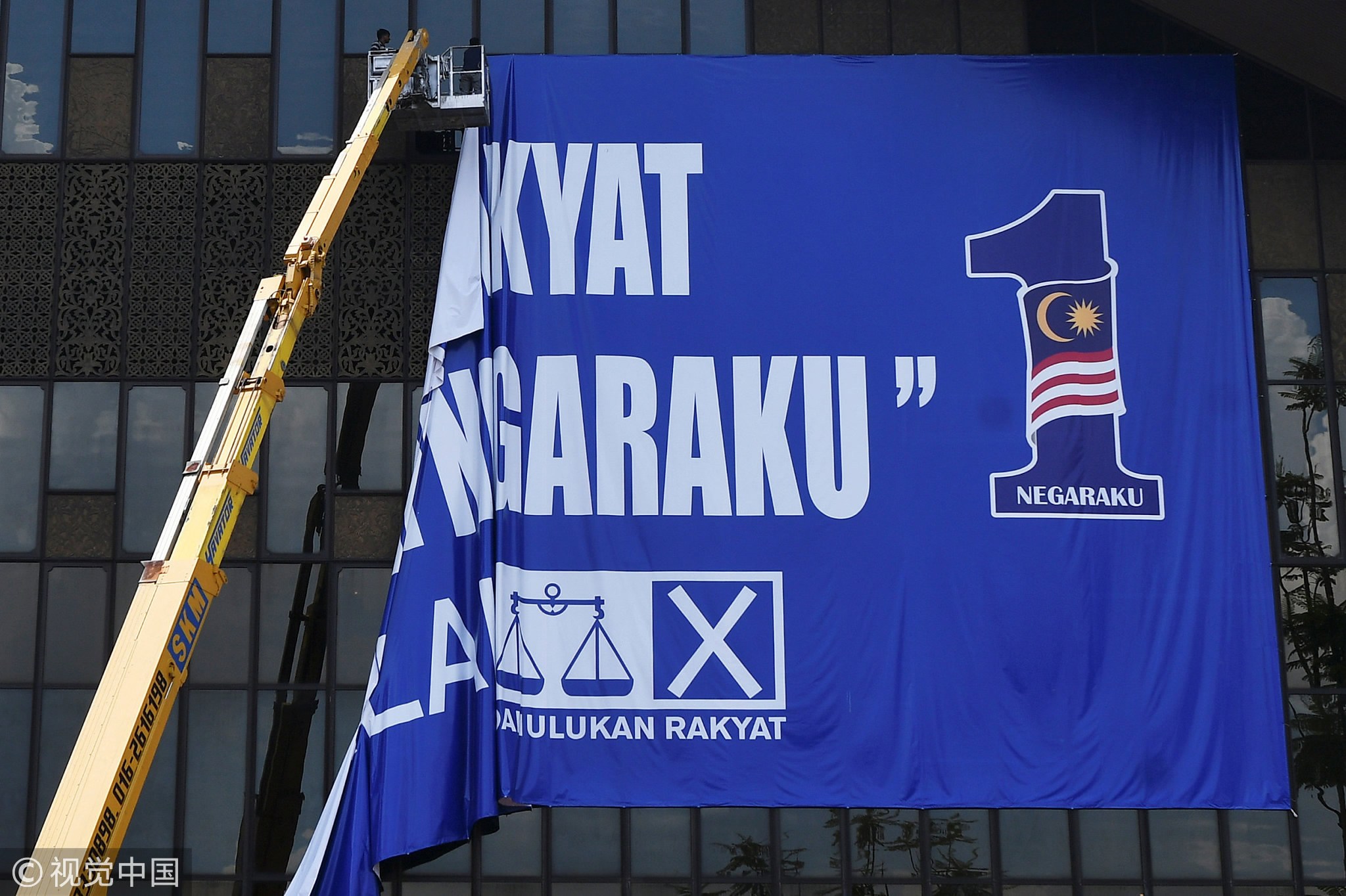
A worker tears down a Barisan Nasional flag at Putra World Trade Centre (PWTC) in Kuala Lumpur, Malaysia, May 10, 2018. /VCG Photo
A worker tears down a Barisan Nasional flag at Putra World Trade Centre (PWTC) in Kuala Lumpur, Malaysia, May 10, 2018. /VCG Photo
In 2008, it lost its two-thirds majority in parliament for the first time. In 2013, it won less than 50 percent of the vote, although under Malaysia’s first-past-the-post system, it still secured a simple majority in parliament.
Ahead of Wednesday's vote, the government approved redesigned electoral boundaries and passed new election rules, prompting accusations that BN was trying to skew the vote in its favor.
Meanwhile, Najib has been battling a scandal involving state development fund 1MDB, from which billions of US dollars were allegedly siphoned off.
As results started trickling in on Wednesday evening, news of cabinet ministers losing their constituencies and of opposition gains in crucial states hinted at what almost nobody could have believed hours before – BN might actually lose this election.
On Thursday, the front page headline of the Malay-language Sinar Harian daily summarized the momentous event in three words: "The People's Tsunami."
At a press conference later, Najib defended his record in office but acknowledged defeat.
“I accept the verdict of the people,” he told reporters.
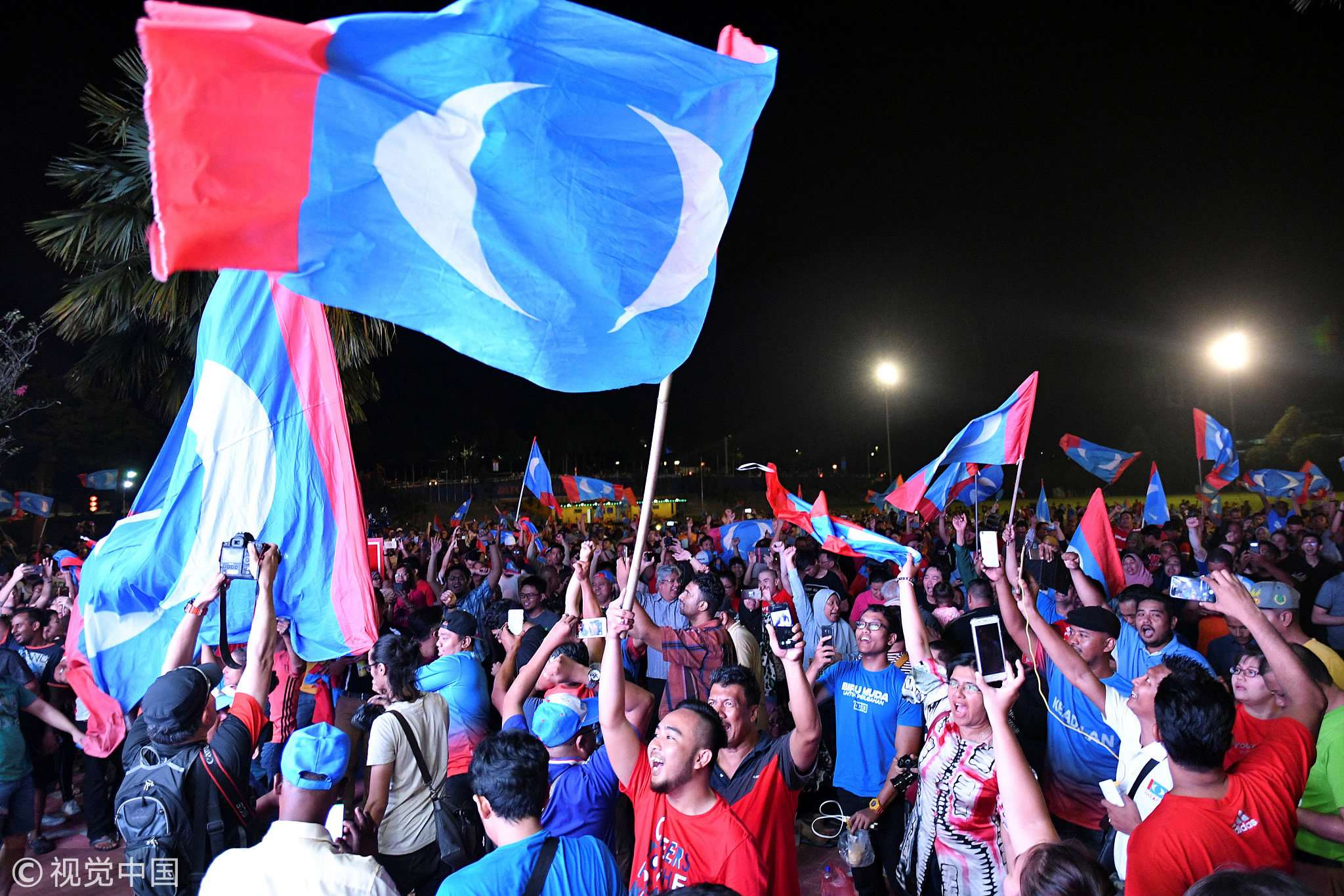
Supporters of Mahathir Mohamad celebrate in Petaling Jaya, Malaysia, May 10, 2018. /VCG Photo
Supporters of Mahathir Mohamad celebrate in Petaling Jaya, Malaysia, May 10, 2018. /VCG Photo
What next?
Now that the election is over, a number of questions remain:
1. Who’s prime minister?
Mahathir will be sworn in as Malaysia’s new prime minister on Thursday evening.
But he is expected to fill the position for only a short time – two years at most, he has said – before handing the post over to opposition leader Anwar Ibrahim, who is serving jail time on what his supporters call trumped-up charges.
At a press conference on Thursday, Mahathir said the opposition would push for a royal pardon to allow Anwar – who is due to be released on June 8 – to return to politics.
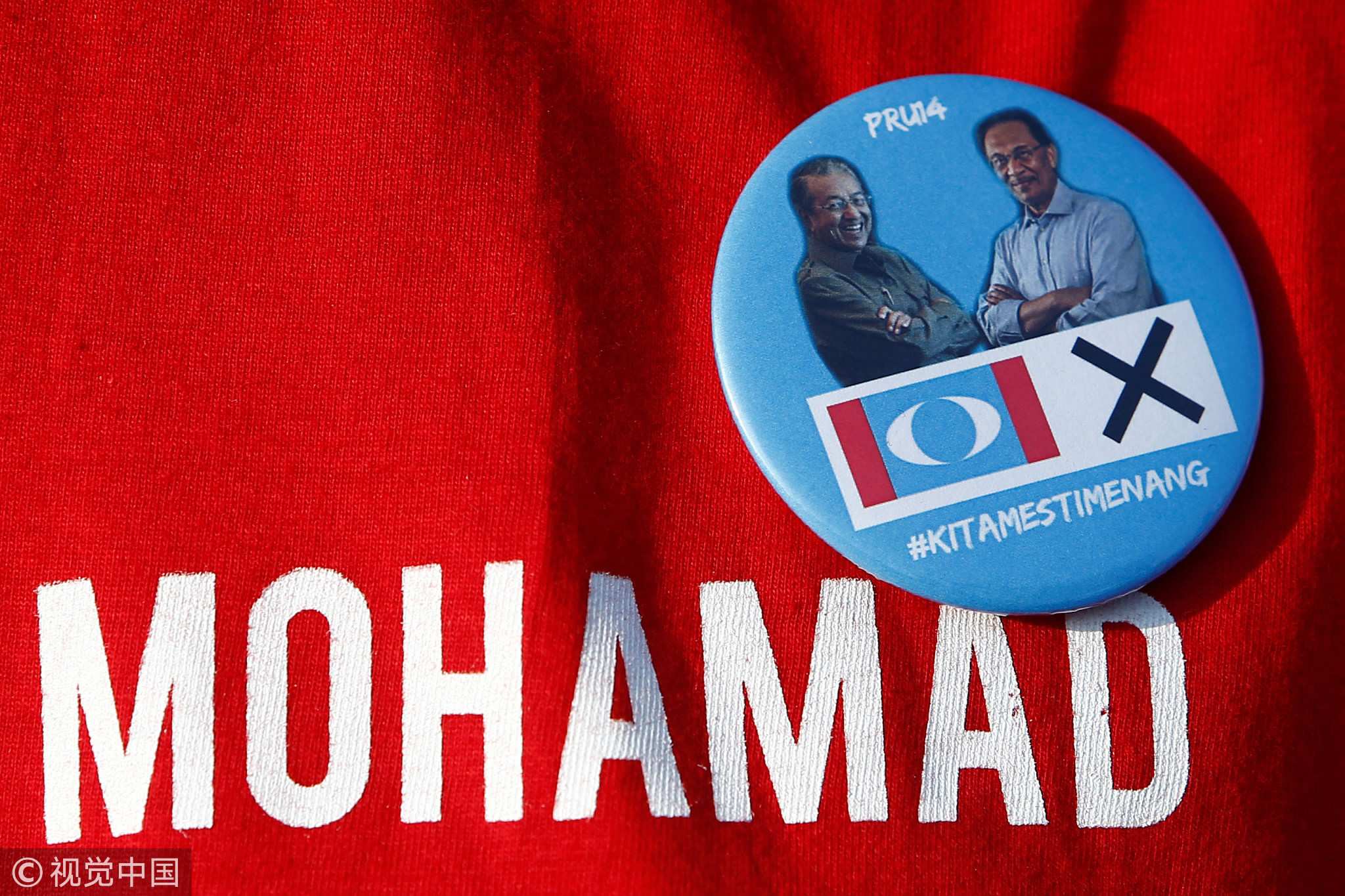
A supporter wears a badge of former Malaysian prime minister Mahathir Mohamad and former deputy prime minister Anwar Ibrahim in Langkawi, Malaysia, April 28, 2018. /VCG Photo
A supporter wears a badge of former Malaysian prime minister Mahathir Mohamad and former deputy prime minister Anwar Ibrahim in Langkawi, Malaysia, April 28, 2018. /VCG Photo
A timeline however remains unclear.
In the meantime, Anwar's wife Wan Azizah Wan Ismail, another key opposition leader, is due to be Mahathir's deputy prime minister.
2. Can the opposition stay united?
While facing a common opponent – BN – Mahathir and PH had much in common. But once in power, it remains to be seen if they continue to agree on policy.
During his previous stint in office in 1981-2003, Mahathir was sometimes accused of authoritarianism. In what may have been a Freudian slip on Thursday, he called for a new prime minister to be sworn in immediately or else “the country will be without a ruler, umm, without a government.”
The opposition already underwent a split in 2015 as widely divergent parties that had banded together for election purposes– including the Islamist PAS and the secular Democratic Action Party (DAP) – drifted apart.
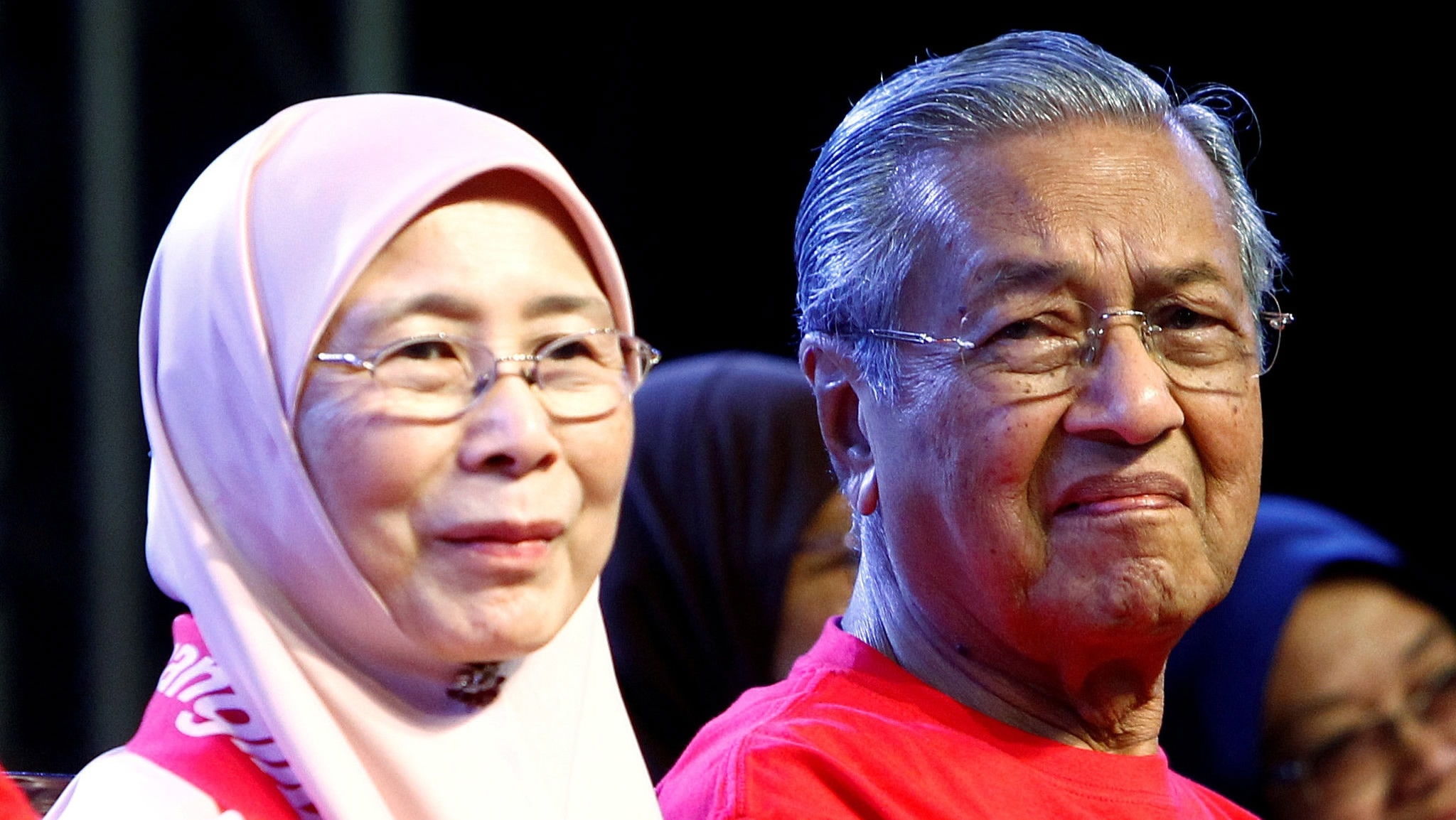
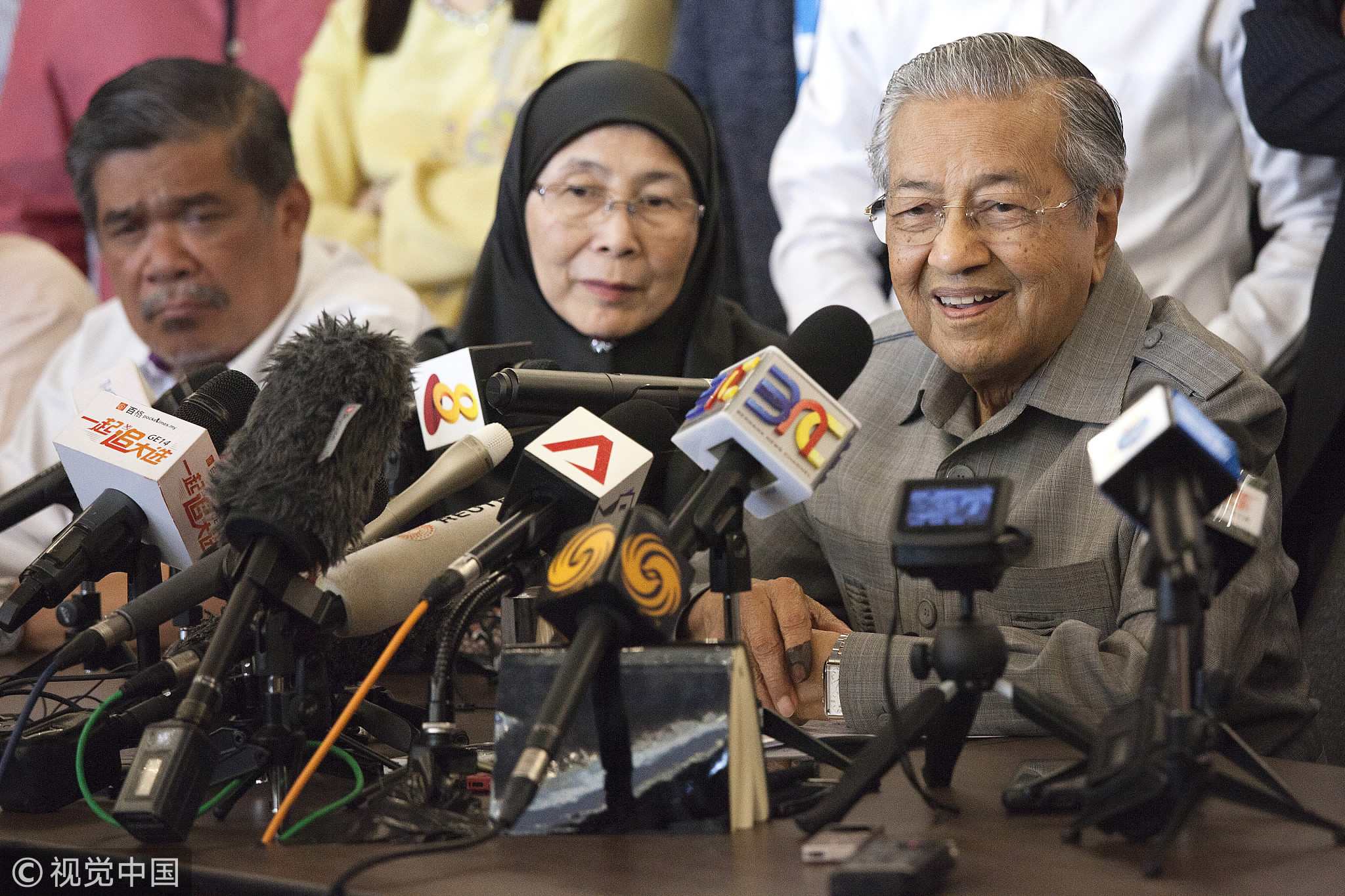
Mahathir Mohamad (R) speaks during a news conference as Wan Azizah (C) listens in Kuala Lumpur, Malaysia, May 10, 2018. /VCG Photo
Mahathir Mohamad (R) speaks during a news conference as Wan Azizah (C) listens in Kuala Lumpur, Malaysia, May 10, 2018. /VCG Photo
Mahathir is also now representing a coalition whose de facto leader – Anwar Ibrahim – he sacked in 1998 as deputy prime minister. The two men remained bitter foes for 18 years before burying the hatchet with a much-publicized handshake in 2016.
3. What next for Malaysia?
The new government has its work cut out for it.
As voters and commentators rejoiced on Thursday that at last the people’s voices had been heard, they also called for more checks and balances, an end to cronyism and corruption, increased transparency and accountability, a freer press and a fair democratic process in future elections.
“Now the hard work begins,” an editorial by the political news website Malaysiakini said on Thursday, warning that it would take time to “to reverse the rot that had taken root for decades.”
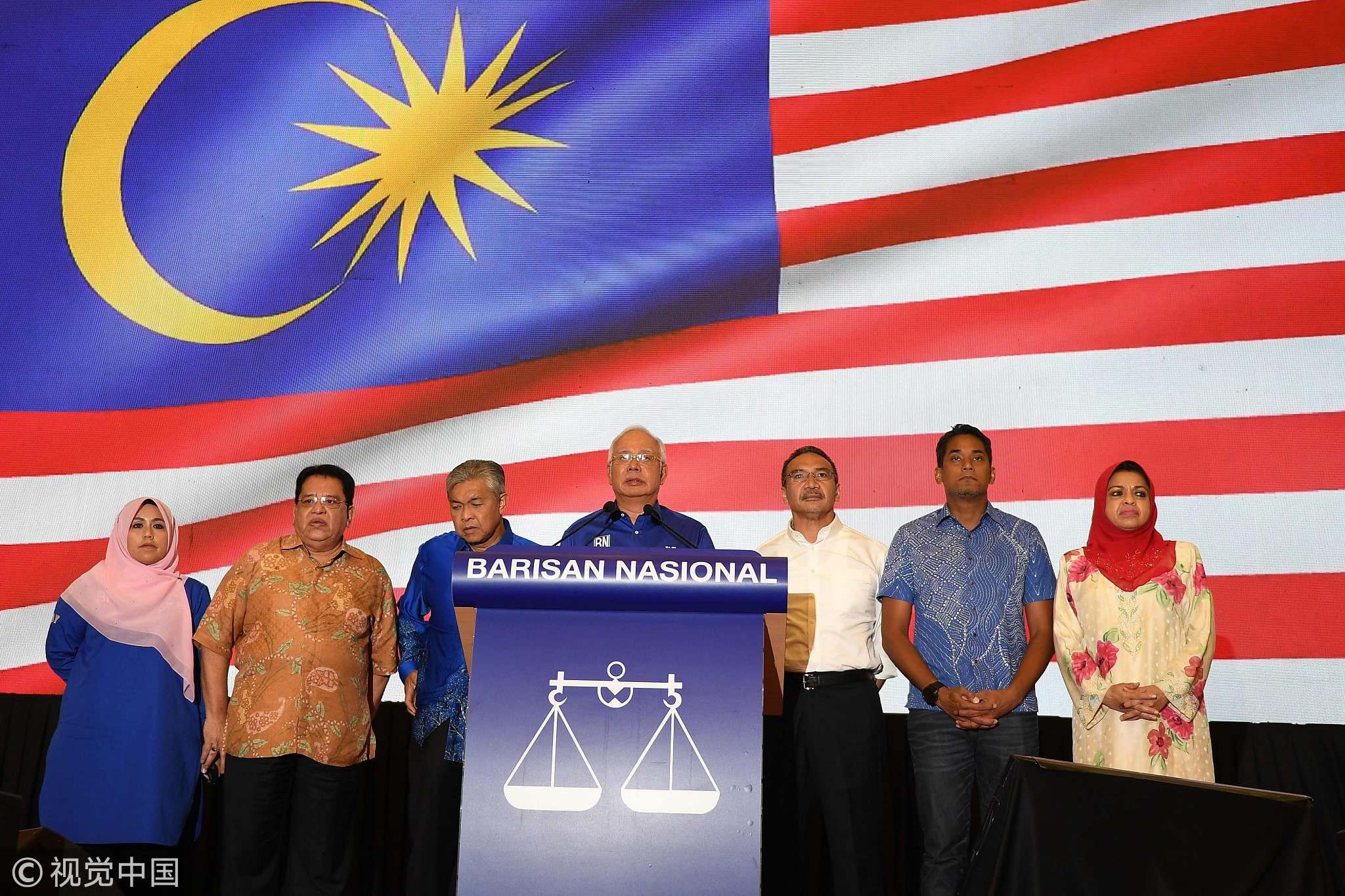
Outgoing Malaysian prime minister Najib Razak (C) addresses the media after his Barisan Nasional coalition lost the country's 14th general election in Kuala Lumpur, May 10, 2018. /VCG Photo
Outgoing Malaysian prime minister Najib Razak (C) addresses the media after his Barisan Nasional coalition lost the country's 14th general election in Kuala Lumpur, May 10, 2018. /VCG Photo
On the economic front, Malaysia has been enjoying strong growth, but analysts warned on Thursday that uncertainty from the change in government could spell volatility in the markets. Like most, they had banked on a win for BN and Najib.
Key opposition pledges, including abolishing the deeply unpopular goods and services tax (GST) and reintroducing fuel subsidies, could negatively impact the country’s credit rating, Moody’s Investor Service said.
Malaysia’s shock election result already led to a drop in the national currency, the ringgit, on Thursday.
4. What happens to BN and Najib?
Such a momentous loss means Najib’s days at the head of BN are numbered. But this may be the least of his worries.
The opposition vowed in its campaign manifesto to investigate the 1MDB scandal and this could spell trouble for the outgoing prime minister.
On Thursday, Mahathir insisted: “We are not seeking revenge, we don’t want to punish people.”
However, voters’ anger over the scandal will make it hard for the new government to go back on its campaign pledges.

 ["other"]