
Culture China
16:53, 20-May-2019
Former Palace Museum director: Preserve cultural heritage to inspire people
Updated
20:56, 20-May-2019
 ["china"]
Share







Copied
04:40
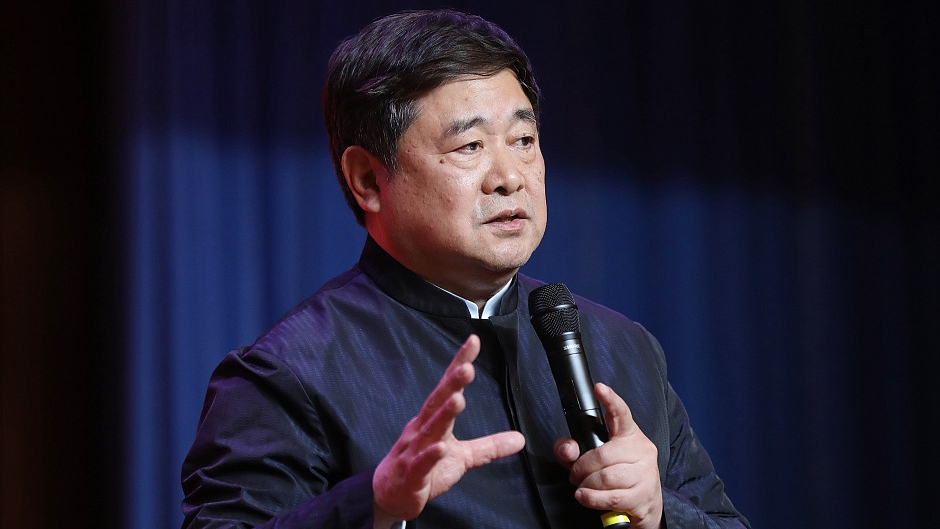
When it comes to the history of the Palace Museum, also known as the Forbidden City, it's hard to say who the most successful director is. But most people agree that Shan Jixiang was the most innovative of them all. During an interview at our studio, Shan talked about his efforts to share the ancient treasure trove with a wider audience.
Shan retired on April 8, after seven years and three months serving as the Palace Museum's director. He was later appointed head of the Academy, or the Gugong Institute.
The institute was founded six years ago. It both provides training for the staff members of the Palace Museum and offers educational programs to the general public. It also has a significant role in exchanges with other museums from home and abroad.
From imperial residence to a leading museum, this plot of land has indeed seen some extraordinary transformations over the past hundred years. Until about a century ago, it was the Forbidden City for the emperors of the Ming and Qing dynasties. Then it became known as the Old Palace in 1912 upon the abdication of the last emperor, before its conversion into a museum in 1925.
Now it has become the world's most visited museum. "Although we have to limit the visitors to 80,000 a day, last year the Palace Museum still received over 17 million people," Shan said, "With so many to serve, we regard it our duty to make this former imperial residence part of modern life."
The Palace Museum is first of all known for its ancient buildings. Its vast collection of Chinese cultural relics is also a main attraction. As a world heritage site, it has become a must-see attraction for all visitors to China.
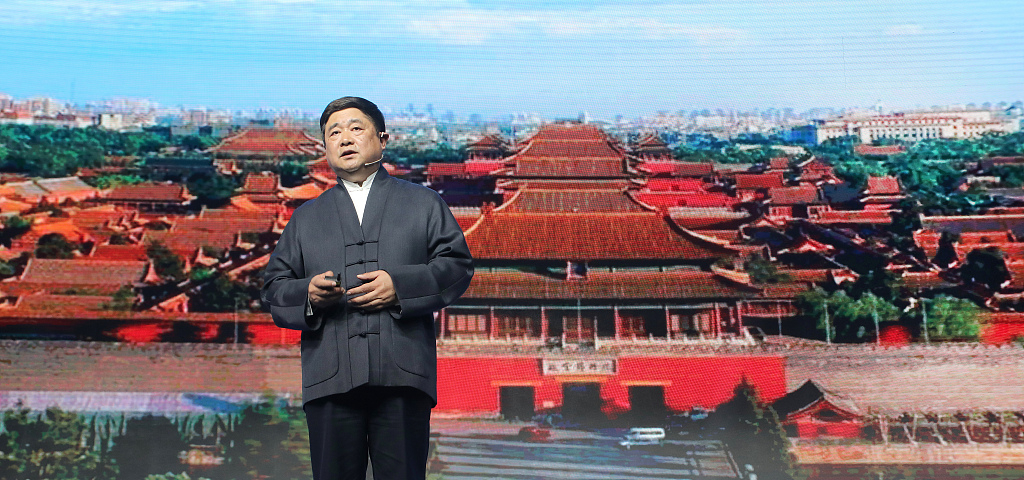
Shan Jixiang delivers a speech about the Forbidden City in Beijing, April 27, 2018. /VCG Photo
Shan Jixiang delivers a speech about the Forbidden City in Beijing, April 27, 2018. /VCG Photo
During Shan's term, the museum opened up more spaces to share with visitors. Shan said: "In order to allow people to see more of the Museum, we've opened up more of its spaces to visitors. In the past, only 30 percent of its area was accessible to the public. In 2012, the figure reached 50 percent and grew to 76 percent in 2016. Today, visitors can see more than 80 percent of the Palace Museum. We can see the change through the attitude of Beijing residents. They used to think they had been there as a child, so rarely bothered to visit the museum again. But our Chinese New Year Exhibition now attracts local residents in large numbers. They make up half of the visitors during our relatively slow months."
According to Shan, decades of effort has been made to make buildings and relics more accessible.
“In the new era, there has been a remarkable growth in people's demand for a quality cultural life. This has urged the Palace Museum to change itself. My predecessor is Mr. Zheng Xinmiao. During his ten years as director, Mr. Zheng laid the foundation for today's accessible Palace Museum. He drew up the overall plan for renovation, which aims to restore all the buildings on the museum premises. He also began the inventory of the museum's collection. It took ten years to go through the vast collection. I finished the project he launched three years into my tenure,” Shan said.
“Another major change has been the attention paid to the visitors' experience. We began to ask what people take away with them when they leave our museum. We're making the most out of our resources with the view to satisfy the visitors. This has become our top priority in recent years," He added.
Shan explained his understanding of “preservation.” "It is not merely to keep the buildings and relics in good repair. Rather the key is how to make it part of people's lives. We preserve our cultural heritage to inspire today's people. It's about the dignity of our tradition and the respect for our past. That is how we keep the museum alive as a positive force," he said.
Read more: