
Opinions
14:00, 02-May-2018
Opinion: Modern worker will need both creativity and innovation
 ["china"]
Share







Copied

Traditionally, economic growth has depended on labor and capital. However, this is quickly shifting, with the key factor for sustainable economic development being innovation – ways of transforming creative ideas into high valuable products or services.
The Fourth Industrial Revolution includes the Internet, big data, cloud computing, artificial intelligence and the blockchain – all dramatically changing the way we think about production and wealth creation.
Since 2006, China has nationally adopted a strategy focused on innovation. At the 19th National Congress, Chinese President Xi Jinping announced the beginning of a new era, aimed at addressing the contradiction between unbalanced and inadequate development.

Tablet is common in the workplace. /VCG Photo
Tablet is common in the workplace. /VCG Photo
Now Chinese people are benefiting from this transformation. Emerging industries like the digital economy are thriving and the construction of high-speed railways, highways, bridges, ports, airports, and other types of infrastructure has paced up to match a modern China. We're also seeing factory workers being supported by intelligent manufacturing and artificial intelligence. Some proclaim that their daily lives have been much improved by smart solutions initiated by tech companies, large and small.
With continuous support in the fields of research, development and innovation, more cutting-edge frontier technologies will start in China. From this perspective, labor in all industries including agriculture, manufacturing and the service industry will be both high-tech and human-centered.
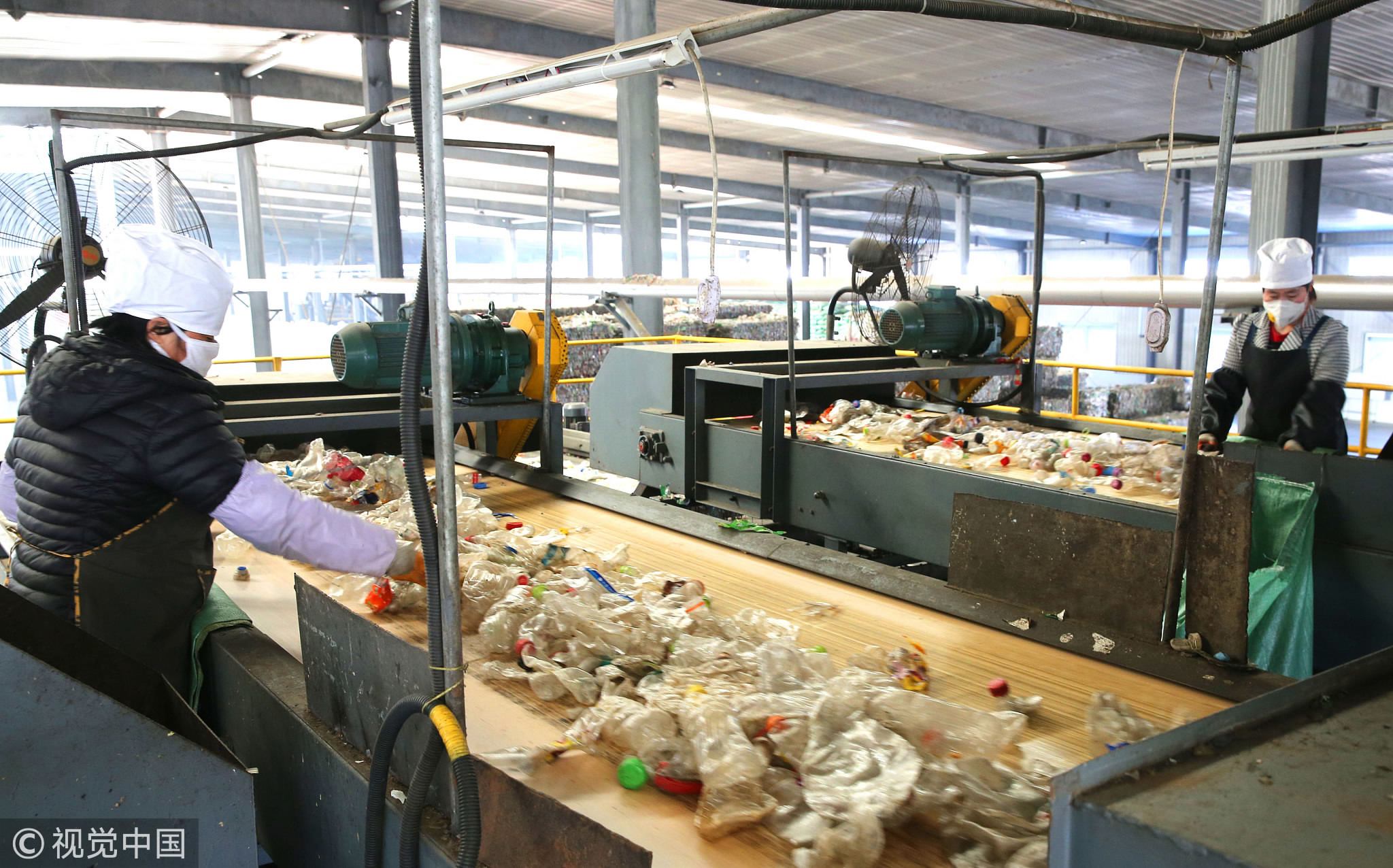
Discarded plastic bottles can be used for the production of blankets, Apr 9, 2018./VCG Photo
Discarded plastic bottles can be used for the production of blankets, Apr 9, 2018./VCG Photo
Consequently, this will create a big shift for Chinese workers with creativity and innovation – instead of operations – the main task for every worker.
Chinese leadership has emphasized both the importance of entrepreneurship and craftsmanship. The success of China’s infrastructure, such as high speed trains and modern cross-strait bridges are the contributions of millions of workers in China. Total quality management and total innovation management are two pillars for any Chinese business and other organization.
China’s socialist democracy is the broadest and most effective democracy to safeguard the fundamental interests of the people. Sparking creativity and innovation is the key in this system. China will make great efforts to build an educated, skilled, and innovative workforce, where taking pride in labor becomes a social norm, along with promoting quality craftsmanship and developing workers' leadership.
(Chen Jin is a professor at Tsinghua University's School of Economics and Management. The article reflects the author's opinion, and not necessarily the views of CGTN.)