
North America
14:51, 12-May-2019
Will socialism take root in young America?
 ["north america"]
Share







Copied
Politics in the United States has always been divisive. From guns to abortion, there is generally a clear line separating a Democrat from a Republican. Out of the few things that both sides condemn, one is terrorism, the other is communism.
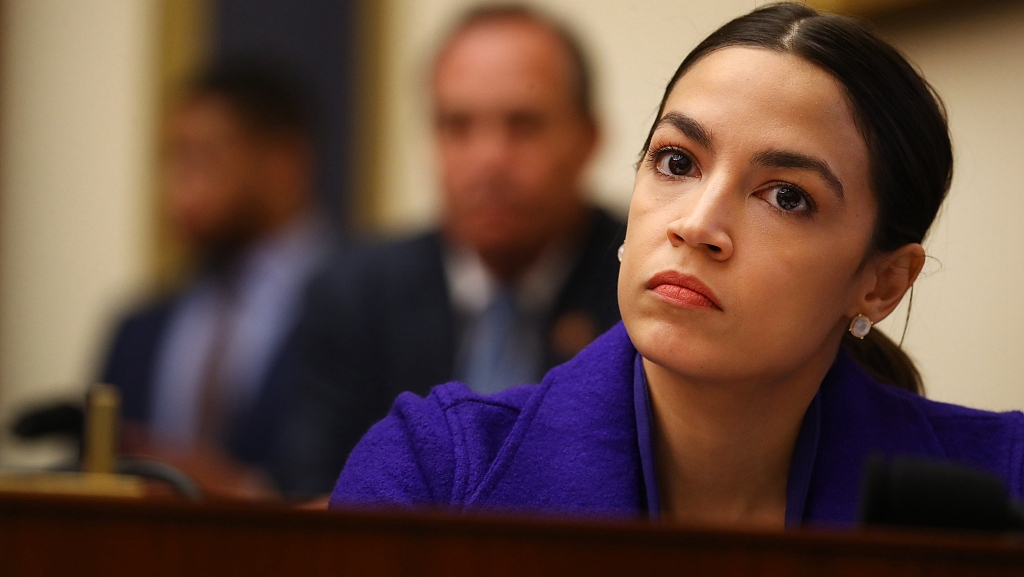
Historically, the country's political and media establishment considers "socialism" to be communism's little brother. For the average American, the concept carries the stench of government invasion of individual privacy. When the young Alexandria Ocasio-Cortez – an avowed democratic socialist – won her congressional seat last November, the New York Post printed a half-page picture of her along with "Red Alert" in capital letters.
However, the widespread sentiment against the country's "socialists" is changing. Ocasio-Cortez and Rashida Tlaib, a congresswoman from Michigan, ran as members of the Democratic Socialists of America (DSA), a small political organization that saw its membership grow by almost 5,000 in the weeks following Ocasio-Cortez's surprise victory.
Both Democratic House representatives advocate for universal health coverage and environmental reform, policies that are labeled unabashedly socialist by outspoken conservative critics. In an alarmist response to Ocasio-Cortez's plan to shift the U.S. to renewable energy and infrastructure, President Trump tweeted that the proposal would "permanently eliminate all Planes, Cars, Cows, Oil, Gas & the Military."
These "socialist" policies that require even "bigger" government, however, are seeing greater acceptance by young America.
Senator Bernie Sanders, 77, is also a self-proclaimed democratic socialist. During his 2016 run for the White House, he gave speeches in arenas packed with college students, inspired by his message of fighting for free tuition, better wages and the reform of corporate America. An August 2018 Gallup poll found that 51 percent of Americans aged 18-29 were positive about socialism, compared with 45 percent for capitalism, a drop of 12 points from 2010.
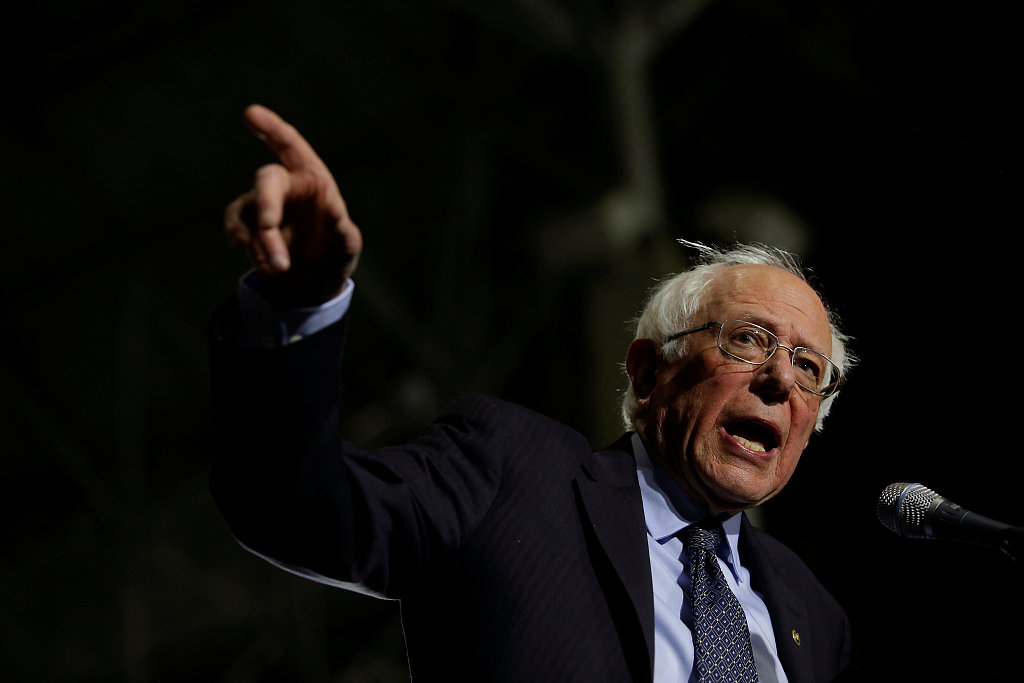
U.S. Senator Bernie Sanders speaks as he holds one of his first campaign events for his 2020 presidential run in Chicago, Illinois, U.S., March 3, 2019. /VCG Photo
U.S. Senator Bernie Sanders speaks as he holds one of his first campaign events for his 2020 presidential run in Chicago, Illinois, U.S., March 3, 2019. /VCG Photo
Are socialists marching toward mainstream America?
The DSA has local chapters throughout the country. It does not claim to be a political party, but an organization that fights for "reforms that empower working people." Though growing, the DSA is far from competing with the big guns. Allie Cohn, on the DSA's governing body, told NBC News last December that the organization had 55,000 members at the time. In contrast, registered Democrats and Republicans numbered over 44 million and 32 million respectively, according to a 2017 tally by Ballot Access News.
Although small, the DSA is advocating for policies that have been endorsed by numerous congressional Democrats. Senators Elizabeth Warren and Kamala Harris, along with Congresswoman Tulsi Gabbard from Hawaii, are on board for the universal health coverage bill called "Medicare for all" that Sanders put on the table. When Ocasio-Cortez rolled out her signature Green New Deal proposal, the Washington Post's Jeff Stein tweeted that Harris, along with Democratic senators Cory Booker and Kristen Gillibrand, supported the initiative to fund environmental reforms.
Meanwhile, Republican voices rolled out their criticism of the proposal's perceived regulatory overreach, with Senator John Barrasso of Wyoming saying "goodbye to dairy, to beef, to family farms and ranches. American favorites like cheeseburgers and milkshakes will become a thing of the past."
Although not all prominent Democrats support the aforementioned policies – House Speaker Nancy Pelosi cautions a more gradual fiscal approach to widespread health coverage – the party has shifted further left. This transition is partly due to greater Democratic support for workers' concerns amid a recovering domestic economy that has seen massive layoffs and rising wealth inequality. After all, reaching out to blue-collar workers propelled Trump and the Republicans to the White House in 2016.
However, a more progressive agenda in support of the working class within the Democratic party isn't a historical anomaly and could be a return to its mid-20th century leanings. Ocasio-Cortez's progressive Green New Deal even echoes FDR's lionized New Deal, a series of government interventions during the Great Depression that was also decried as "socialist."
In fact, the party's transition may simply be the political acknowledgment, from members old and young, that appealing to society's elites is a departure from what many constituents truly want, as fresh progressive voices increasingly define Democratic politics.