
Europe
13:11, 09-May-2019
EU leaders debate bloc's top jobs ahead of pivotal elections
 ["europe"]
Share






Copied
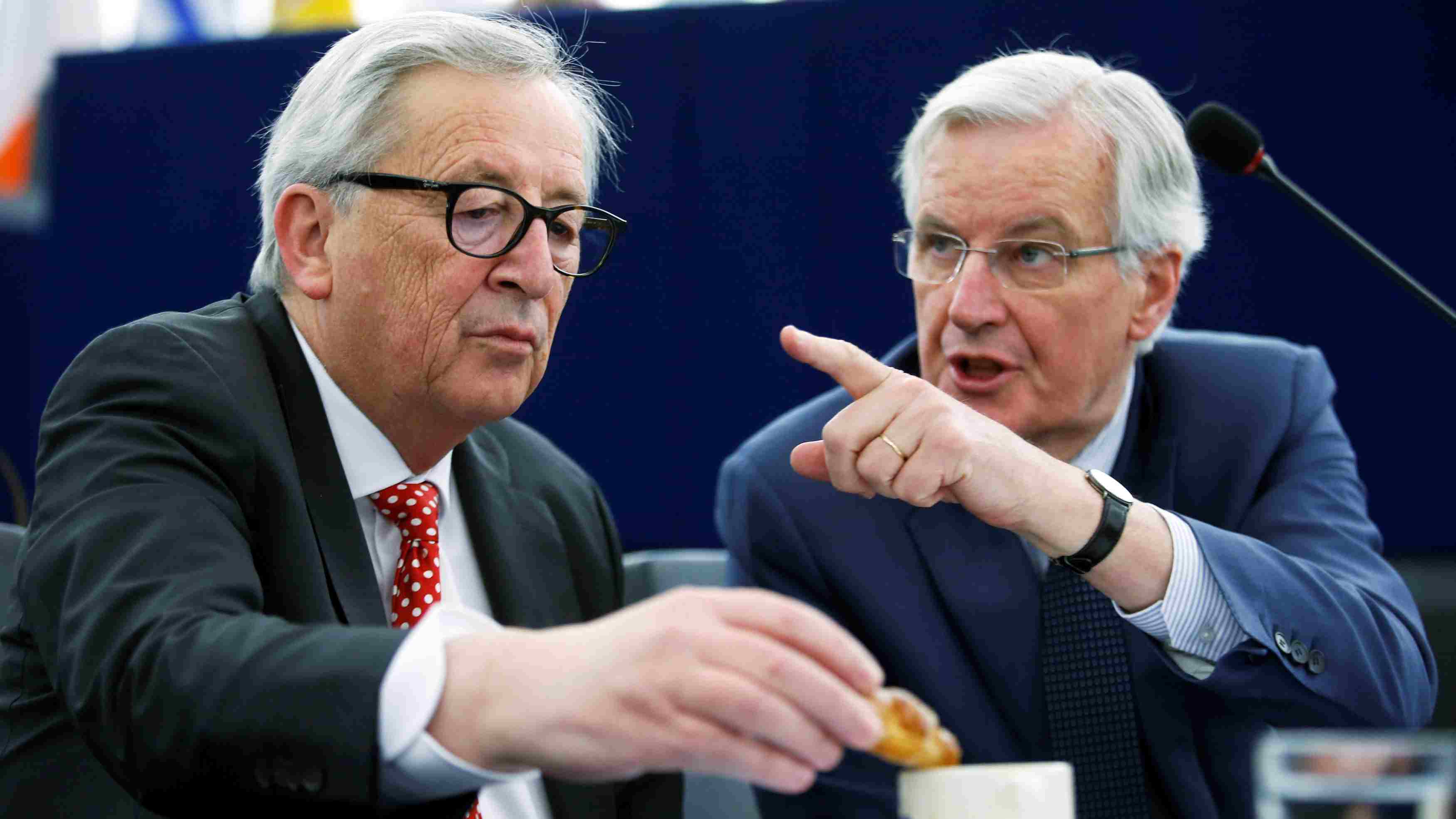
Leaders of European Union countries are expected to discuss the bloc's top jobs on Monday – with Brexit negotiator Michel Barnier's name thought to be in the frame for Commission president – as uncertainty over the upcoming European Parliament elections grows.
The EU27 leaders gather in the Romanian city of Sibiu for an informal summit at which the EU's five-year roadmap is set to be discussed, against a backdrop of elections likely to feature a surge in populist support and potentially lead to legislative deadlock.
Read more:
A draft declaration seen by Politico lists commitments – described by the site as "a mix of good intentions, generic points and some aspirations that clash with the everyday reality of the EU" – that are expected to be signed off by the leaders.
The viability of anything specific agreed by the current leadership – at a summit originally scheduled as a post-Brexit relaunch – after the May 23-26 legislative elections is remote, however.
The growth of populist and nationalist forces, combined with splits in mainstream parties, has contributed to a fragmentation of the vote in many EU states, and the trends are expected to be reflected in the election results at a time of existing internal divisions over issues like migration.
Polls indicate forming a majority in the European Parliament – which passes EU laws and monitors the powerful Commission, which drafts laws – could take some time.
The main two groupings, the European People's Party (EPP) and the Progressive Alliance of Socialists and Democrats, which have dominated the parliament since direct elections began in 1979, are not expected to win enough seats to form a majority in the 751-member chamber.
A lengthy period of coalition-building is therefore likely and choosing a new European Commission president could be a complicated and delayed process.
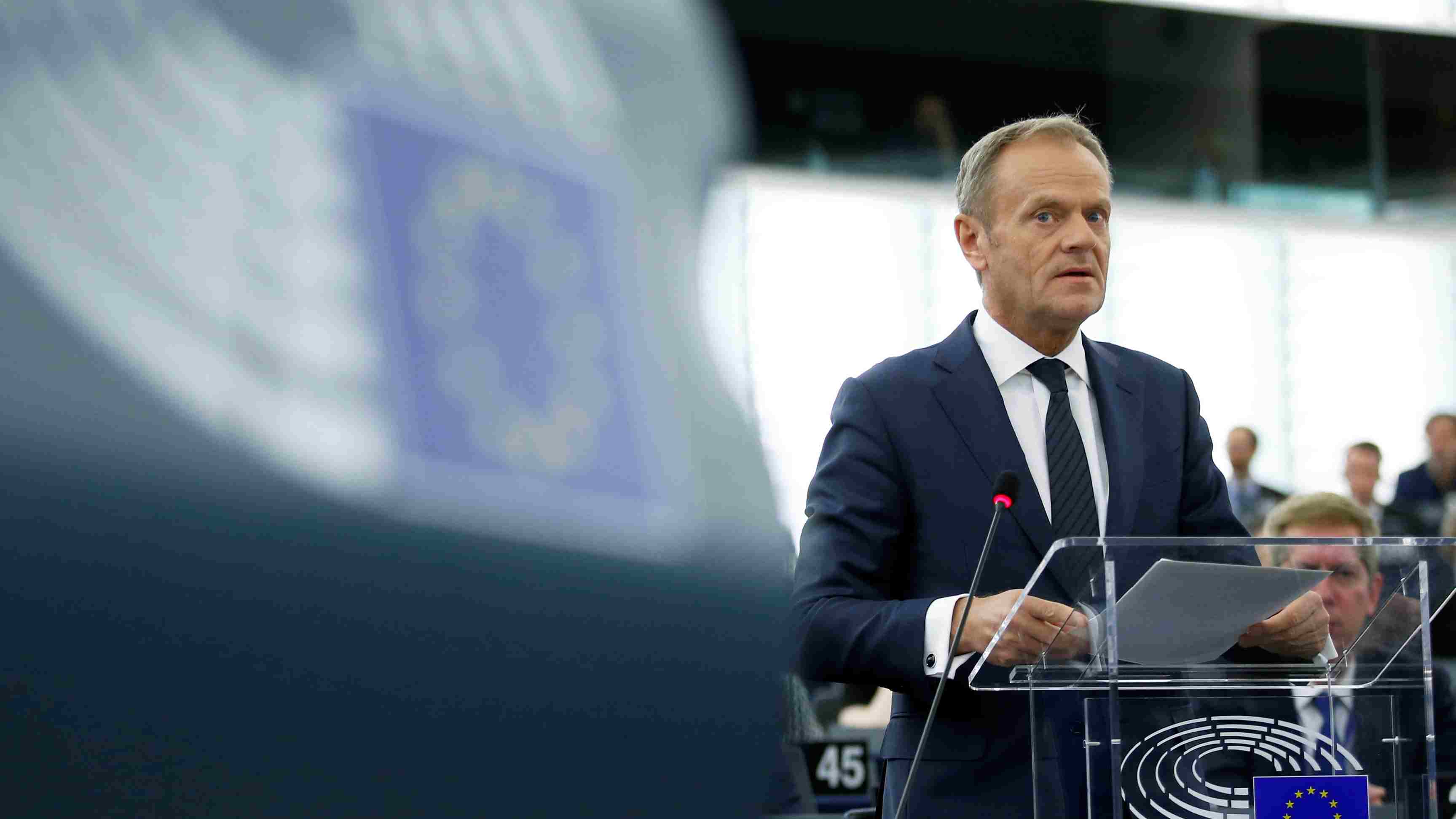
European Council President Donald Tusk delivers a speech at the European Parliament in
Strasbourg, France, April 16, 2019. /VCG Photo
European Council President Donald Tusk delivers a speech at the European Parliament in Strasbourg, France, April 16, 2019. /VCG Photo
The discussions over the next leaders of the EU – with five tops jobs set to change hands this year – will be closely watched for clues as to national leaders' thinking.
EU Observer reported on Tuesday that outgoing European Council President Donald Tusk is aiming to reach agreement on senior roles quickly, though the process is far from simple.
As well as a successor to Jean-Claude Juncker as Commission president and Tusk as European Council president, heads of the Parliament, the European Central Bank and the joint diplomatic service must be found over the coming months.
An indication of the complexity of negotiations ahead was given this week when Viktor Orban, the Hungarian prime minister and leader of Fidesz, said he would not support German conservative Manfred Weber, the center-right EPP's candidate for the Commission presidency. Fidesz has been suspended from the EPP over its criticisms of EU migration policy.
Orban, along with then British Prime Minister David Cameron, also opposed the nomination of Juncker in 2014. Since then the EPP, of which German Chancellor Angela Merkel's Christian Democratic Union is a dominant presence, has experienced several internal divisions.
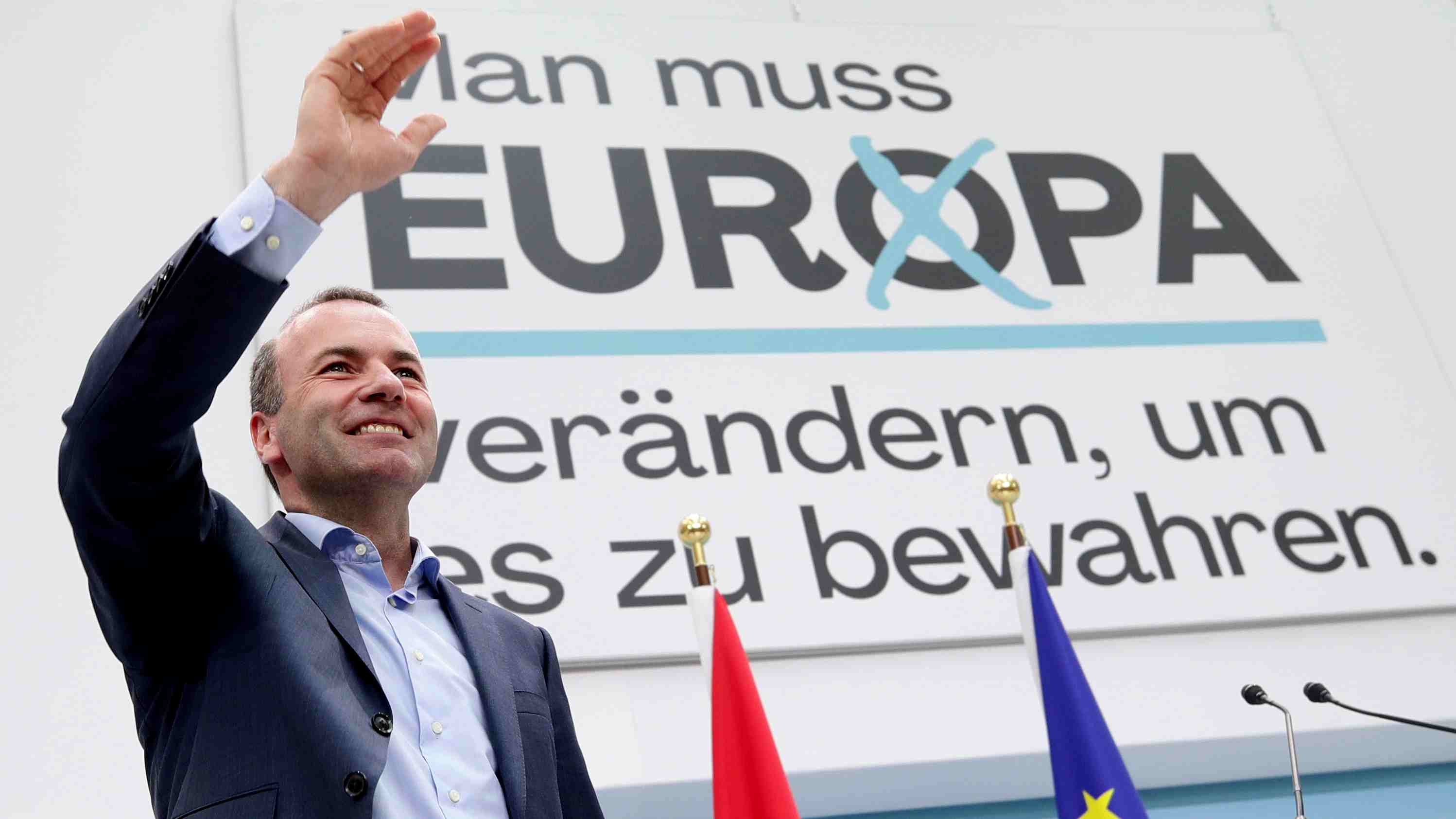
Manfred Weber, top candidate of the European
Peoples Party for the EU elections, campaigns in Vienna, Austria, May
4, 2019. /VCG Photo
Manfred Weber, top candidate of the European Peoples Party for the EU elections, campaigns in Vienna, Austria, May 4, 2019. /VCG Photo
The splits within the EPP – allied with the possibility of losing seats and uncertainty over the Spitzenkandidaten process – make settling on a successor to Juncker in the influential Commission president role even tougher than in 2014, when negotiations lasted three months.
The anticipated success of nationalist parties in the elections could contribute to the EU taking a right-ward turn over the coming years, and it remains possible that a non-Spitzenkandidaten – someone who isn't a lead candidate for any of the groupings – eventually takes the role.
Brexit negotiator Barnier, a former French foreign minister, is among the names rumored to be in contention if a lead candidate can't attract sufficient backing.
For the EU, the elections place a fresh layer of uncertainty on divisions over migration and reform as well as indecision on Brexit. Thursday's informal summit is likely to be the first of several EU27 meetings over the coming months.