04:23
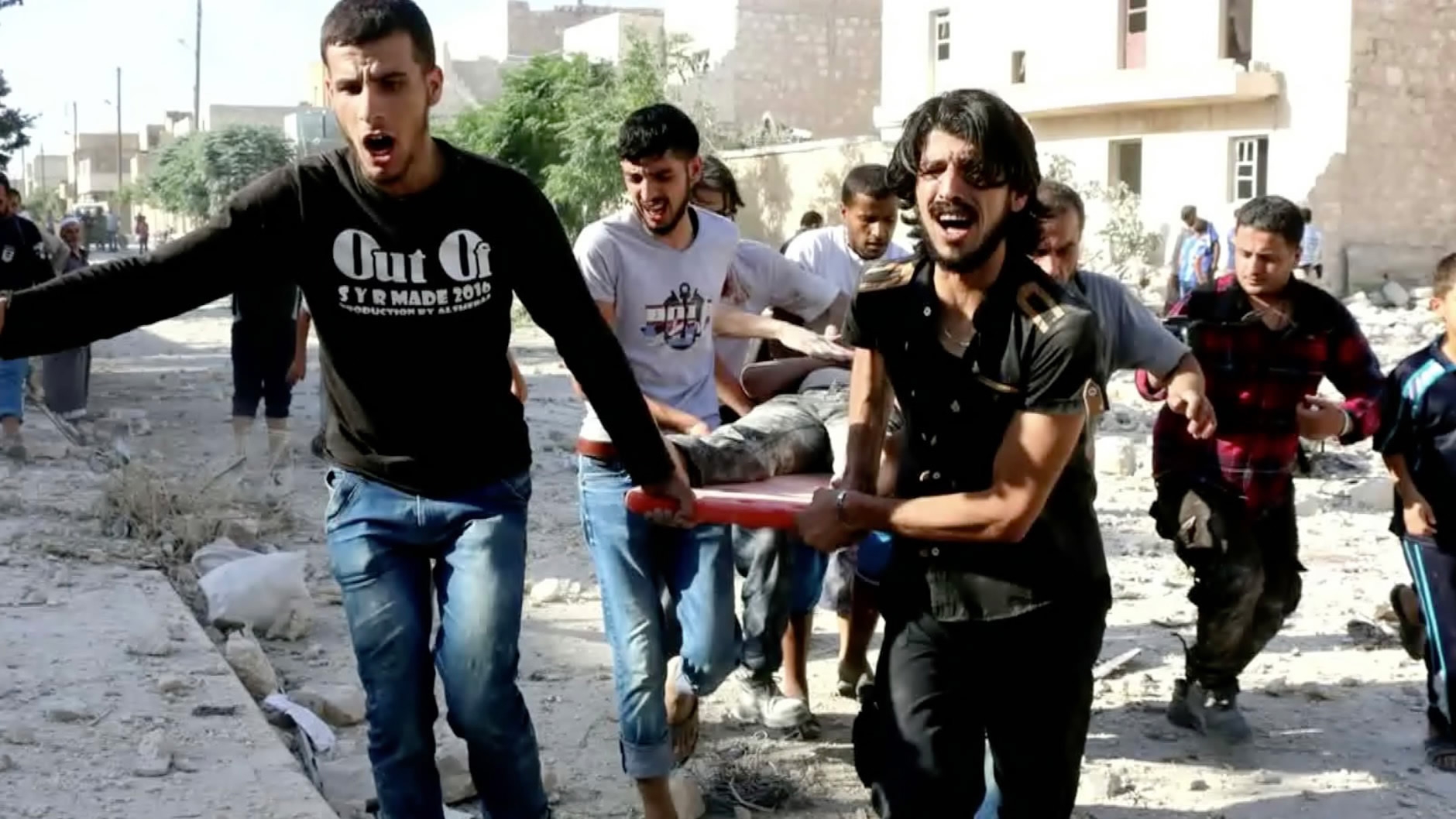
"We are keenly aware that every battlefield where an enemy hides behind women and children is also a humanitarian field." — Jim Mattis(US Defense Secretary)
There is a saying in Arabic: “If heaven is on the Earth, then Damascus must be in it; if heaven is in the sky, then Damascus must be the same as it.”
Now, it seems that this particular proverb adds a touch of sadness to the fate of Syria – the cradle of civilization, which is now at the center of the war, wandering between the verge of heaven and hell.
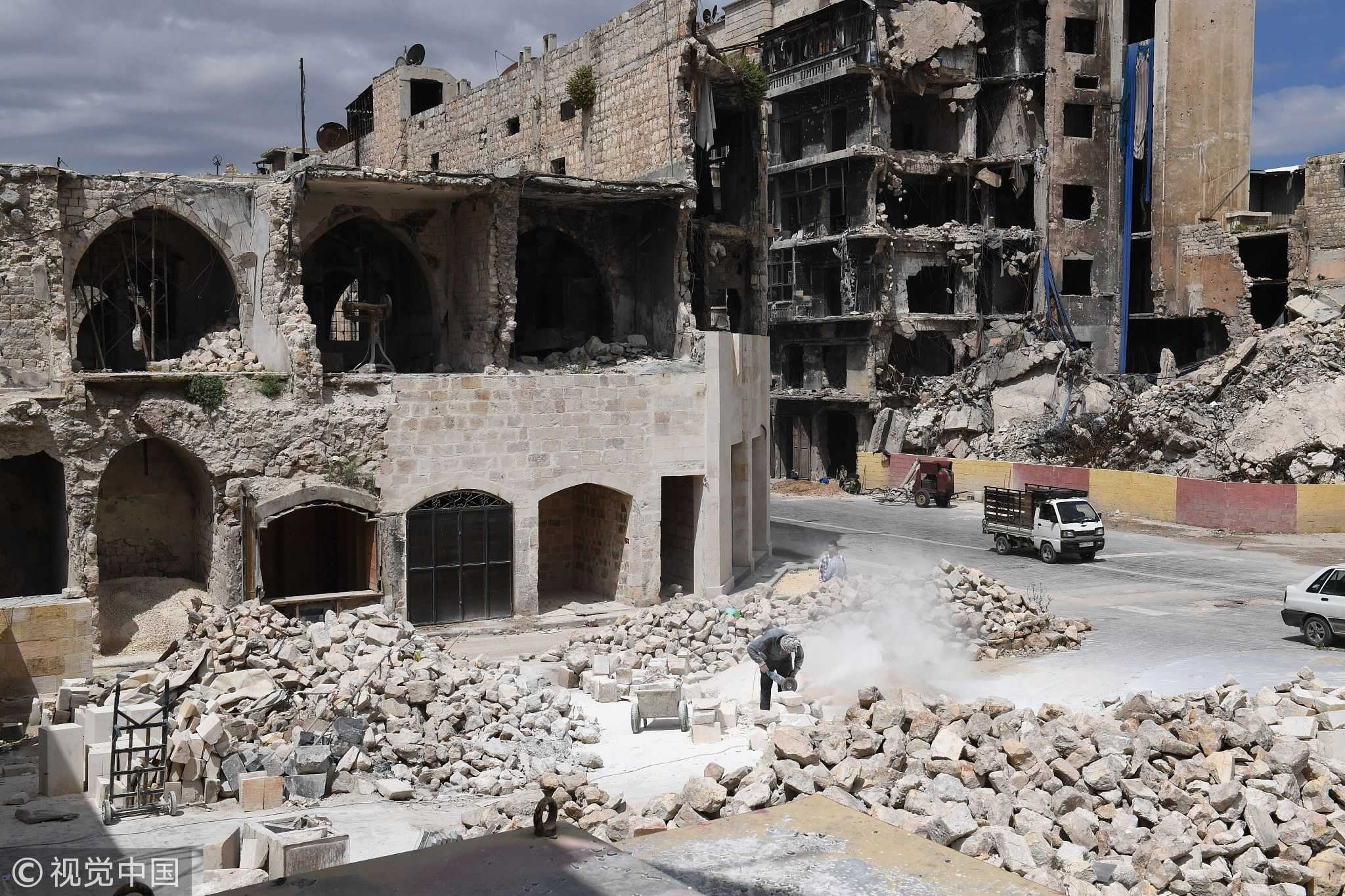
A general view shows a Syrian man cutting stones as they restore the 14th century Al-Sahibiyah mosque in the old city of Aleppo on April 22, 2018. /VCG Photo
A general view shows a Syrian man cutting stones as they restore the 14th century Al-Sahibiyah mosque in the old city of Aleppo on April 22, 2018. /VCG Photo
When the people in Syria cannot sustain their basic needs, and when they have no place to live, nothing to eat, who will be blamed?
That should be the US, who currently holds the image of “the boss and the policeman of the world.” They always appear next to countries in trouble and intervene in issues that have nothing to do with them, with human rights being their most used excuse.
The core value that “all people are born equal,” which is also the main principle of human rights, was said to have been established in the country since it was founded. Over the past few hundred years, the national power of the US grew stronger. It gradually adopted this concept as a cultural infiltration, implying that it protected human rights within its own borders. Therefore, the US has always put itself on the moral high ground on human rights issues, especially in contrast to other countries.
The recently released 2017 Country Reports on Human Rights Practices is the best proof of this concept. From time to time, the US will criticize human rights issues in China and other countries.
The cliché accusations and fake appeals cannot cover the problems of human rights they face inside their own “world police” nation.
Following the September 11 attacks in 2001 on the US, which they blamed on Osama bin Laden, who was living or hiding in Afghanistan, former US President Bush demanded that the Taliban hand over Osama bin Laden and expel Al-Qaeda. The Taliban declined to extradite him, and the US dismissed the request for evidence as a delaying tactic. On October 7, 2001 the US launched an anti-terrorism operation in Afghanistan.
The war in Afghanistan lasted more than one decade. During this period, Osama bin Laden was killed and the Taliban and Al-Qaeda were seriously undermined. If we only see from the perspective of counter-terrorism, it was quite successful.
However, how can the US explain the countless amount of innocent people killed in Afghanistan?
In 2015, airstrikes hit a Doctors Without Borders hospital in Kunduz. At least 42 people were reportedly killed.
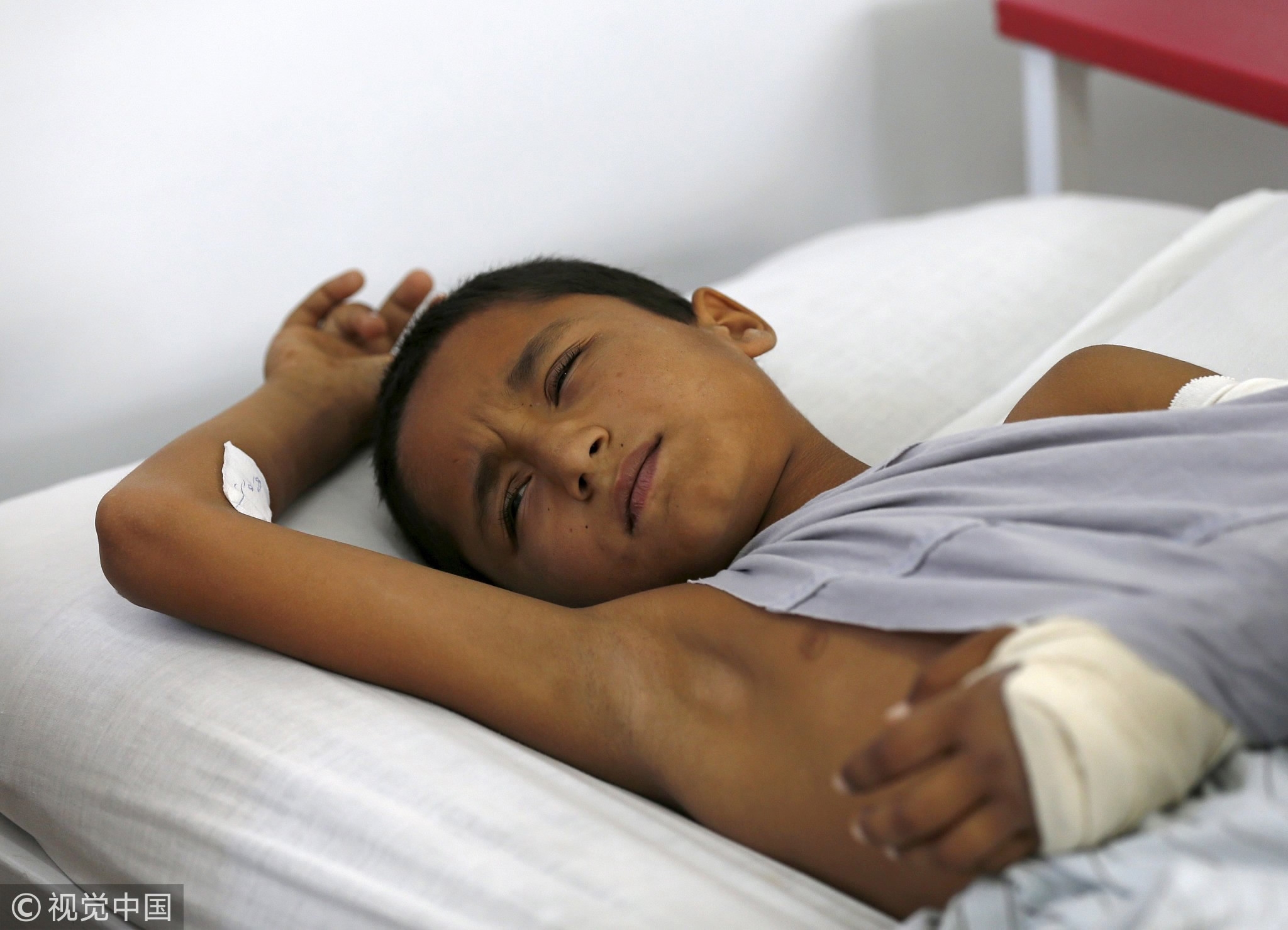
A wounded Afghan boy, who survived a US air strike on a Medecins Sans Frontieres (MSF) hospital in Kunduz, receives treatment at the Emergency Hospital in Kabul, October 8, 2015. /VCG Photo
A wounded Afghan boy, who survived a US air strike on a Medecins Sans Frontieres (MSF) hospital in Kunduz, receives treatment at the Emergency Hospital in Kabul, October 8, 2015. /VCG Photo
However, Washington called it an "accident."
A survivor of the attack said, "This act is not forgivable. Those criminals who have done it, if they are American or from anywhere else, must be put on trial, in an open trial in Afghanistan, not in America."
Then US President Barack Obama issued an apology and ordered an investigation. But the probe proved futile for Doctors Without Borders and the military personnel responsible for the mistake did not go to court.
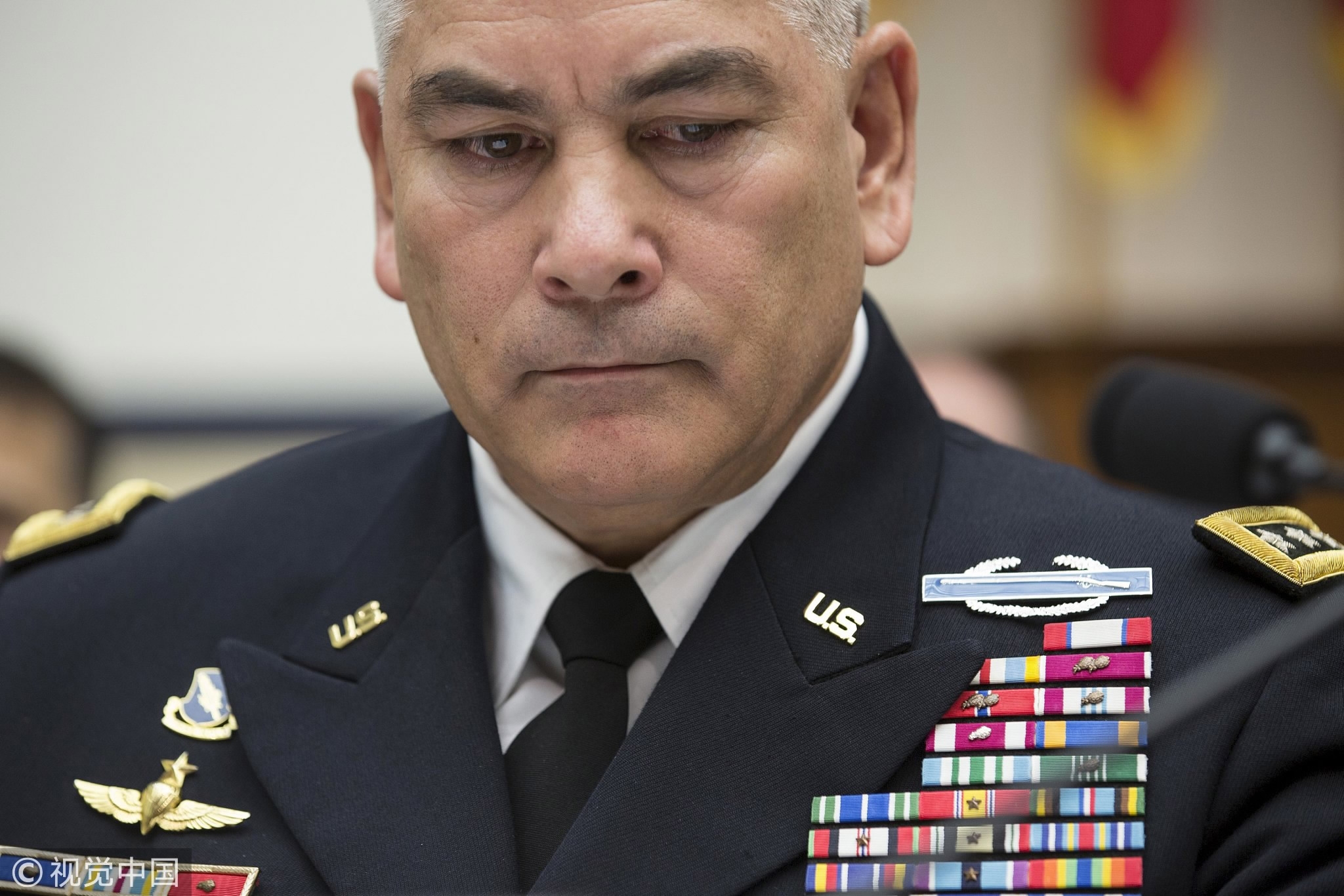
US Army General John Campbell, commander of US forces in Afghanistan, prepares to testify before the House Armed Services Committee hearing on "US Strategy in Afghanistan" on Capitol Hill in Washington, DC, October 8, 2015. /VCG Photo
US Army General John Campbell, commander of US forces in Afghanistan, prepares to testify before the House Armed Services Committee hearing on "US Strategy in Afghanistan" on Capitol Hill in Washington, DC, October 8, 2015. /VCG Photo
The US is also actively “dealing with” the conflict in Syria. It's been seven years since the deadly conflict in Syria erupted, and there seems to be no end in sight. US-led coalition airstrikes continue to pound ISIL targets in the war-torn country – a battle that appears to be more lethal for the ordinary people.
A similar event to the Kunduz hospital tragedy happened again. Lama Fakih, Human Rights Watch's deputy director of the Middle East and North Africa division said: "We found that the US hit a mosque in northern Syria and killed at least 38 different individuals...The US government really failed to understand the nature of their target."
UN war crimes investigators say that from March to June of last year, US-led coalition airstrikes killed at least 300 civilians in the ISIL stronghold of Raqqa.
"Civilians are caught up in the city under the oppressive rule of ISIL, while facing the extreme danger associated with movement due to excessive air strikes."
Has the US ever felt sorry for the people of Syria?
The Guantanamo Bay detention camp is located in the southeastern part of Cuba and is used for detaining terrorists. Since it opened, 780 detainees have been held there. Many of them have been detained for years.
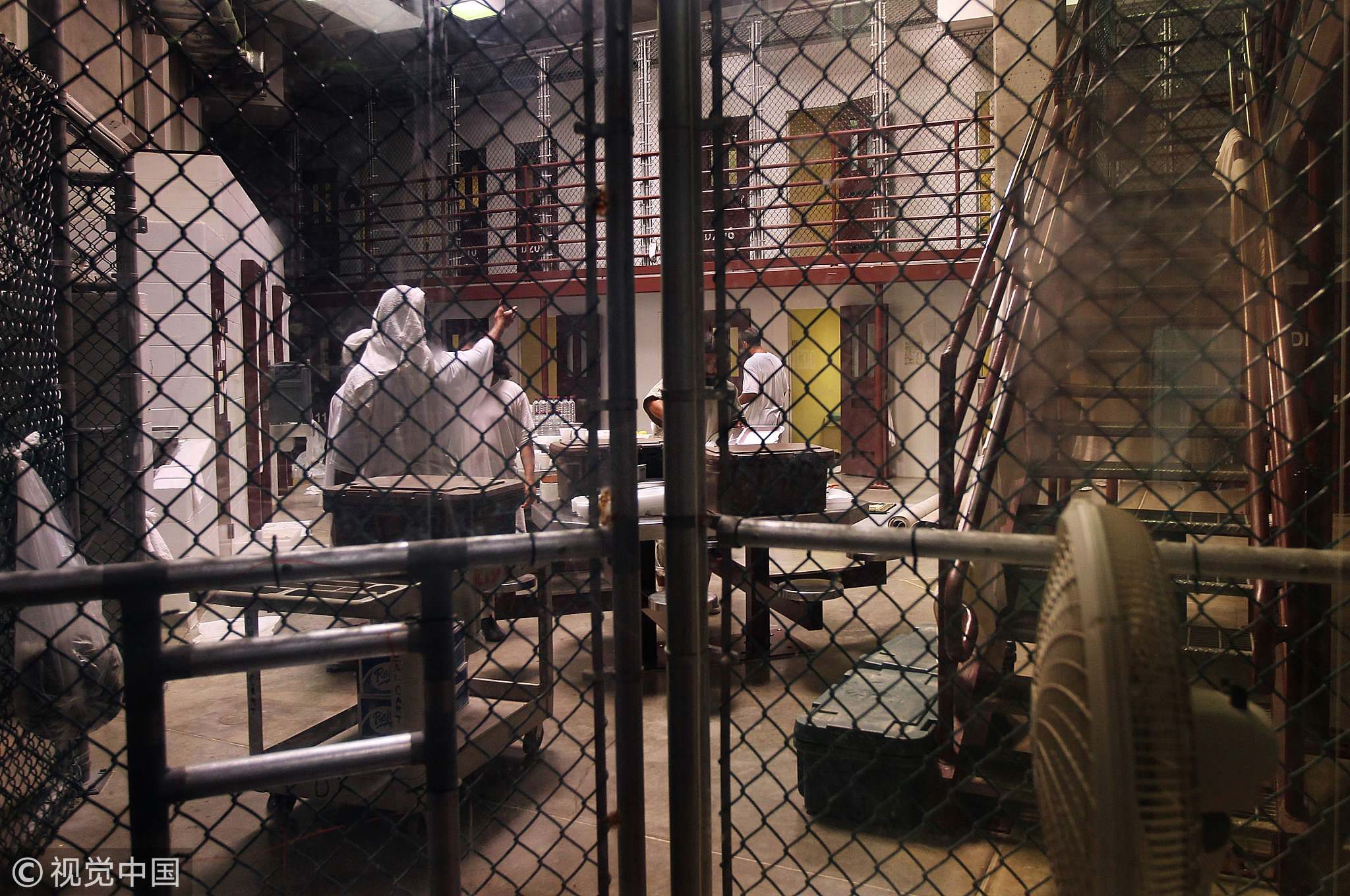
Detainees prepare to eat lunch at Camp 6 in the Guantanamo Bay detention center on March 30, 2010 in Guantanamo Bay, Cuba. /VCG Photo
Detainees prepare to eat lunch at Camp 6 in the Guantanamo Bay detention center on March 30, 2010 in Guantanamo Bay, Cuba. /VCG Photo
How did the US treat these detainees?
A former Guantanamo detainee said: “They stripped us naked. They bent us over like this, and we... how do you say it... we got raped. We endured that three times. It was filmed, and they said 'OK'... or something else in English, they said 'OK.'”
Beating, sleep deprivation, forced injections and many other torture methods were reported by media and released prisoners.
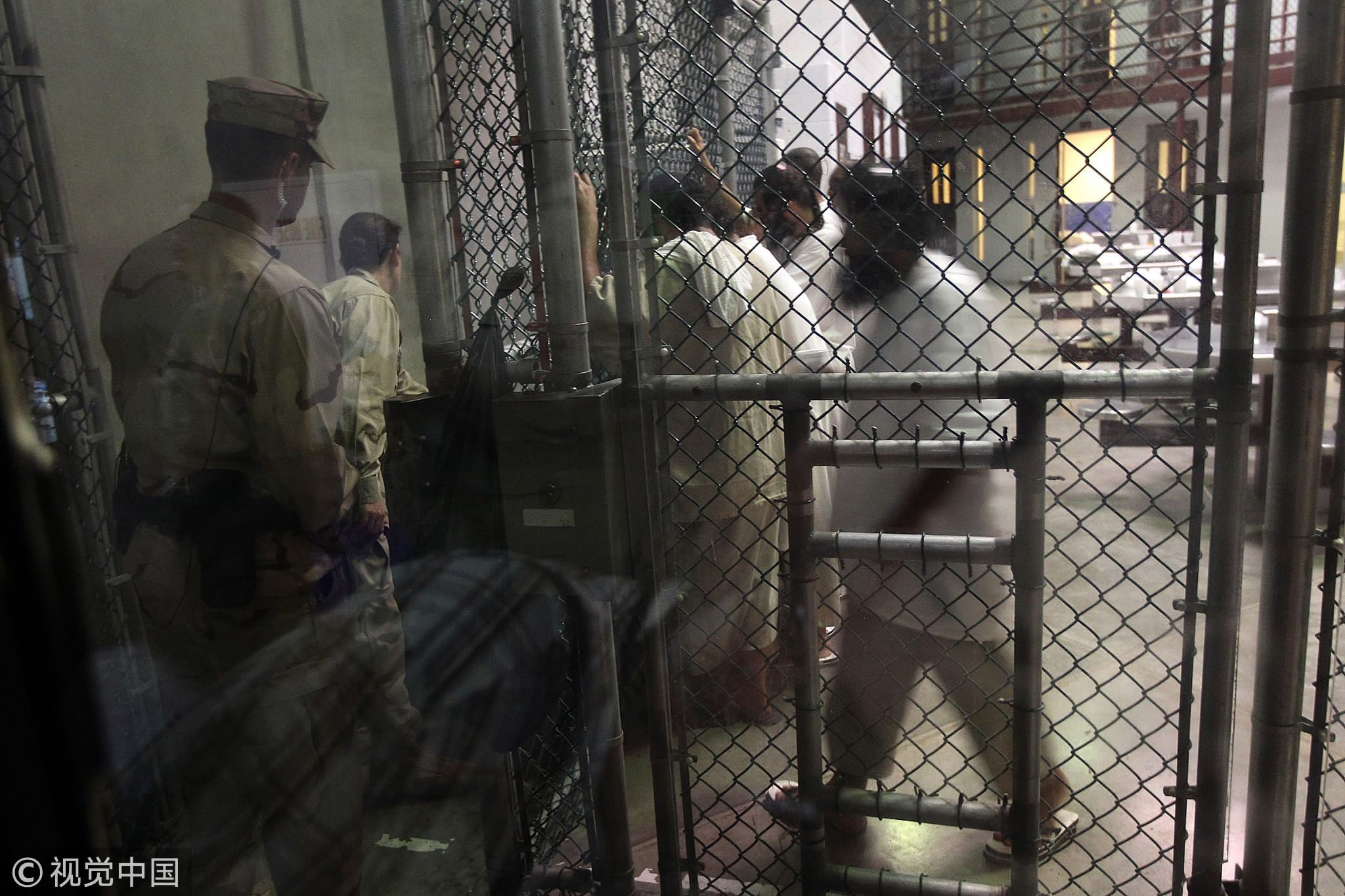
Detainees speak with US military guards in Camp 6 at the Guantanamo Bay detention center on March 30, 2010 in Guantanamo Bay, Cuba. / VCG Photo
Detainees speak with US military guards in Camp 6 at the Guantanamo Bay detention center on March 30, 2010 in Guantanamo Bay, Cuba. / VCG Photo
For many Afghans it has been 17 years since the country was invaded by the forces of the “free world.”
For Syrians, the bloody civil war enters its seventh year, with millions of its citizens still refugees.
For prisoners in Guantanamo, it is another year of uncertainty in detention.
For the marginalized and the dispossessed – caught in the crossfire of America's wars – there's little comfort and still no light at the end of a long dark tunnel.

 ["north america"]