
Business
21:04, 22-Jun-2018
OPEC mulls daily one million-barrel oil production increase
 ["europe"]
Share







Copied
OPEC moved closer on Friday toward boosting oil output as its leader Saudi Arabia appeared to have persuaded arch-rival Iran to cooperate, after major consumers warned of a supply shortage.
Saudi Arabia and non-OPEC Russia have said a production increase of about one million barrels per day (bpd) or around one percent of global supply had become a near-consensus proposal for the group and its allies.
The Organization of the Petroleum Exporting Countries is gathering in Vienna amid calls from the United States, China and India to cool down the price of crude and prevent an oil deficit that would hurt the global economy.
OPEC in theory needs the agreement of all members to clinch a deal but has in the past agreed production pacts without Iran, which has criticized the idea of raising supply as it faces export-crippling US sanctions.
“We are cooking something,” Iranian Oil Minister Bijan Zanganeh told reporters after meeting Saudi Energy Minister Khalid al-Falih before the OPEC talks.
Iran, OPEC’s third-largest producer, has so far been the main barrier to a deal as it called on OPEC to reject pressure from US President Donald Trump to pump more oil.
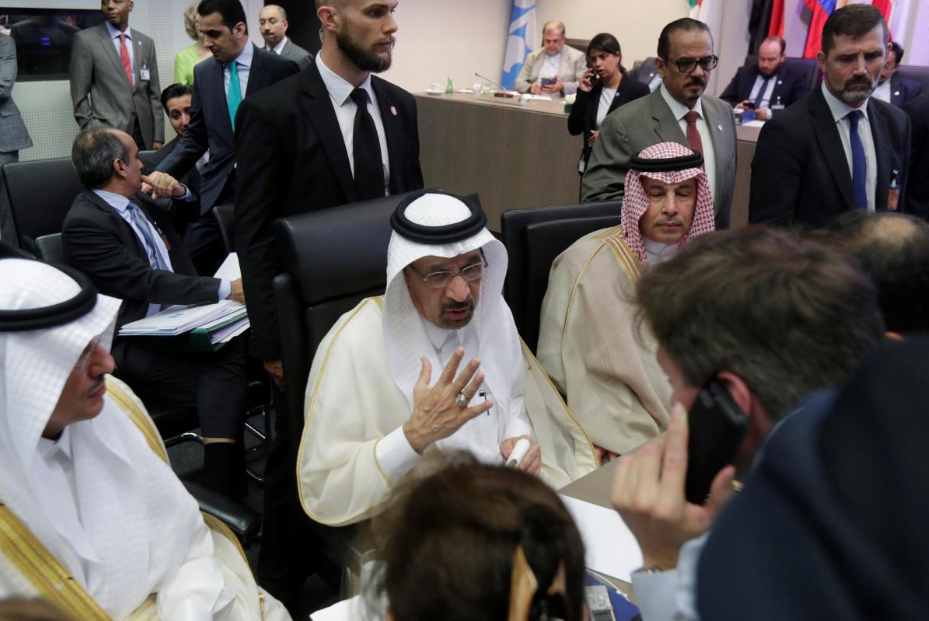
Saudi Arabia's Oil Minister Khalid al-Falih talks to journalists at the beginning of an OPEC meeting in Vienna, Austria, June 22, 2018. /Reuters Photo
Saudi Arabia's Oil Minister Khalid al-Falih talks to journalists at the beginning of an OPEC meeting in Vienna, Austria, June 22, 2018. /Reuters Photo
Trump imposed fresh sanctions on Tehran in May and market watchers expect Iran’s output to drop by a third by the end of 2018. That means the country has little to gain from a deal to raise OPEC output, unlike top oil exporter Saudi Arabia.
Falih said the overwhelming majority of producers had recommended raising output by one million bpd, gradually and on a pro-rata basis.
The 24 nations in the supply-cat pact, known as OPEC+, agreed in late 2016 to trim production by 1.8 million barrels a day but they have actually been keeping some 2.8 million barrels per day off the market.
Much of the shortfall has come from Venezuela, where an economic crisis has savaged petroleum production.
Output has also plummeted in Libya, where fighting between rival factions has damaged key oil infrastructure.
Given the production restraints in some countries, the one million barrels per day proposal would in reality end up adding several hundred thousand barrels to the market.
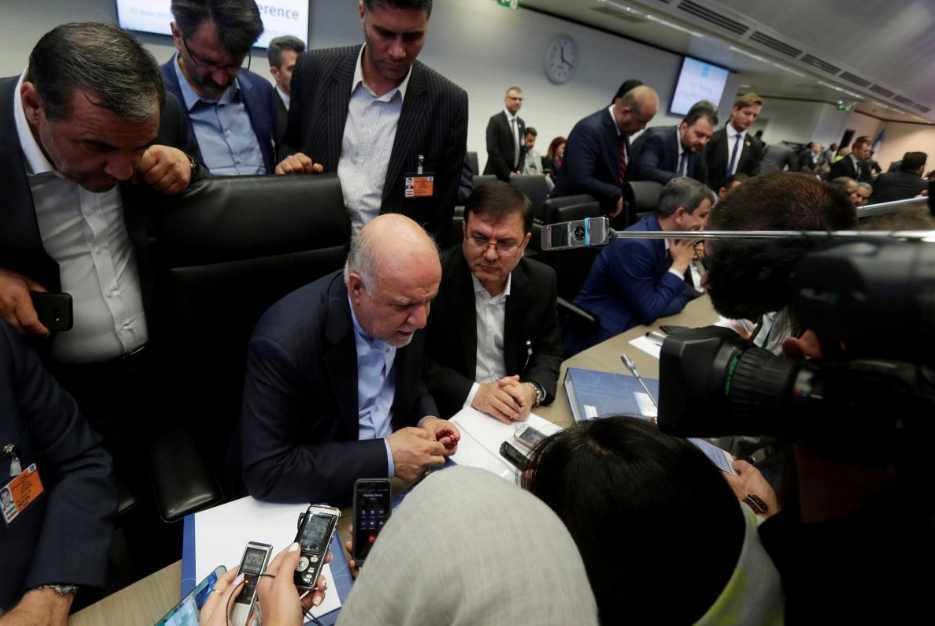
Iran's Oil Minister Bijan Zanganeh talks to journalists at the beginning of an OPEC meeting in Vienna, Austria, June 22, 2018.
Iran's Oil Minister Bijan Zanganeh talks to journalists at the beginning of an OPEC meeting in Vienna, Austria, June 22, 2018.
But it remains to be seen what kind of compromise could emerge, given Iran's deep aversion to any attempt by OPEC allies to offset its expected production losses as a result of the impending US sanctions.
Meanwhile Riyadh, which cheered Washington's exit from the Iranian nuclear deal, is under pressure from its US ally to open the spigots as Trump hopes for lower pump prices ahead of November's mid-term elections.
Iran's Zanganeh has accused Trump of trying to politicize OPEC and said it was US sanctions on Iran and Venezuela that had helped push up prices.
OPEC operates on the principle of consensus, and ministers are keen to avoid a damaging rift between key members that could undermine the bloc's credibility.
Analysts have called this week's OPEC talks the most fractious and politically charged in years.
Global oil prices rose Friday by over one percent on the day as analysts expected any OPEC+ crude output increase to fall short of the original target.
(With input from agencies)