
Opinions
09:11, 27-Apr-2018
Opinion: China, India can unite to forge Asia prosperity
 ["china","other","Asia"]
Share







Copied
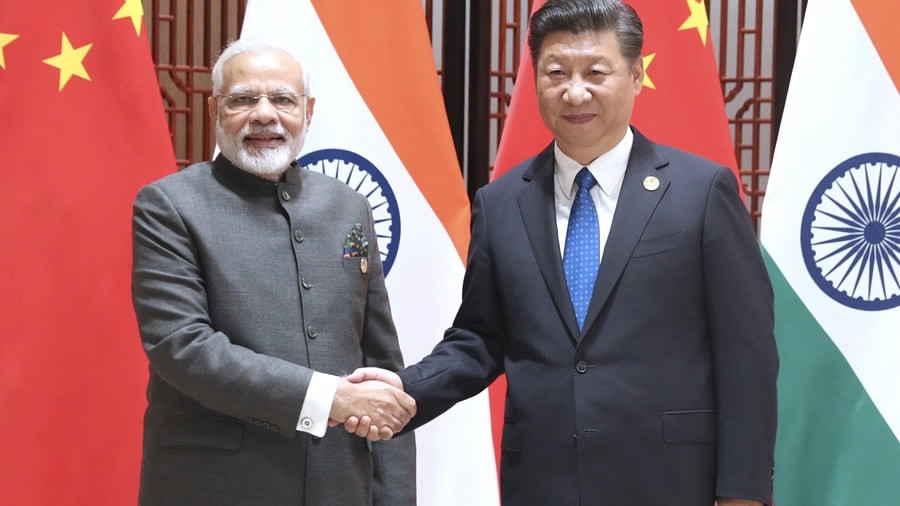
Indian Prime Minister Narendra Modi's Wuhan visit to meet with Chinese President Xi Jinping has dominated the headlines since the news broke Sunday. The unofficial summit is considered unprecedented as Modi is set to embark on another China trip for the Shanghai Cooperation Organization (SCO) summit a month later. The two largest Asian nations pin high hopes on the summit, expecting the unconventional trip to foster bilateral ties in an unconventional way.
Modi's meeting with Xi was preluded by a series of China visits by Indian National Security Adviser Ajit Doval, External Affairs Minister Sushma Swaraj, and Defense Minister Nirmala Sitharaman. The whirlwind of high-level interactions swiftly defrosted the much-blighted Sino-Indian ties, which had further spiraled into high tensions given the 73-day military standoff in the Dong Lang (Doklam) area last year.
The unprecedented dialogue in an informal, cordial way shows that New Delhi is eager to repair the frayed bonds with China by effectively controlling projected differences. Both sides need to build mutual trust to make sure that any conflict like the Dong Lang (Doklam) one will never happen again.
Actually, the incident was not all bad: It reminded India to review its intertwinement with China and recognize that it cannot stand to brawl with the Asian powerhouse. For India, economic development is the paramount mission at the current stage and for many years into the future. In a January report of the Inclusive Development Index, the World Economic Forum ranked India at the 62nd place among 79 emerging economies, two places lower than that of last year. Its neighbors Nepal, Bangladesh, Sri Lanka, and Pakistan were much higher on the list.
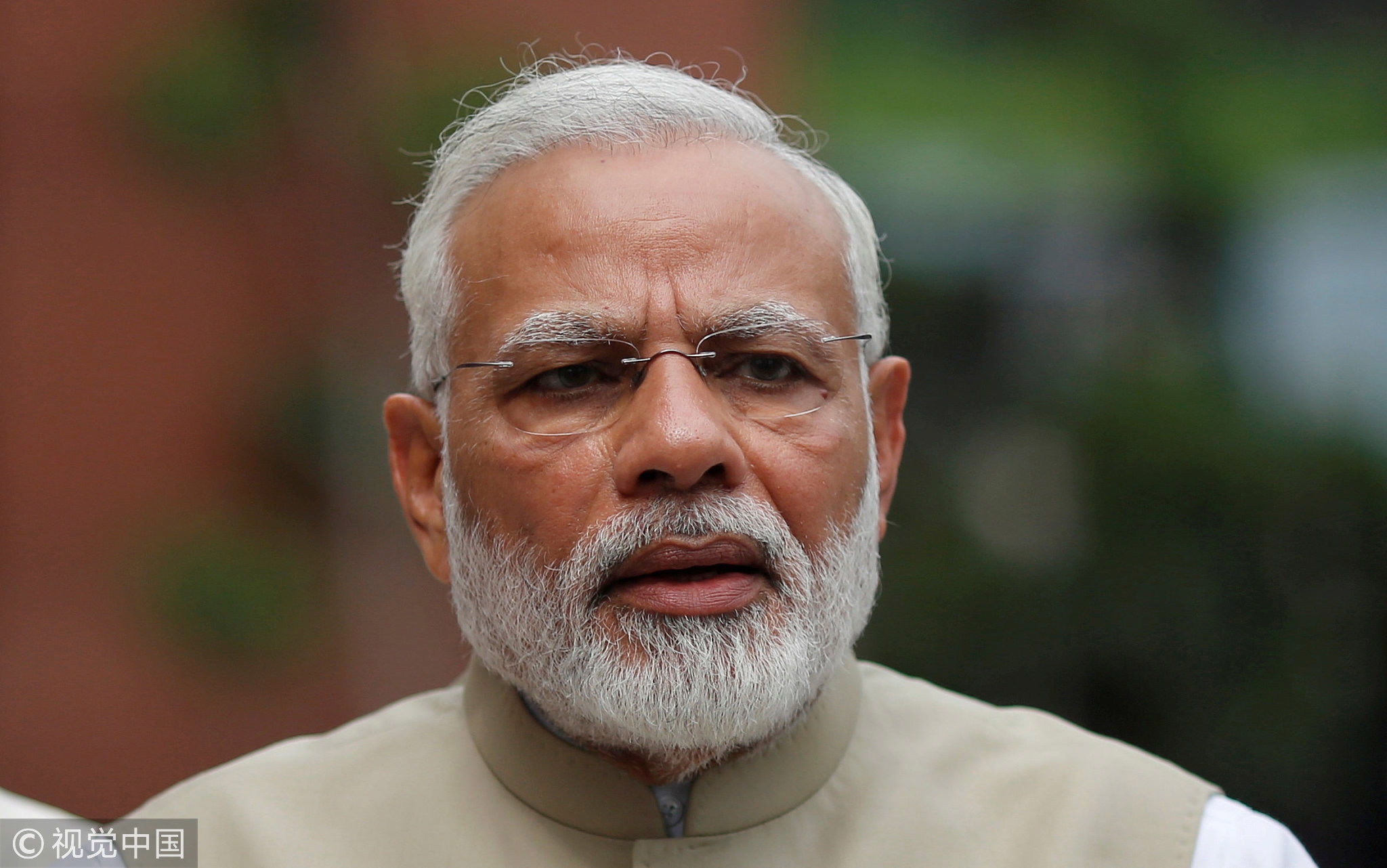
India’s Prime Minister Narendra Modi arrives to cast his vote for the country's next president at the Parliament House in New Delhi, India, July 17, 2017.
India’s Prime Minister Narendra Modi arrives to cast his vote for the country's next president at the Parliament House in New Delhi, India, July 17, 2017.
To secure a steady momentum of development, New Delhi must seek cooperation and eschew confrontation, which will only lead to a waste of time, budget and various resources. If India keeps using their limited resources on arms expansion, there will be little left for economic growth.
The optics of power projected by satellites and rockets cannot save the country from a flagging economy. The largest South Asian country has also failed to acquire plenty of advanced technologies from the US under a Donald Trump who’s obsessed with "America First" and its Western allies that are leaning toward trade protectionism and even populism.
There are also structural differences between the economies of India and the developed world. What the Indian economy needs most is to boost its manufacturing and service sectors for its staggeringly large population and a burgeoning middle class. In contrast, most Western countries have transferred their manufacturing industry overseas many years ago, so a developing India cannot rely on this honeypot anymore.
But China, a rising economy in the process of industrial upgrading, will provide more economic assistance to India. Last year, their trade volume amounted to a record high of 84.4 billion US dollars. Just imagine how the two countries, boasting nearly half of the global economic growth, will gain greater leverage in the world economy if they combine their efforts.
For instance, China can quickly improve India's infrastructure at rather low costs. The Press Trust of India, the country's biggest news agency, revealed that "India seeks China’s help for expediting Bengaluru-Chennai rail corridor," including accelerating its building speed as well as renovating two railway stations.
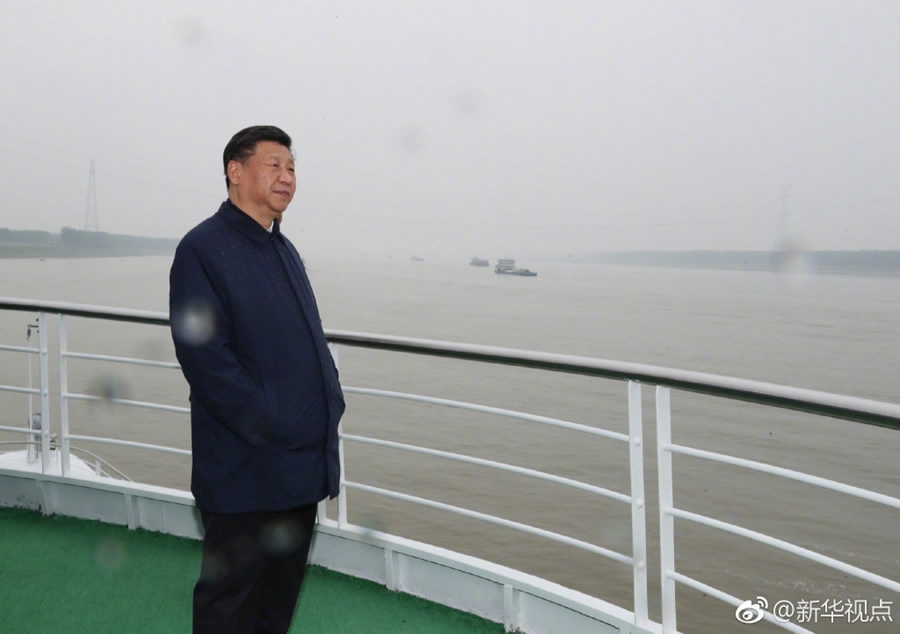
Chinese President Xi Jinping inspects the ecological restoration along the Yangtze River in central China's Hubei Province, April 25, 2018. /VCG Photo
Chinese President Xi Jinping inspects the ecological restoration along the Yangtze River in central China's Hubei Province, April 25, 2018. /VCG Photo
On the 16th biennial International Energy Forum Ministerial Meeting earlier this month, Dharmendra Pradhan, Minister for Petroleum and Natural Gas, suggested that India coordinate with China to break free of the so-called “Asian premium,” the extra charge levied on Asia for oil from OPEC countries.
As the general elections approach next year, Modi is seeking to ratchet up the country's economy in front of the rising political star Rahul Gandhi of the Indian National Congress.
Furthermore, New Delhi also needs Beijing's support in becoming a permanent member of the UN Security Council, paving its way toward a responsible global power.
For China, India is a crucial country in its peripheral diplomacy. Intensive, inclusive development requires a peaceful environment. Ramped-up cooperation between the two countries with some 35 percent of the world population plays an instrumental role in Asian regional stability and development. The two sides have already achieved consensus in defending the security of Afghanistan, protecting the Paris climate deal, as well as multilateral economic collaboration.
“Asia's voice will be stronger if India and China speak in one voice,” Modi said in a speech in Tsinghua University. Indeed, Beijing-New Delhi cooperation will precipitate numerous changes: smaller Asian countries do not have to take sides; a regional trade mechanism will take shape; the SCO, BRICS, the Regional Comprehensive Economic Partnership will gain more strength. And most importantly, it is believed that the two nations, if united, have the might to shed fallacious international practices and inject more justice and fairness into global governance.
(The article in based on an interview with Long Xingchun, a research fellow at the Charhar Institute and director of the Center for Indian Studies at China West Normal University.)