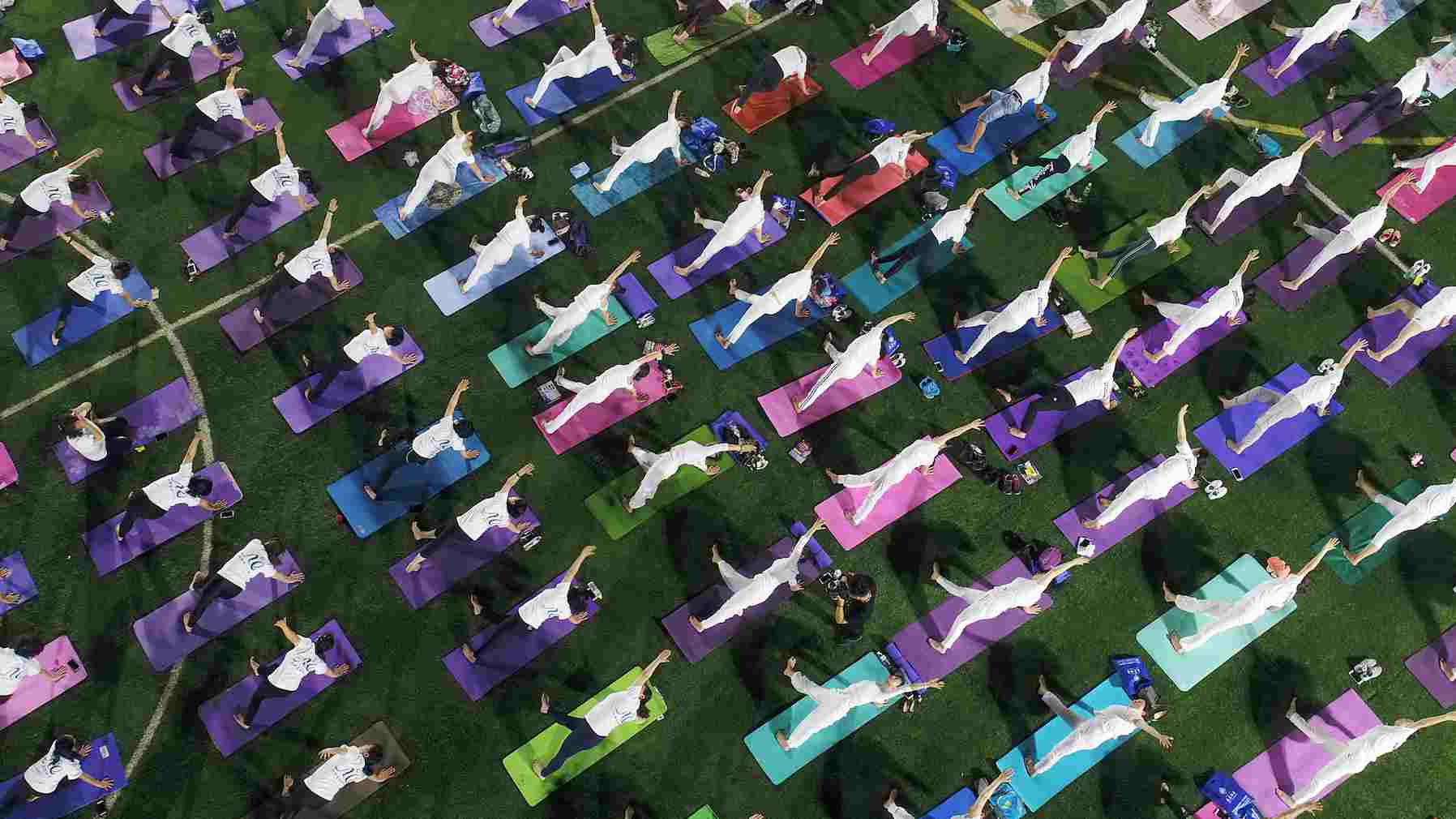
On a typical weekend stroll through Beijing’s Olympic Sports Center, the compelling sight of red jerseys coupled with the roaring sound of cheers and boos are ones you’d expect to experience from a place in which Beijing Enterprises FC call home.
But last weekend was different. The soccer apparel was swapped for shimmering sequin dresses as a different kind of crowd swarmed the center. The dancing grannies had come.

Beijing Enterprises players celebrates their opening goal against Hangzhou Greentown on April 28 at the Olympic Sports Center Stadium. /VCG Photo
Beijing Enterprises players celebrates their opening goal against Hangzhou Greentown on April 28 at the Olympic Sports Center Stadium. /VCG Photo
Gathering in full regalia, legions of women, mostly retirees, fell into rows and columns with a whirlwind of color, before they started performing synchronized dance routines to a wildly popular ditty called Moonlight over the Lotus Pond.
The square dancing traced its roots back to more than a millennium ago in Emperor Yao's China, but its popularity took a giant leap in 2008 when the Chinese government launched a national fitness campaign to warm up for the Beijing Olympic Games.
In the following years, the dancing grannies were increasingly sparking a backlash in urban areas, where they were seen by the younger generation as a public nuisance as they occupied public places and blasted their music out of large portable boom boxes.
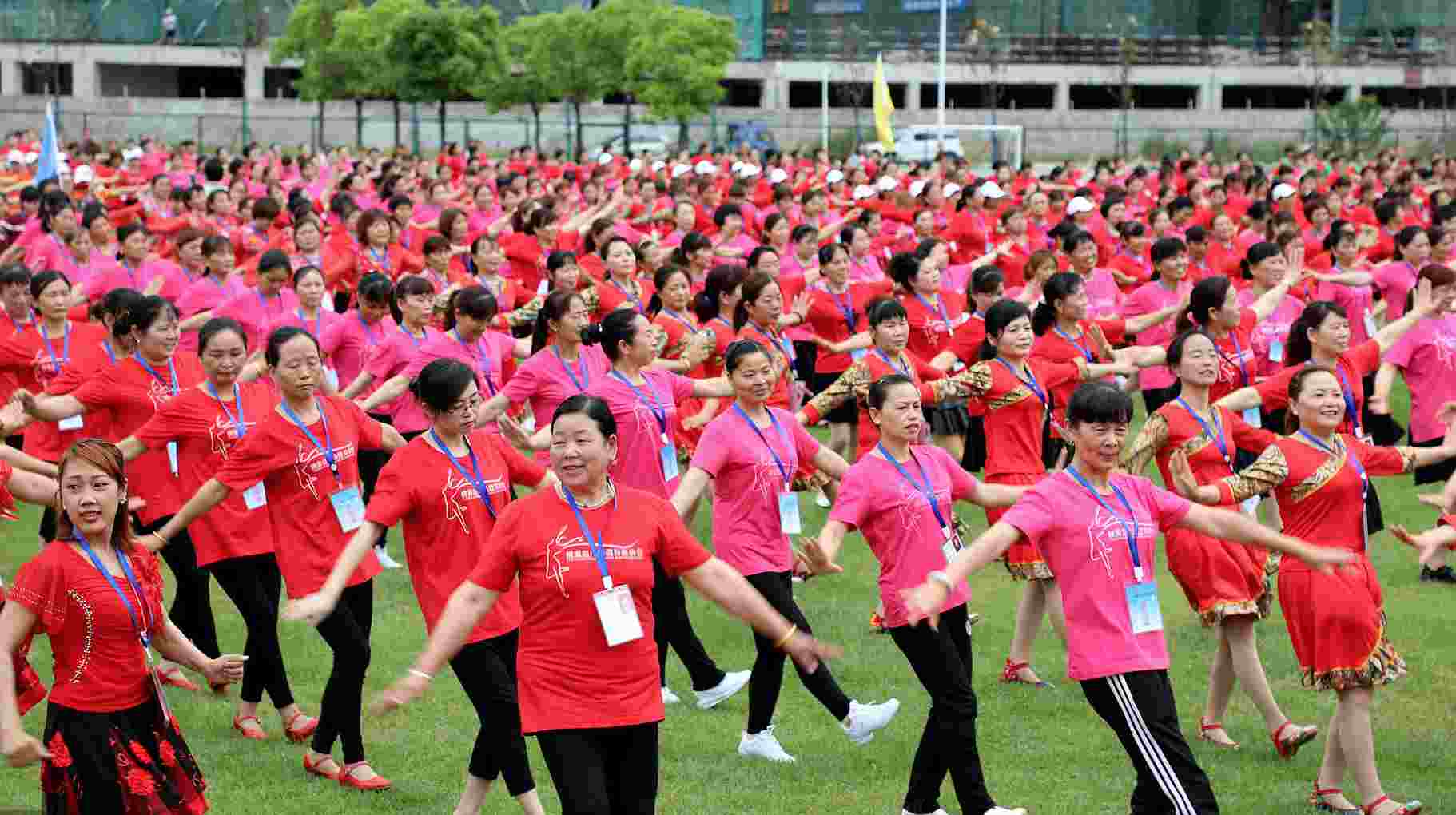
Square dancing is a popular pastime embraced by many Chinese grannies as a way of keeping fit while also staying social. /VCG Photo
Square dancing is a popular pastime embraced by many Chinese grannies as a way of keeping fit while also staying social. /VCG Photo
Fortunately, local regulations such as banning the dancing activity within 200 meters of residential neighborhoods have made many elderly dancers come to terms with the importance of trying to curb their over-enthusiasm and develop an altruistic spirit.
One of them is He Ping, a bubbly 57-year-old granny who hops around a number of square dancing venues in Beijing's Chaoyang District.
"I have reminded the lead dancer to turn down the volume of our speakers on several occasions. It's important to show respect for others in public places," she told CGTN.
"I have changed a lot over the past few years, but my passion for dance remained unchanged. Square dancing gives me incentive to stay in shape. Moreover, I have made many new friends," she smiled.
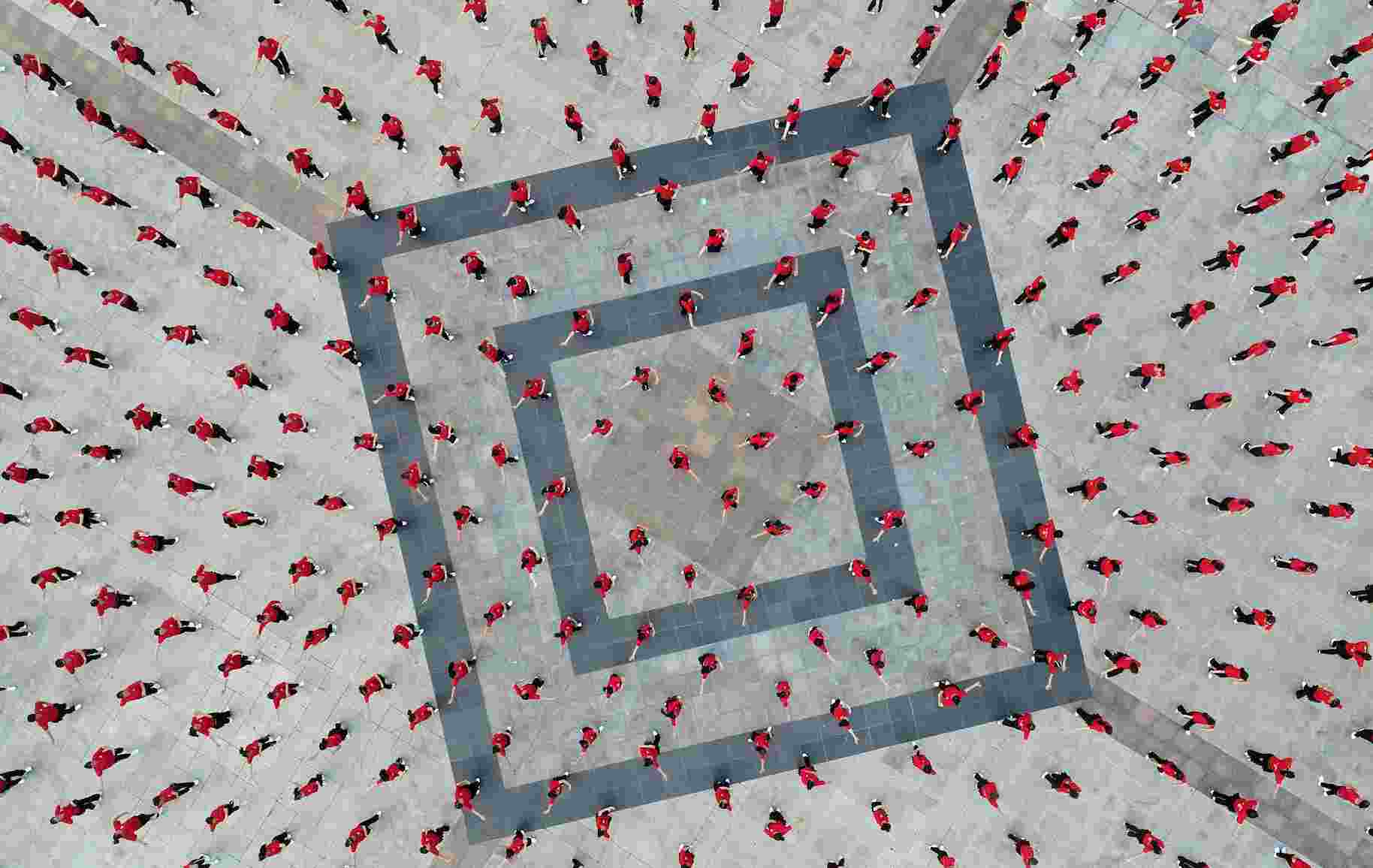
Drone captures amazing bird's-eye view of more than 1,000 square dancers performing in Xiangyang, Hubei, July 29, 2018. /VCG Photo
Drone captures amazing bird's-eye view of more than 1,000 square dancers performing in Xiangyang, Hubei, July 29, 2018. /VCG Photo
The latest available data shows that there are approximately 100 million square dancers like Li in China. The pastime has become so incredibly popular that it has even been listed as a recreational event at the 13th National Games last year.
The embrace of square dancing at the national level is part of a broader push by the Chinese government to boost and encourage grassroots sports after the country made a success of hosting the Beijing Olympics.
Ten years on, the Games proved to be a transformative event for the capital city as it leads to Chinese people taking sport and health more seriously. That is hugely beneficial for countries like China who is faced with a rapidly aging population and declining birth rate.
The Olympic effect is not limited to square dancing. Marathons are also in vogue. According to the Chinese Athletics Association's annual report, more than 1,000 marathon events were held in China last year, enticing a grand total of 5 million running enthusiasts that are ravenous for fitness.
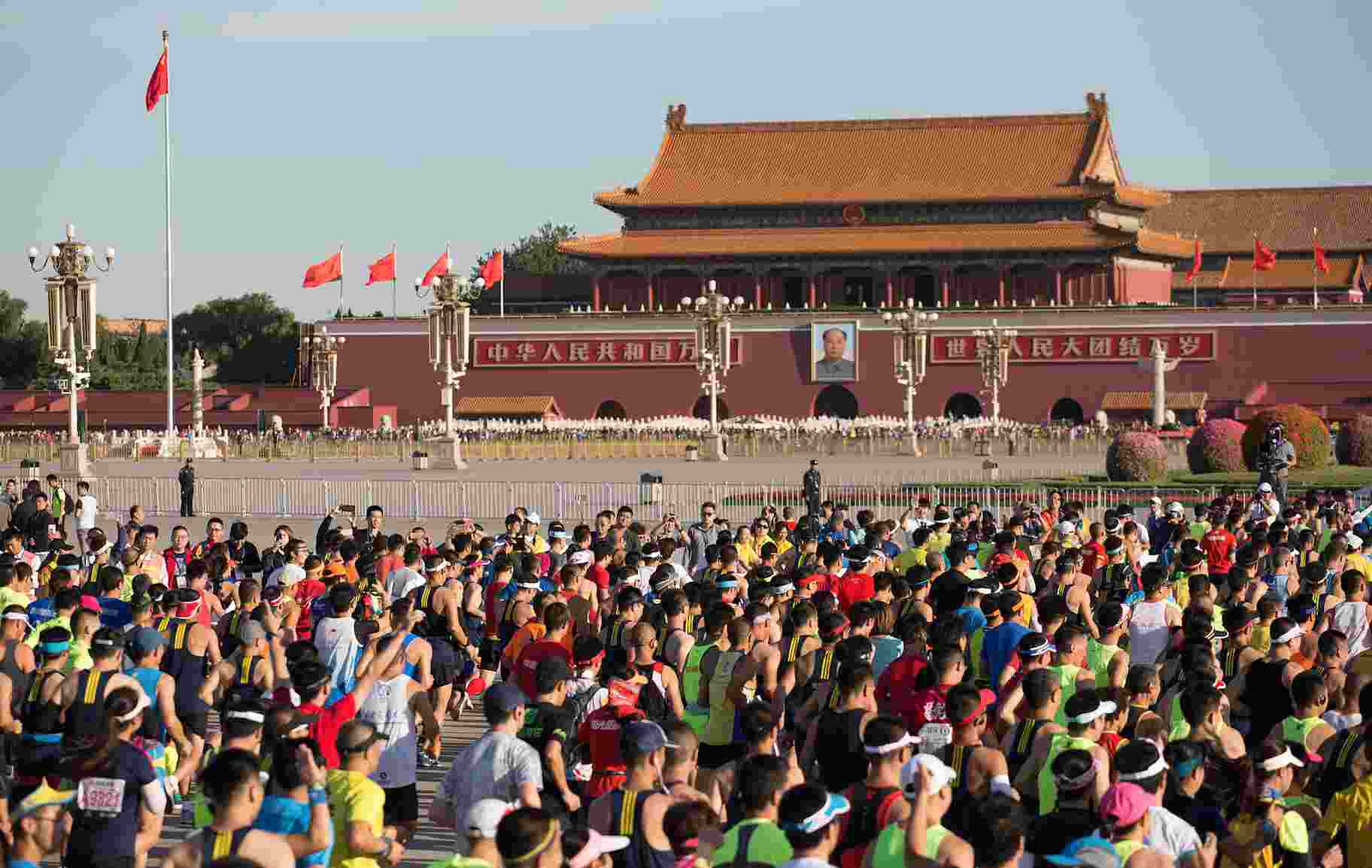
The 2017 Beijing Marathon attracts nearly 100,000 applicants for 30,000 slots, with organizers using an online lottery system to determine the eventual runners. /VCG Photo
The 2017 Beijing Marathon attracts nearly 100,000 applicants for 30,000 slots, with organizers using an online lottery system to determine the eventual runners. /VCG Photo
Tens of thousands of running clubs and apps have sprouted across China over the last decade, and runners fill their WeChat Moments, China's equivalent of Facebook's newsfeed, with sweaty selfies and the number of miles they triumphantly logged.
But not every health-seeker in China is keen on outside sports. For those who wanted to get out of the sweltering summer heat, a gym offered the most obvious choice of escape.
According to an industry report commissioned by Kismart, a leading gym management system provider, there are now more than 11,000 officially accredited fitness centers in China, with many more unaccredited ones also dotted around the country.
Li Xin is a hunky 37-year-old businessman with two kids, a seven-year-old girl and a three-year-old boy. This year marks his fifth year of being a regular gym-goer, who manages to squeeze in workouts despite his hectic schedules.
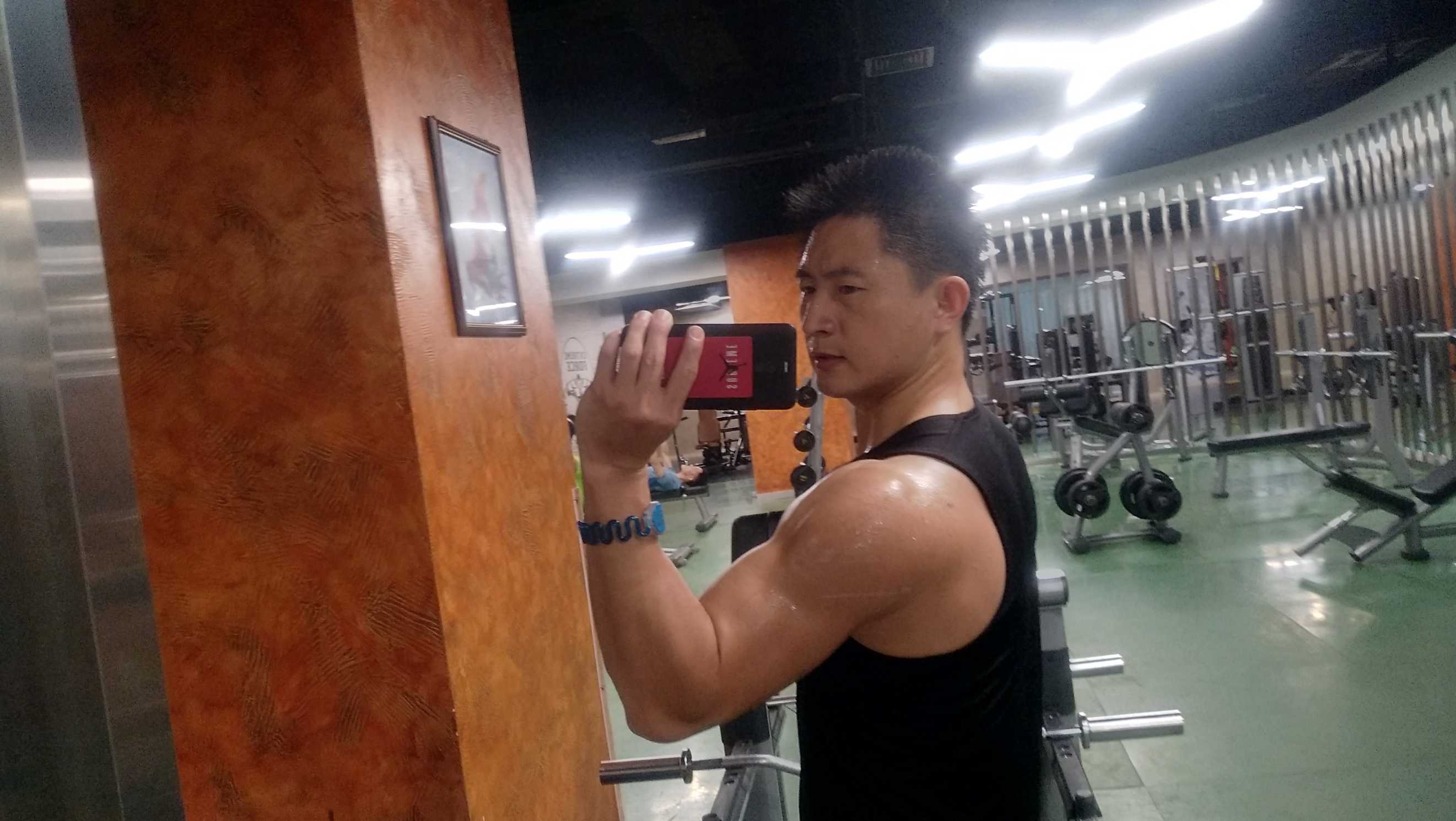
Li Xin shows off his hulking muscles after a particularly grueling gym session. /CGTN
Li Xin shows off his hulking muscles after a particularly grueling gym session. /CGTN
It's difficult not to admire his dedication. He wakes up before 7 a.m., walks his daughter to school, and then leaves for work. Instead of getting some extra sleep on his lunch break, he shows up at his gym religiously at noon every day. After working out for 45 minutes, he grabs a salad from the nearby 7-Eleven, and then returns to work.
"One day I looked in the mirror, I see someone who was pale, wrinkly and exhausted, just like a careworn old man. I felt my physical condition was much worse than before. I was shocked and afraid," Li told CGTN.
"Since then, going to the gym has become an indispensable part of my life. I've seen many of my workout buddies make drastic changes to their lifestyles. Nowadays people care more about their health and fitness instead of just their work," he added.
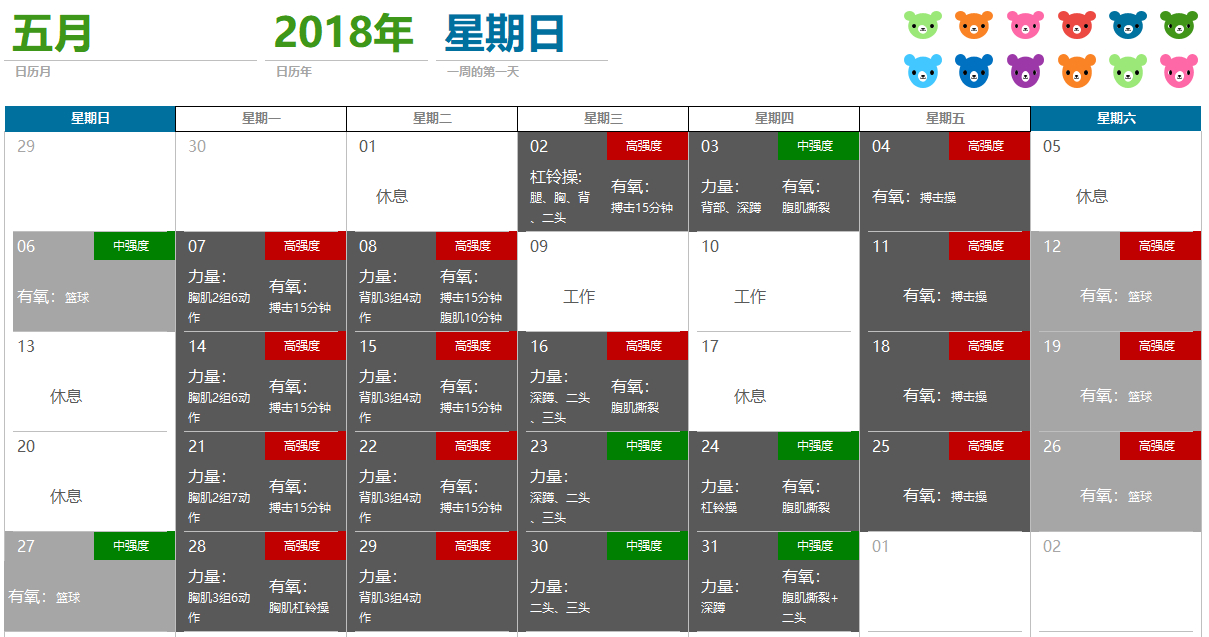
Li Xin makes a meticulous fitness plan via MS Excel, detailing what parts of the body he needs to work out with what level of intensity on a given day. /CGTN
Li Xin makes a meticulous fitness plan via MS Excel, detailing what parts of the body he needs to work out with what level of intensity on a given day. /CGTN
In 2016, China’s General Administration of Sport, the government’s top sports body, unveiled a national strategy to develop the fitness and leisure industry, with a goal of increasing the sector’s output to more than 3 trillion yuan (438 billion US dollars) by 2025.
Official statistics show that there were over 360 million people, nearly a quarter of its population, doing regular exercise in China, and the number is expected to skyrocket to 500 million by 2025.
“Once you start (to dance), the joy of it, what you can get from it, is priceless,” beamed He Ping after completing her square dance routines at the Olympic Sports Center.
The same could be said for China's fitness revolution.

 ["china"]