
Politics
08:28, 19-Aug-2018
Syria and Ukraine dominate Merkel-Putin meeting
Updated
07:55, 22-Aug-2018
 ["europe"]
Share







Copied
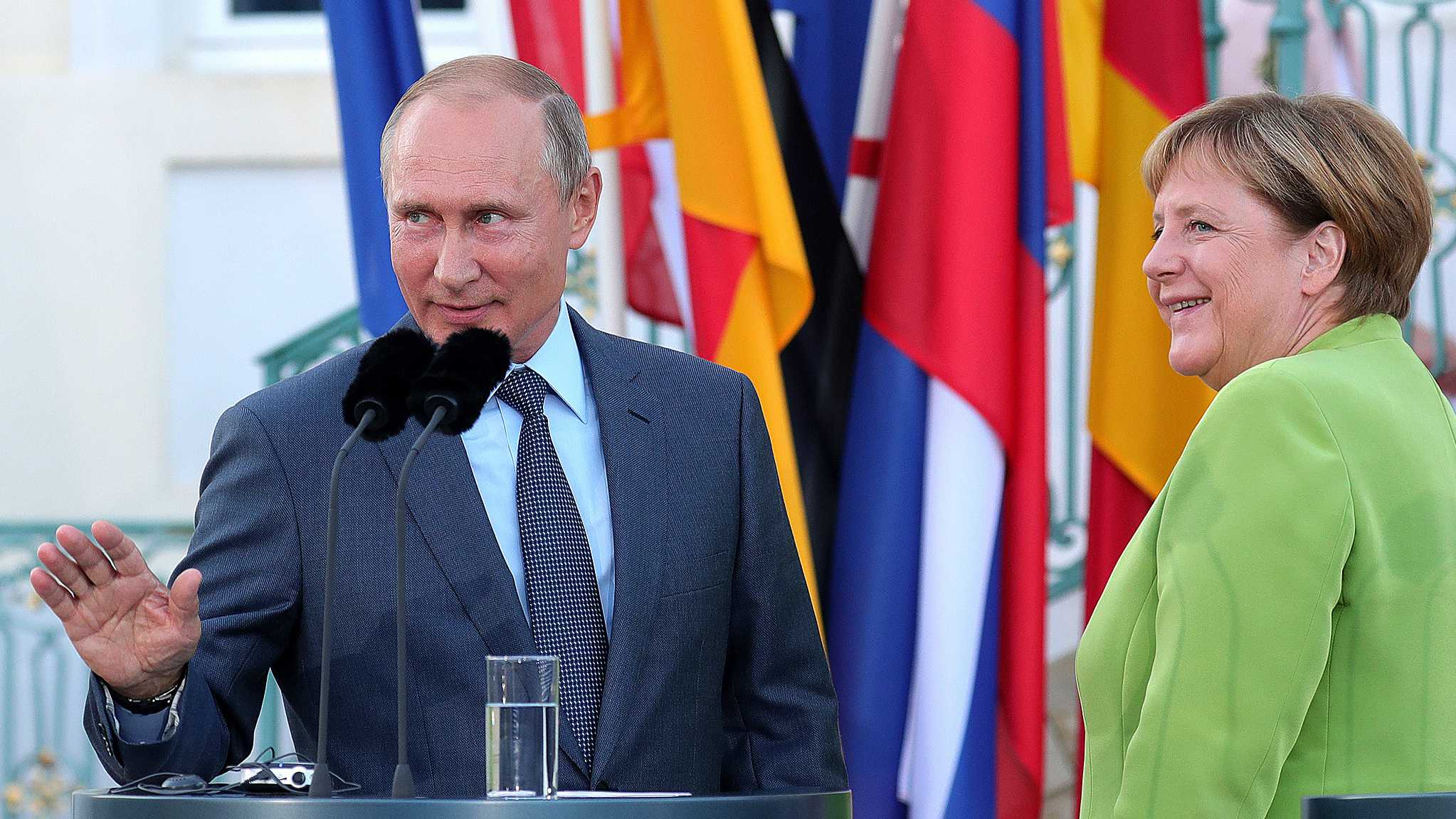
German Chancellor Angela Merkel and Russian President Vladimir Putin met outside Berlin on Saturday for talks ranging from the conflicts in Ukraine and Syria, to Iran and a gas pipeline project.
Standing beside Putin, Merkel said both countries – but especially Russia as a permanent member of the UN Security Council – had the responsibility to tackle these problems.
Syria and refugees
Merkel said she planned to raise some tough issues with Putin, and discuss bilateral relations, strained since the Crimea crisis in 2014.
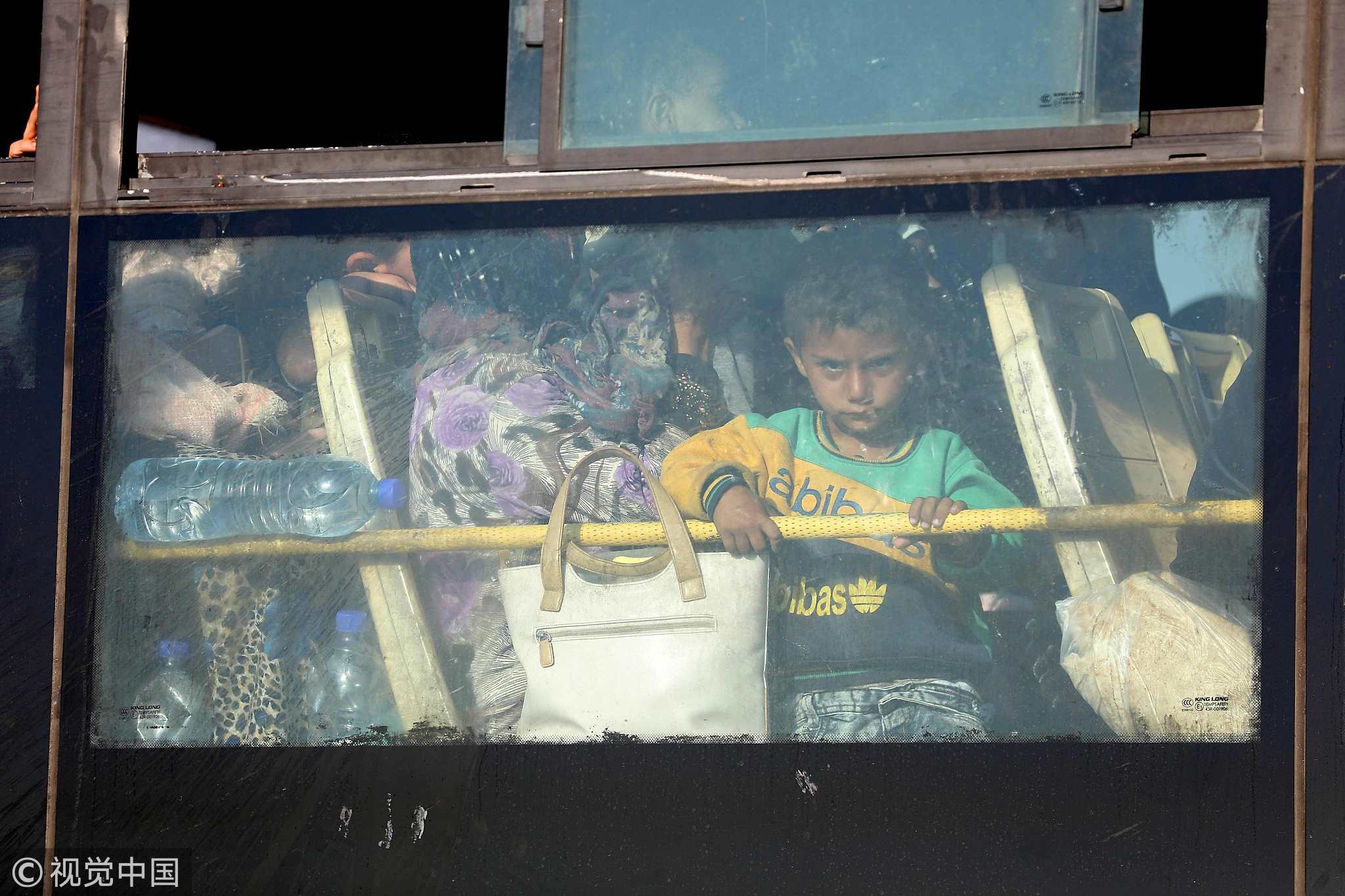
A Syrian child looks through the window of a bus as displaced people from the Quneitra province wait at the Morek crossing point to be transferred in the provinces of Idlib and Aleppo, in Morek, northwestern Syria, July 21, 2018. /VCG Photo
A Syrian child looks through the window of a bus as displaced people from the Quneitra province wait at the Morek crossing point to be transferred in the provinces of Idlib and Aleppo, in Morek, northwestern Syria, July 21, 2018. /VCG Photo
Both leaders raised concerns about Syria and the plight of the many refugees created by the seven-year-old war there.
Merkel said it was important to avert a humanitarian crisis in Idlib, Syria and the surrounding region, and said she and Putin had already discussed the issue of constitutional reforms and possible elections when they last met in Sochi in May.
Putin told reporters that everything must be done to help Syrian refugees return to their country and that Syria needed reconstruction assistance.
He urged Europe to intensify humanitarian aid to Syria so that refugees could return home. Millions of refugees from Jordan, Lebanon and Turkey would be potentially a huge burden for Europe, he warned.
Ukraine and pipeline
On Ukraine, Merkel said she hoped fresh efforts could be undertaken at the beginning of the new school year to disentangle Ukrainian military forces and separatists on the front lines in the Donbass region.
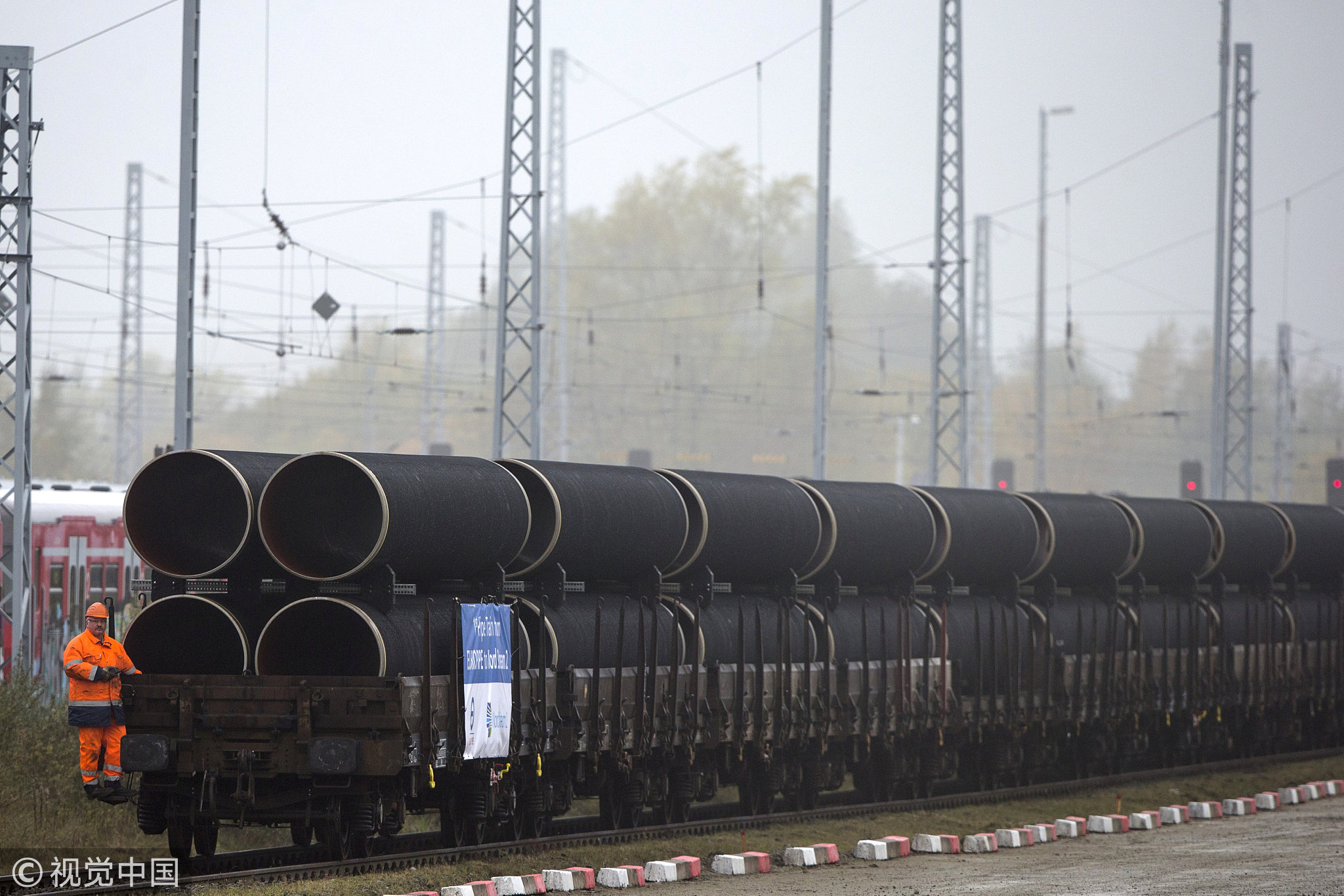
The first pipes for the Nord Stream 2 pipeline are being delivered by rail to the German logistics hub Mukran on the island of Rugen, Germany, March 23, 2017. /VCG Photo
The first pipes for the Nord Stream 2 pipeline are being delivered by rail to the German logistics hub Mukran on the island of Rugen, Germany, March 23, 2017. /VCG Photo
On the planned Nord Stream 2 pipeline to carry Russian gas under the Baltic to Germany, Merkel said Ukraine should continue to have a role in gas transit to Europe, and welcomed the start of discussions among the European Union, Ukraine and Russia on the issue.
Putin told reporters that such a move had to make sense from a business perspective. "I would like to stress that the main thing is that the Ukrainian transit – which is traditional for us – meets economic demands," he said.
"Nord Stream 2 is exclusively an economic project."
The United States is pressing Germany to halt work on the pipeline, arguing that it will increase Germany's dependence on Russia for energy. Ukraine fears the pipeline will allow Russia to cut it off from the gas transit business.
The Austrian wedding
Putin arrived in Germany on Saturday evening after a stop at an Austrian vineyard to attend Foreign Minister Karin Kneissl's wedding to entrepreneur Wolfgang Meilinger.
The Russian president gave the newlyweds presents and danced with the bride.
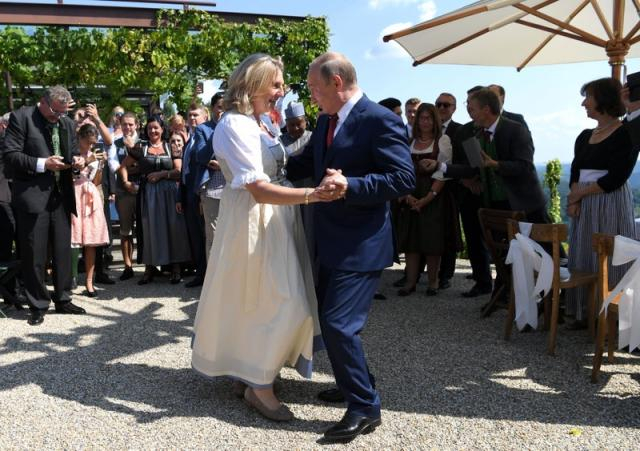
Austria's Foreign Minister Karin Kneissl dances with Russia's President Vladimir Putin at her wedding in Gamlitz, Austria, Aug. 18, 2018. /Reuters Photo
Austria's Foreign Minister Karin Kneissl dances with Russia's President Vladimir Putin at her wedding in Gamlitz, Austria, Aug. 18, 2018. /Reuters Photo
The two leaders also had a brief conversation at the celebration, the Kremlin said.
In June, Putin visited Vienna and met Kurz and Austrian President Alexander Van der Bellen. The two countries agreed to extend their gas supply contract from 2028 till 2040.
Source(s): Reuters
,Xinhua News Agency