
Drone
17:36, 07-May-2018
Why Ehang's record-breaking 1,374-drone show became a disaster?
 ["china"]
Share







Copied
01:30
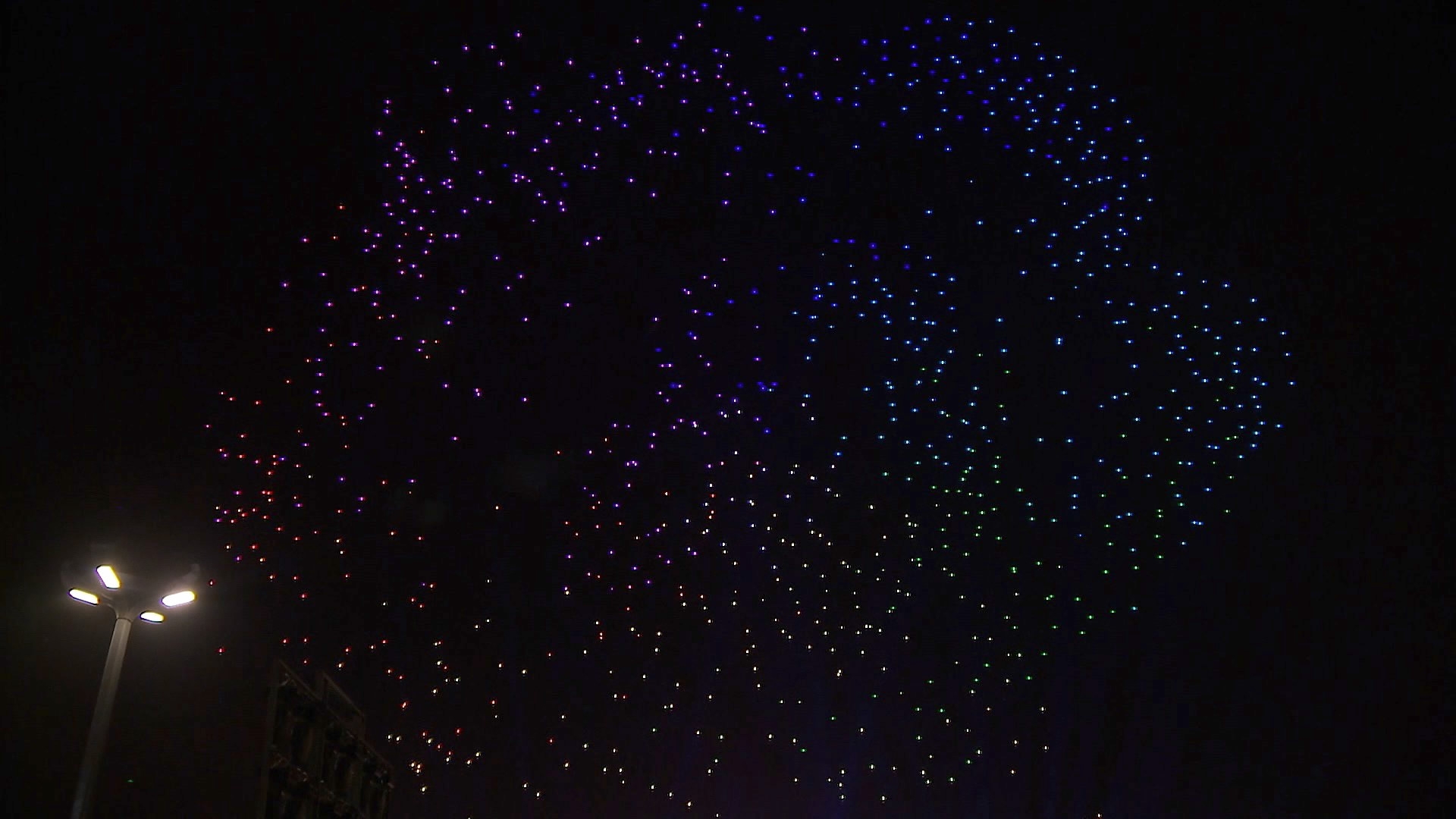
Another Guinness World Record has been set on the "Most Unmanned Aerial Vehicles (UAVs) airborne simultaneously," as a total number of 1,374 drones were set off to a light show in China's Xi'an city on April 29, which the record staff called "dazzling".
But when Ehang, the company behind the show, tried to display it to the public on May 1, something went wrong and ruined the second show.
The performance began on an ancient city wall in the same city. Everything was fine until the audience complained that they couldn't understand the left half of the formation.
In fact, some drones on the left were drifting away from their designed locations.
Tickets were sold for the great show. And of course, some buyers demanded refund. Some even doubted if the record-setting event ever happened, since it was done unannounced.
Why it happened?
In an apology letter posted by the company on Weibo (China's Twitter equivalent) on May 6, Ehang said the situation was beyond their control – the signals were jammed for those lost-control drones.
"We examined the data in the 496 affected drones, and found that the devices were working as intended. But the GPS signals got jammed by unknown sources, so the drones didn't know where they were at that moment," said the letter.
The letter used "targeted jamming" to describe what they suffered.
As the letter failed to identify what exactly jammed the GPS signal, the drone community on the Internet launched a wave of speculations.
Some said Ehang's competitor in the market jammed the GPS to ruin the company's public image. But no proof was provided to support this claim.
Some others said it might be related to the International Workers' Day holidays, but no one gave explanations on how exactly it was related.
There were also critical comments blaming Ehang's drone control system. But the company denied any flaw in the devices they used during the event.
Another drone fan on Weibo said his DJI drone also got lost control for a brief moment.
How to put a drone down
It's widely known that drones can be dangerous. If the flying devices suddenly lost power, it can fall and possibly hit people.
That's why drone makers like Ehang and DJI developed all kinds of fail-safe features.
Typically, if a drone loses GPS, it will stay where it was and drift with the wind.
If the signal won't recover, the drone would usually lower its height gradually, and eventually land in an open space.
Similar actions will be taken if the drone realized its battery is running out.
With this knowledge, we can see that jamming GPS signal is a good way to put a drone down to the ground.
GPS uses an open band of wireless transmission. Anyone can try to jam it with a not-so-expensive device in a small area.
If GPS is a satellite network that shouts position info to drones, the jamming device is a poison node that shouts wrong positions.
When loud enough, the jammer's "voice" will create chaos.
Airliners have advanced devices that can do rough positioning when GPS, Beidou and GLONASS were all jammed. But the device is too heavy to be mounted on a little drone.