
Opinions
16:34, 23-Sep-2018
Tariff war riddles US trade hub with uncertainty
Updated
15:39, 26-Sep-2018
 ["china","north america"]
Share







Copied
03:22
Many wonder what the endgame will be for the world's two largest economies as their unfolding tit-for-tat ultimately escalated to a trade war.
Washington announced a third tranche of tariffs on 200 billion US dollars' worth of Chinese goods set to take effect Monday. In retaliation, Beijing said it would impose tariffs on nearly 60 billion US dollars of American imports. The brewing conflict is not only derailing businesses of both countries but striking the proudly iconic American sectors that depend on exports.
The US state of Texas – one of the global leaders in the energy, agriculture, hi-tech, and healthcare industries – could take the hardest hits from the multi-front trade war. It's hard to pick a list of commodities more representative of the Lone Star State in the tariff salvos. Within the state, no city is more dependent on international trade than Houston, whose energy, healthcare, and semiconductor industries are not only well known in the country, but renowned worldwide.
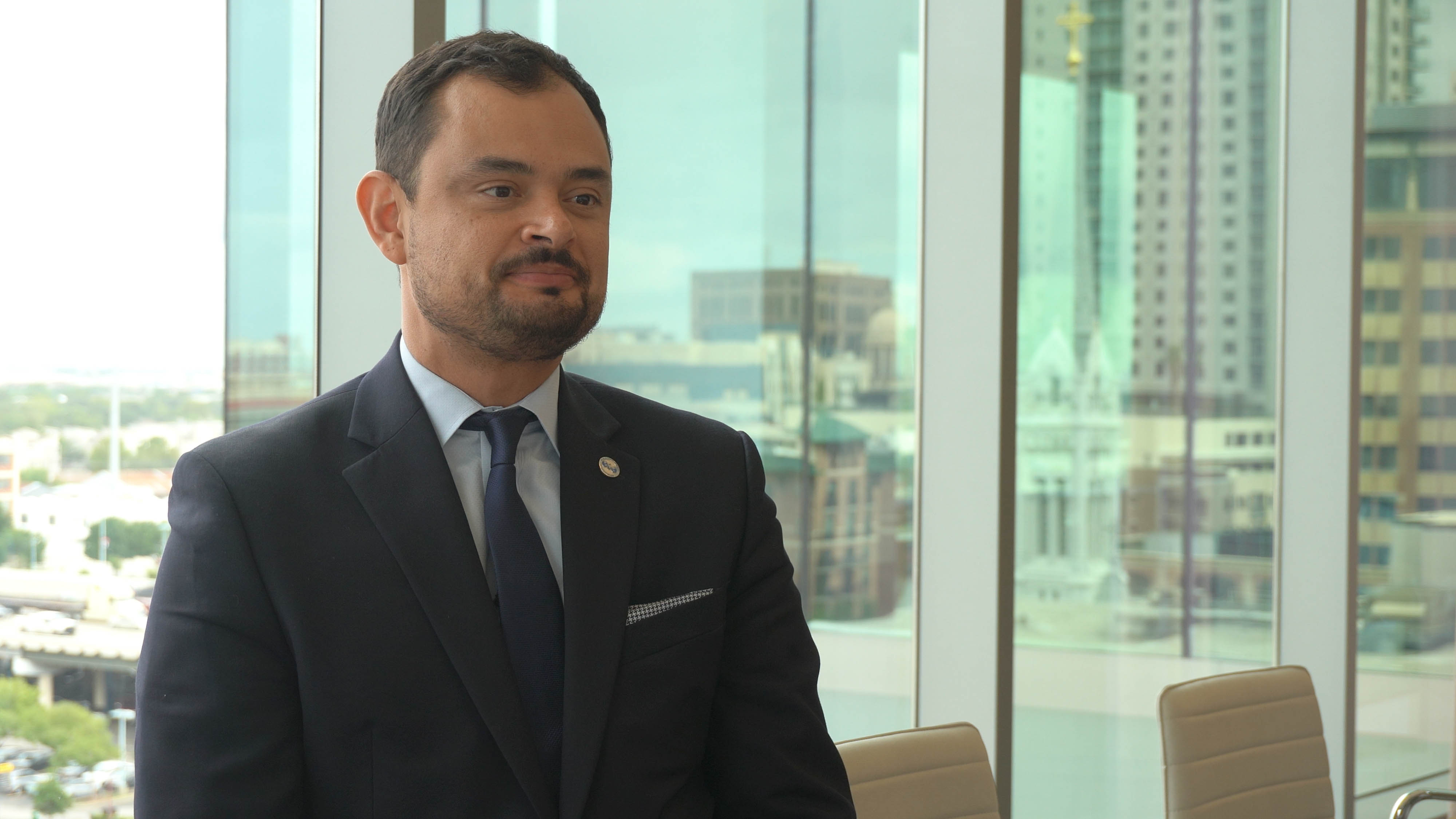
CGTN's Wang Xiaonan talked to Horacio Licon (Licon), vice president of the International Investment and Trade at the Greater Houston Partnership, about the potential consequences of the trade conflict, China's trade practices and the prospect of Trump's tariff punch.
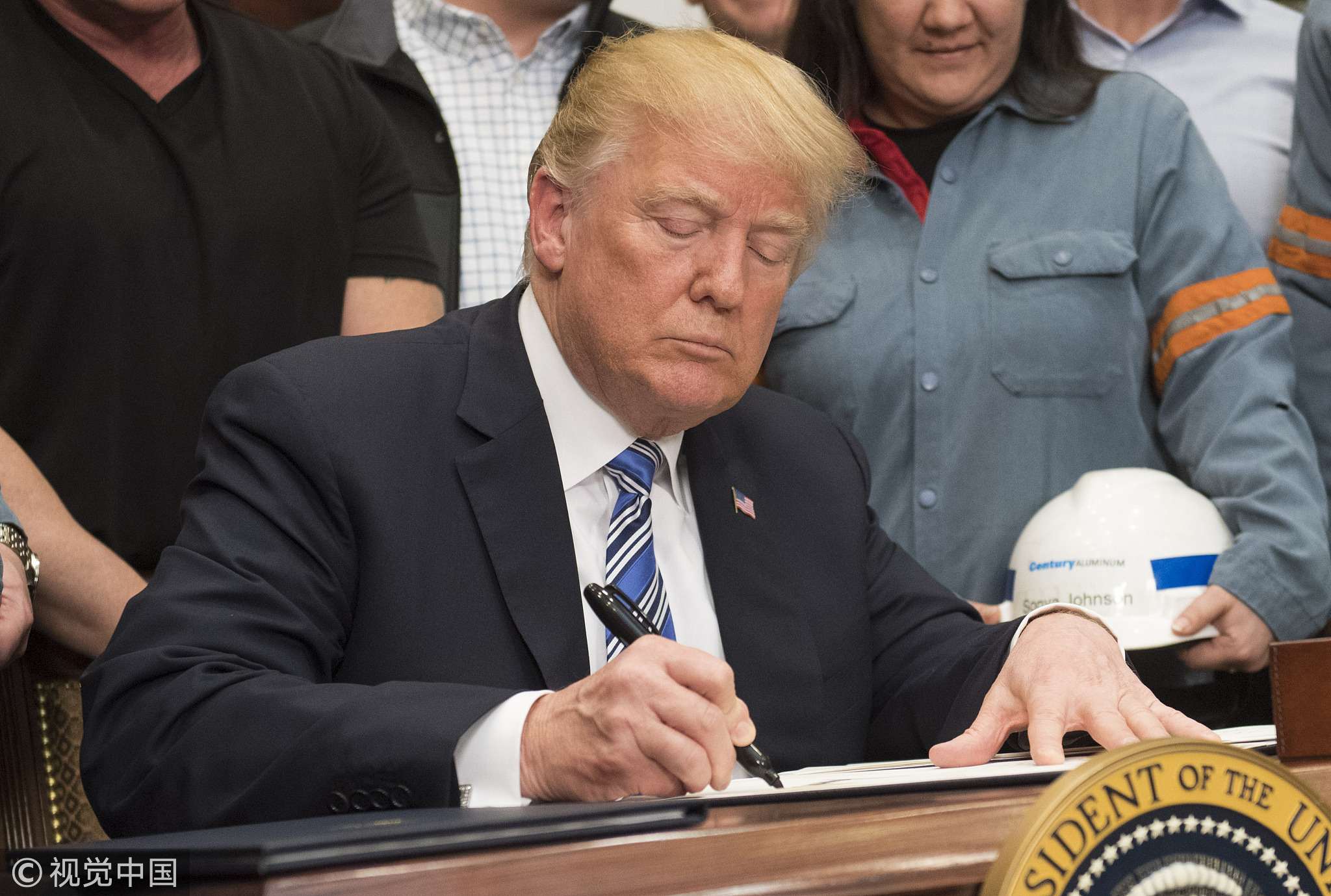
US President Donald Trump signs a proclamation applying tariffs to steel and aluminum imports, as he is joined by steel and aluminum makers in the Roosevelt Room at the White House in Washington, DC, March 8, 2018. /VCG Photo
US President Donald Trump signs a proclamation applying tariffs to steel and aluminum imports, as he is joined by steel and aluminum makers in the Roosevelt Room at the White House in Washington, DC, March 8, 2018. /VCG Photo
CGTN: How is the trade war impacting trade in Houston?
Licon: Houston depends on exports heavily, more than any other large metro in the United States. We're the fourth largest city in America, and 17 percent of our GDP depends on exports, which is a strong component. Anything that brings uncertainty to the trade relationships we have is not positive for us. China, in particular, is our second largest trading partner – it was the first in 2016, second in 2017 with total trade at about 26 billion [US dollars] a year – so it's quite a substantial volume.
We depend on trade in a big way, more than any other city in the US. And Texas has been named by CNBC as the best state for doing business. Uncertainty raised by tariffs or sanctions brings difficulties to our trade.
CGTN: It's reported that the back-and-forth tariffs are hurting major sectors in Texas, notably its oil and gas industry – the lifeblood of the region, grains – the No.1 export of Texas to China, and semiconductors. Which sector so far gets hit the hardest?
Licon: In particular, we are worried about the energy sector because we have invested heavily to take advantage of what we call the feedstock advantage. All the production of hydrocarbons in the Permian Basin in Texas – we've been bringing some of those hydrocarbons to the Houston region, and transformed those hydrocarbons (natural gas and oil) into polymers, resins, and petrochemical products that are exported mainly to Asia, China being one of the main markets.
In the last five or six years, we invested 50 billion US dollars so that infrastructure is in place. And this is the opportunity to start getting China as a customer to buy these products.
Some of the lists that we've seen include products that are under the petrochemical list. So it would be impacting some of the products that we produce.
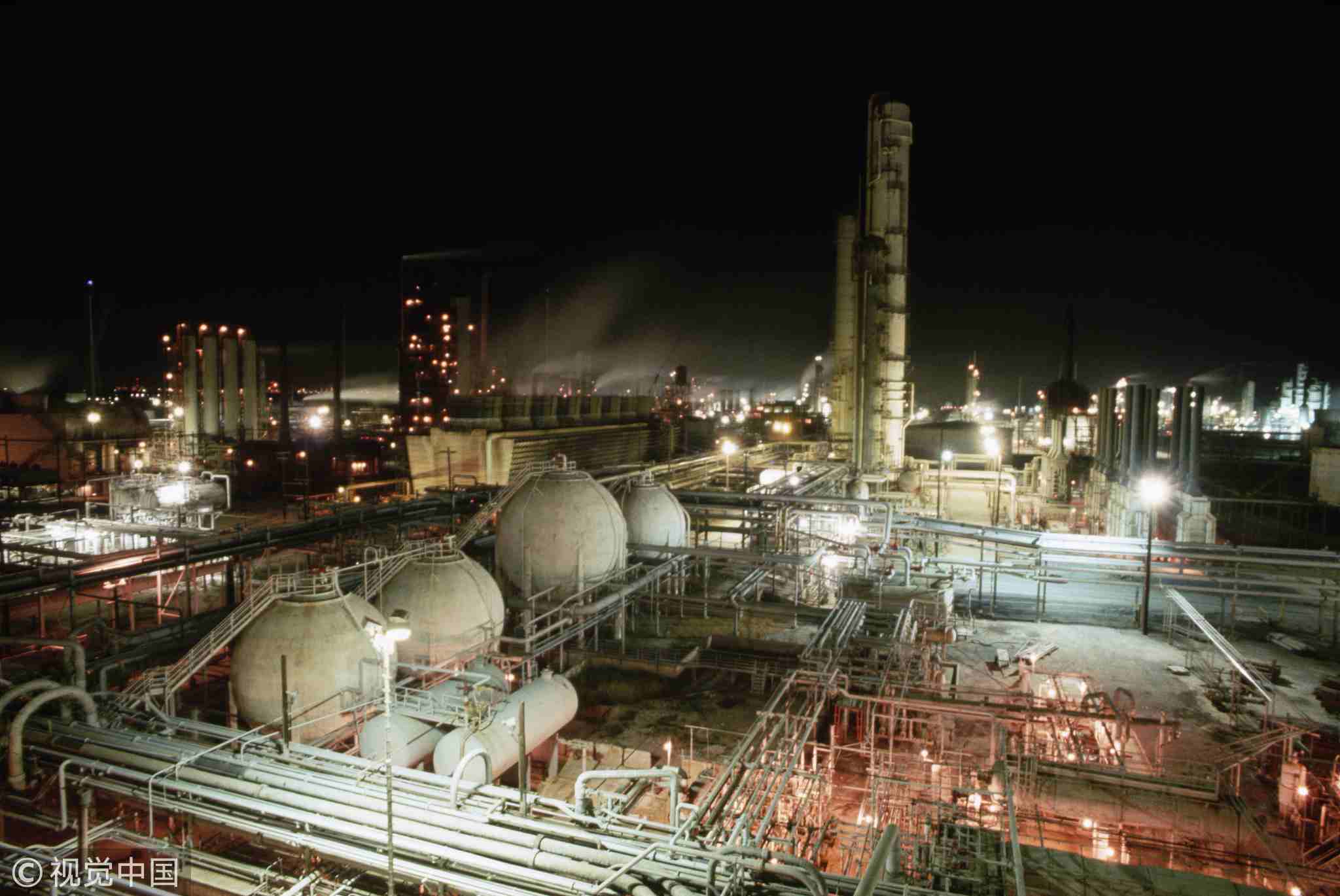
Exxon Oil Refinery in Houston /VCG Photo
Exxon Oil Refinery in Houston /VCG Photo
CGTN: Have the tariffs on steel and aluminum imports imposed in March raised costs for building new pipelines, refineries and chemical plants here?
Licon: The sanctions that were imposed on steel and aluminum have impacted the development of certain infrastructure projects, like new pipelines in the midstream sector, particularly the petrochemical sector and the potential LNG export terminals that are basically mountains of steel.
And when you bring uncertainty to steel prices, it makes it difficult for companies to take a final investment decision. It's also becoming more difficult to export steel components and products to some of our key markets like Mexico.
CGTN: What has the Greater Houston Partnership done to reverse the situation? Have you talked to Washington?
Licon: We were in touch with members of Congress, the US Department of Commerce, the US Trade Representative. We are also talking to Chinese companies and US companies buying and selling from China. We are making our assessment on the potential impact of the rounds of tariffs.
We were conveying that message [to Washington] – let's take advantage of this opportunity, we have a huge natural resource base that we're developing, we're adding value with our petrochemical complex, and China is the main market for it.
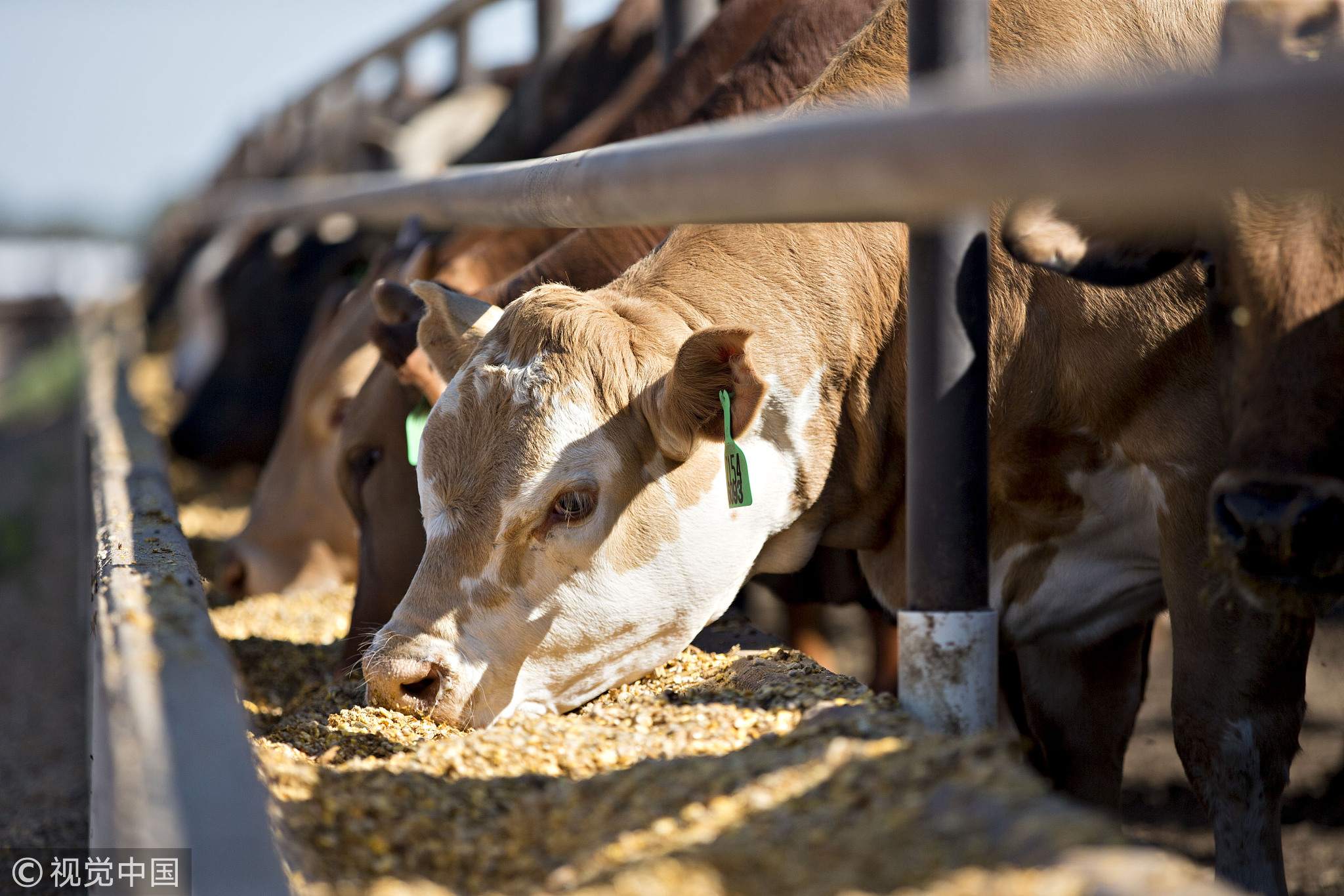
Beef cattle eat grain-based rations at the Texana Feeders feedlot in Floresville, Texas, May 7, 2018. /VCG Photo
Beef cattle eat grain-based rations at the Texana Feeders feedlot in Floresville, Texas, May 7, 2018. /VCG Photo
CGTN: Is it true that China did not play by international trade rules, as Trump claims?
Licon: If the WTO considers China a member, it means China is complying with different trade rules that the WTO membership requires. Within the mechanisms that are in place in the WTO, we have to accept the rulings of the WTO. So sometimes it benefits the countries involved and sometimes they rule against it.
Recently, Boeing won a big ruling in the WTO against Airbus on subsidies, and it was the WTO working in favor of the US.
Free trade agreements between the US and other countries, like NAFTA, are under WTO-accepted rules. So it has been benefiting us for more than 20 years. The rules of the game are established there for trade.
We are a part of it; China has been a part of it for a few years. And rather than us making a ruling on whether China is complying or not, we give credit to the work done by the WTO and accept the rulings that they take. I understand that there have been steps taken by China challenging list one and list two (Trump's lists of tariffs). So we'll wait to see what will happen with those processes.
But from our side, what we want to ensure is that our position as a region is understood – that the opportunities are there, and that we're putting it at risk by bringing uncertainty into trade.
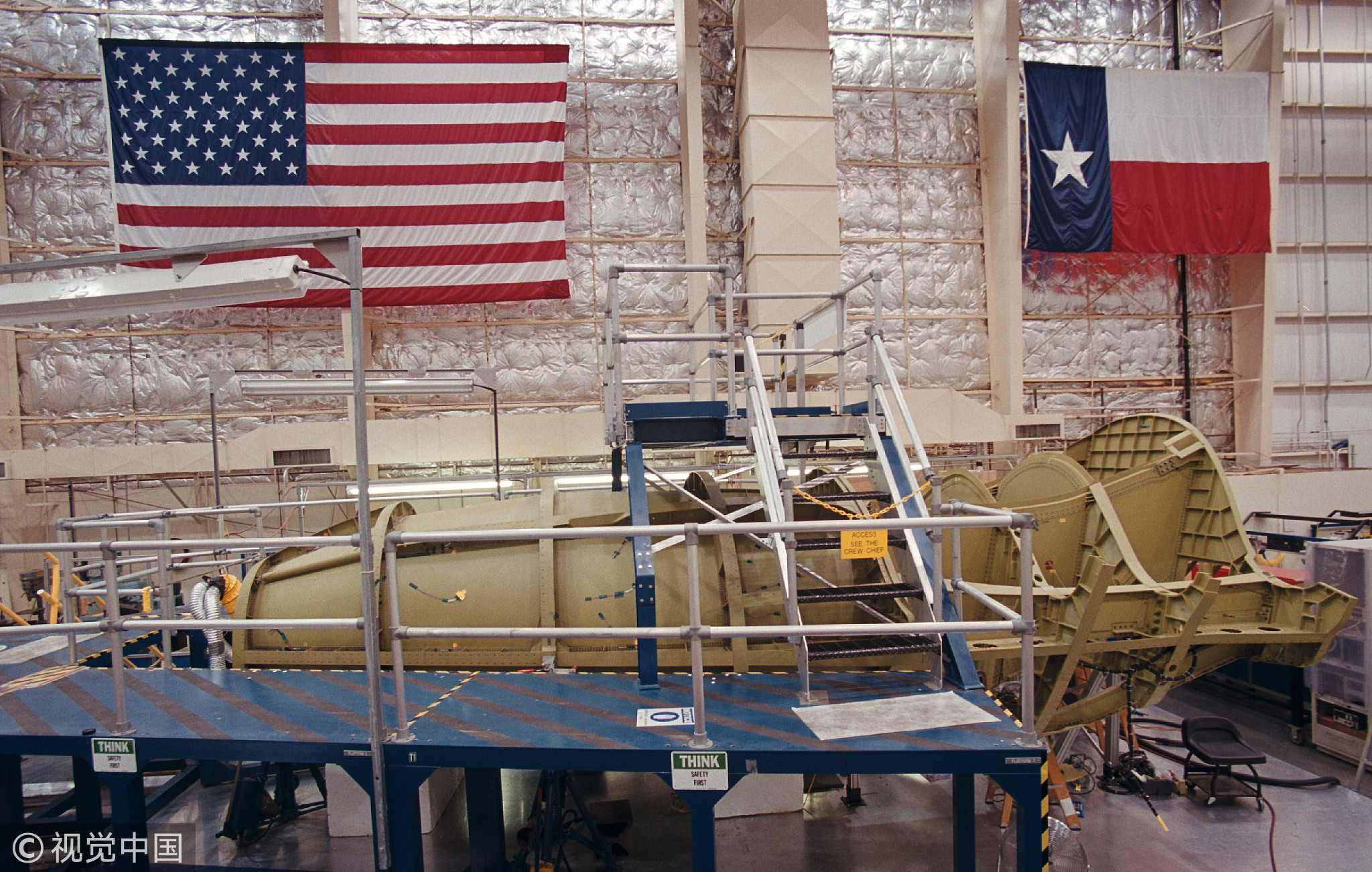
April 4, 2000: United States and Texas flags hang over X-38 space vehicle structure, at NASA Johnson Space Center in Houston. /VCG Photo
April 4, 2000: United States and Texas flags hang over X-38 space vehicle structure, at NASA Johnson Space Center in Houston. /VCG Photo
CGTN: Houston is a hub of innovation in not only energy but also medical research, aerospace and high-tech. What do you think of the Trump administration's claims of intellectual property theft by Chinese companies?
Licon: We know that on the IPR side, there are challenges with China. We know there are different ways to deal with those problems. Here in Texas, we developed some of the main innovations that you see all over the world. 3D printing was invented at UT Austin (University of Texas at Austin). George Mitchell invented fracking. He was from Galveston. He completely revolutionized the energy sector worldwide. And the lithium-ion battery was invented here in Texas.
We see that the future economy will be based on knowledge and digital technologies. So the respect for ideas, and respect for someone else's ideas is very important. But as I said, there are global challenges on that front, as it's becoming easier to replicate an idea. So the challenge is global, not just with China.
CGTN: Will US President Donald Trump's tariff war usher in a new normal?
Licon: In trade, there are winners and losers. Tariffs are a barrier to entry. You impose tariffs on products, you make entry to the US market more difficult. So we think this is a long-term effect if we stay in this uncertainty as a new normal. We hope that won't be the case.
Videographer: Henry Zheng
Video editor: Zhang Xinyue
(If you want to contribute and have specific expertise, please contact us at opinions@cgtn.com.)