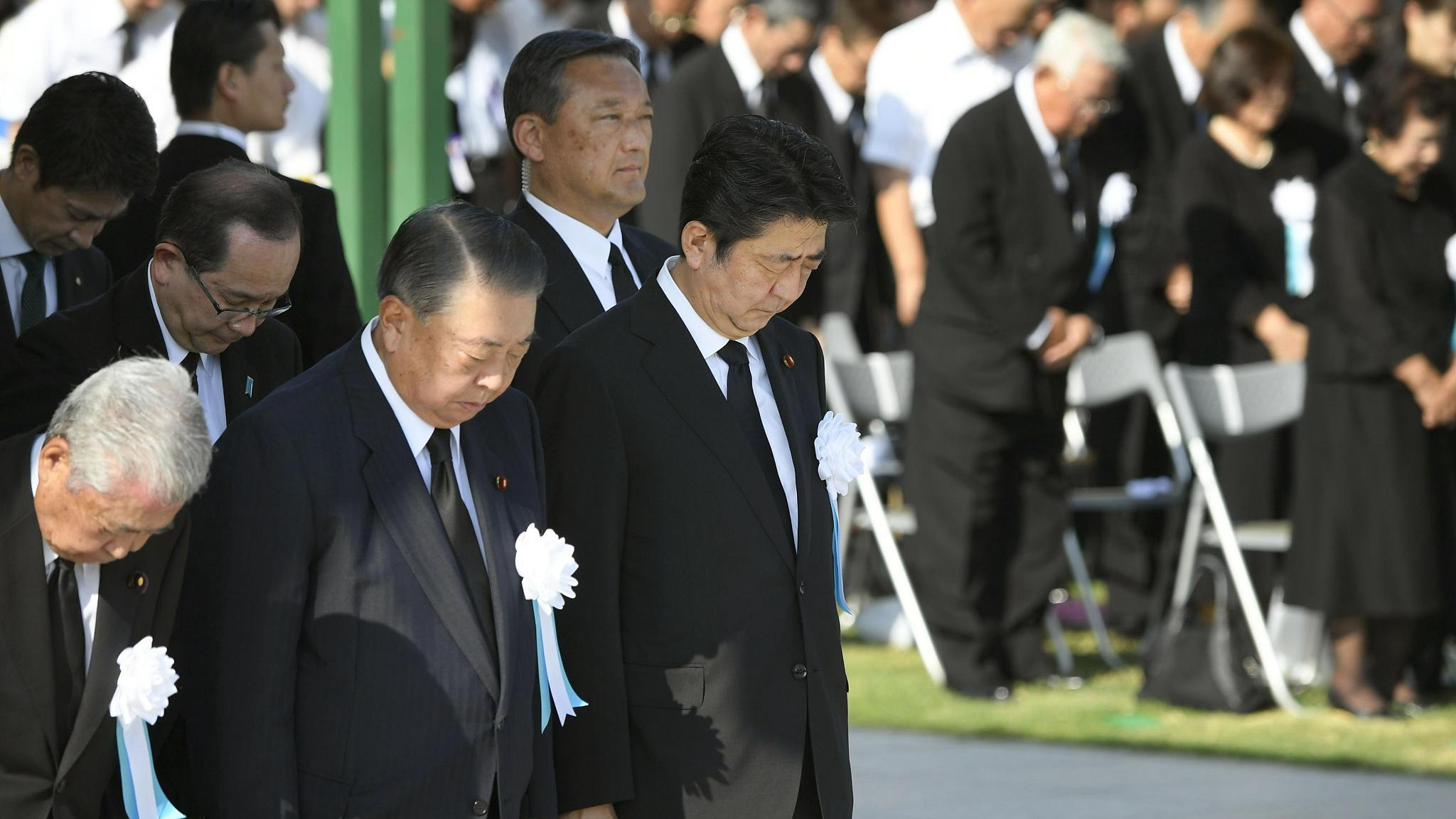
Japan on Monday marked the 73rd anniversary of the atomic bombing of Hiroshima, with its mayor telling thousands of observers that there should be a world without nuclear weapons.
"If the human family forgets history or stops confronting it, we could again commit a terrible error," Mayor Kazumi Matsui said at the ceremony.
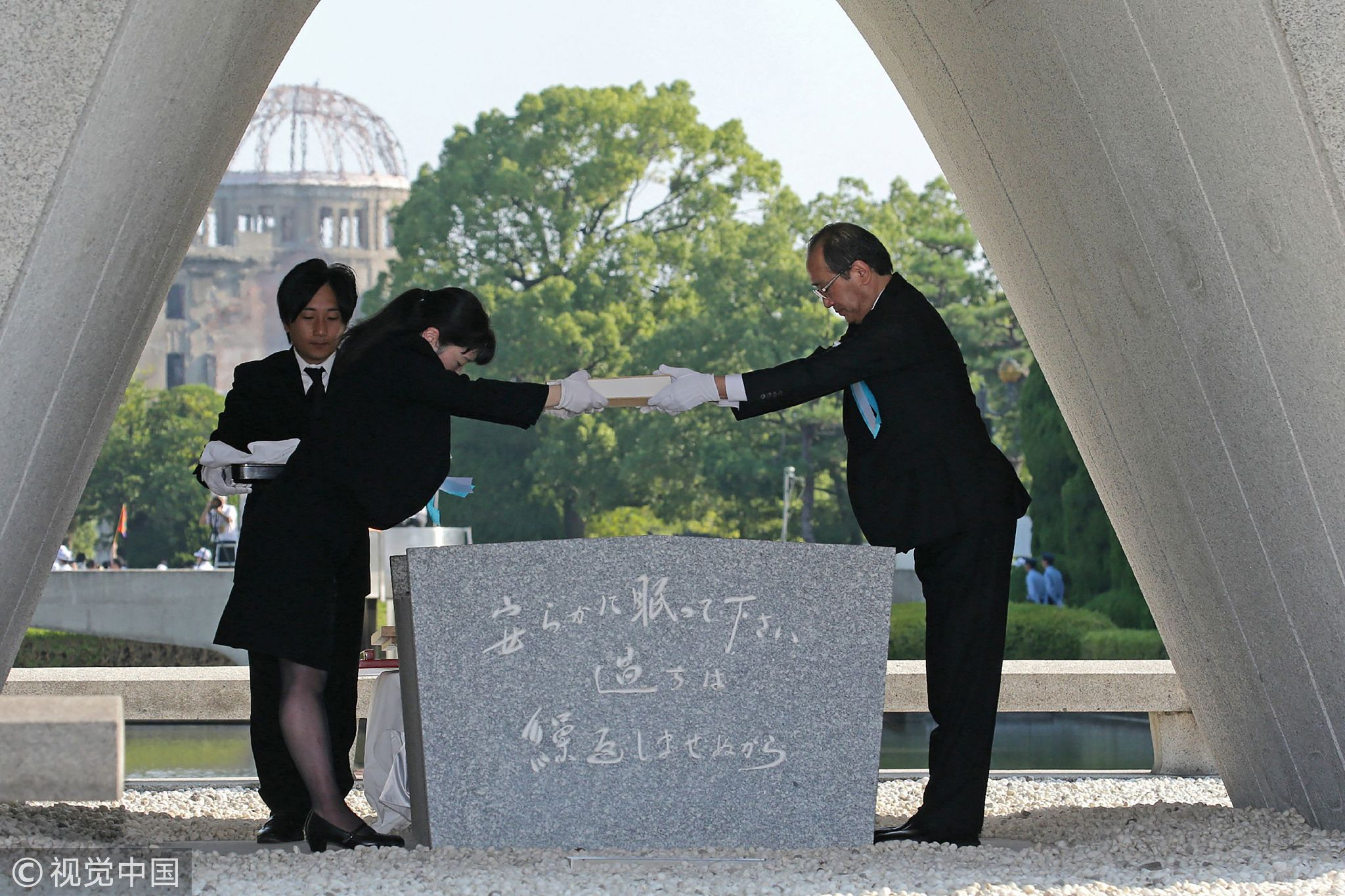
Hiroshima Mayor Kazumi Matsui (R) offers a new list of A-bomb dead, including individuals who died since last year's anniversary from the side effects of radiation, during the 73rd-anniversary memorial service for the atomic bomb victims at the Peace Memorial Park in Hiroshima on August 6, 2018. /VCG Photo
Hiroshima Mayor Kazumi Matsui (R) offers a new list of A-bomb dead, including individuals who died since last year's anniversary from the side effects of radiation, during the 73rd-anniversary memorial service for the atomic bomb victims at the Peace Memorial Park in Hiroshima on August 6, 2018. /VCG Photo
Survivors of the bombing known as hibakusha were also in attendance at the annual ceremony.
Some of the hibakusha, many now aged over 82, have been working with the International Campaign to Abolish Nuclear Weapons to help a treaty to be adopted by the UN to ban nuclear weapons.
However, Japan has not become a signatory to the Treaty on the Prohibition of Nuclear Weapons which came into effect in July 2017.
UN Secretary-General Antonio Guterres said in his message during the ceremony that Hiroshima's legacy is one of "resilience" and sought continued moral support from the hibakusha survivors for efforts in promoting the ban of nuclear weapons.
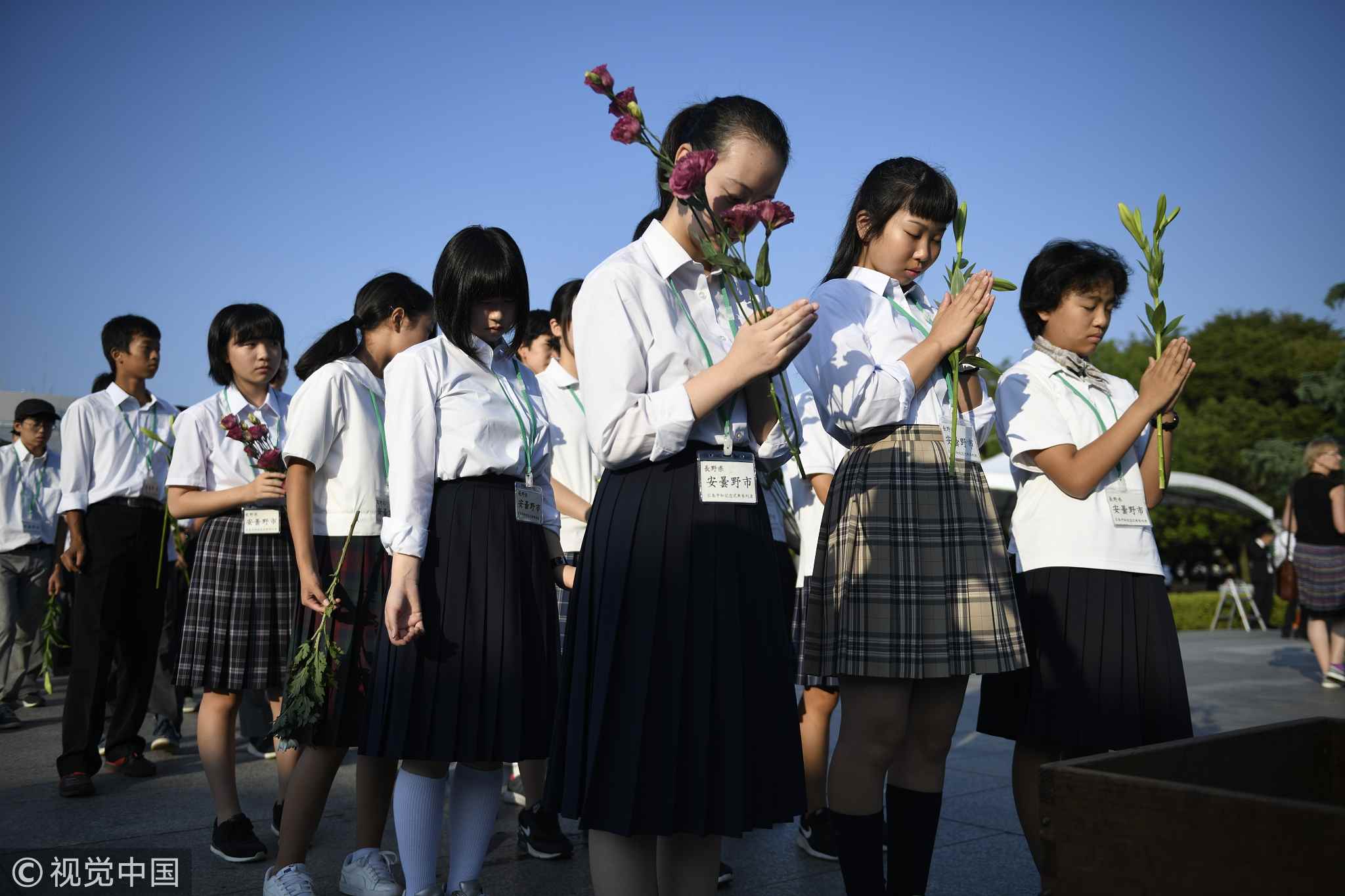
Visitors lay flowers and pray for the atomic bomb victims in front of the cenotaph at the Hiroshima Peace Memorial Park in Hiroshima, western Japan on August 6, 2018. /VCG Photo
Visitors lay flowers and pray for the atomic bomb victims in front of the cenotaph at the Hiroshima Peace Memorial Park in Hiroshima, western Japan on August 6, 2018. /VCG Photo
But with years past and, perhaps, for those in the future, while Japan has a tendency to focus solely on the inward tragedy that nuclear and chemical warfare has inflicted on it, many experts hope that Japan will also take the time to remember that its own involvement in World War II had also brought immeasurable suffering.
For example, the Imperial Japanese Army's notorious Unit 731, which was based in the Pingfang district of Harbin, the largest city than in northeast China, was set up around 1936 and conducted vivisection experiments on live human beings to test germ-releasing bombs and chemical bombs, among other criminal atrocities.
The unit became Japan's top-secret biological and chemical warfare research base and operated as the nerve center of Japanese biological warfare in China and Southeast Asia during World War II.
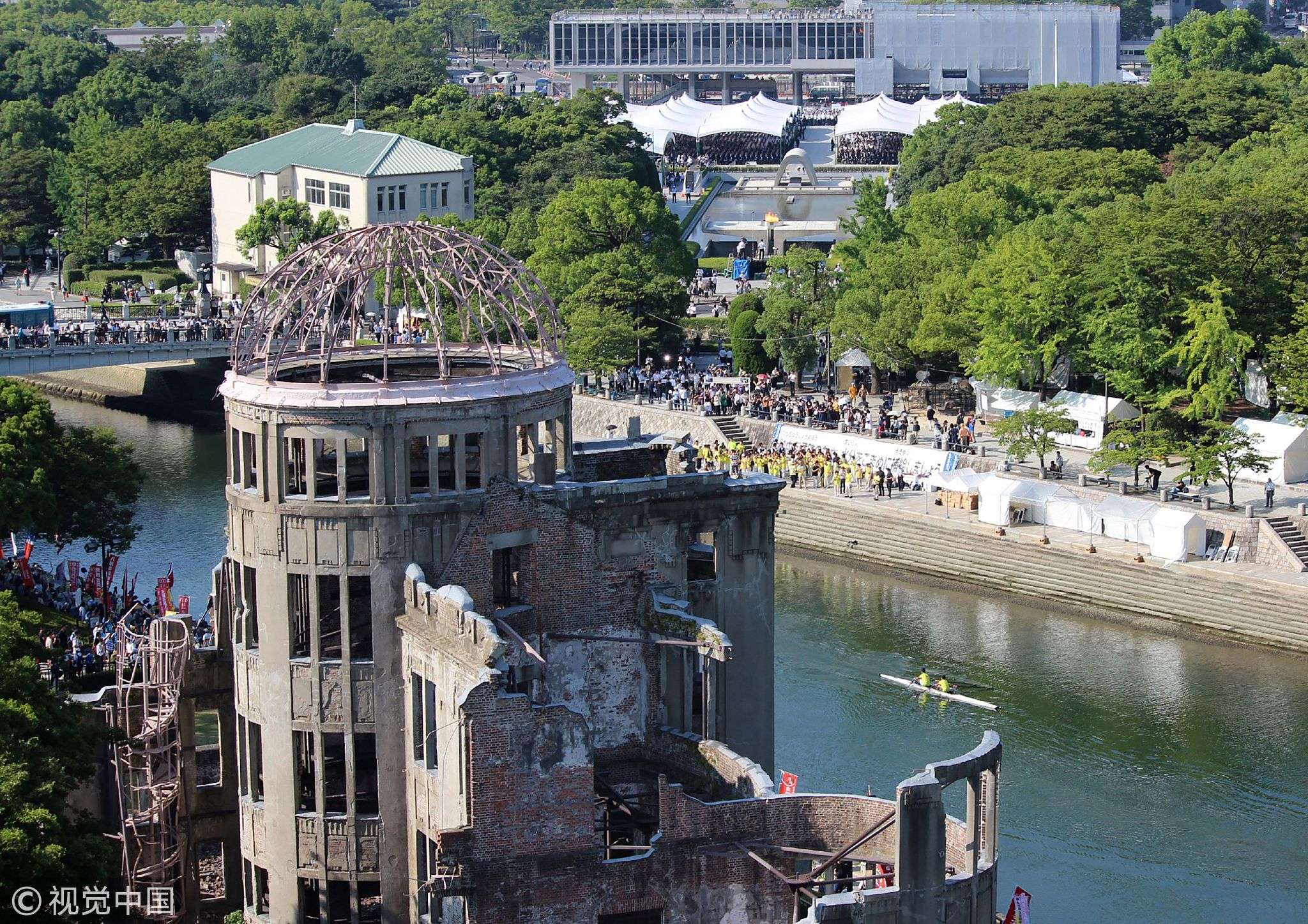
The Hiroshima Atomic Bomb dome (front L) and Peace Memorial Park (C) are seen as people attend the 73rd-anniversary memorial service for the atomic bomb victims in Hiroshima on August 6, 2018. /VCG Photo
The Hiroshima Atomic Bomb dome (front L) and Peace Memorial Park (C) are seen as people attend the 73rd-anniversary memorial service for the atomic bomb victims in Hiroshima on August 6, 2018. /VCG Photo
At least 3,000 people, mostly Chinese, were used for human experimentation by Unit 731, along with a small percentage of Soviets, Mongolians, Koreans, and soldiers of the Allied Forces who had been taken captive. Some of those killed in ways unimaginable were just children.
More than 300,000 people across China were killed by Japan's biological weapons during WWII.
The notorious Unit 731 managed to keep its atrocities largely concealed due to the International Military Tribunal for the Far East not prosecuting the unit's commanders under the condition they handed over the germ warfare data to the United States.
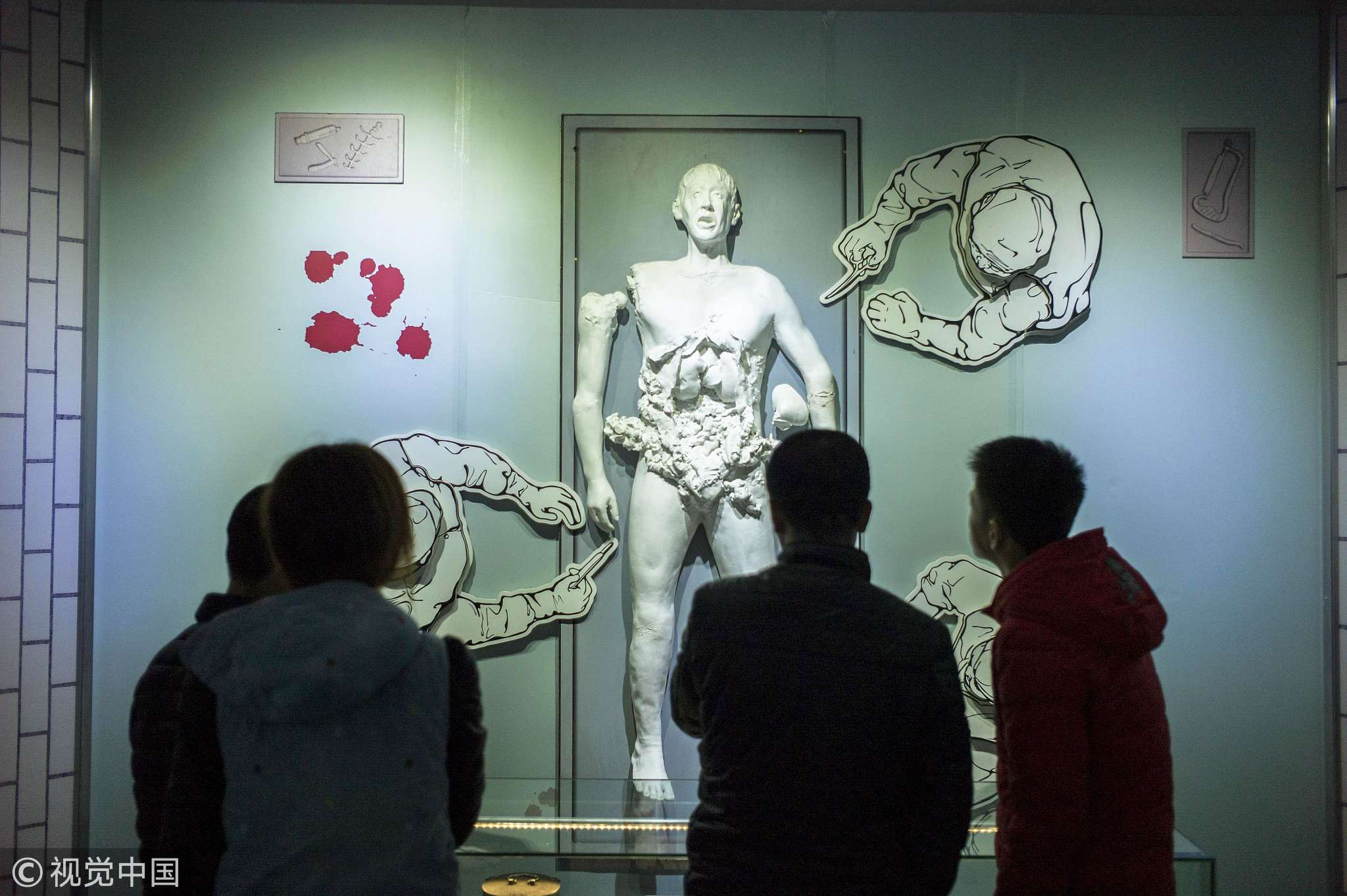
Visitors look at a scene of human experiments at the Unit 731 museum in Harbin, northeast China's Heilongjiang Province on January 7, 2015. /VCG Photo
Visitors look at a scene of human experiments at the Unit 731 museum in Harbin, northeast China's Heilongjiang Province on January 7, 2015. /VCG Photo
Right-wing forces in Japan have also, since the unit's abominable crimes committed before and during WWII, attempted to sequester the facts of the unit, going as far as denying its actual existence, despite an NHK documentary drawing local and international attention to the travesties and the names and positions of hundreds of those working at the unit being officially released recently.
To accelerate Japan's surrender in the WWII, the US forces dropped two atomic bombs, on Hiroshima and Nagasaki on August 6 and August 9, 1945, respectively. Japan surrendered to the Allied Forces on August 15, 1945, bringing an end to WWII.
Source(s): Xinhua News Agency

 ["china"]