
Opinions
14:13, 28-Apr-2018
Expert: What can obstruct Korea's successful peace talks?
 ["china"]
Share







Copied
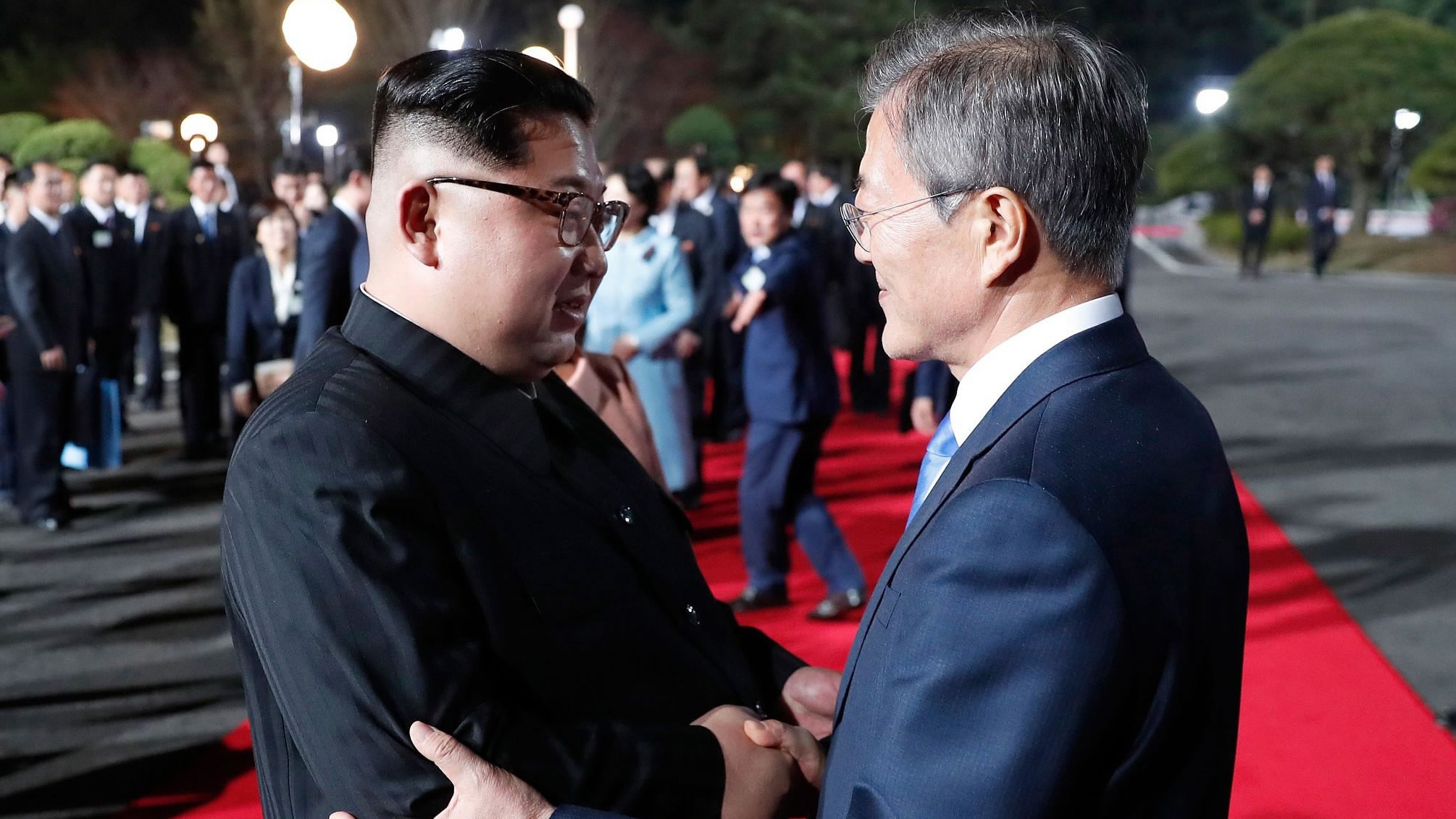
The leaders of the Democratic People's Republic of Korea (DPRK) and the Republic of Korea (ROK) have signed a declaration agreeing to work for peace, prosperity, and the unification of the Korean Peninsula through denuclearization and the formation of a peace treaty, officially ending the Korean War.
Wang Peng, a researcher of the Charhar Institute, argues that the declaration will certainly have a positive impact on the region. He says that people living on the Korean Peninsula will be the principal beneficiaries of the declaration, which is designed to formally end the 1950-53 war and shift the DPRK's focus to economic development. Wang believes the whole world will profit from a peaceful and denuclearized Korean Peninsula.
While there were positive signs at the inter-Korean summit, challenges to peace remain. Denuclearization is the major factor hindering progress as Wang notes that, although Pyongyang has agreed to end nuclear tests and focus on economic development, the issue is the main divergence point between the DPRK and the US.
Achieving denuclearization has been a bone of contention between Pyongyang and Washington. Wang contends that the US advocates the so-called "Libyan model," whereby Libya agreed to give up its nuclear weapons as part of an effort to return to the international fold. However, the eventual fate of Muammar Gaddafi, the former leader of Libya, provides a very negative example to Pyongyang.
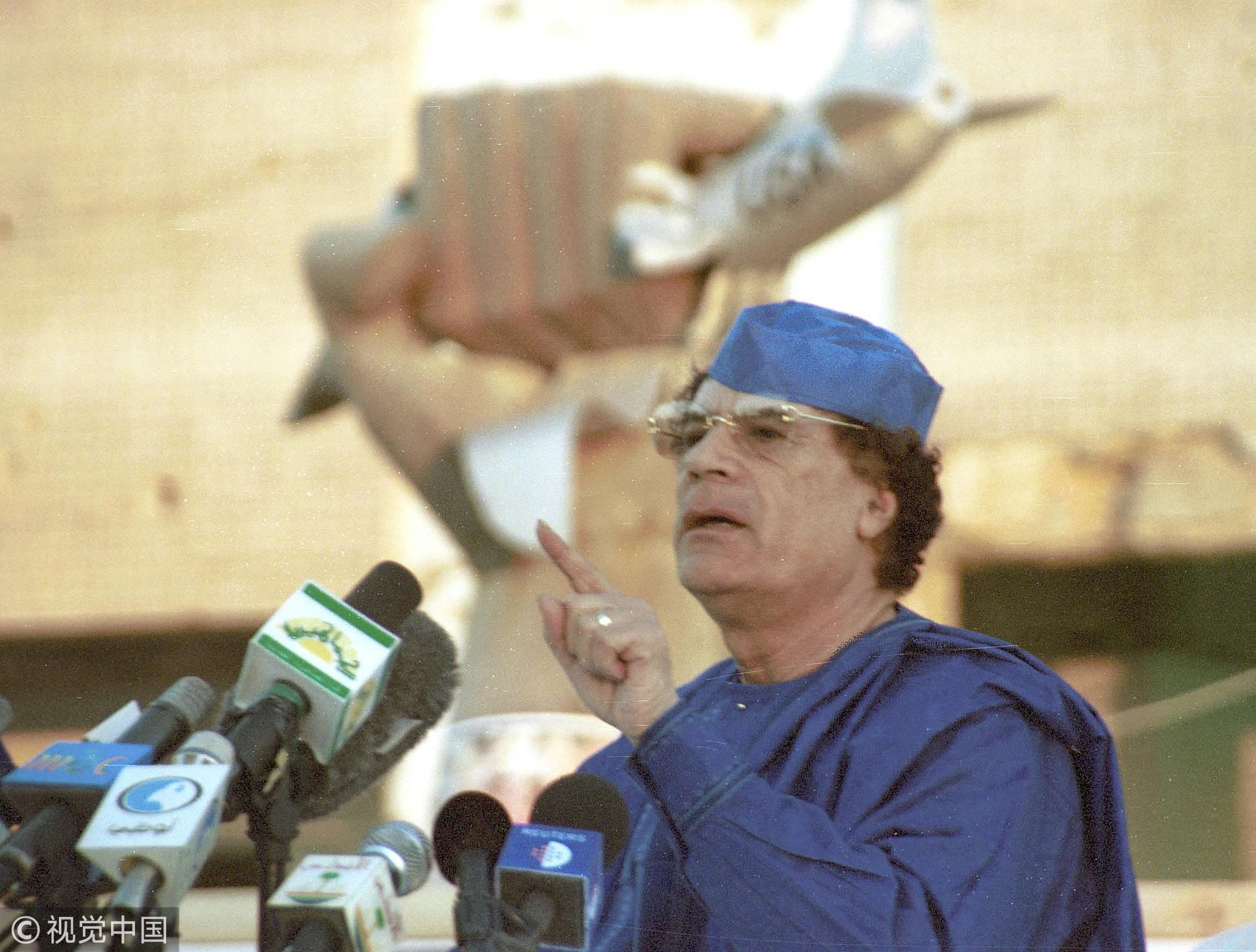
Muammar Gaddafi tells reporters in Tripoli that the guilty verdict of Abdel Baset Ali Megrahi in the Pam Am Flight 103 bombing trial was a farce and trivialized the evidence used to convict him, Feb 5, 2001. /VCG Photo
Muammar Gaddafi tells reporters in Tripoli that the guilty verdict of Abdel Baset Ali Megrahi in the Pam Am Flight 103 bombing trial was a farce and trivialized the evidence used to convict him, Feb 5, 2001. /VCG Photo
Donald Trump's rhetoric has also caused concerns, notably his threat to pull the US out of the Iran nuclear deal. The US has developed an image of being inconsistent and, as a result, the DPRK is unlikely to accept the "Libyan model" of destroying its nuclear weapons immediately.
The DPRK hopes to make progress step by step, gradually closing down all nuclear sites. Wang thinks that Pyongyang's proposal is backed by China, Russia and several ROK officials. Given the complications of the issue, Pyongyang's proposal is viewed as the most effective way to fulfill the declaration and bring peace to the region.
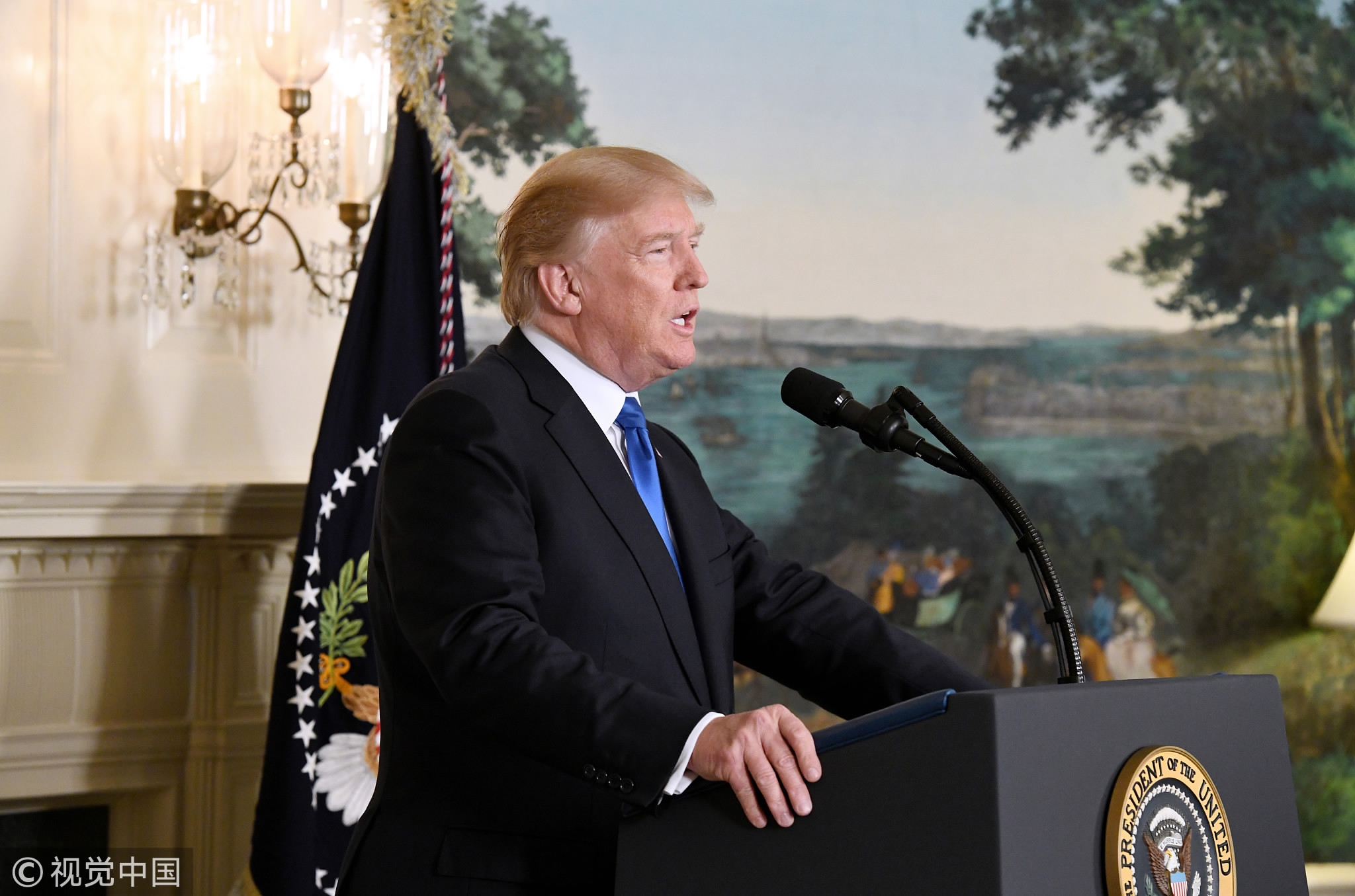
US President Donald Trump speaks on the Iran Strategy in the Diplomatic Reception Room of the White House in Washington, DC, Oct 13, 2017. /VCG Photo
US President Donald Trump speaks on the Iran Strategy in the Diplomatic Reception Room of the White House in Washington, DC, Oct 13, 2017. /VCG Photo
Thus Seoul's standpoint on denuclearization will be of vital importance. However, it seems like the ruling elites of the ROK haven't reached an agreement on the issue. Wang identifies two key factors. He says that, unlike the DPRK, which has a stable political environment as a result of Kim Jong Un's supreme status, the ROK is quite unstable in terms of domestic politics. Some politicians will use the DPRK issue as an excuse to attack Moon's government with the hope of winning an election.
Wang added that as the ROK's most important ally, the US has urged it to accept the "Libyan model." Pressure from the US has effected to Seoul's perspective on the issue of denuclearization, holding back progress.
The inter-Korean summit had positive outcomes, Wang added, but challenges remain.